The window for smart 2026 summer buying is closing fast. Most retailers don't see it coming. By the time a swimwear trend shows up on mainstream social feeds, your competitors have already placed deposits, confirmed production slots, and locked in their landed costs.
This guide is built for buyers who want to move before the market moves — not after it. You'll get a breakdown of the five highest-momentum swimwear trends heading into summer 2026. Each one maps to custom swimwear manufacturing specs, realistic MOQs, fabric sourcing realities, and margin math.
Scaling a private label swimwear line? Refreshing a boutique wholesale collection? What follows isn't a mood board. It's a procurement roadmap.
Elevated Minimalism & One-Piece Swimsuit Wholesale Trend
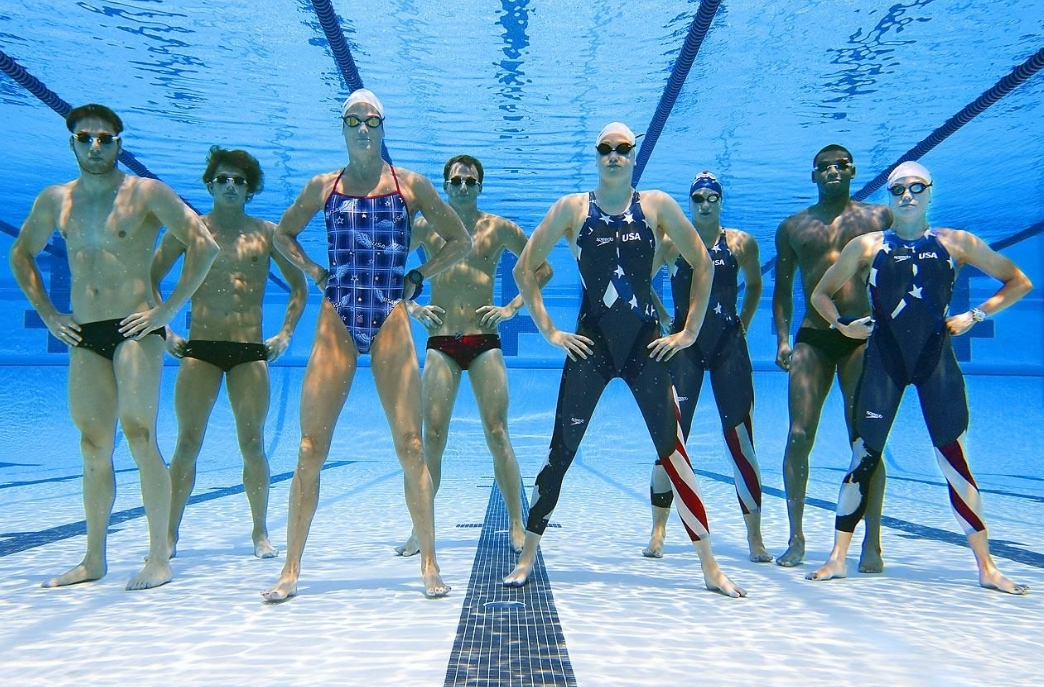
One-piece swimwear isn't having a moment — it's holding a position. Across boutique channels and mid-to-high DTC brands, the one-piece swimsuit wholesale category has become one of the most reliable revenue anchors heading into 2026. The direction is clear: less decoration, better fabric, cleaner structure.
The aesthetic has a name now — elevated minimalism — and it's more than a styling preference. It's a procurement logic. Neutral, versatile colorways extend your selling window. Sculpted silhouettes cut down the "trend expiry" risk. Premium fabric construction supports higher retail pricing without adding SKU complexity.
What's Selling Right Now (And Why It Works at Wholesale)
Three silhouettes are carrying the commercial weight right now:
Square-neck one-piece — structured, fashion-forward, works across age brackets
Thin-strap or minimal bandeau one-piece — clean upper body with a high-cut leg. Moves fast in online channels
Controlled monokini / cut-out — the key word is controlled . Restrained geometric cutouts, not high-exposure designs. Better for broader sizing runs and higher AOV
Color direction for 2026 centers on what buyers call a quiet luxury palette : deep moss green, olive, dark navy, matte black, cream white, and shadowed terracotta. These aren't trendy — they're repeatable. That's what you want in a base wholesale program.
Texture matters too. Ribbed and crinkle-surface fabrics in matte finishes are outselling high-gloss options at the mid-high price point. The tactile quality reads as premium on product pages. Plus, it holds shape better across size runs.
Fabric & Construction Specs Worth Knowing
The industry standard for sculpted one-pieces is 78–82% nylon / 18–22% spandex , with an outer shell running 200–260 g/m². Go heavier (230–260 g/m²) for light colorways. That weight blocks transparency and keeps structure intact under wet conditions.
Construction details that separate forgettable basics from repeat-order styles:
Bonded or heat-sealed seams — keeps the silhouette clean, reduces bulk at edges
Removable cups + internal bust-support stitching — holds the minimal exterior without giving up function
Swimwear-grade nylon lining at 120–150 g/m², matched or skin-toned — you need this for light colors, no exceptions
Procurement Numbers, Straight Up
Item | Range |
|---|---|
MOQ (per color/style) | 200–500 pcs |
FOB cost — smooth matte | US$7.5–10.0 |
FOB cost — ribbed/crinkle + upgraded hardware | US$9.5–13.0 |
Sample turnaround | 7–14 days |
Bulk production (post-fabric arrival) | 25–35 days |
Target retail price (accessible premium) | US$38–65 |
Gross margin at US$55 retail | ~74–79% |
Your all-in landed cost (FOB + freight + duties + packaging) runs US$11–14 per unit. Price at US$55–65 and you land in a margin range that covers platform fees and still funds reorders. That math is why experienced buyers lock this category in early.
BERUN Activewear: Performance Swim Meets Private Label Flexibility
Most swimwear factories make swimwear. BERUN ( berunactivewear.com ) makes performance swim that functions as activewear — and that difference matters more in 2026 than it did two years ago.
Their core product logic is crossover design . High-support bikini tops are built to double as sports bras. One-piece swim styles have enough structure to wear off the beach with denim. That "one piece, multiple contexts" positioning is what athleisure-driven buyers want right now.
What separates BERUN from standard swim factories:
Four-way stretch performance fabrics (nylon/spandex or polyester/spandex, 220–260 GSM)
Sublimation printing — color-stable in saltwater and UV, ideal for high-saturation surf-inspired prints
Mesh lining + removable chest pads — dual-support construction for both training and water use
Full OEM/ODM with private label packaging: hang tags, woven labels, custom polybags
Procurement numbers that hold up:
Item | Range |
|---|---|
MOQ — solid/simple colorblock | 150–200 pcs/style |
MOQ — full sublimation print | 200–300 pcs/style |
FOB cost — performance one-piece | US$11–16 |
Sampling turnaround | 7–10 days |
Standard bulk production | 25–30 days |
Rush reorder (existing fabric) | ~18 days |
Landed cost comes in at US$13–19/unit . Price at US$55–75 retail and your gross margin hits 60–68% . That works well for DTC and private label brands carrying platform fees.
First-order mix worth considering: 40% high-support bikini tops, 40% one-piece/bodysuit styles, 20% resort cover-ups for bundling. That split pushes average order value up by 25%+ compared to single-SKU buys.
Textured Fabrics & Sustainable Swimwear Wholesale
Recycled fabric used to be a marketing footnote. In 2026, it's a line item on purchase orders.
The shift is structural. Boutique buyers and DTC brands are getting direct questions from end consumers about fiber sourcing. "We use quality materials" doesn't cut it anymore. What does? A hang tag that says ECONYL® or Repreve® , backed by a GRS certificate your swimwear supplier can produce on request.
The commercial opportunity runs parallel to the sustainability story. Textured surfaces — ribbed knit, crinkle, puckered tricot — are pulling real weight on product pages right now. They create visual differentiation without complex prints. They photograph well. They read premium without premium pricing. That's a strong combination for any capsule that needs to convert.
The Fabric Stack: What to Specify
The dominant technical blend for this category is 85% polyamide / 15% spandex . For recycled versions, your two primary inputs are:
ECONYL® — regenerated nylon recovered from ocean waste and landfill material. Strong sustainability story, well recognized by eco-conscious consumers
Repreve® — made from recycled plastic bottles, positioned on durability, moisture-wicking, cooling, and water repellency. More performance-focused in its market positioning
Both handle the textured constructions buyers want. The key is sourcing from mills with activewear and compression fabric experience . Standard swimwear mills often can't maintain crinkle recovery consistency across a full production run.
What to Demand Before You Commit
Don't approve fabric without these:
GRS (Global Recycled Standard) certificate — confirms recycled content claim
OEKO-TEX Standard 100 — screens for harmful substances
Test reports covering: chlorine resistance (AATCC 162) , UV / light fastness (AATCC 16) , tensile strength (ISO 13934) , abrasion resistance (ASTM D3886)
4-way stretch and stretch recovery data — crinkle and ribbed fabrics can hide poor recovery until post-production
Fiber traceability documentation needs to be standard practice. A swimwear supplier who pushes back on it? That tells you everything.
Procurement Benchmarks
Certified recycled yarn costs more than virgin nylon — expect it and plan for it. MOQs for this category open around 300–500 pcs per style . Unit costs run higher than conventional swim fabric due to GSM requirements, lining, and texture complexity. Build that into your margin modeling before the conversation starts, not after.
The strongest swimwear wholesale position for this segment is a premium eco-textured capsule : ribbed or crinkle sets anchored by recycled fabric certification, with select crochet or mixed-texture accents for visual range. That construction keeps sizing runs clean, supports a $58–75 retail price band, and gives your retail buyer a story that sells without needing a markdown to back it up.
Modern Retro High-Waisted & Cut-Out Swimwear Wholesale
High-waisted bikini bottoms now make up 40%+ of total women's bikini volume at large retailers like Cupshe. This isn't a niche play. It's a structural category shift, and it's picking up speed into 2026.
The key silhouette: waistbands that sit at or above the navel , paired with square-neck tops or structured one-pieces with asymmetric or single-side cut-outs at the waist . Contrast binding pulls the look together — navy-on-ivory, red-on-navy, the nautical palette that brands like Unique Vintage and Retro Stage have been selling through for three seasons straight. Your target buyer is a 25–40-year-old woman who wants coverage and a clear design point of view. That's a strong commercial position. She spends more, returns less, and buys into the story behind the product.
Fabric & Construction: The Specs That Matter
The fabric for this category runs 190–220 gsm nylon/spandex or polyester/spandex , four-way stretch, with 12–18% spandex content . That elastane range is non-negotiable. Cut-out zones need to snap back after wear — no elastane, no recovery.
High-waist bottoms need a wider waistband: 6–8cm . Add an interior anti-slip silicone strip (8–10mm wide) stitched into the lining. Skip it and returns follow. Use a double-layer front panel and single-layer rear. This gives you tummy coverage without pushing up production cost.
For cut-out edges, spec 5mm reinforced binding seams — folded edge or narrow tape binding. This spreads tension and stops stress cracking. For a clean, premium finish on waist-area cut-outs, use ultrasonic bonding + heat-seal tape . It cuts bulk and removes the "biting" sensation that drives one-star reviews.
Lining weight: 150–180 gsm light-tone nylon/spandex, wet-opaque. For contrast binding colorways — deep navy, tomato red, burgundy — require chlorine-fastness testing at Grade 4 minimum . Contrast-trim dye bleed is one of the easiest QC failures to avoid in this category. Don't let it slip through.
Procurement Numbers
Item | Range |
|---|---|
MOQ (per style) | 300–400 sets |
MOQ (multi-color split) | 100–150 sets/color |
FOB — solid high-waist set | US$6.5–9.0 |
FOB — contrast binding + cut-out | US$9.5–13.0 |
FOB — multi-cut-out one-piece | US$10.5–15.0 |
Bulk production lead time | 28–32 days |
Retail price range | US$42–68 |
Gross margin (DTC/boutique) | 55–62% |
Landed cost runs US$11–15/unit for North American and EU e-commerce. Set the standard high-waist two-piece at US$42–55. Hold US$55–68 for cut-out and nautical-stripe feature styles. This tiering protects margin on your volume SKUs. Hero pieces carry the brand image at the higher end.
Stocking Mix & Supplier Requirements
A solid opening-order split for this trend cluster looks like this: 50% high-waist two-piece sets (size S–3XL, weight units toward M/XL at 45–55%), 30% square-neck one-pieces (higher AOV, strong social media conversion), 20% cut-out feature styles (trend-signal pieces that raise the collection's perceived value).
On the supplier side, pick factories where high-waist and shaping styles are a core part of their output — not a one-off request. Before you commit, confirm they can deliver:
Pattern grading through at least S–3XL , with solid block work optimized at M and XL
3D virtual sampling (CLO or Browzwear) — this lets you iterate cut-out placement and high-waist proportion without burning through sample budget
A retro contrast binding color card covering: cream, ivory, navy, tomato red, burgundy, mustard — this speeds up colorway decisions and cuts sampling delays
Require pull-force testing on all cut-out edges and strap attachment points: 500N minimum, with no seam failure or adhesive separation . That's your protection against stretch-and-split complaints that kill repeat orders.
Surf Revival & UPF Resort Wear Wholesale Collection
The global surf apparel market hit USD 9.16 billion in 2022 . It's tracking toward USD 14.09 billion by 2030 at a 5.5% CAGR — and apparel alone accounts for 77% of that revenue. This isn't a subculture. It's a commercial category with a decade of strong growth behind it.
What's driving it into 2026 is one clear trend: Surf Revival aesthetics meeting UPF functional demand . Brands like Rip Curl and Title Nine have already proven this works. The swimwear wholesale opportunity is in building that combination at scale — before the boutique channel catches up.
The Silhouette Stack Worth Building Around
The strongest wholesale styles for this category are:
Long-sleeve zip-front surfsuits (UPF 50+) — contrast-stripe colorblocking, 80s–90s surf references, front YKK zipper for adjustable coverage. The Rip Curl Surf Revival Surfsuit is the key reference here
Rash guard sets — long or short-sleeve top paired with high-waist bottoms or surf shorts. This is a high-repeat category across resort and water sports retail
Cross-back long-sleeve one-pieces — back cutout + crossed straps. You get visual interest without losing sun coverage
Colorblock and retro-stripe bikinis — high-waist bottoms that carry the Surf Revival look into two-piece SKUs
The multi-use positioning is a real commercial advantage. Title Nine markets UPF swimwear for swimming, paddleboarding, beach running, and daily transit — four use cases in one product. That range cuts return rates and holds up premium pricing.
Fabric & Construction Specs
UPF 50+ has one clear meaning: only 1/50 UV rays pass through the fabric . Hitting that rating across a full production run takes deliberate spec work — not just a fabric claim on a tech sheet.
The right foundation:
Fine-denier polyester or nylon + 15–20% spandex , 200–230 g/m², double-knit or bonded construction for opacity and UPF performance
Micro-mesh panels at underarm and upper back — critical for heat management during long wear. Surfsuits trap heat fast without them
YKK corrosion-resistant resin zipper (saltwater-rated) for zip-front styles — a must if you're selling into real surf markets
Flatlock or overlock stitching with inner binding tape at friction points — strap channels, zipper edges, leg openings
Optional lightweight neoprene or foam cups for one-pieces that need chest support without extra bulk
Testing requirements to include in your supplier brief:
- UPF 50+ third-party report (AATCC 183 or ASTM D6603, via SGS or Intertek)
- Chlorine-soak test: 40°C / 50ppm — document color and elasticity before and after
- Wet-stretch recovery: transverse and longitudinal ≥ 80–90%
- Color fastness: Grade 4 minimum
Ask for production-lot UPF re-verification — not just pre-production samples. That's where most swimwear suppliers cut corners.
Procurement Numbers
Item | Range |
|---|---|
MOQ — zip surfsuit / long-sleeve | 400–600 pcs/style/color |
MOQ — rash guard set | 300–500 sets/style/color |
FOB — long-sleeve surfsuit (UPF + zip) | USD 13–18 |
FOB — rash guard set | USD 10–15 |
Production lead time | 35–40 days |
Target retail price | USD 55–95 |
Gross margin | 60–70% |
Hardware, neoprene cups, and YKK zippers push unit cost up 10–25% compared to basic bikini construction. Build that into your margin model upfront — not after your first order lands.
Inventory Allocation by Channel
Split your opening order based on real sell-through logic:
60% — Resort / vacation retail: Coral, ocean blue, lemon yellow, retro stripe prints. This is where the Surf Revival look drives impulse buys.
40% — Urban active / fitness: Matte olive, deep navy, black, smoke grey. These cleaner colorways keep the product selling well past beach season.
Size the run XS–XL, with the bulk of units in S–M for your first order . On reorder, shift that size distribution based on what your actual sales data shows.
Wholesale activewear packaging strategy: Bundle as 2–3 piece sets — long-sleeve rash guard + high-waist bottom + lightweight cover-up. Run the same Surf Revival print across all three pieces. It lifts perceived collection value and drives stronger reorder rates.
Plus-Size Engineering & Custom Swimwear Manufacturing
The plus-size swimwear market isn't underserved because demand is weak. It's underserved because most factories aren't engineering for it. They're just scaling up a size-small block and hoping the fit holds.
It doesn't. Buyers who understand that gap build loyal customer bases with 20–30% higher repeat purchase rates than standard-size lines.
Here's the structural reality: mainstream brands have already normalized XL–3XL across their core ranges, covering US 12–24. The commercial signal is clear. The real sourcing challenge is finding manufacturers who treat plus-size as a distinct engineering problem — not an afterthought.
What Real Plus-Size Engineering Looks Like
The difference between a factory that can do plus-size and one that does it well lives in the construction specs.
Here are the non-negotiables for a functional plus-size swimwear line:
Wide straps (minimum 3–4cm) with reinforced attachment points — bar-tack stitching or triangular gusset inserts at the shoulder-to-bodice junction. Skip this and the strap-to-fabric connection becomes your first failure point under real-body tension.
High-back coverage + underwire or underbust band (3–4cm wide elastic, double-stitched). This separates a supportive one-piece from one that looks supportive in product photos and falls apart by noon.
Power mesh / shaping mesh panel at 170–220 gsm. Heavier than standard lining. Compressive in direction. It covers the full front abdominal panel and extends to the side seams. Not just a strip of mesh — the whole front.
Ruched front or wrap-front construction to manage abdominal variation across the same nominal size.
High-waist or mid-rise bottoms with full-coverage rear cut and a slight leg-opening angle that lengthens the leg line. That's proportion engineering, not guesswork.
Adjustable hardware throughout : multi-position back hooks, adjustable side ties, and shoulder-slider systems. These handle the hip-to-waist variance that a single grade can't capture on its own.
Outer shell fabric: 230–260 gsm nylon/spandex , with transverse elongation of 150–200% and a recovery rate above 85–90%. Don't go lighter for plus-size. The coverage, opacity, and structural strength you need under dynamic load require that GSM range.
Seam Engineering: Where Bulk Production Fails Plus-Size
Garment failure in plus-size swimwear traces back to three structural stress points:
Shoulder attachment — use double-needle lockstitch plus bar-tack. No exceptions.
Crotch and gusset junction — overlock plus topstitch, both passes. This is where split seams happen on heavy-stretch squatting or entry movements.
Underbust band termination — the band must anchor into the side-seam structure. It can't float on the fabric surface.
Your production brief should specify seam tensile testing at 100–150% of expected stretch load with zero seam failure tolerance. A factory that pushes back on that standard is not the right factory.
For chlorine and saltwater durability — plus-size buyers care about this more than most, because durability justifies the purchase — spec Xtra Life Lycra-grade spandex or an equivalent high-chlorine-tolerance elastane. It extends garment life in a way your customer will notice at the end of the season.
Factory Selection: What to Verify Before You Commit
One question cuts through the noise fast: Do you have an independent plus-size block, or do you grade up from a standard base?
A factory with real plus-size capability has distinct pattern blocks for 1X / 2X / 3X — with redrawn curves at the chest, underbust, side seam angle, back width, abdomen, and hip. Not proportional scaling from a size-8 template. Ask to see the grade rules. Ask for fit sample photos from existing plus-size clients.
Prioritize factories offering 3D virtual sampling via CLO or Browzwear with plus-size avatars. You can evaluate pressure distribution, transparency risk, and cut-out placement before spending sample budget. That saves real time and cost across multiple fit iterations.
Also check the hardware side: plus-size styles need larger-diameter underwires, higher-density foam cups, and heavier-gauge elastic. A factory that doesn't stock these as standard inventory will slow your timeline and push up sampling costs.
Procurement Numbers
Item | Range |
|---|---|
MOQ — plus-size line (per style/color) | 200–350 pcs |
FOB — basic plus-size one-piece (190–220 gsm, single control layer) | US$8–10 |
FOB — structured plus-size (power mesh + reinforced seams + multi-panel) | US$11–15 |
Sample turnaround (incl. 2 fit rounds) | 10–14 days |
Bulk production lead time | 30–35 days |
Target retail (DTC / boutique) | US$50–85 |
Gross margin | 58–65% |
Landed cost runs around US$13–18/unit for North American and EU markets. At a US$65–75 retail price point, you're sitting inside 60%+ gross margin. That's before factoring in the lower markdown frequency that plus-size lines carry. Demand is concentrated. Supply is tight. Your plus-size SKUs clear at full price more often than your core size range does.
Inventory Structure for First Orders
Start your opening run at 60% core sizes (XS–L) / 40% plus-size (XL–3XL) . Adjust once your own sell-through data gives you a clearer picture.
Within the plus-size allocation, weight XL and 2XL heavier . US 14–18 is where plus-size consumer demand peaks. Those sizes stock out first if you under-index them.
Building a custom swimwear manufacturing brief for this category? The strongest opening assortment combines three styles: a wide-strap high-support one-piece (your volume SKU), a high-waist tummy-control two-piece set, and a tankini with removable soft cups and adjustable straps. Three constructions. Three distinct fit needs. One coherent plus-size line. That's a wholesale program that converts — and reorders.
Quantifiable Trend Evaluation & Wholesale Sourcing Checklist
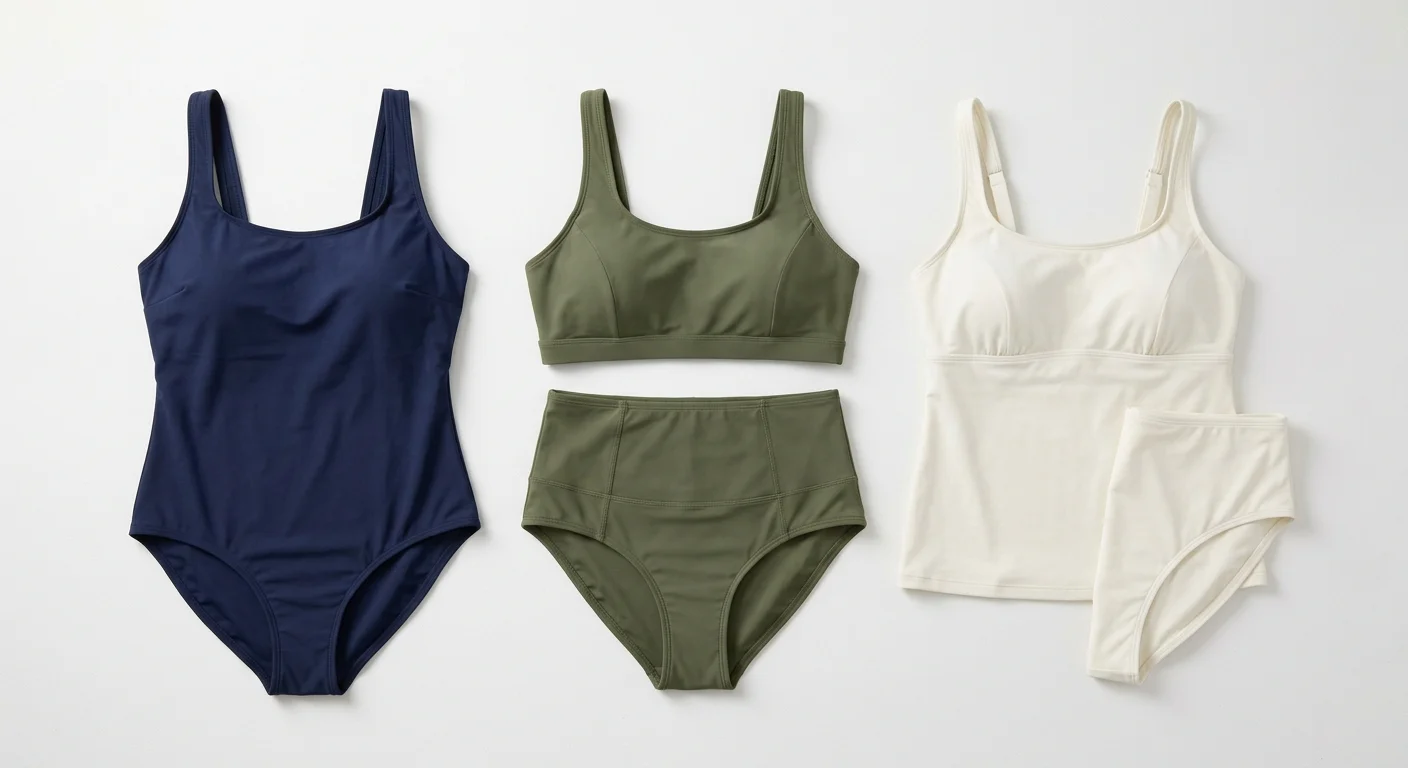
Five trends. Finite budget. Every decision costs you twice — once when you buy, once when you don't.
The framework below turns that pressure into a clear process. Score each trend before you commit. Screen each swimwear supplier before you sign. Build your first-order test pool with math, not gut feeling.
Trend-Fit Scoring Matrix (0–400 Total)
Rate every trend candidate across four dimensions. Score each one from 0–10, then multiply by 10:
Dimension | What You're Measuring | Score (×10) |
|---|---|---|
Target customer alignment | Does this trend match your buyer's actual profile? | 0–100 |
Supply chain achievability | Can you source it at spec, on time, at your MOQ? | 0–100 |
Gross margin headroom | Does the math work at your target retail price? | 0–100 |
Competitive saturation | How crowded is this SKU space? (reverse-scored) | 0–100 |
Decision thresholds:
- ≥320 → Priority sample. Move fast.
- 240–319 → Small-batch test. 150 pcs, one colorway.
- <240 → Hold. Use as a traffic driver, not a margin play.
Supplier Gate Checklist: Hard Stops You Can't Skip
Run every factory through this screen before they touch your tech pack.
Capacity & Delivery
- Output above 50,000 pcs per month — the floor for scalable wholesale
- Standard lead time ≤35 days from fabric arrival
- Rush flexibility: can handle ~15% order acceleration for fast reorders
- Full-size sample set in hand within 7 days
Quality Control
- Full inspection sequence: PP sample → DUPRO → FRI
- Defect rate target: <2.5%
- 3 free pattern/fitting revisions included in sampling terms
- Fabric specs: color variance ΔE ≤ 1.0 , weight tolerance ±5 gsm
Compliance Documents
- GRS certificate — required for any recycled-fabric claim
- OEKO-TEX Standard 100 — your chemical safety baseline
- UPF 50+ third-party test report (AATCC 183 or ASTM D6603) — needed if you market sun protection
- Azo/formaldehyde test results showing compliant levels
Commercial Terms
- Tiered quote at 300 / 500 / 1,000 pcs — compare the unit-price gap at each breakpoint
- Sample and tooling fees credited back against bulk orders
- Contract SLA with late-delivery penalties ≥5% and written defect replacement terms
First-Order Test Structure
Don't go deep on one bet. Run an A/B pool for each trend:
1 main SKU + 1 fallback SKU , 150 pcs each
Set aside 12–15% of total budget for fast replenishment on whichever clears first
Check sell-through every week. Make reorder calls at the 30-day mark — not the 90-day mark.
This structure keeps your risk contained. You also get real sell-through data — and that's the one signal that tells you what's worth chasing.
Conclusion

Winning brands in summer 2026 won't be the ones who spotted trends last. They'll be the ones who locked in their custom swimwear manufacturing partnerships before the rest of the market moved.
You already have the roadmap. Here's what it covers:
Elevated one-pieces driving premium margins
Recycled-fabric constructions that convert eco-conscious shoppers
Cut-outs and high-waists feeding the retro-modern appetite
Plus-size engineering now treated as the real revenue opportunity it's always been
The next move isn't complicated. It's just urgent.
Pull up your trend evaluation scorecard. Cross-reference it against your target customer profile. Start supplier conversations now — while MOQs are still negotiable and production slots are still open.
Summer 2026 inventory decisions happen in the next 90 days.
Buyers who move first don't just ride the wave — they set the swimwear price.