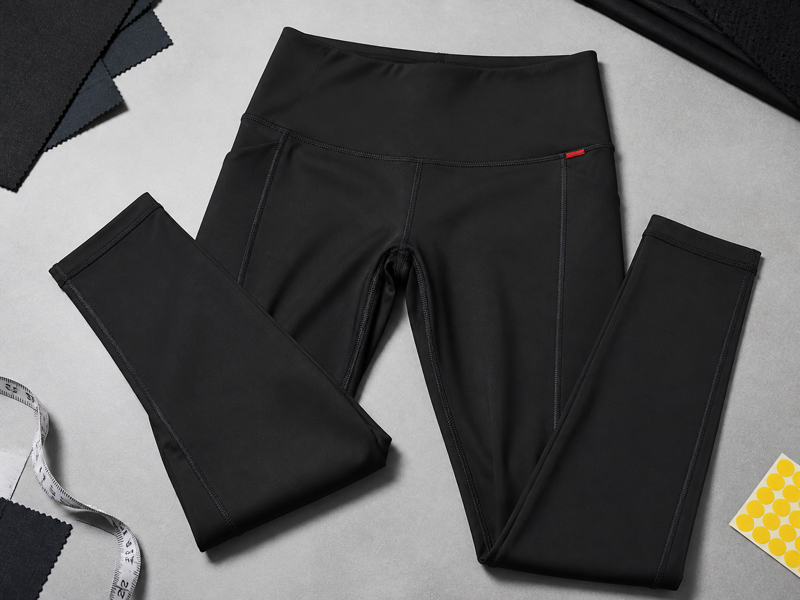
Core SKU planning
Leggings, bras, shorts and tops can be grouped into a repeatable wholesale assortment.
Factory-Direct Wholesale
Purchase activewear directly from our 8,500 m² facility. Volume tiered FOB pricing, 12 production lines, and a full private-label branding kit included with every wholesale order.
Factory-direct wholesale works best when each SKU has a stable spec, approved sample, packing rule and reorder record. The goal is to keep the next PO consistent with the previous one while still allowing planned color, size or label updates.
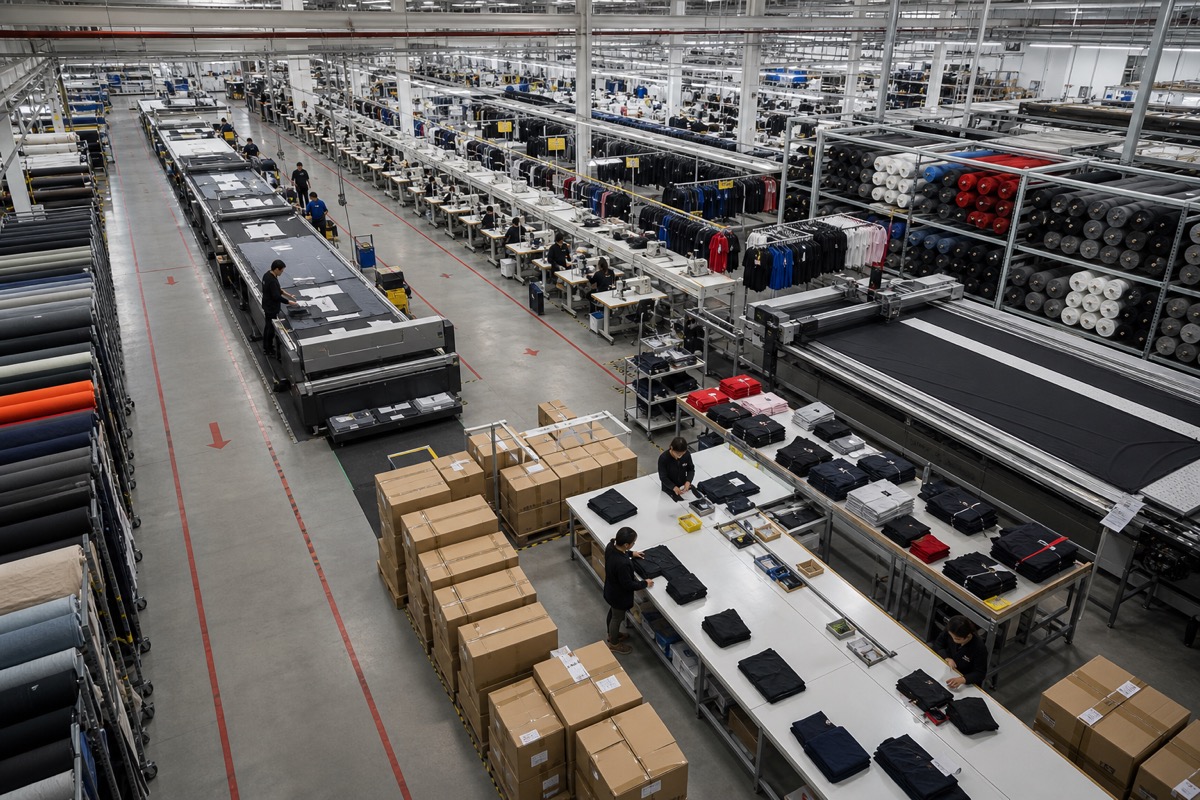
Leggings, bras, shorts and tops can be grouped into a repeatable wholesale assortment.
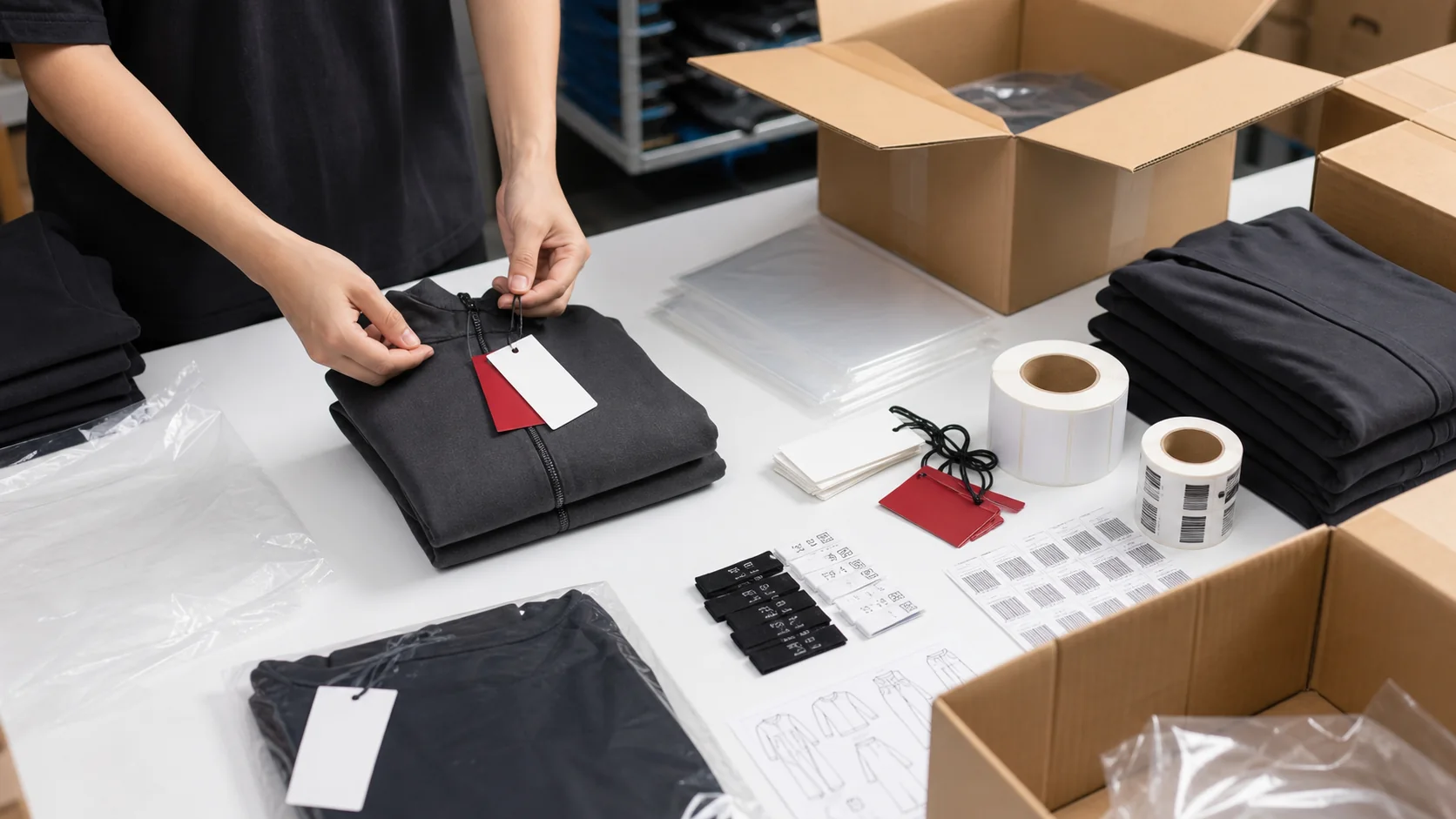
Carton marks, size labels and polybag rules are prepared before the shipment leaves the factory.
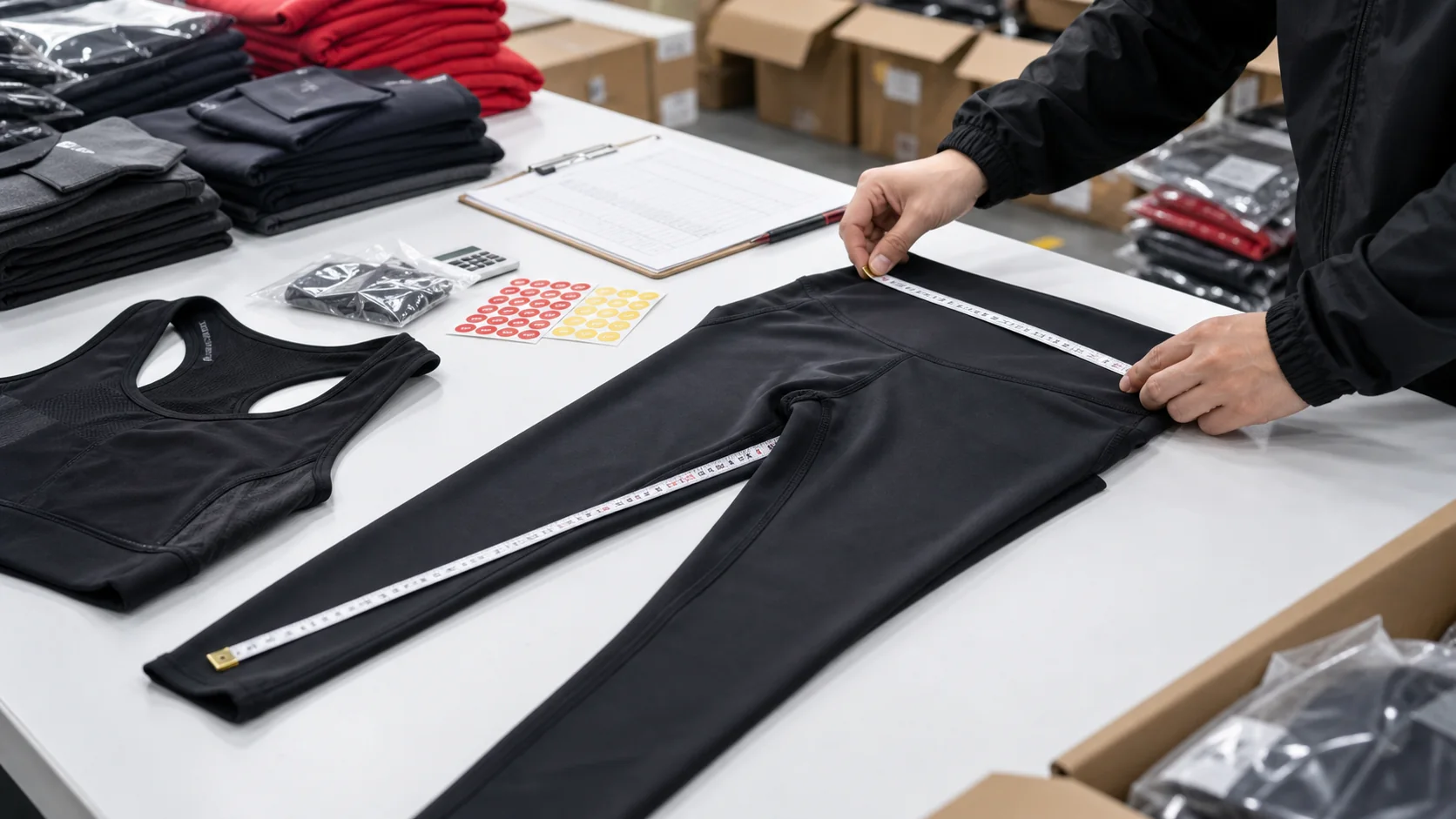
Measurement and defect-photo records help buyers compare repeat lots with the approved file.
All prices are FOB Guangzhou. Wholesale tier pricing is itemized in the RFQ quote — per-SKU FOB price, volume discount step (if any), line allocation, sampling and reorder cadence — calibrated to your annual program rather than published as fixed tiers. Payment: 30% deposit, balance before shipment. Full MOQ-by-SKU policy: see FAQ.
First wholesale PO
FOB per RFQ
Confidence-build SKU before catalog commit
Repeat-SKU rolling cadence
FOB per RFQ
Lot-to-lot consistency program
Multi-SKU annual program
FOB per RFQ
Consolidated planning cycle
Five product families manufactured entirely in-house. Each family supports the 6 decoration methods documented on the print & embroidery service page — sublimation, DTG, screen print, silicone, embroidery and heat transfer — combinable on the same wholesale PO with no extra MOQ per method.
High-waist, V-waist, scrunch, seamless. 180–320 GSM 4-way stretch nylon/spandex (training family).
Low, medium, high support. Removable cups, racerback, longline.
French terry, fleece, cotton blends. 280–360 GSM. Relaxed and tapered fits.
Running shorts, compression shorts, racerback tanks, crop tops.
Windbreakers, warm-up jackets, track suits. Custom sublimated team kits.
Buying wholesale directly from the factory eliminates middleman markups and gives you full control over branding, fabric selection, and delivery terms.
| Criteria | Wholesale (Berun Factory-Direct) | Retail / Trading Company |
|---|---|---|
| Minimum Order | 100 pcs / SKU | Often 500–1,000+ or catalog-only |
| Unit Pricing | FOB factory-direct, itemized per RFQ | Subject to agent-layer markup |
| Lead Time | 35–42 days stock fabric / 48–58 custom | Extended by agent communication and relay layer |
| Customization | Full OEM: fabric, color, cut, print, label | Limited to existing catalog styles |
| QC Transparency | Inline & final inspection reports shared | QC delegated, reports not always available |
| Shipping Terms | FOB standard, DDP available | Often EXW or limited terms |
| Private Label | Full label kit at no extra MOQ | Often requires separate branding MOQ |
We handle packing, documentation, and freight coordination so your wholesale order arrives warehouse-ready.
Standard shipping term. Goods packed in export cartons, loaded at our facility, and delivered to port. You arrange ocean freight and customs clearance at destination.
We manage freight, customs, duties, and last-mile delivery to your warehouse. Available for US, EU, UK, and AU destinations. Quoted per order based on volume and weight.
20’ container fits ~5,000 leggings or ~3,500 hoodies. 40’ HC doubles capacity. We optimize carton dimensions to maximize container fill rate and reduce per-unit freight cost.
Distributors do not sell sizes evenly, so cartons should not contain them evenly. The pack ratio is where wholesale margin quietly lives or leaks.
A pre-agreed size mix per carton — say one XS, two S, three M, two L, one XL — repeated identically across the shipment. Receiving teams count cartons instead of garments, and every carton is shelf-complete on its own.
First orders borrow a standard curve; reorders should be reshaped by your actual sell-through. Send us the size-level sales report and we adjust the pack mix — a ten-minute change that ends season-long markdowns on the sizes you over-bought.
Mid-season you can reorder a subset of sizes rather than the full curve, provided the SKU’s reorder still clears its minimum. Tell us which sizes ran dry; the production file already knows everything else, including which fabric lot the originals were cut from.
A repeat-order program is only as good as the institutional memory under it. These are the records we keep per SKU so reorders don't depend on you re-explaining the product.
| Record Type | What It Records | Retrieval Method | Failure Mode It Prevents |
|---|---|---|---|
| Counter-sample (physical archive) | 1 buyer-approved physical piece + fabric lot tag + sign-off date | SKU number lookup → warehouse retrieval of the actual garment | Lot N drift vs lot 1 with no physical baseline to compare against |
| Fabric record | Mill name · dye lot · GSM · shade band (intake reject at ΔE > 1.0 spectrophotometer reading) | SKU number lookup → cross-reference incoming reorder fabric against original | Shade drift between lots; mill source drift mid-program |
| Measurement table archive | POM inspection table from every previous shipment of this SKU | SKU number lookup → cross-lot comparison on demand | Drift-in-bulk dispute answered with reassurances rather than numbers |
| Packing photo set | Carton mark · polybag style · fold · ratio documentation, photographed at first shipment | SKU number lookup → packing spec baseline retrieval | 3PL receives a different box layout each reorder; ratio pack divergence |
| Production file (one identifier) | Consolidated index: spec + fabric lot + ratio + packing photo set + measurement archive | SKU number 1-step retrieval (replaces "same as last time" email threads) | "Same as last time" buried in reply chains shipping wrong colors / mismatched ratio |
These five records are how lot two ships identical to lot one. Every reorder file references its SKU number — one identifier retrieves spec, fabric lot, ratio pack, packing photo set, and the buyer-approved counter-sample in the physical archive. No "same as last time" emails, no fading memory.
“Same as last time” buried in a reply chain is how wrong colors ship. Reorders here reference the SKU’s production file by number — one identifier retrieves spec, fabric lot, ratio and packing in a single step.
A replenishment cycle equals production plus transit; trigger the reorder when inventory covers that whole span, not when the shelf is empty. We help map reorder points against your tier’s lead time at program setup.
Multi-brand distributors juggling many SKUs get consolidated production windows — several styles cut in one planning cycle, one inspection visit, one container. Fewer, larger, calmer shipments beat a drip of urgent ones. Established brands moving replenishment to a new factory typically start with one proven SKU as a confidence-build before committing the catalog.