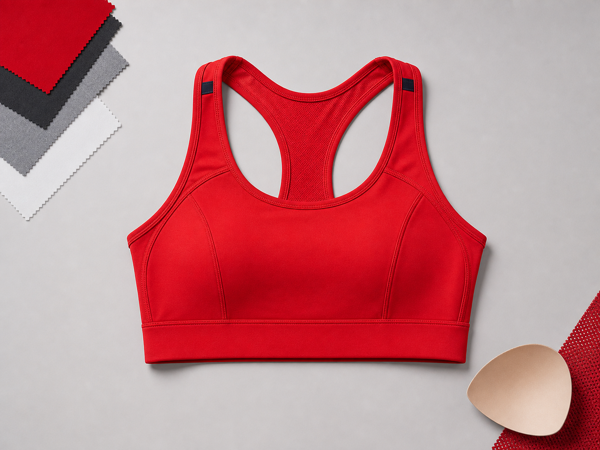
Fit decisions
Compression level, strap setup, neckline depth and support panel notes are clarified before sampling.
Send a sample, sketch, or photos. 16 pattern-makers return a graded tech-pack in 7-14 days — USD 220, ready for bulk.
16 pattern-makers·XS-5XL grading·USD 220 flat fee·7-14 days
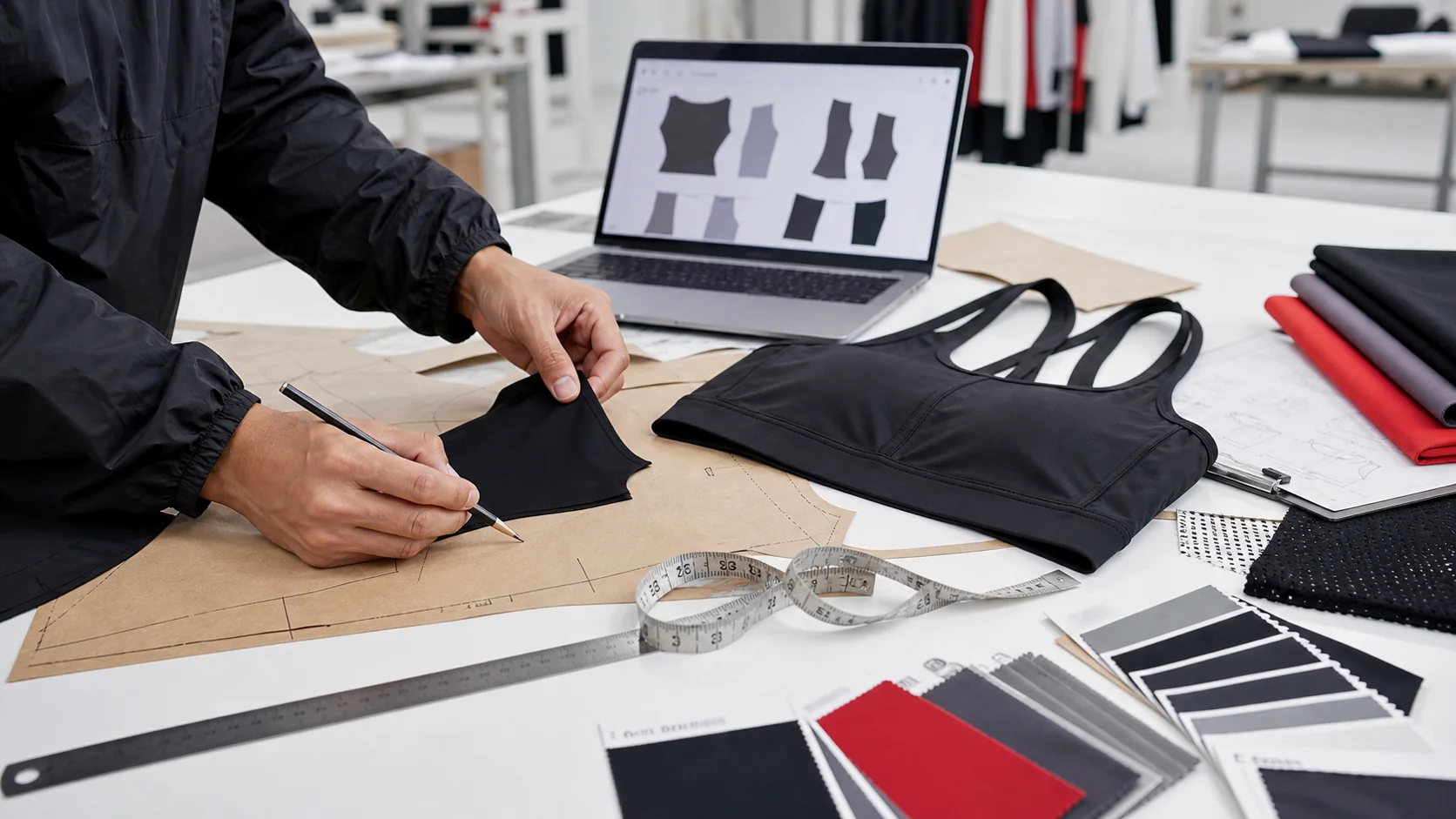
Sketches and reference photos are useful, but they do not tell the factory how to grade, stitch, trim or inspect the garment. This service converts the idea into a buyer-reviewable file: flat sketch, POM table, grading rule, construction notes and material/trim list.
Compression level, strap setup, neckline depth and support panel notes are clarified before sampling.
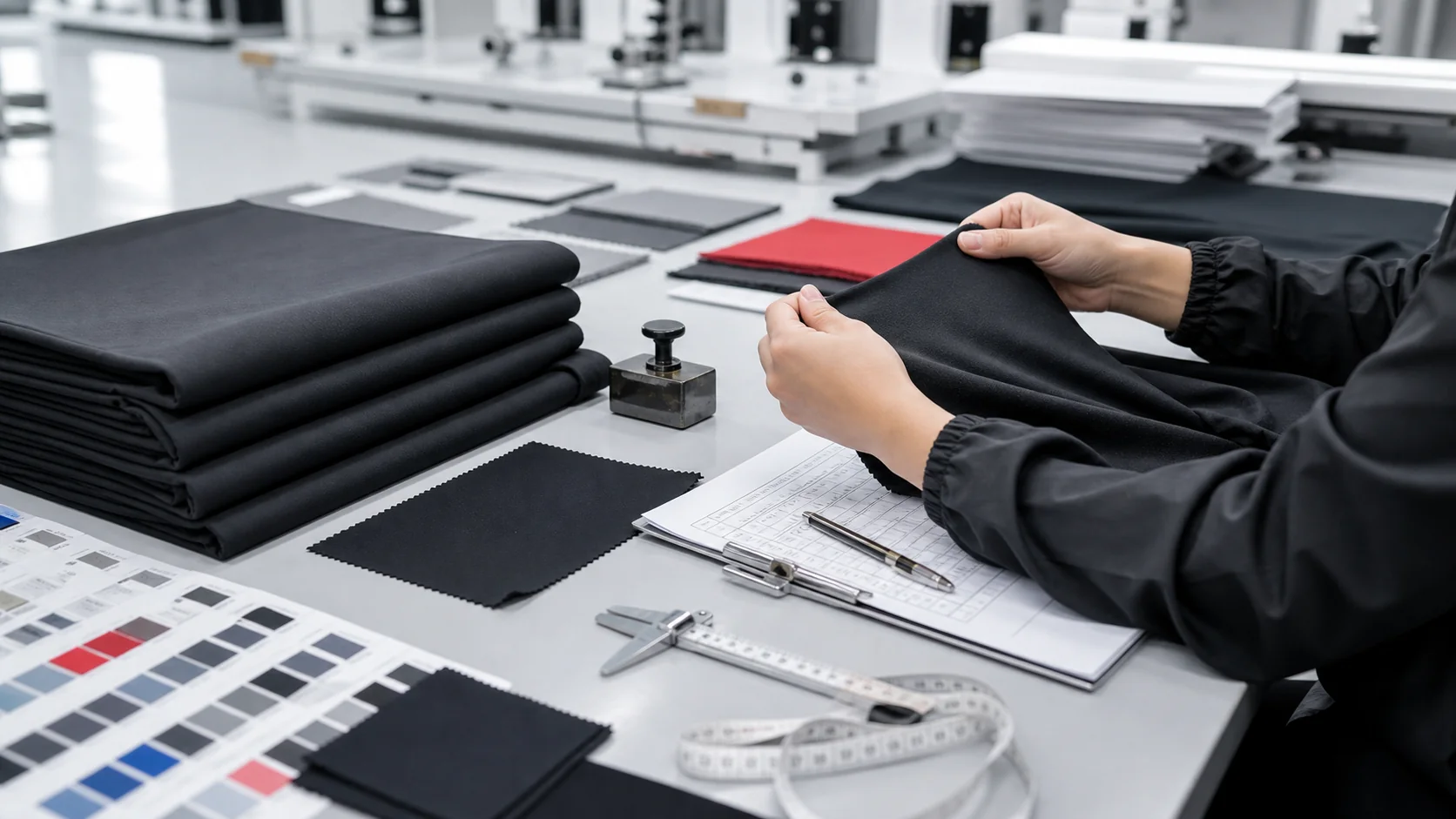
Fabric base, GSM target, stretch requirement and trim choices are written into the spec.
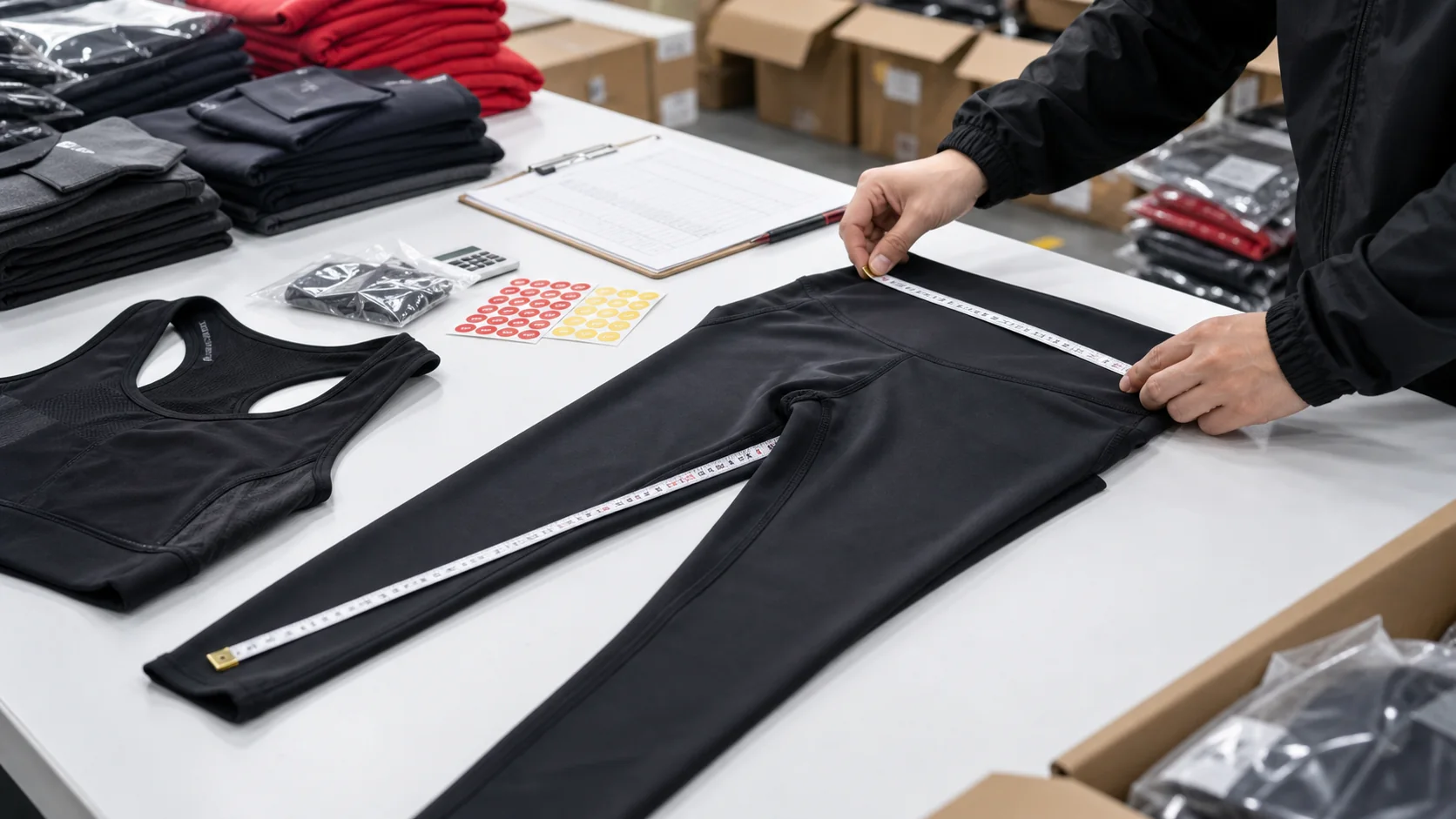
Measurement points are defined in a way QC teams can repeat during sample and bulk inspection.
One PDF + DXF bundle — open it and start cutting.
| Deliverable | File Format | Buyer Use Case | Who Uses It | Downstream Interface |
|---|---|---|---|---|
| Complete Tech-Pack | PDF (flat sketch front/back/detail + POM table + construction notes per seam + print placement coordinates) | RFQ pricing baseline · bulk QC contract reference · multi-factory quotation | Sourcing manager · buyer PM · QC lead | Any OEM factory's sales / sample / QC team (PDF universally readable) |
| Graded Pattern Set XS–5XL |
DXF (Gerber / Lectra / Optitex compatible) + paper backup | Cutting room reads directly · multi-factory portability · extended-sizing grading per buyer's size chart | Factory pattern team · cutting room operator | Any OEM cutting room (DXF is the industry interchange format) |
| Marker Layout | DXF + PDF/AI preview | Roll-width optimization · cost-per-piece input · 85%+ material yield target | Factory cutting room · sourcing manager | Cutting machine direct read + costing spreadsheet |
| Bill of Materials (BOM) | PDF + Excel · supplier-neutral references | Material sourcing · multi-supplier price comparison · production-planning buffer timing | Sourcing · material procurement · finance / cost modeling | Mill RFQ · trim vendor list · cost model input |
Input (sample / sketch / reference photos + measurements) → Service (16 pattern-makers · USD 220 flat · 7-14 days · one revision included · USD 40 per additional round) → Output (4 deliverables above) → Downstream (your OEM/sample/QC line, or any factory accepting DXF). DXF and BOM are portable by design — feed them into our OEM line directly, or run a sample first on the small-batch sampling track (5/12 working days) before bulk.
Sample, sketch, or photos with measurements. We confirm scope in one business day.
One of 16 pattern-makers drafts the flat sketch, grades XS-5XL, creates the marker, compiles the BOM. 5-10 working days.
Draft PDF for sign-off. One revision round included. Additional rounds: USD 40 each.
Pattern and BOM feed into our OEM line — or take the DXF files to any factory. The tech-pack is yours.
Three starting points — same production-ready output.
Ship a garment. We deconstruct, measure, rebuild digitally.
Best for: replicating a fit you already sell.
Hand-drawn scan, AI render, or PDF with base-size measurements.
Best for: designs that exist only on paper.
Photos plus a POM table (chest, waist, hip, inseam, sleeve).
Best for: "like this, but with changes."
USD 220
Pattern fee per style, one revision round included
7-14
Days from reference received to draft tech-pack
16
Pattern-makers on the activewear line
XS-5XL
Standard grading range
Pattern development looks like silence from the buyer’s side. This is the work filling that silence.
Your reference is measured or your sketch interrogated: intended fabric behavior, compression goal, target body. Ambiguities surface now, by email, while answers are still free.
The assigned pattern-maker starts from the closest proven activewear block rather than a blank screen — faster, and the resulting fit carries production history instead of theory.
The base size is graded with stretch-garment rules — activewear does not grade linearly the way wovens do — then the marker and material list are compiled against real supplier references.
A second pattern-maker reviews the file before it leaves the building. You receive a draft PDF with the revision round already budgeted — planned iteration, not failure.
Measurements without tolerances are unenforceable — QC cannot fail a garment against a number with no allowed range.
The fix: every POM row gets a plus-minus value.
A medium-only chart leaves every other size to guesswork, and stretch garments punish linear guessing at the curve’s ends.
The fix: explicit grade rules across the full range.
“Buttery soft, like the famous brand” is a mood, not a procurement instruction. Mills quote against numbers.
The fix: fiber content, GSM and stretch written as specs.
Seam types, stitch density, elastic spec and trim callouts decide durability — omit them and the factory’s defaults decide instead.
The fix: a construction note for every seam on the flat.
Iterating samples without a spec means each round tests a guess. Two avoided rounds repay the pattern fee in courier costs alone, before counting the calendar weeks.
Spec first converges; guessing oscillates.
When a delivered lot is contested, the tech-pack is the contract both sides measure against. Without one, a quality dispute is two opinions and a wire transfer already sent.
Paper protects the buyer more than the factory.
The DXF and BOM are deliverables you own and can take to any factory. The pattern file is portable by design — that portability is part of the tech-pack you paid for, not a feature we may revoke.
Portability is part of the product.