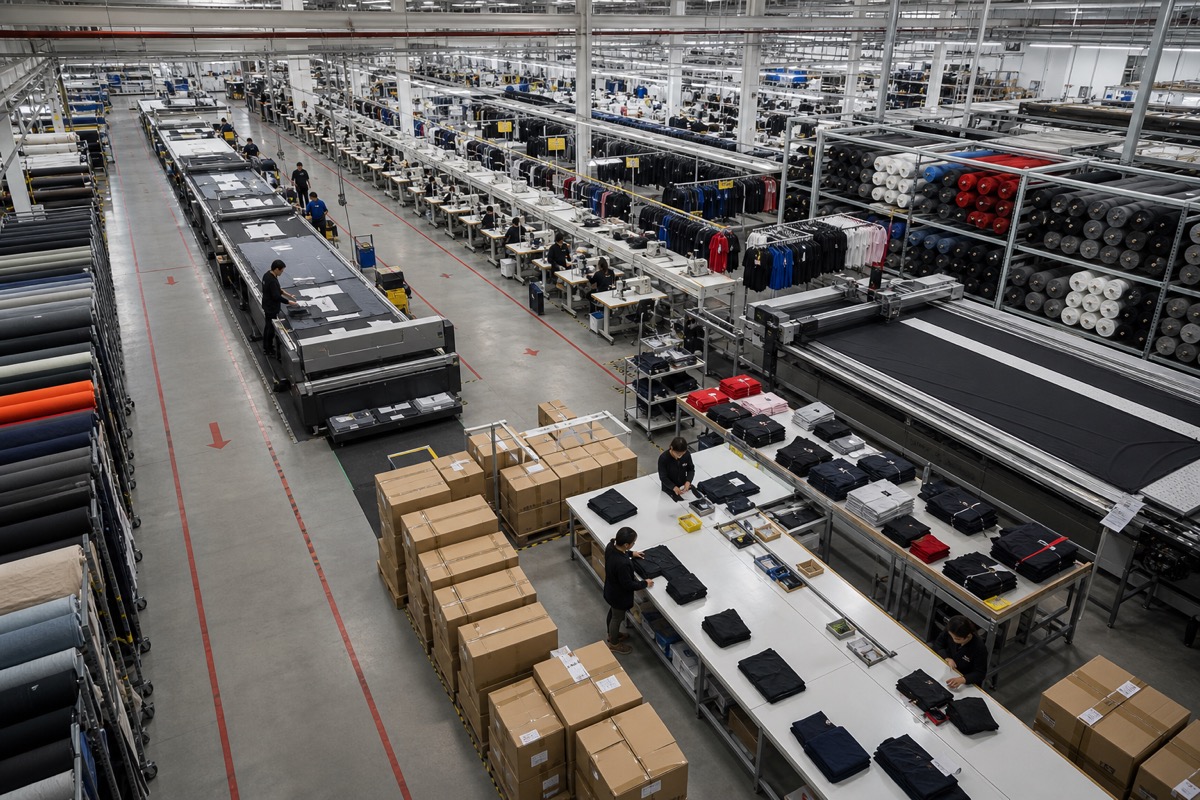
Line allocation
Bulk sewing line is reserved only after sample approval, fabric arrival and target shipment window are aligned.
Send your tech-pack and approved lab dip. We cut-and-sew to your spec across 12 production lines, run pre-shipment inspection against the published sampling plan, and ship FOB. MOQ 100 per SKU.
OEM orders fail when the approved sample, marker, trim file and packing rule live in different conversations. This track keeps each approval tied to the same style file before bulk cutting starts.
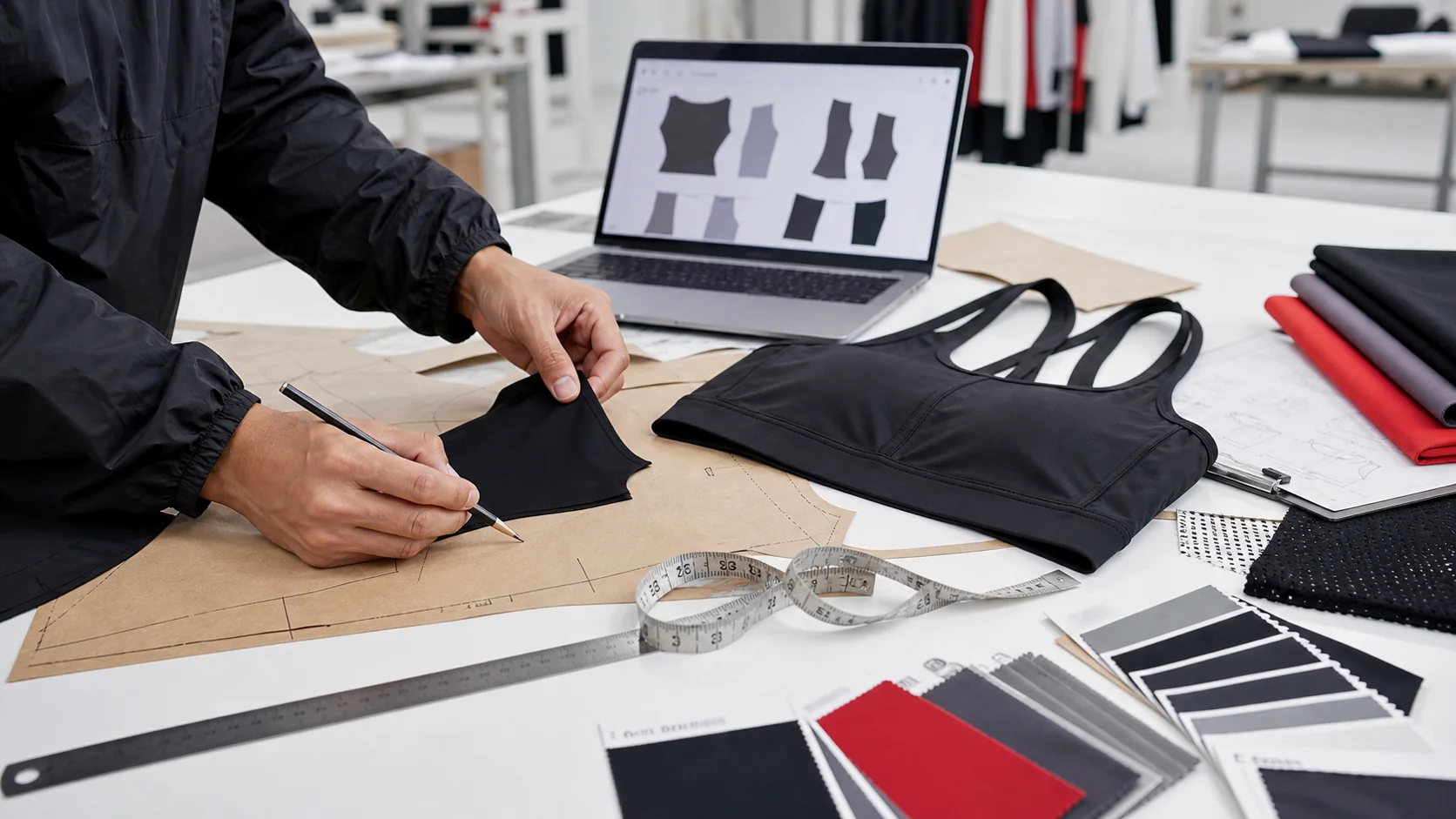
Bulk sewing line is reserved only after sample approval, fabric arrival and target shipment window are aligned.
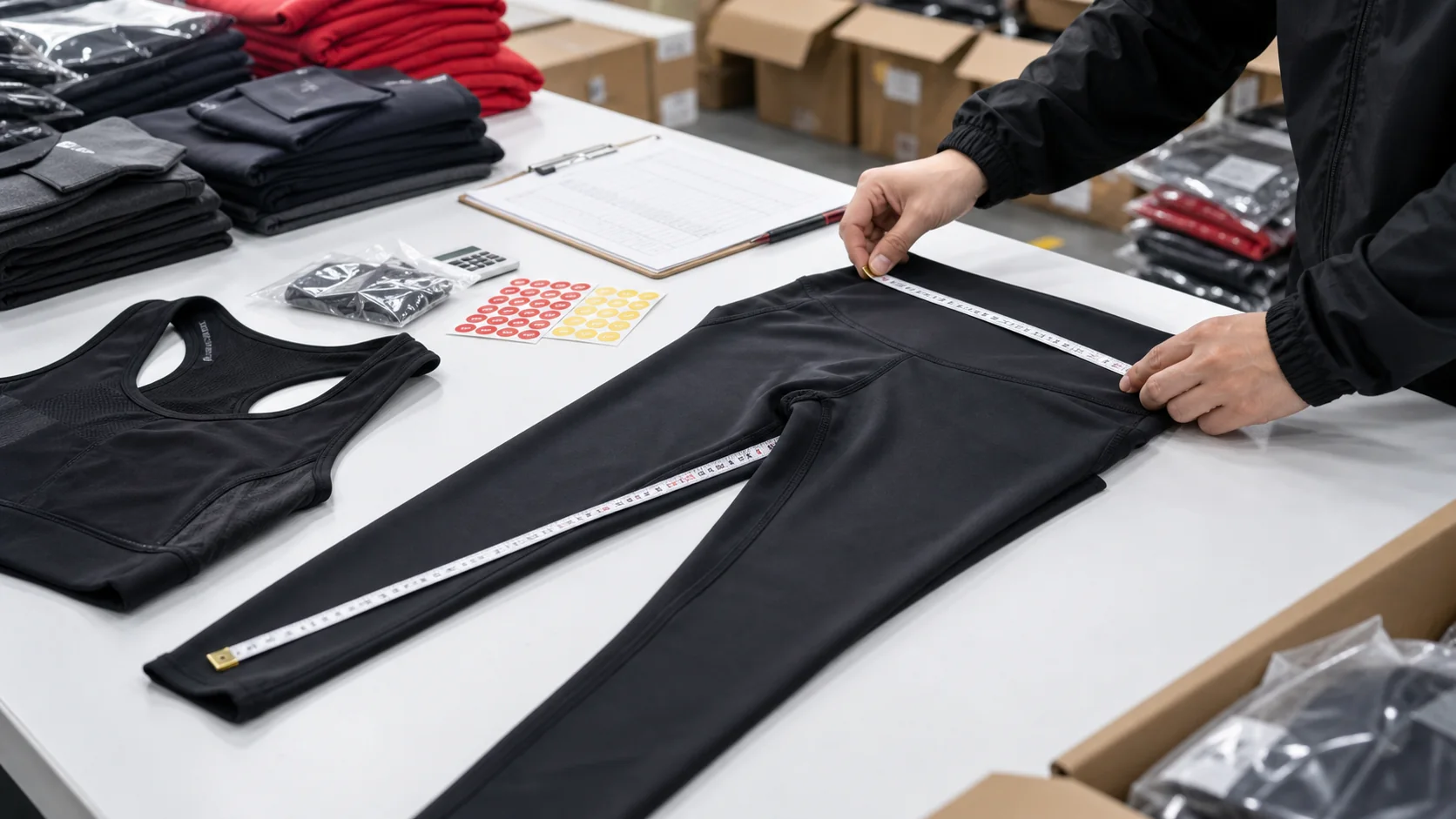
Inline and final checks focus on measurement tolerance, seam condition, shade consistency and packing count.
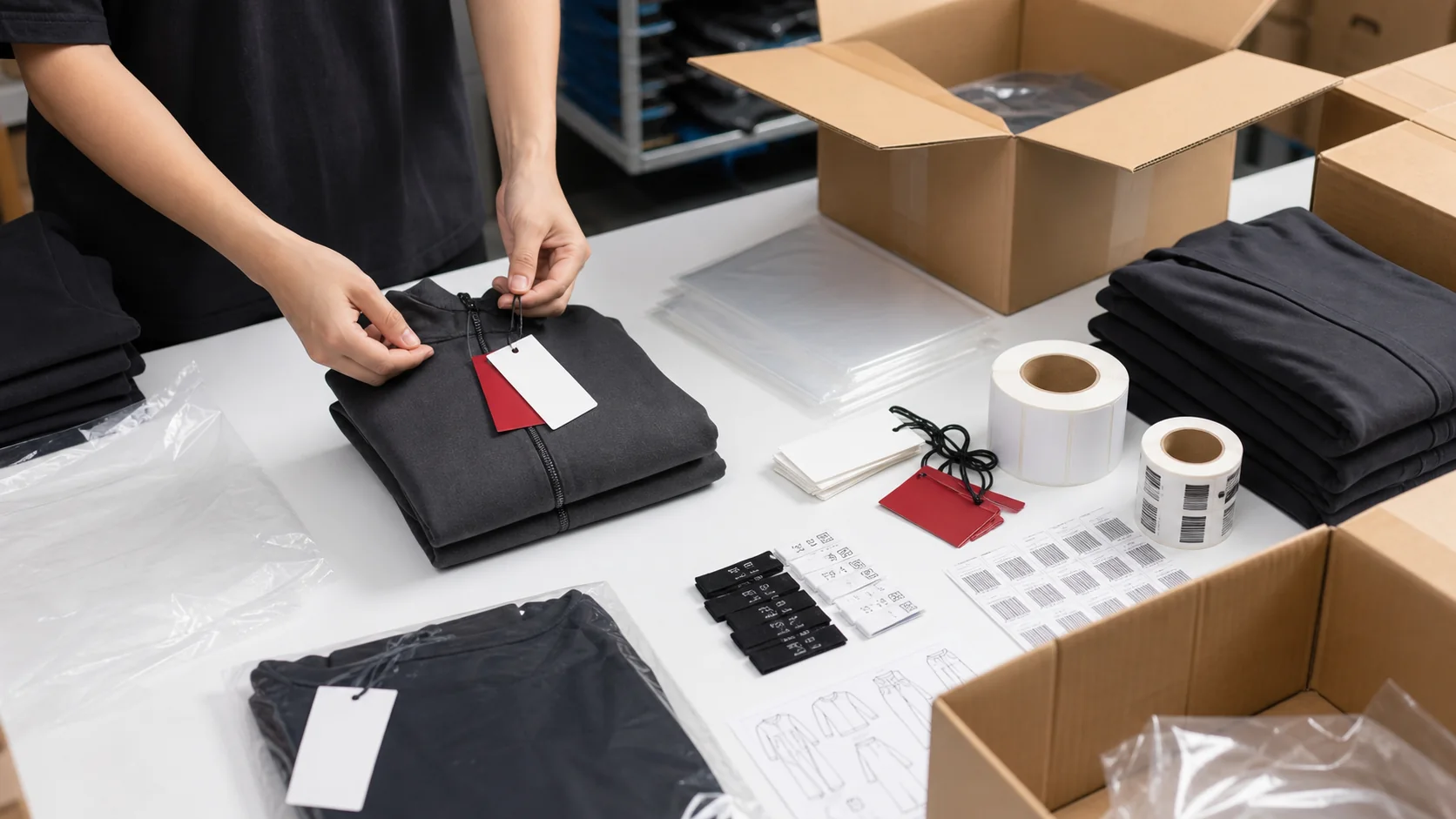
Hangtag, care label, polybag and carton mark are checked before final packing, not after cartons are sealed.
The five inputs below shape almost every per-piece OEM quote. Use this table to see what each lever does to price, what part of it you can push, and where pushing breaks the build.
| Lever | What it drives | Buyer levers to push | Where pushing breaks the build |
|---|---|---|---|
| Fabric & weight | Largest single cost block. Fiber content, GSM and certified content (e.g. recycled) set the floor; custom-developed fabric shifts the lead clock from the 35-42 stock track to the 48-58 custom track. | Choose stock-fabric SKUs first; switch synthetic blend ratios within spec; consider recycled content at parity GSM. | Requesting premium fabric performance at floor-mill pricing — substitution chain departs from the tech-pack spec and the sample no longer represents bulk. |
| Sewing minutes | Panel count, seam types and operations per unit translate into operator time. A six-panel bonded bra costs more minutes than a two-panel tee regardless of fabric. | Simplify panel count where the silhouette allows; consolidate parallel seams; remove decorative top-stitching that adds no functional value. | Removing structural seams (gusset, waistband foundation) to save minutes — the garment fails wear testing on the second or third use. |
| Decoration | Each placement adds a station pass. Method choice matters less than placement count — three small logos cost more than one large print. | Consolidate logo placements; pick a single decoration method per garment family; place artwork on flat panels rather than curved areas. | Stacking incompatible methods on the same panel (e.g. sublimation under DTG) — registration drifts in bulk and rejects spike. |
| Size-curve spread | Wide curve raises marker complexity and slight cutting waste. A 7-size spread quotes differently than a 4-size spread at the same total quantity. | Launch with a 4-size core curve; add extended sizes (XXL+) at re-order once demand data validates the addition. | Forcing extended-size grading on the first PO without demand data — slow movers tie up working capital and dilute margin. |
| Quantity tier | Setup costs amortize fast: the step from 100 to 500 pieces moves unit price far more than the step from 5,000 to 6,000. The tier table is shown in every quote. | Consolidate SKUs to fewer tiers above the inflection point (typically 300-500 per SKU); use blank-stock buffer for known re-orders. | Buying volume the brand cannot sell to chase tier pricing — inventory aging cost normally exceeds the tier savings within one season. |
Rows are ordered by typical impact on FOB. Specific tier breakpoints sit on the per-quote table we send back with the per-SKU MOQ split (MOQ policy details).