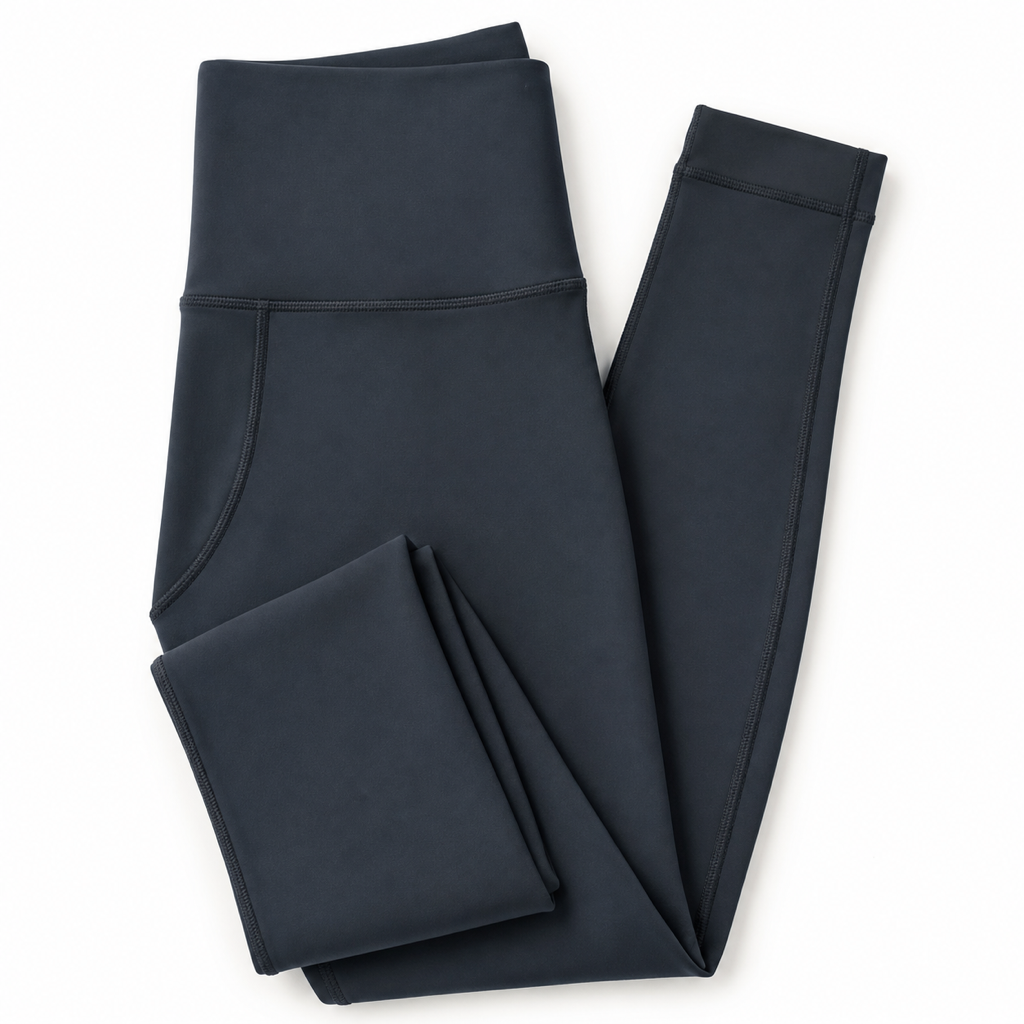
Yoga Leggings
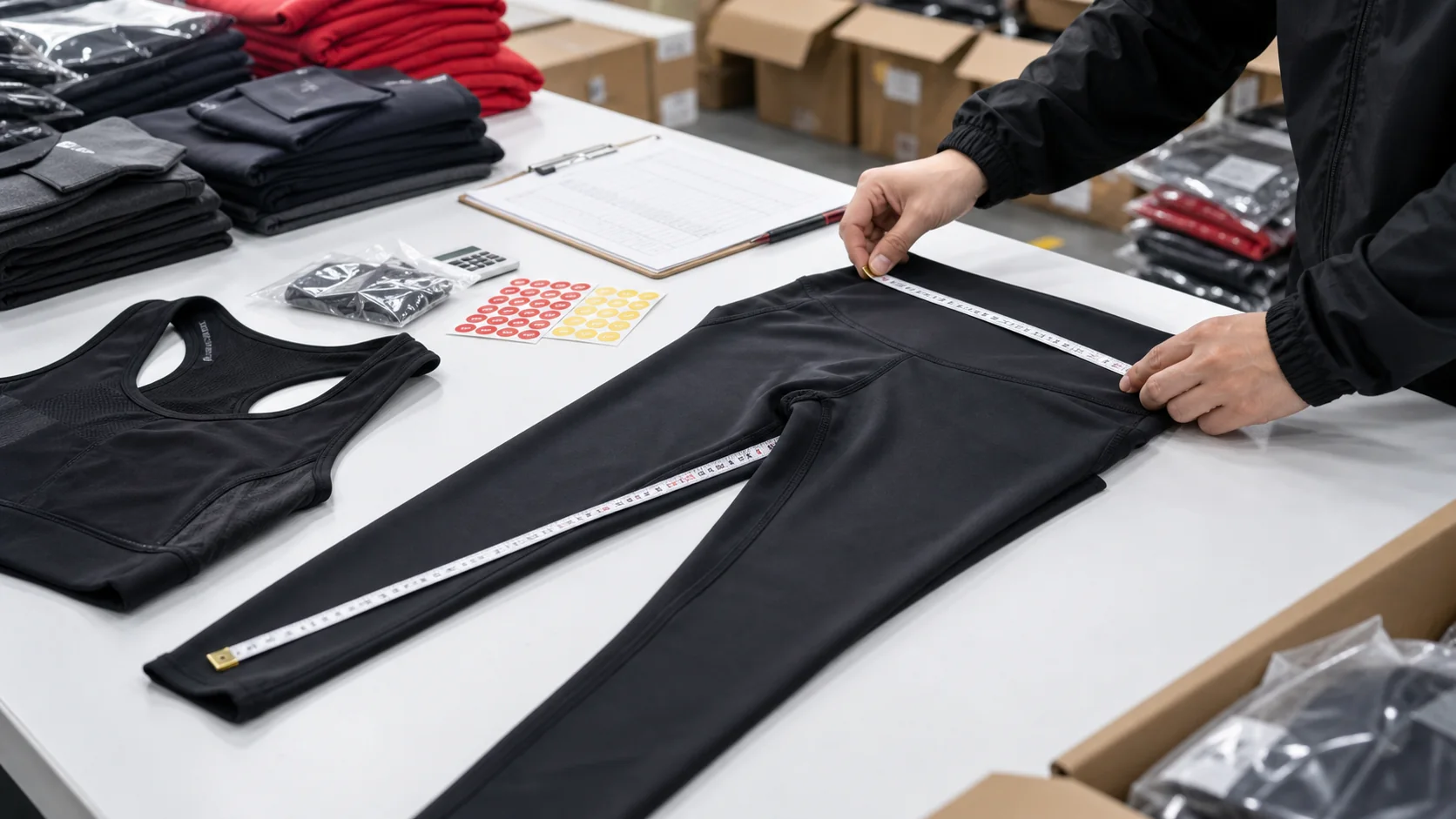
High-rise, 7-8 length, full-length, and cropped fits. Squat-proof opacity from 280 GSM up.
View leggings spec →Send your reference leggings and tech-pack. We benchmark them on three measurable lines — stretched-opacity ΔL, 50-cycle elastic recovery, and per-lot Pantone ΔE reading — and those readings get locked on the sample sheet ahead of bulk cutting.
Five yoga-specific cuts. Each spec’d against a different practice intensity and silhouette.
High-rise, 7-8 length, full-length, and cropped fits. Squat-proof opacity from 280 GSM up.
View leggings spec →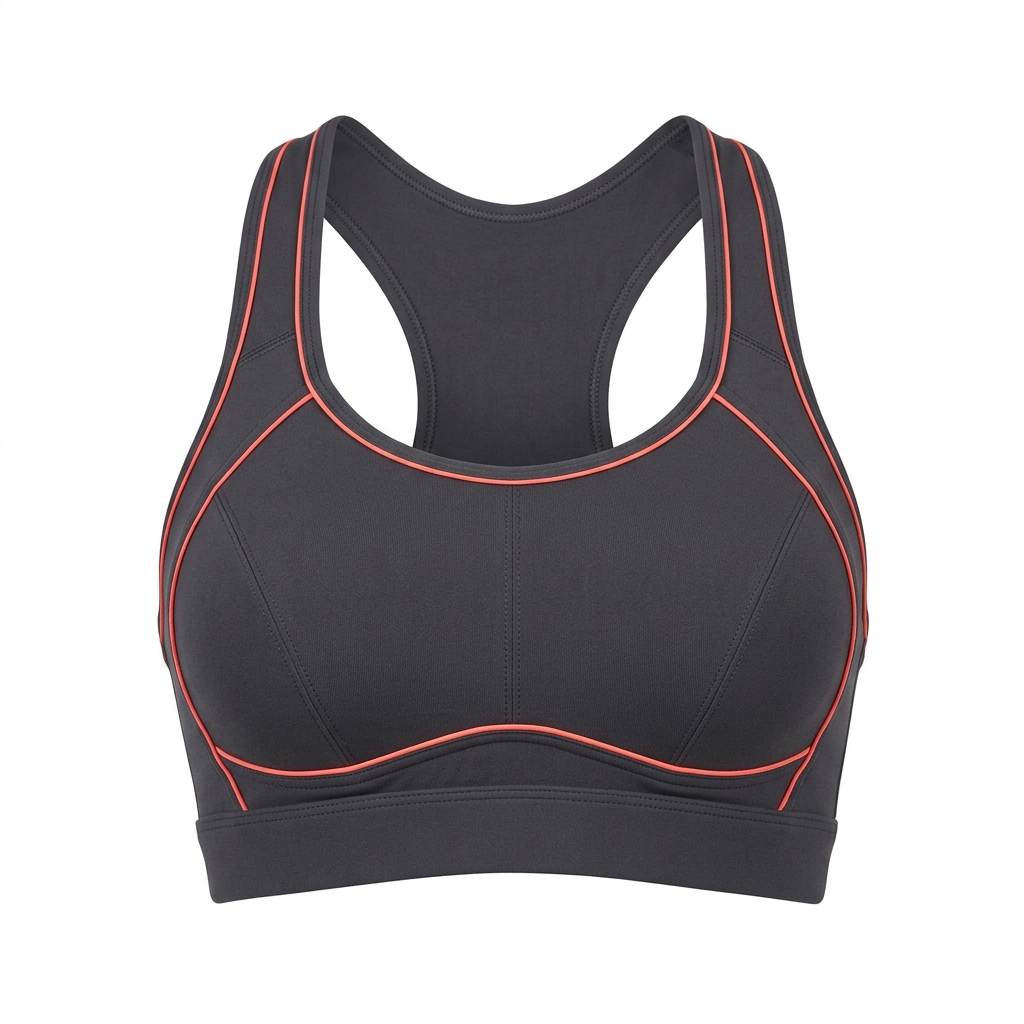
Low, mid, and high impact. Removable pads, racerback or strappy back.
View sports bra spec →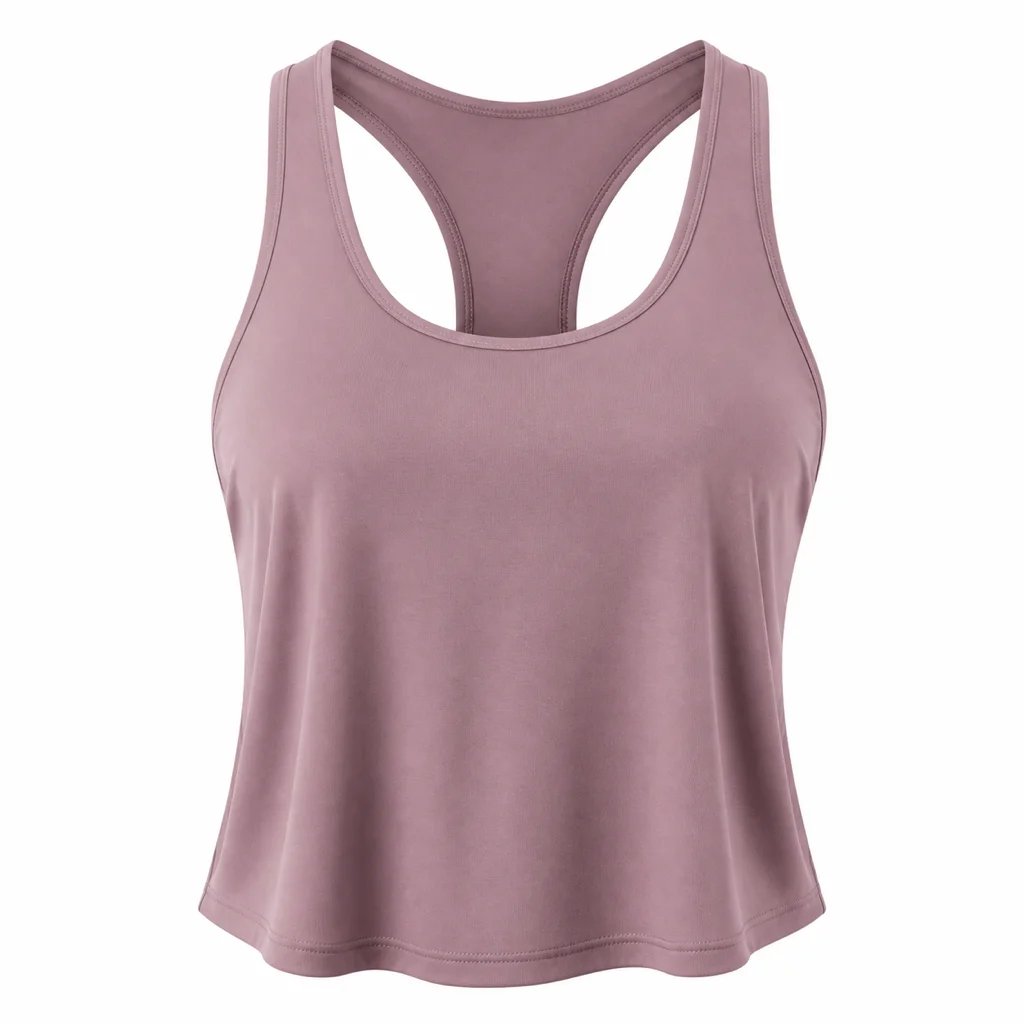
Racerback, strappy, cami, and cropped silhouettes for low-impact flows.
View tank spec →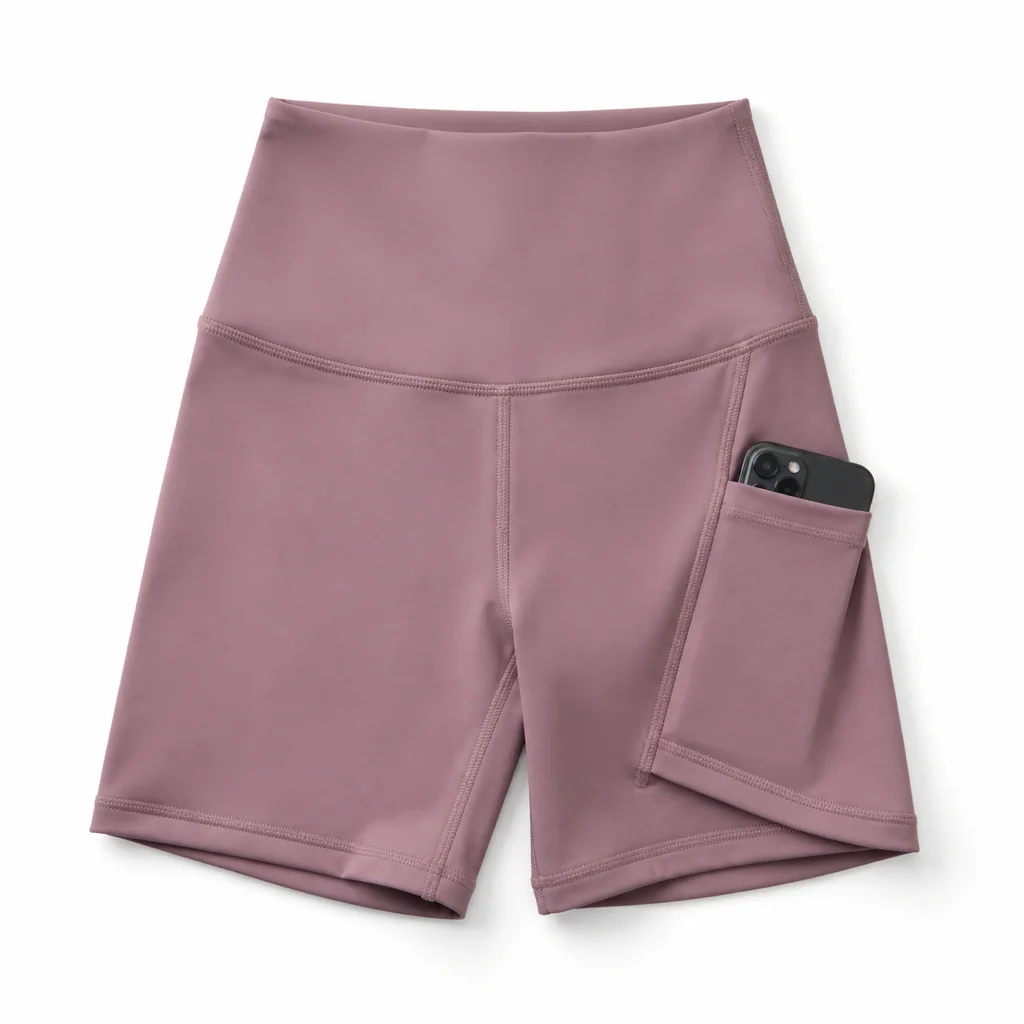
Bike short, high-waist, lined, and pocketed cuts for hot yoga and HIIT crossover.
View shorts spec →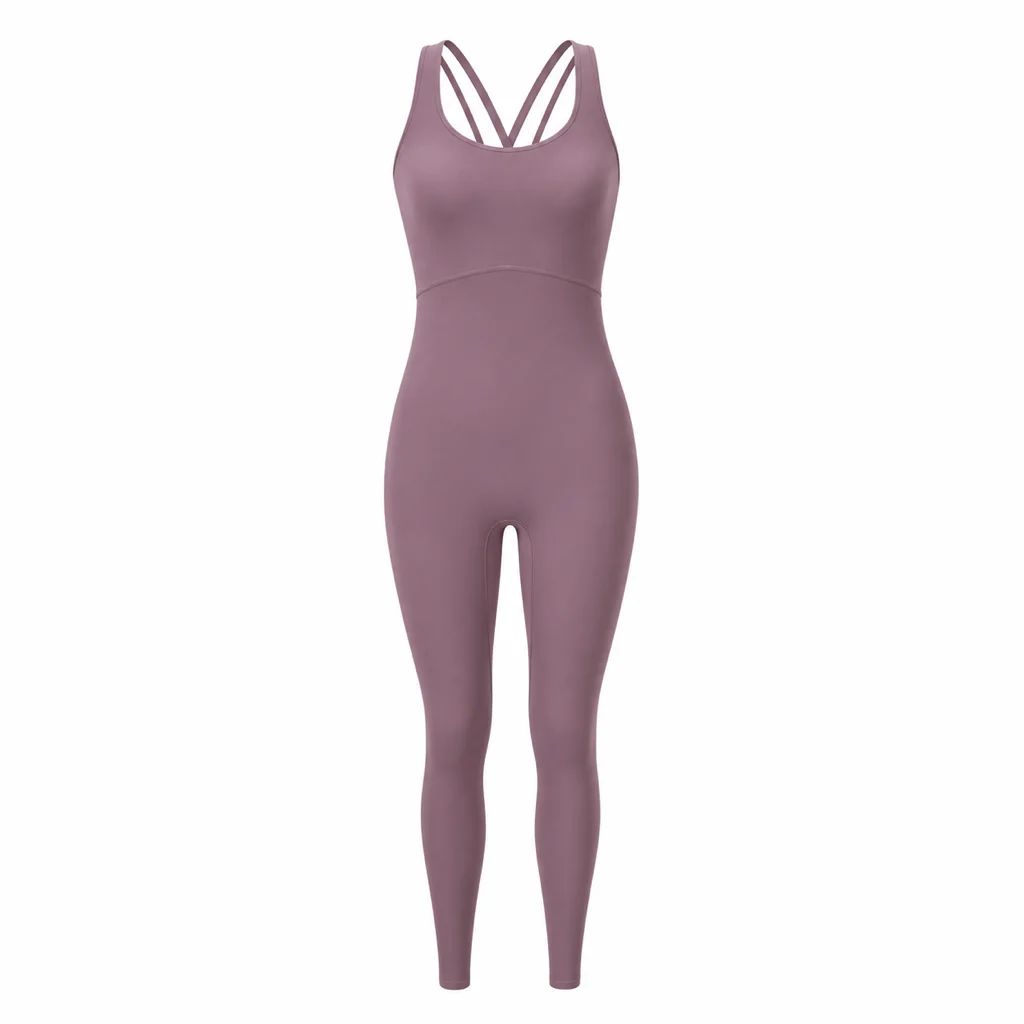
Full-length 1-piece, cropped 1-piece, and strappy-back unitards. Bonded seams throughout.
View bodysuit spec →Six leggings fits cut and graded on separate blocks — compression through wide-leg — so a buyer’s full legging matrix ships from one floor under one dye batch per PO.
Tightest hold, 18–22% spandex, sculpts through deep squats.Performance & HIIT lines
Contour-seamed shaping with firm hold, 16–20% spandex.Shape-focused athleisure
Soft mid-hold, 12–16% spandex, all-day comfort.Lounge-leaning yoga
Fitted thigh, flared hem, studio-to-street silhouette.Trend-led capsules
Loose drape, mid-rise drawcord, palazzo flow.Relaxed & restorative
Circular-knit, bonded edges, second-skin feel.Minimal-seam lines
Cut-and-sew fits run on our 5 cut-and-sew lines; seamless runs on a circular-knit line. Cut-and-sew and seamless share one dye-house per PO so a coordinated set stays in one Pantone lot.
The silhouette library of a high-waisted leggings manufacturer — every block already patterned and graded, so your fabric and branding drop into a fit that exists.
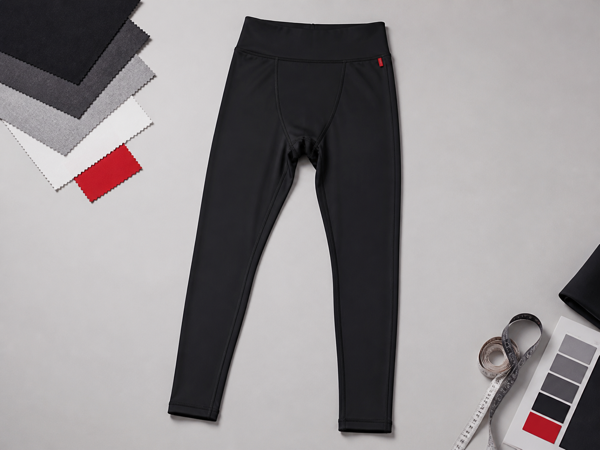
280–320 GSM compression · 28″ inseam · no-roll high-rise · all-day staple.
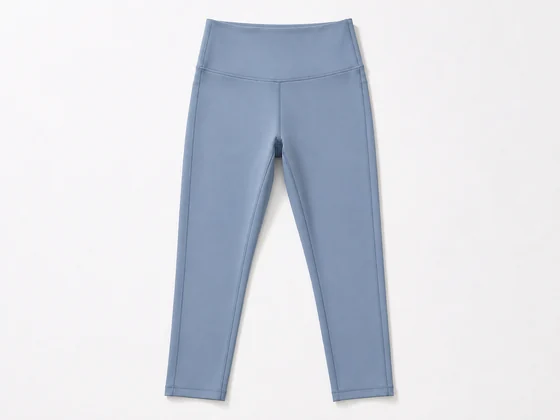
260–300 GSM · 25″ inseam · high-rise · vinyasa and training.
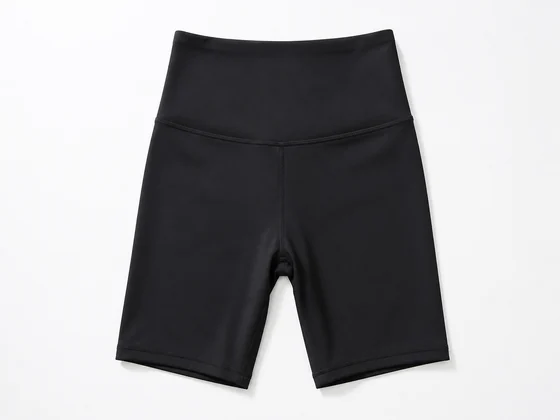
280–320 GSM · 5″ inseam · high-rise · hot yoga and layering.
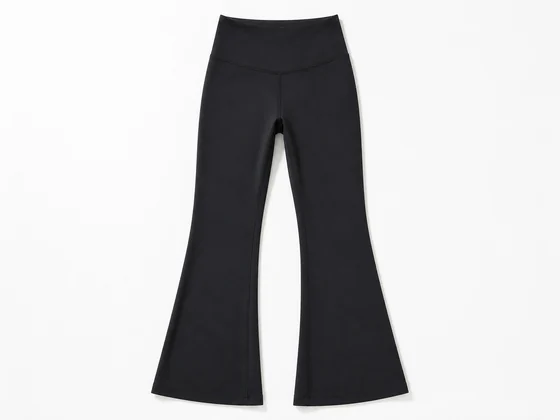
240–280 GSM · 30″ inseam · fitted thigh, flared hem · studio-to-street.
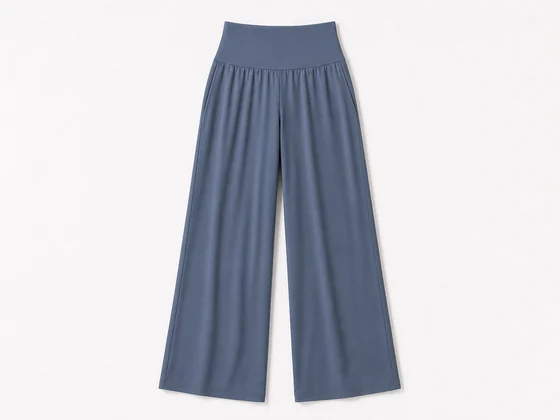
230–260 GSM · full-length · mid-rise drawcord · relaxed flow.
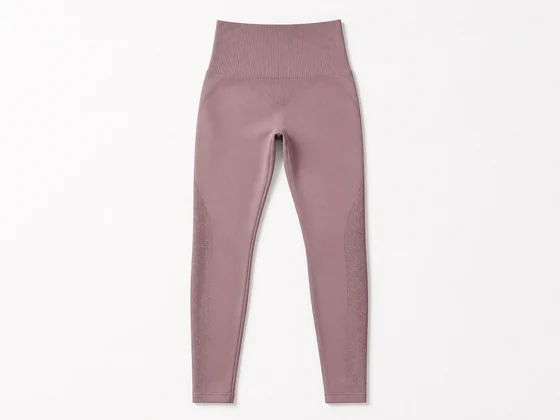
250–290 GSM circular-knit · 25–28″ · bonded waistband · second-skin feel.
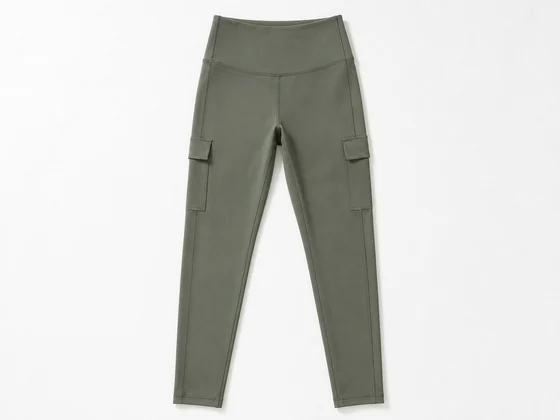
280–310 GSM · 25–28″ · side cargo + hidden waist pocket · utility.
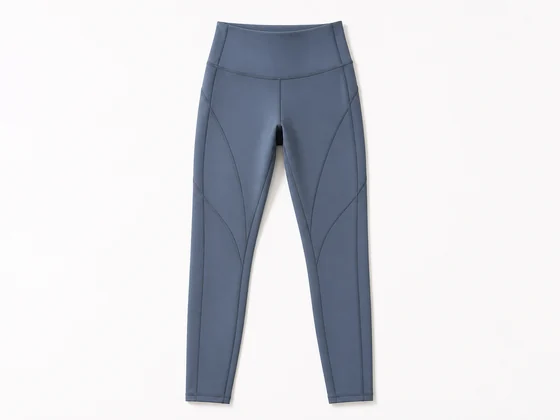
280–320 GSM · 28″ · contour back seaming · shaping.
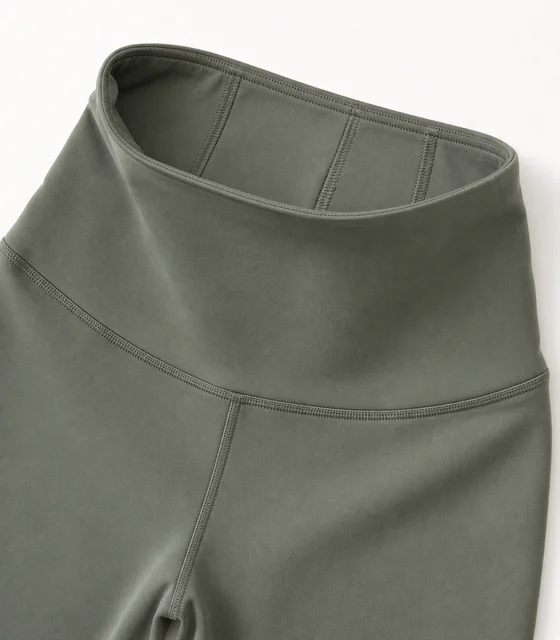
The waistband is the buy decision for any compression leggings manufacturer. Here is every build option — and the gusset and seam work underneath.
| Option | Choices |
|---|---|
| Rise (front) | low 18 cm · mid 22 cm · high 26 cm · extra-high 30 cm |
| Band width | 8 cm · 12 cm · 15 cm contour |
| Inner build | fold-over casing · bonded no-roll inner · power-mesh tummy panel |
| Extras | flat drawcord · hidden key pocket · back zip pocket · contour seaming |
Why rise height dictates the inner build: a 26–30 cm extra-high front rise puts the band above the natural waist, where a plain folded casing will always roll on forward bends. That is why our extra-high blocks default to the bonded no-roll inner or a power-mesh front panel, while an 18 cm low rise can run a simple fold-over. The rise you pick is a structural decision, not a styling one — our 16 pattern-makers pattern the band, rise, and gusset placement together so the waist behaves as one system through a full vinyasa sequence.
Gusset geometry, briefly: the diamond gusset exists to remove the four-seam junction at the crotch — the single highest-stress point in a legging. By inserting a curved panel, load spreads along two seams instead of converging on one knot, the front stays seam-free, and deep flexion stops pulling the inseam off-grain. On plus blocks we widen and re-curve the gusset rather than scaling it, which is why our 2X–3X legging squats like the sample.
Send your fit list and target fabric. Your waistband build and gusset call come back inside one working day.
Request a fit + fabric matchBiker to tall, XS to 3XL — graded on separate blocks so the plus sizes fit like the sample, not a stretched medium.
Grading method. We grade XS–3XL on three blocks, not one linear rule — a base block (XS–XL), a separate plus block (1X–3X with proportional rise, gusset, and waistband-to-hip grading), plus petite (−2.5 cm height) and tall (+5 cm height) blocks on request.
Why it matters. Linear grading from a medium sags the crotch and rolls the waistband at 2X–3X. Separate blocks hold the fit your sample promised across the full range.
| Size | Waist (cm) | Hip (cm) | Full inseam (cm) |
|---|---|---|---|
| XS | 60–64 | 84–88 | 71 |
| S | 64–68 | 88–92 | 71 |
| M | 68–74 | 92–98 | 71 |
| L | 74–80 | 98–104 | 72 |
| XL | 80–88 | 104–112 | 72 |
| 2XL | 88–98 | 112–122 | 73 |
| 3XL | 98–108 | 122–132 | 73 |
From a seamless leggings manufacturer’s circular-knit to squat-proof compression, every fit is mapped to its fabric tier, opacity, and stretch — measured before the first bolt is cut.
| Fit | GSM | Spandex | Stretch elong. | Squat-proof ΔL | Fabric | Wicking |
|---|---|---|---|---|---|---|
| Compression | 280–320 | 18–22% | 65%+ | <8% | nylon-spandex, Lycra T-400 | High |
| Sculpt | 260–300 | 16–20% | 60%+ | <8% | poly-spandex, bonded | High |
| Relaxed | 230–260 | 12–16% | 55%+ | <10% | modal-spandex | High |
| Flare | 240–280 | 14–18% | 55%+ | <9% | poly-spandex | Mid-high |
| Wide-Leg | 230–260 | 10–14% | 50%+ | n/a (loose) | modal-poly | High |
| Seamless | 250–290 | 16–20% | 70%+ | <8% | nylon circular-knit | High |
Opacity and elongation get bench-tested on every incoming roll, not assumed from the mill sheet. For the deeper four-way stretch fabric engineering behind these knits, see our training-and-performance leggings line page.
Above: fit-driven specs (how each leggings fit is constructed). Below: practice-driven specs (which fit suits which yoga style).
Hot yoga demands ultra-light wicking. Power vinyasa demands squat-proof opacity. We spec the fabric to the practice.

High-sweat, low-impact, room at 90–105°F. Apparel built for max wicking and minimal volume.

High-flow with deep stretches and transition-heavy sequences. Apparel needs hold and opacity in deep squats.
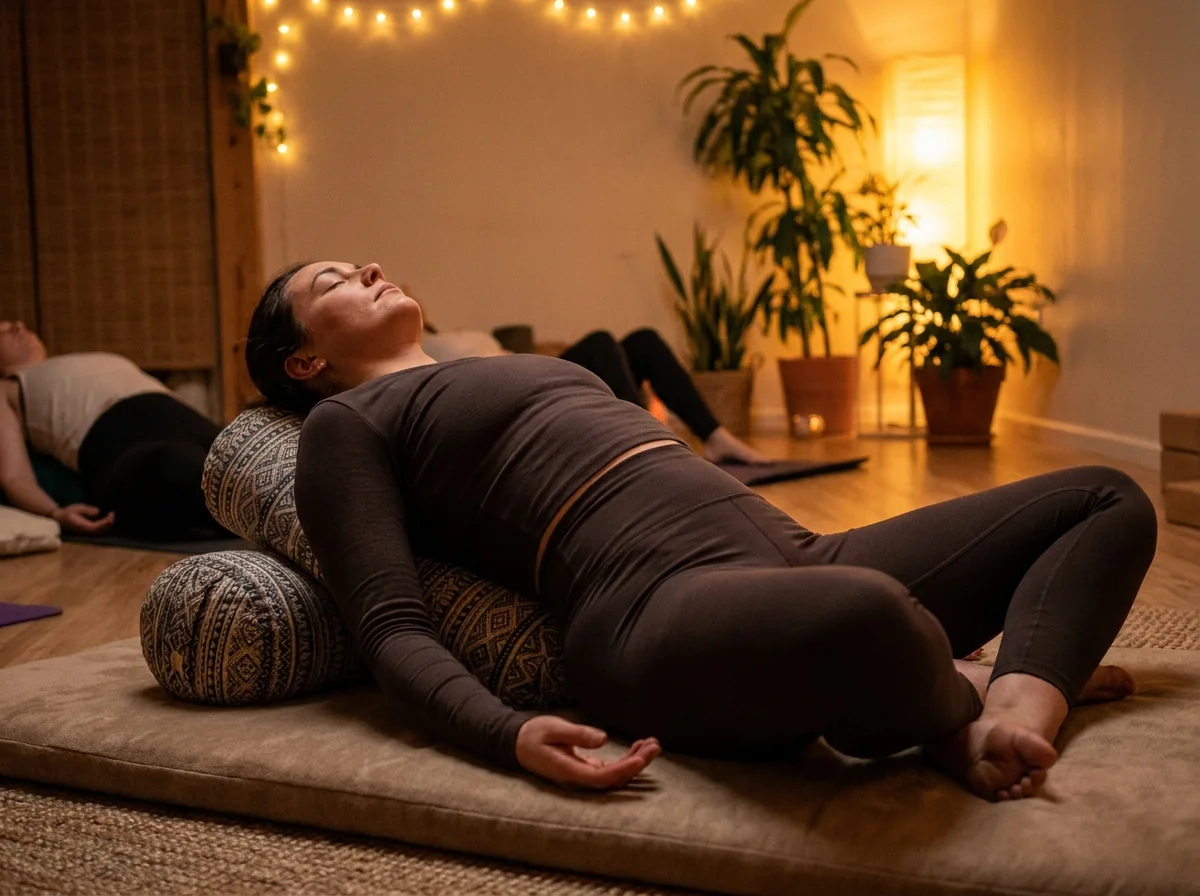
Low-impact, long holds, props-heavy. Apparel prioritizes soft hand and quiet stretch over compression.

High-impact, sweat-heavy, jumping and explosive sequences. Apparel needs lock-in and bonded seams under load.

High-rise coverage, gentle compression, and modesty across changing bodies. Apparel adapts pre and post.
Four-way stretch is a recipe, not a label. Each yoga tier carries its own fiber ratio, knit build, warp and weft elongation target, and 50-cycle recovery line — tuned per SKU instead of stamped on every bolt.
| Yoga tier | Fiber recipe | Knit build | Warp elong. | Weft elong. | 50-cycle recovery | Per-SKU calibration lever |
|---|---|---|---|---|---|---|
| Compression Power vinyasa, HIIT | 18–22% Lycra T-400 / T-462 + nylon filament | Tight-loop jersey, high density | 65%+ | 60%+ | ±5% elongation loss | Raise elastane share to lift recovery; raise GSM to lift opacity |
| Mid-weight General vinyasa, all-day | 14–18% Lycra + poly-spandex | Standard jersey, balanced density | 55%+ | 50%+ | ±5% elongation loss | Trade GSM for hand feel without losing stretch return |
| Lightweight Hot yoga, summer line | 8–14% spandex + recycled-poly filament | Open-loop jersey, max wicking | 45%+ | 40%+ | ±6% elongation loss | Tune filament gauge for breathability without going sheer |
| Seamless Bodysuit, circular-knit | 16–20% Lycra + nylon filament | Circular-knit, programmed density zones | 70%+ | 65%+ | ±5% elongation loss | Shift density zones per panel instead of cut-and-sew patterning |
Yoga buyers walk in carrying three identical complaints: opacity that fails in deep squats, color that drifts across reorders, and elastic that collapses mid-season. The in-house lab pass line for each is published below.
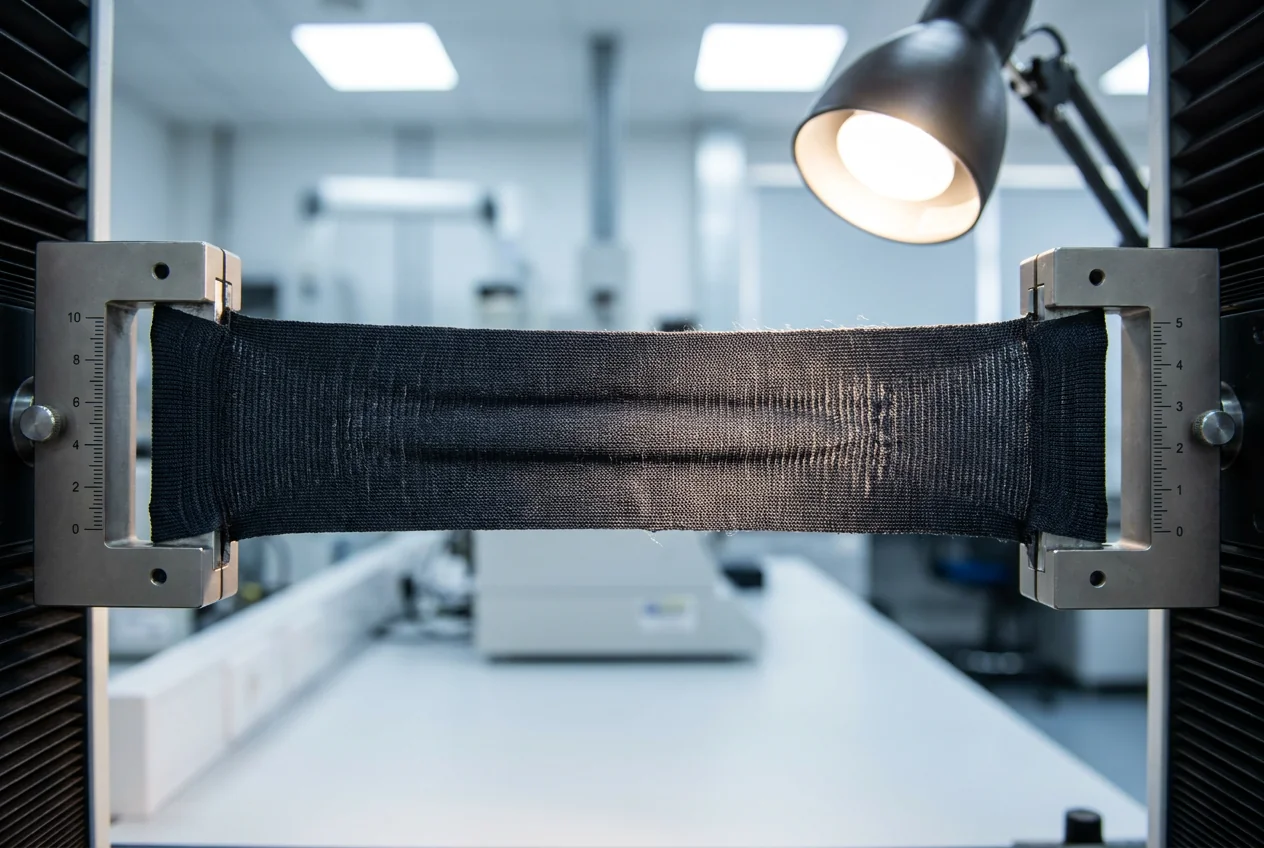
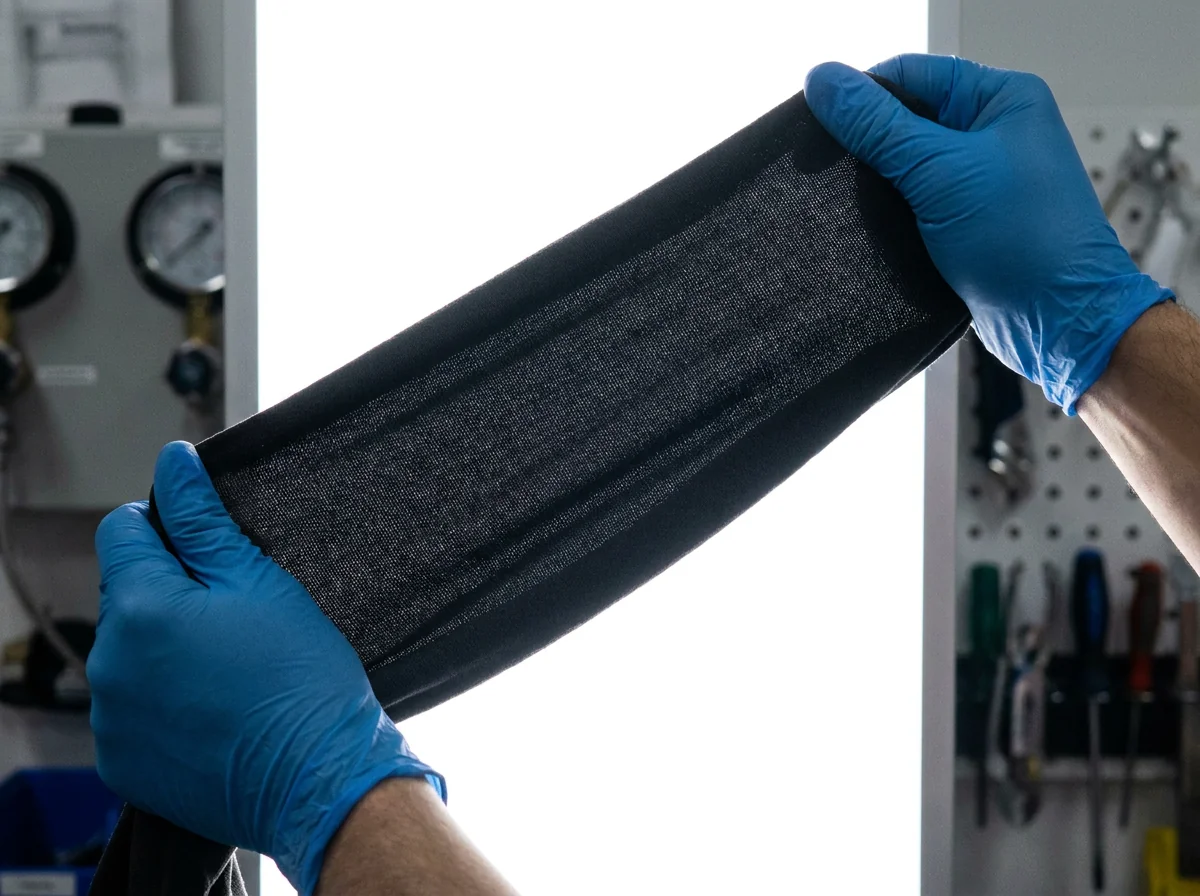
Returns spike when incoming buyers audit a competing factory’s leggings: pre-cut fabric measuring at 230 GSM despite a 280 GSM tech-pack, and ΔL stretched-opacity readings sitting in the mid-teens. The fix is a hard pre-cut gate, not a finished-garment re-test that arrives too late to substitute.
280–320 GSM squat-proof tier. Opacity ΔL <8% test on every fabric lot, pre-cut. AQL 2.5 first-piece QC at production start. Opacity log included in your pre-shipment package.
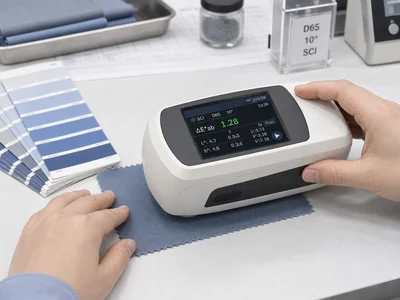
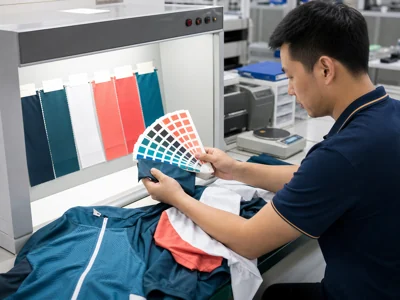
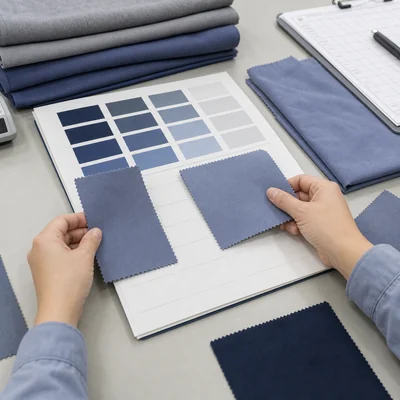
PO-to-PO ΔE drift above 3.0 is visible side-by-side under daylight, and brands lose repeat-customer trust over a half-shade change the buyer can see. The root cause is missing per-lot spectrophotometer reading at the fabric stage, not a finished-garment re-shade.
ΔE ≤ 1.5 published commitment — not contract-only. Spectrophotometer reading per fabric lot in your pre-shipment package. Higg FEM dye-house traceability (HIG-FEM-2024-CN-08, score 82/100).
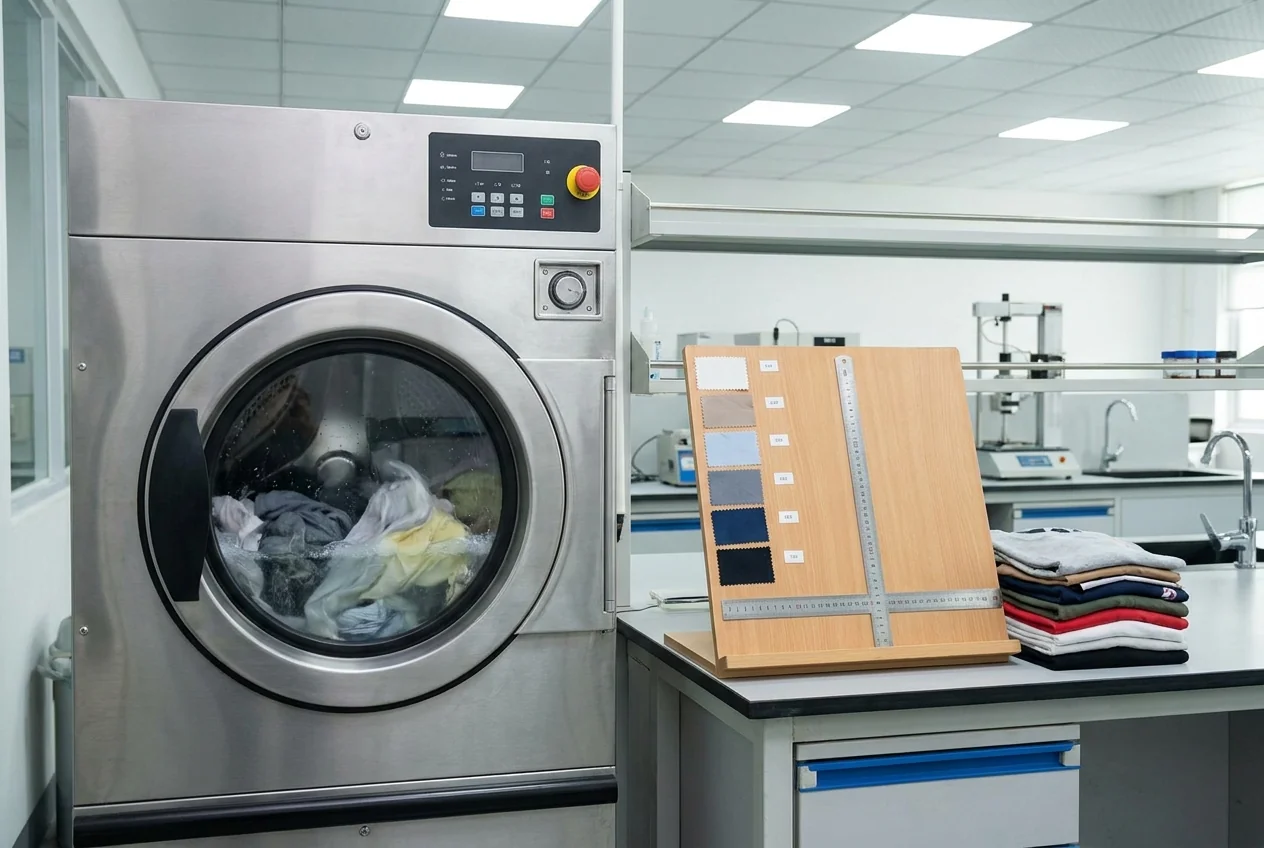
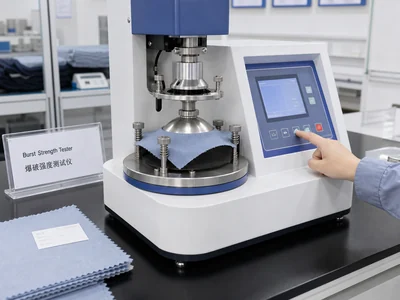
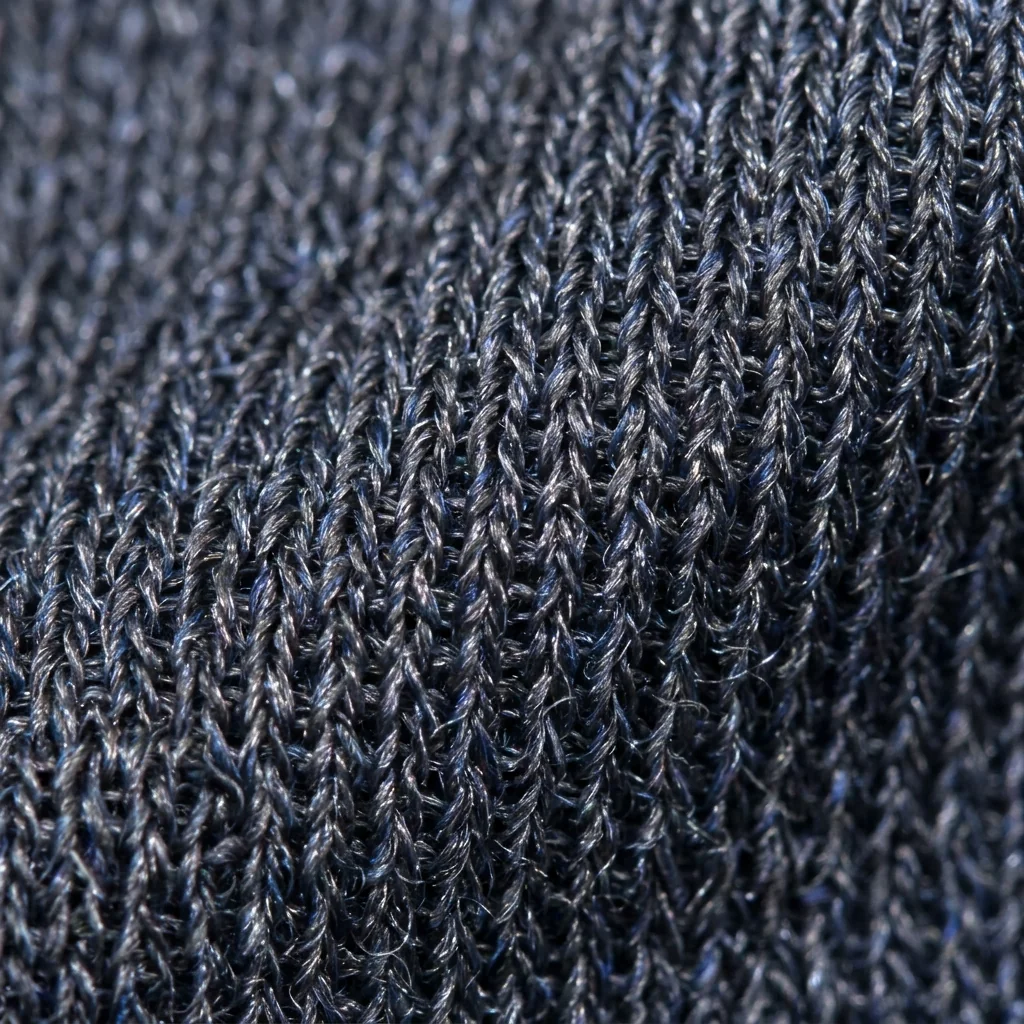
After a season of washes, knees round out and waistbands sag when commodity-grade spandex is substituted for Lycra-equivalent. The elastic recovery line drops below what a returning customer expects, and the line stops reordering before the next colorway lands.
Lycra T-400 or T-462 grade spandex only, 18–22% content. 50-cycle wash-recovery test on your sample with recovery within 5% of initial elongation as the pass line. 4-needle flatlock plus bartack reinforcement at waistband, knee, and gusset stress zones.
Send your tech-pack, reference sample photo, or just describe what you need. We match it against the floor schedule and confirm fabric construction and stretch spec within one business day.
Three production models for three commitment levels. Pick the one that matches where you are.
Full tech-pack execution with stretch-fabric handling built into every line step.
Best for: Established brands with finished tech-packs and existing buyer base.
View full OEM process →50+ yoga block patterns. You customize color, print, and labels.
Best for: New brands without a tech-pack, or established brands testing a new category.
View ODM options →Our existing yoga blanks, your hangtag, care label, and packaging.
Best for: Founders racing to first PO or testing a side capsule fast.
View private label options →Five steps. Two are yoga-specific. None are negotiable.
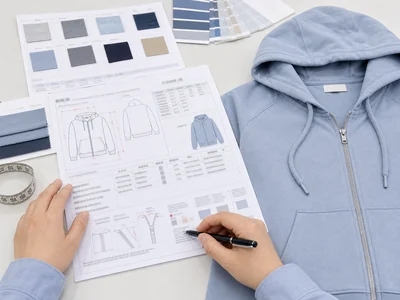
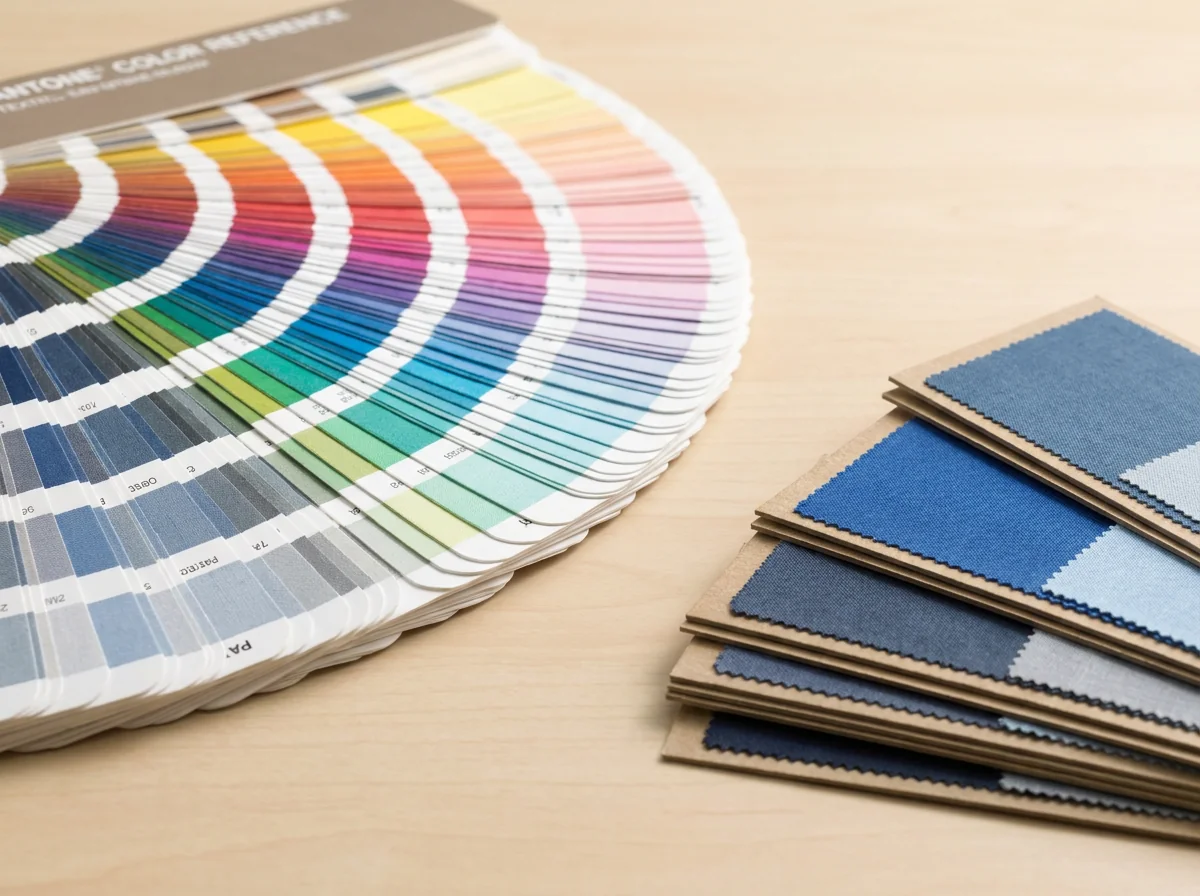
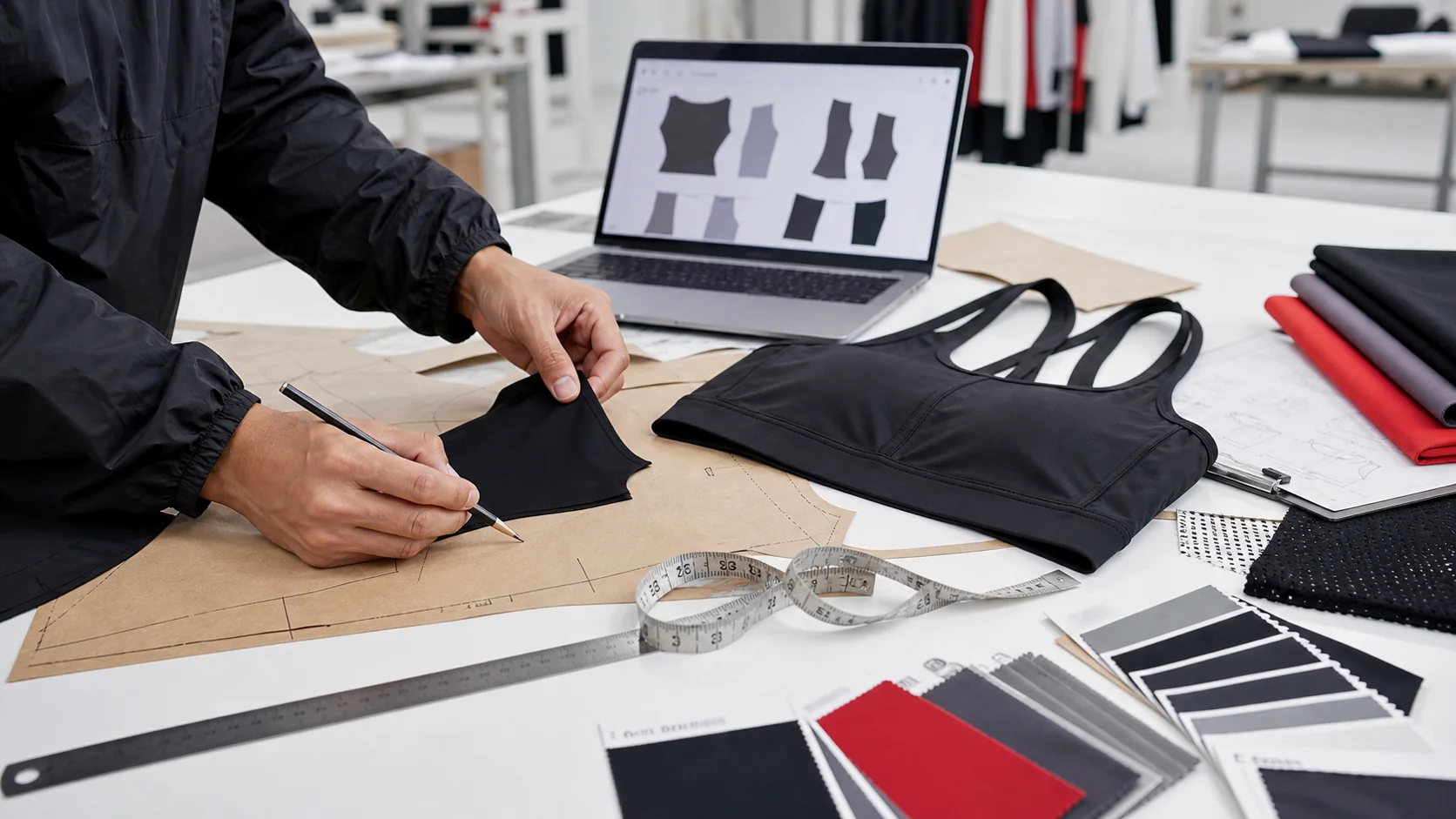
Submit your tech-pack, reference photo, or sketch with Pantone references. We confirm fabric availability, flag construction concerns, and call out stretch-direction implications before any pattern work.
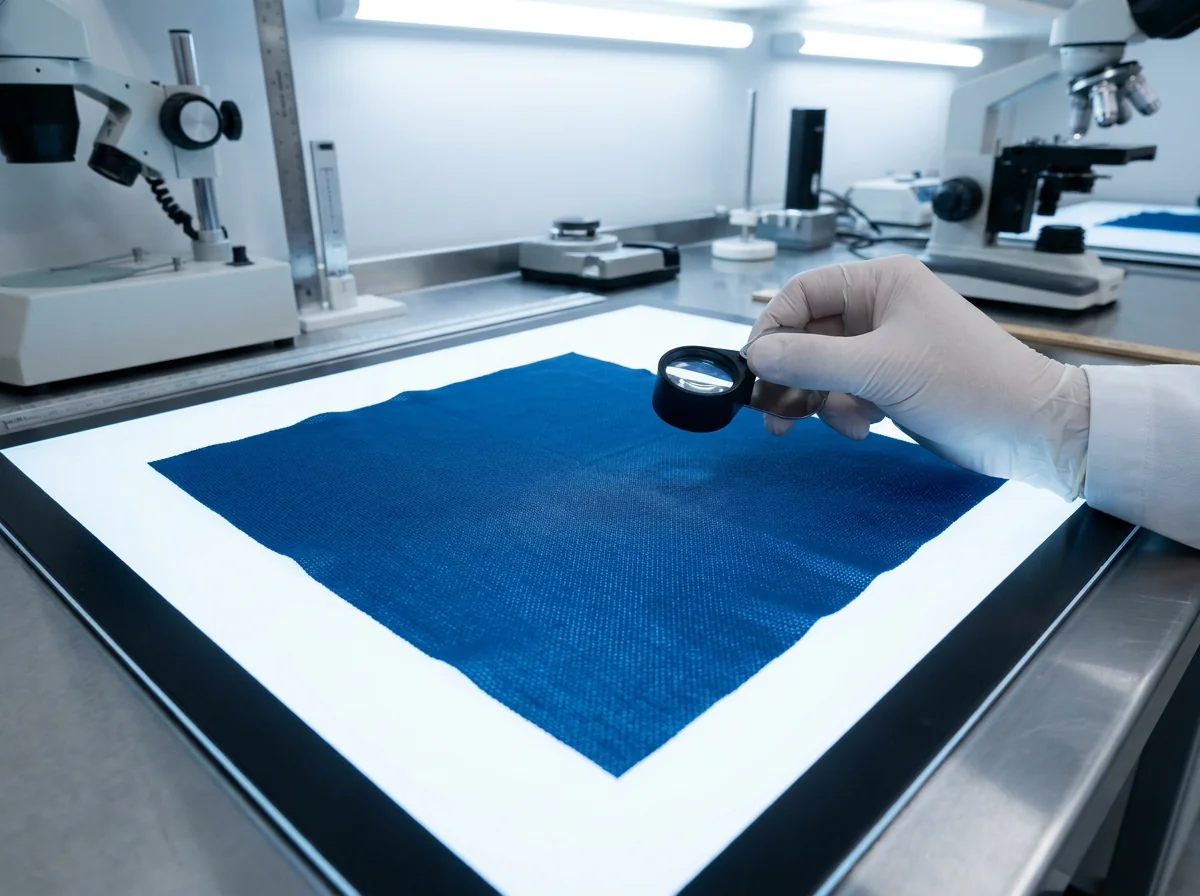
Fabric submitted to in-house lab. ΔL <8% threshold under stretched white-background light. Fabric passes or substitutes with a higher-GSM tier before pattern cut.
Yoga-specific extension to the baseline OEM cycle at /services/oem; brands not building yoga apparel can skip this layer.
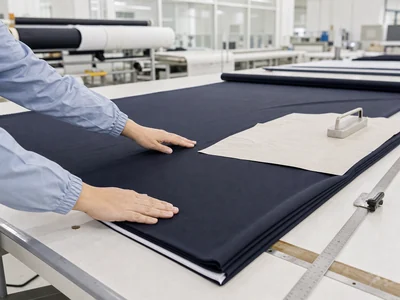
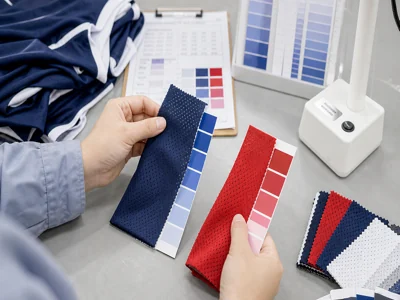
Pantone match to ΔE ≤ 1.5, then a single sample sewn to your size-0 reference garment goes out by courier for fit and hand-feel approval.
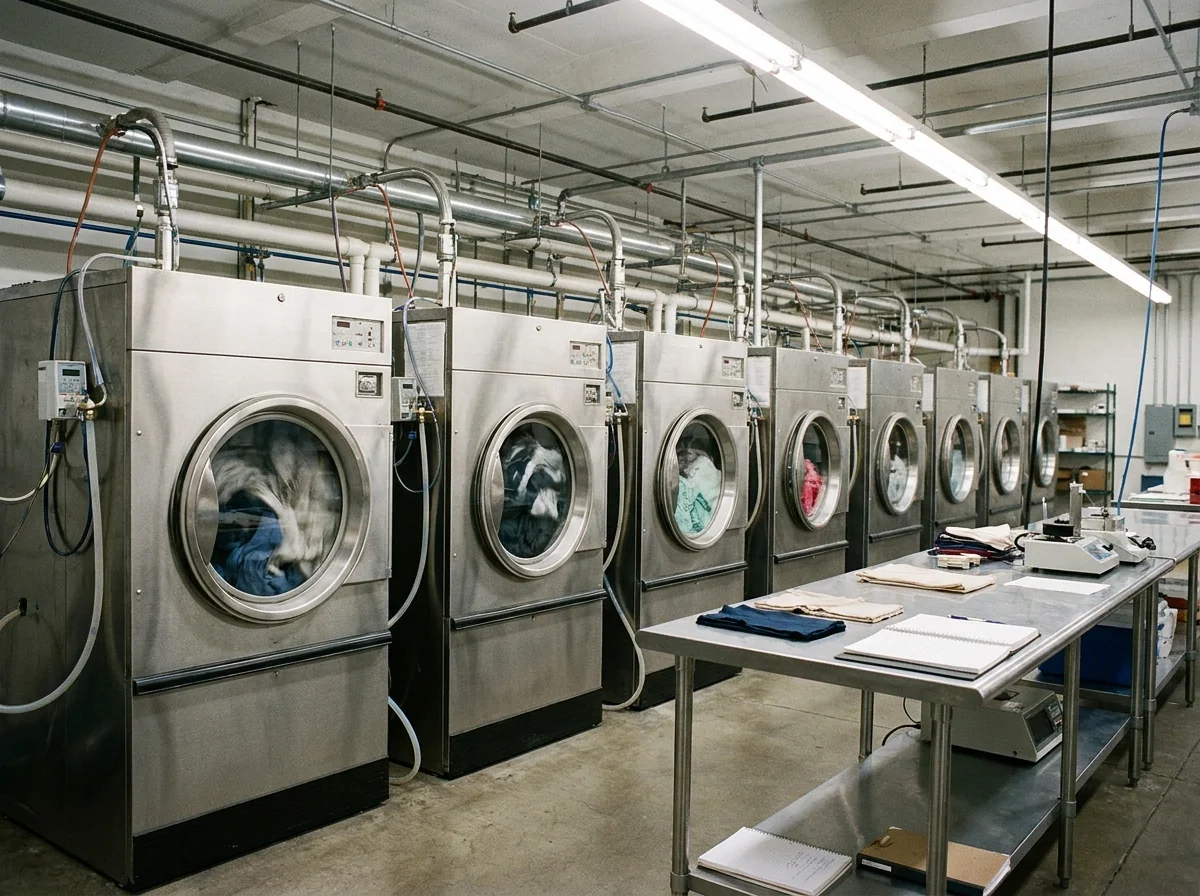
Sample subjected to 50 wash-recovery cycles in lab. Pass = recovery within 5% of initial elongation, tested per fabric lot.
Recommended for OEM accounts with multi-season repeat-buyer audiences.
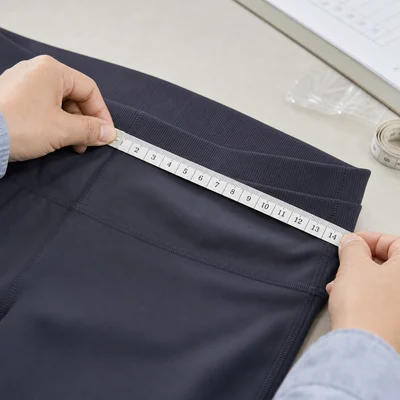
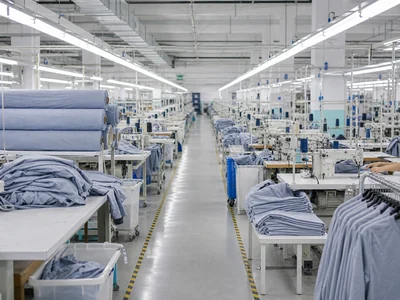
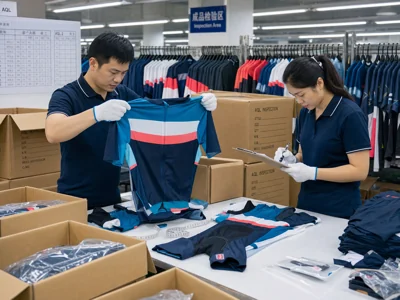
Cut-and-sew across dedicated lines, inline QC at every station. Pre-shipment inspection to the published sampling plan, per-batch report. FOB your designated port. Third-party inspection (BV / SGS / Intertek) on request.
Eight questions covering MOQ, fabric spec, opacity testing, recovery testing, color tolerance, mill sourcing, recycled-poly options, and tech-pack intake.
Yes — and sizes XS through XXL split inside that single hundred rather than multiplying it. Current MOQ tables, sample terms, and lead times for every production model are kept on the company FAQ.
Yes — go with ODM. We have 50+ yoga-specific block patterns: high-rise leggings, three impact tiers of bras, fitted tanks, lined shorts, and full unitards. You choose colorways, prints, fabric tier, and labels; the pattern work is already done.
It means the knit elongates and recovers along both warp and weft. We build it from 18–22% Lycra T-400 or T-462 wrapped against nylon or recycled-poly filament: the elastane share sets stretch force and recovery, while filament gauge and knit density set opacity. That is why the squat-proof tier holds 65%+ four-way elongation at 280–320 GSM without going sheer — density does the covering, elastane does the moving.
We use Lycra T-400 or T-462 grade spandex (high elastic recovery). On request, we run a 50-cycle wash-recovery test on your sample before bulk production starts — recovery within 5% of initial elongation is our pass threshold.
Pre-cut fabric inspection: ΔL <8% under stretched white-background light. Failed fabric is substituted with a higher-GSM tier before pattern cut. We log the result per fabric lot and include it in your pre-shipment QC package.
ΔE ≤ 1.5 against your Pantone reference, published commitment — not contract-only. Each bulk PO ships with a spectrophotometer reading per fabric lot. Color drift is the most common brand-consistency complaint we hear from inbound buyers — so this is our published number.
Eclat Textile (four-way stretch specialist), Formosa Taffeta (recycled-poly performance), and Brookwood Performance (knit specialist). All three OEKO-TEX Standard 100 certified at the mill level. Higg-traceable on request.
Yes. GRS certification on file (CU 1014387 GRS-2024). Recycled polyester yoga apparel available with full chain-of-custody documentation; reference projects available on request.
Certification files — all 5 audited schemes with registry numbers — are published once, on the about page. This section is for the fabric engineering.
Four-way stretch is a recipe, not a buzzword. The squat-proof tier carries 18–22% Lycra T-400/T-462, stepping down to 8–14% elastane for hot-yoga lightweights, knitted so warp and weft elongate together and return within 5% of original length after 50 industrial wash cycles. Fiber ratio decides recovery; knit density decides opacity. We tune both per SKU instead of buying one jersey and calling it a range.
Every fabric lot meets the lightbox before it meets the cutting table: stretched over a white background, measured for ΔL light pass-through, rejected above 8%. The same in-house lab reads inbound color on the spectrophotometer with ΔE 1.0 as the fabric-stage ceiling, and every reading lands in the lot file that travels with your pre-shipment package.
We came over after our last factory shipped a black-leggings PO with ΔE drift. The pre-shipment spectrophotometer reading on our first Berun PO was 1.2. By PO four it was still 1.3. That’s brand integrity I can hand to my CMO.