80% of beginners quit within the first month, and it’s rarely willpower that stops them. It’s blisters, chub rub, and gear that doesn’t work for your body yet.
I’ve coached enough new runners—and made enough gear mistakes myself—to know where newcomers waste money and where they cut corners they shouldn’t. This isn’t a 47-item "ultimate running gear checklist." It’s a stripped-down, must-have versus can-wait breakdown that starts with running shoes for beginners. Getting that one wrong ends more running careers than anything else.
By the end you’ll know what to buy first, what to skip, and how to spend your budget without getting fooled by flashy gear you don’t need yet.
Running Shoes
Your shoe budget should eat up the biggest chunk of your gear spending.
The wrong pair of running shoes is the #1 reason new runners develop blisters, shin splints, and knee pain in week two. Most people show up in old sneakers from their closet or grab whatever's on sale. That's how running careers end before they start.
Buying fashion sneakers instead of actual trainers, squeezing into a tight toe box, or ignoring drop and cushioning specs entirely. These details matter more than color or brand hype.
What to Look For
Unless a podiatrist has told you that you overpronate, skip stability shoes. Start with a neutral cushioned trainer.
Heel-to-toe drop: 8–12 mm (10–12 mm is standard in most classic daily trainers)
Stack height: 25–35 mm for moderate cushioning
Weight: 240–300 grams per shoe (US men's size 9)
The Fit Test That Works
Forget "feels good in the store."
Leave one thumb width (8–10 mm) of space in front of your longest toe
Check for zero side pressure at the forefoot
Your heel should feel snug with minimal slip, not loose or squeezed
If a shoe fails any of these three checks, walk away. No exceptions.
Models Worth Your Money
Hoka Clifton 9 — $145 MSRP (often $116 on sale), 5 mm drop, 248 g
Brooks Ghost 16 — $130–140, 12 mm drop, ~264–280 g
Nike Pegasus 41 — around $130, versatile neutral daily trainer
All three are beginner-safe, neutral, and built for daily mileage.
Don't Skip This
Track your mileage from day one. Replace your shoes every 500–800 km (300–500 miles), sooner if you notice outsole wear or the midsole feels flat and dead. Worn-out shoes are just as risky as the wrong shoes.
berunactivewear.com
Not every beginner starts running solo. If you're organizing a run club, a training group, or launching a small running brand, off-the-shelf gear won't cut it forever. That's where a activewear manufacturer like BeRun activewear comes in.
Berun has run a single 8,500 m² facility since 2017, with 280 workers and 12 production lines dedicated to custom activewear . They specialize in OEM/ODM activewear production for training and outdoor/running categories—leggings, compression gear, windbreakers, singlets, and tights—all built with moisture-wicking, four-way stretch performance fabrics. That's the same fabric tech beginners should look for when buying moisture wicking running clothes, just at production scale.
Why It Matters for Small Teams and Startups
The entry point is low compared to most sports clothing factories. MOQ starts at 100 pieces per SKU, and sizes XS–XXL split inside that number rather than multiplying it. That makes it realistic for a run club ordering matching gear or a DTC startup testing a product line.
Lead times run 35–42 days for OEM with stock fabric, 48–58 days for custom sports clothing fabric, and 30–40 days for ODM using existing patterns. Sampling costs around $45, with AQL 2.5 quality control before bulk production ships.
Pricing is quote-based, FOB Guangzhou. If you're past the beginner phase and thinking bigger than personal gear, this is worth a request-for-quote conversation.
Running Socks
Someone drops $140 on great shoes, then throws on the cotton socks sitting in their drawer. That combo wrecks feet fast. Cotton absorbs sweat and holds onto it, which cranks up friction and turns your first mile into a blister activewear factory.
Running socks aren't optional gear. They're the second thing you buy, right after shoes.
What to Buy Instead of Cotton
Look for polyester, nylon, elastane blends, or merino wool. These fabrics move moisture away from your skin instead of trapping it. Some technical brands go heavy on synthetics. Drymax's running socks, for example, blend Drymax/Olefin with polyester and elastane to fight moisture buildup.
Beyond fabric, check for:
Flat or hand-linked toe seams that reduce rubbing at the toes
A snug arch band that keeps the sock from sliding
Cushioning at heel and forefoot, where impact hits hardest
Height and Fit
No-show or ankle socks work fine for road running. Save crew-height socks for trail runs or cold weather, where extra coverage blocks debris and shoe collar rub.
Don't grab thick socks for tight shoes. That extra bulk increases pressure inside the shoe and can lead to black toenails. Sock thickness needs to match your shoe's volume.
What to Expect to Pay
Single pairs run $10–18. Multi-packs land around $25–35. HOKA's 3-pack sits at $35, Myprotein's runs £20–22. Premium options like Stance climb to £37.99–47.99 per 3-pack.
If your budget's tight, prioritize socks over a second pair of shoes. It's the cheapest fix for foot problems on run day.
Sports Bra (For Women)
Bounce is the enemy here. Every stride sends impact through breast tissue, and a regular bra just isn't built to handle that repeated motion. For C-cup and above, this is a support issue, not a comfort issue.
Support Level Is Non-Negotiable
Skip anything labeled "light" or "medium support." Running demands high-impact, maximum support construction. Look for encapsulation-style cups instead of compression-only ones, along with molded padding, adjustable straps, and secure multi-hook back closures. These features separate a runner-ready bra from a gym-casual one.
Fit Test
The band should sit snug against your ribcage—tight enough that it doesn't ride up, loose enough to breathe. Measure underbust and bust to nail down band and cup size before buying. Sizing runs from 32C up to 42DDD or 42F, with specialty large-bust lines extending to 44DD-46D.
Fabric and Price
Prioritize nylon, elastane, or polyurethane blends with moisture-wicking finishes. Same principle as your running clothes. Expect to pay $40–$80 for a solid high-impact model. Larger-bust specialty styles run $84–$99.
Replacement Rule
Swap it out after 12 months or 50–70 washes, whichever comes first. Elastic fatigue kills support long before the fabric looks worn.
Anti‑Chafe Products
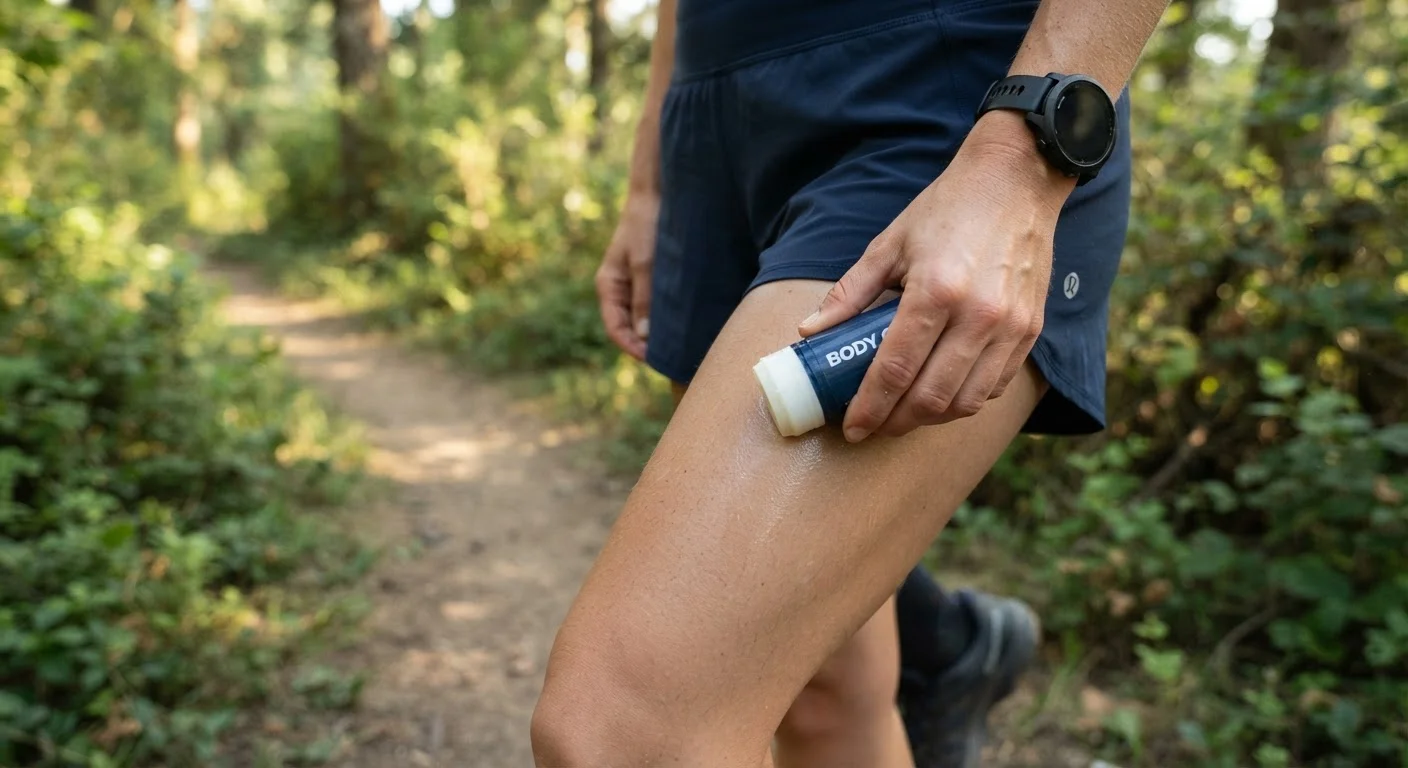
Raw skin between your thighs at mile 3 will end your run faster than tired legs ever will. Once you push past 5K, friction becomes a real threat. Most beginners don't buy protection until after they've already suffered through it once.
The Product That Works
Body Glide's Original Anti Chafe Balm is the benchmark. It comes in sizes from 10g up to 42g, priced around $9.97–$11.00 for the 1.28–1.5oz U.S. version (UK/EU pricing runs higher, roughly £14.90–£30.66 for 42g). Body Glide also makes Foot Glide for blister-prone feet, Skin Glide for general friction, and a For Her formula for women's chafe-prone areas.
The Cheap Alternative
Petroleum jelly works fine at $3–7 a tube. It's greasier and can stain your favorite running clothes, but it does the job.
How to Use It
Apply to inner thighs, underarms, bra line, and groin before any run over 30–40 minutes. Reapply every 60–90 minutes in heat. One stick lasts 1–3 months with regular use—cheap insurance against a ruined run.
Hydration & Carry Essentials
If your runs stay under 5K, skip this category. Save your money. Shoes and apparel come first. Once you push past 30 minutes, or your route takes you somewhere without water fountains, that's when hydration belt running gear earns its spot in your kit.
Two mistakes show up constantly with new runners. First, they carry their phone in-hand, which throws off natural arm swing and makes running feel awkward. Second, they grab a random water bottle from the kitchen cabinet, and it sloshes with every stride, driving them crazy by mile two.
What Works
Start with a handheld bottle. Look for 300–500 ml capacity, which covers you through about 10K. Weight matters here, too. Runner-specific handhelds like the Salomon Active Handheld (500 ml, 68 g, ~€22) or FITLY Handheld (350 ml, 55 g, ~€25) stay light and use flexible TPU material that cuts down on that annoying slosh.
Prefer a hands-free setup? A hydration belt works well. Beginner-friendly options run 500–600 ml total, like two 300 ml bottles for around €12, or Decathlon's KIPRUN belt at £14.99–£19.99. Look for storage that fits your phone, keys, and gels, plus an adjustable waist so it doesn't bounce.
If you need music or navigation, add a phone armband. Cheap options run $2.99–$9.51, while branded versions hit £5.99–£13.99. Prioritize sweat-resistant fabric and a snug elastic band—loose armbands bounce and become useless fast.
Buying order: handheld or belt first, armband only if you need it, hydration pack later once runs stretch longer or hotter.
Visibility & Safety Gear
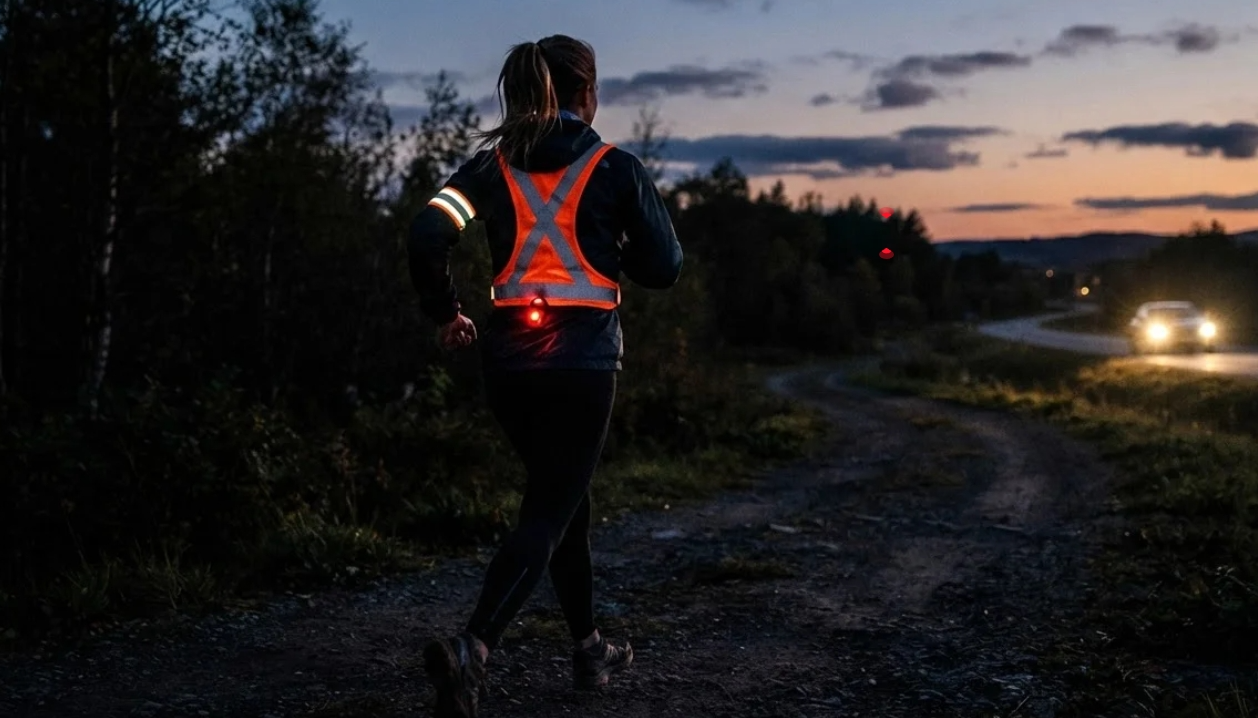
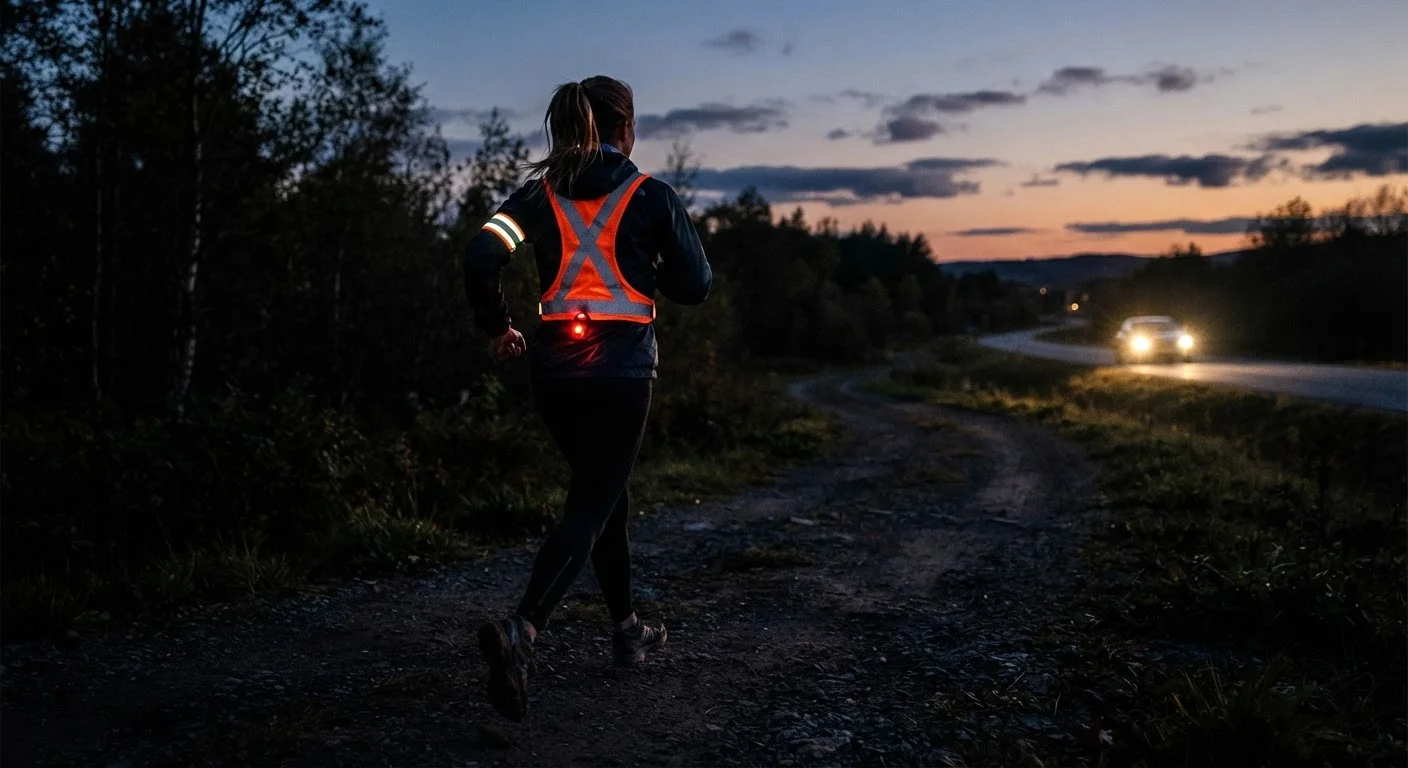
Getting hit by a car doesn't care about your pace or your PR goals. If you only run during daylight, skip this category. Reflective running gear is a "can wait" purchase for most beginners, until your schedule shifts to dawn, dusk, or unlit trails.
The One Mistake to Avoid
New runners often over-buy visibility gear before nailing the basics. Don't. A simple reflective vest or armband handles 90% of situations.
What to Buy, In Order
Reflective vest or armband first. Budget $10–25. Reflective/LED armbands run $8–12; basic vests land $15–35.
Clip-on light or headlamp second. Expect $15–30. Clip-on LEDs sit around $12–25; headlamps range $12–45 based on brightness and battery type.
A solid starter setup (one vest plus one light) costs $25–60 total. The Amphipod Full-Visibility Vest ($35) or Nathan StrobeLight 2 ($12.95) cover the basics without overspending.
Skip This For Now
Light-up vests ($35–60) and premium "bodyglower" gear ($75–125) are upgrades. If your route is daytime-only, hold off on all of it.
Conclusion
You don't need a cart full of gear to become a runner. You need the right pair of running shoes for beginners (thumb's-width rule, remember?), moisture-wicking running clothes that won't turn every jog into a swamp, and blister-proof socks. Those three are your non-negotiable essentials.
Everything else (the fancy running watch for tracking, the reflective vest, the hydration belt) can wait until you've actually logged a few weeks of consistent miles. Buy for the runner you are today.
Grab those 3-4 essentials this week, lace up, and go run. Track your first mile with a free running app for beginners before you spend a dime on tech.