Chafing complaints, breathability returns, and a fabric sourcing decision made three months too late cause most activewear brands to fail marathon season. Founders and product managers racing to lock in their 2026 marathon collections need a decision framework, not another listicle.
This guide walks you through the product development sequence used by top performance apparel sourcing teams, covering how to build your core SKU matrix, select moisture-wicking fabric technology with verified transpiration rates, and structure a wear-testing calendar that catches design flaws before production. Follow these five steps, and you'll compress your typical 6-8 month development timeline into 4-5 months, with the technical vocabulary to negotiate specs confidently with any Marathon-Ready Running Apparel Collection manufacturer.
Define Your Core Marathon Apparel Product Matrix for 2026

Skip the SKU sprawl. I've analyzed a lot of marathon collections, and the ones that work lock in three variables before cutting any samples. Those variables are climate scenarios, runner segments, and price tiers.
Build Your Climate Matrix First
Your activewear collection needs at least three weather profiles.
Warm-weather kit (10-25°C): Short-sleeve tops, 3-5" running shorts, moisture-wicking socks
Cold-weather kit (0-10°C): Midweight long-sleeve shirts, running tights, wind-resistant jackets, gloves
Layered system (sub-0°C): Base layer for wicking, thermal compression mid-layer, packable windproof shell
Separate training gear from race-day gear within each category. Training pieces need storage pockets and durability. Race-day pieces need to be lighter, with minimal storage and aero-focused fits.
Price Your Tiers Against Real Benchmarks
The Tokyo Marathon 2026 x ASICS collaboration gives you a working price ladder. Short-sleeve shirts are ¥5,500, long-sleeve ¥6,600, limited hoodies ¥9,900, and flagship footwear ¥39,600. New Balance's TCS London Marathon range spans £40-£230, with entry tees at the bottom and carbon-plated race shoes at the top.
Map your own three tiers.
Entry tier: €35-60 (event tees, lifestyle hoodies)
Performance tier: €60-110 (technical tops, shorts, tights)
Elite tier: €110-260 (race singlets, pro tights, footwear)
Segment by Runner Type
First-timers want comfort and price certainty. Entry tees paired with 5" shorts. Serious amateurs want performance fabrics without elite pricing. Think compression socks and split shorts. Sub-3-hour runners want minimal weight: ultra-light singlets, 3" shorts, high-compression socks.
Plan Volume Before You Sample
For a 30,000-50,000 runner marathon, core event tees move 20,000-30,000 units. Performance tops and shorts run 5,000-10,000 units per SKU. This volume math determines your minimum order quantities before you ever contact a running gear manufacturer.
berunactivewear.com
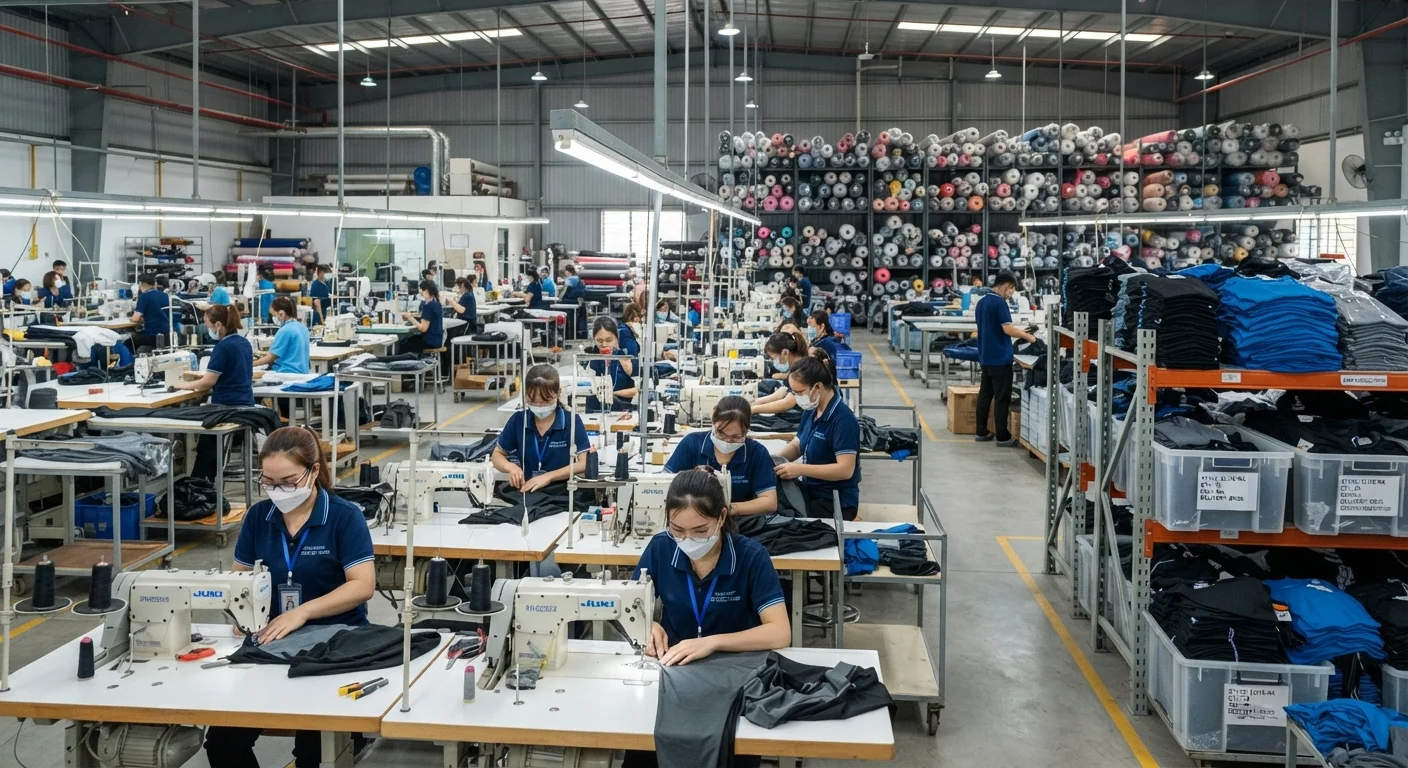
Real numbers beat vague promises when you're vetting a running gear manufacturer. BeRun active wear , a China-based OEM/ODM factory running since 2017, publishes the kind of sourcing specs most suppliers keep locked in a quote email. That transparency makes them a good benchmark for your own supplier conversations.
The Factory Snapshot
Berun operates a single 8,500 m² facility with 280 workers across 12 production lines, covering pattern-making through finished garment. They serve sportswear brands, gym chains, and DTC startups across North America, Europe, and ANZ, with output split across training/performance, athleisure, team/club, and outdoor & running categories, including windbreakers, running tights, and singlets.
Fabric Specs Worth Copying Into Your Tech Pack
For compression running wear and performance leggings-type fabrics, Berun's published benchmarks include:
Stretch: ≥150% in both warp and weft directions
Recovery rate: ≥90% after two stretch cycles
Face yarn: 40D–70D nylon filament
Elastic layer: 40D–78D covered spandex
Finishing: Mild heat-set (over-processing damages recovery)
Their sustainable anchor spec — 70% recycled PET + 30% nylon/spandex, 220-260 GSM, matte finish — shows they can tier the same breathable athletic fabric across price points for private label activewear .
How to Actually Request a Quote
Send tech packs, fabric preferences, and target quantities to their email (best for attachments) and use WhatsApp for fast photo exchanges. Explicitly ask for their capability deck and stretch modulus test data split by warp/weft — not just overall elongation numbers. That single request often separates brands who get workable samples from those who get generic swatches.
Select Performance Fabrics with Verifiable 2026-Relevant Standards
Most fabric quotes say "breathable" or "moisture-wicking" with zero test numbers. That's a red flag. In 2026, every performance apparel sourcing decision needs to trace back to a specific standard number and revision year — not a marketing adjective.
The Standards That Matter for Marathon Gear
Anchor your spec sheet to ISO 11092:2026 for moisture-wicking claims. It's the updated Sweating Guarded-Hotplate method for thermal resistance and water-vapour resistance. This is the single most relevant 2026 standard if your breathable athletic fabric claims are going to survive a buyer audit or a runner's Instagram review.
For abrasion — critical wherever compression wear meets waistbands or seams — request results tied to ISO 12947-2:2016 (Martindale) or ASTM D3886-22 (Wyzenbeek). Use these thresholds:
Residential medium: 15,000 double rubs (Wyzenbeek)
Residential heavy: 30,000 double rubs
Commercial grade: 50,000 double rubs
Martindale residential: 20,000 cycles
Pilling and snagging cause the chafing complaints that kill repeat purchases. Pair every fabric claim with ISO 12945-2:2020 for pilling and the updated EN ISO 25086-1:2026 mace-method test for snagging resistance.
Your Procurement Checklist Before Any PO
Before you approve custom running apparel design samples, get four things in writing from every manufacturer:
The exact standard number and revision year — not "ISO 11092," but confirmation it's the 2026 edition
The test method used (Martindale vs. Wyzenbeek matters more than people assume)
The failure criterion and sample orientation (MD/CD) where applicable
Written confirmation the fabric isn't tested against a withdrawn standard — ASTM has retired D4156-14, D6554/D6554M-14, and D3135-12, yet some factories still cite them
This matters more in 2026 than past cycles because the ASTM textile volume now runs 163 standards across 1,094 pages. The performance fabrics market is scaling fast, moving from $84.60 billion in 2025 to a projected $88.93 billion in 2026. More Marathon-Ready Running Apparel Collection suppliers are entering your athletic apparel chain with fabrics that sound identical but test differently under the hood. Verify the number, not the noun.
Establish a Rigid Sampling & Wear-Testing Schedule
Most brands treat wear-testing like an afterthought — a few friends run in the prototype, everyone says "feels great," and the design ships. That's how chafing complaints end up in your Q1 2026 return data. A rigid sampling schedule fixes numbers to every variable: tester count, test duration, environmental conditions, and evaluation metrics. No guessing.
Lock Your Tester Panel Size
Recruit a minimum of 5 testers per size or use case, pulling from both existing customers and new runners. Five is the floor — if budget allows, go higher. A single tester's feedback on your compression running wear tells you nothing about fit variance across body types.
Fix Your Checkpoints in Advance
Don't leave duration open-ended. Set fixed wear periods — 2 weeks, 4 weeks, 8 weeks — and require testers to log wears per week and wash cycles at each stage. Pair this with photo documentation at every checkpoint. A garment that looks fine on day 1 can show pilling or seam distortion by week 4, and photos catch what self-reported comfort scores miss.
Standardize the Conditions
Condition every sample in the same environment before testing: 23±2°C and 50±5% relative humidity for textiles, held for at least 24 hours (48 hours for organic fibers). Inconsistent lab conditions produce inconsistent breathable athletic fabric data, and you'll waste a sampling cycle re-testing.
Quantify Wear, Don't Just Describe It
Track weight loss (pre-test weight minus post-test weight) and calculate a wear index at fixed cycle checkpoints — 1,000, 5,000, 10,000 cycles. This turns "the fabric held up fine" into a number you can defend to a manufacturer.
Randomize, Don't Pattern
Vary sampling location and timing — different production runs, different shifts — so you're not always testing the same batch. This surfaces inconsistency in your athletic apparel supply chain before it reaches 20,000 units.
Craft a Unique Selling Proposition Beyond "Performance"
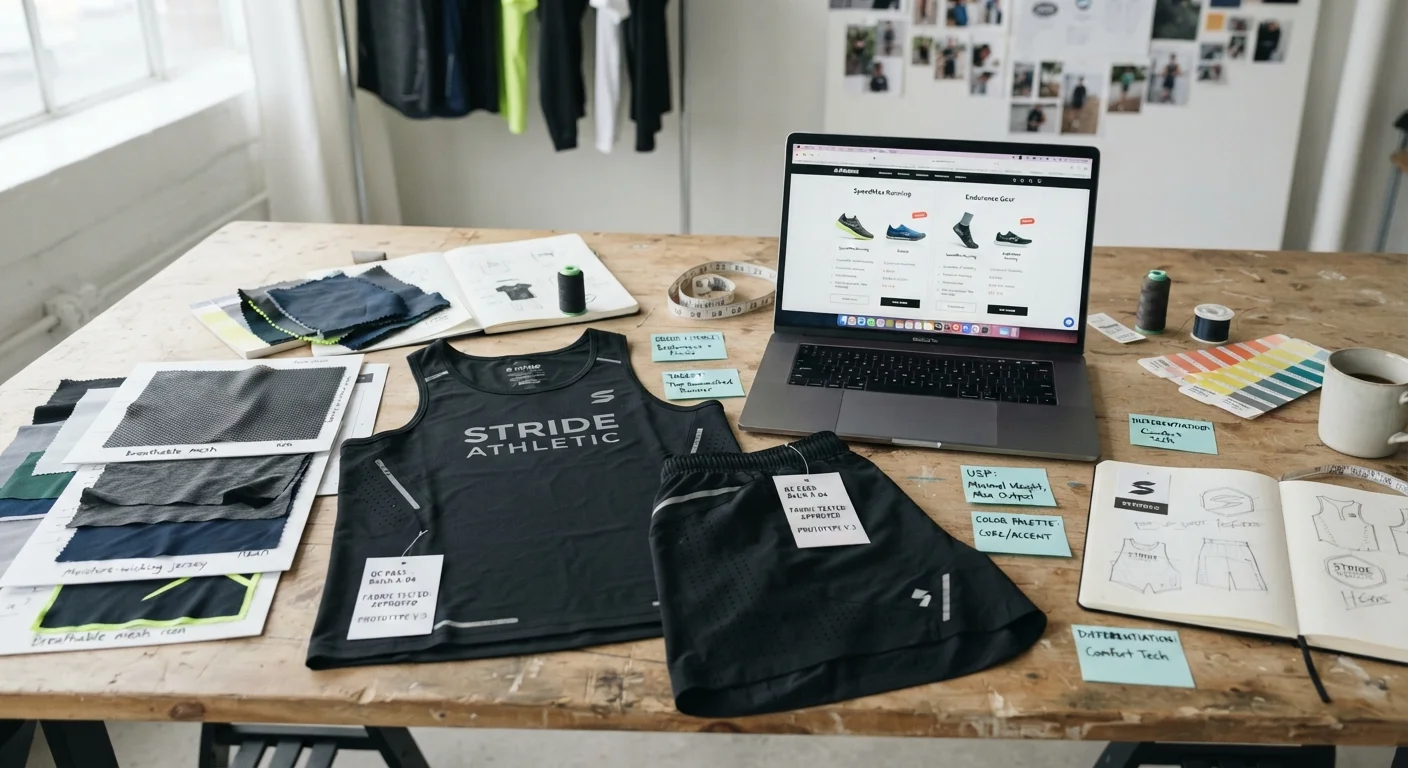
Every marathon brand claims to be breathable, lightweight, and fast-drying. Runners have heard it a thousand times, and they scroll past it just as fast. If your entire pitch is "high-performance fabric," you're competing on the one attribute every manufacturer already promises. Your USP needs to live somewhere else.
Find the Gap Competitors Aren't Filling
Run this sequence before you write a single tagline:
Analyze your target runner's actual pain points. First-timers fear chafing at mile 18. Sub-3-hour runners fear weight, not warmth.
Audit three competitor product pages. Note what they don't say. Most skip fit consistency across body types, return policies, or sizing confidence.
List the strengths only you can prove — a 90% recovery rate after two stretch cycles, a 4-week wear-test protocol, a factory audit trail.
Connect that strength to the pain point in one sentence.
Test the line with actual customers , not your internal team.
Use a Formula
Try this structure: "For [marathon runner segment] who [specific fear/need], our [product] delivers [specific benefit] because [proof]."
Example: "For first-time marathoners afraid of mid-race chafing, our compression running wear holds seam integrity through 10,000 wear cycles because every batch is randomized-tested across three production shifts."
That's a claim built on your own sampling data, not a generic performance word.
Angles That Beat "Performance" Every Time
Fit consistency : "Same size, same fit, every production run" — a real differentiator if your athletic apparel supply chain has quality variance issues.
Onboarding speed : Fastest sample-to-shelf turnaround for private label activewear buyers.
Trust signal : Published fabric test data instead of marketing adjectives.
Niche specificity : Built only for sub-4-hour marathoners.
Test your final line with one question: can a buyer repeat it back after hearing it once? If not, cut it down further.
Re-think the 2026 Launch Cadence
Most marathon apparel brands still blast their entire 2026 collection on one launch day. That's backwards. The brands winning market share in 2026 use a phased rollout - insiders first, then early adopters, then the public, then a post-launch amplification wave.
Match Your Launch Tier to Your Collection Type
Not every drop deserves the same lead time.
Tier 1 (flagship marathon collection): 8-12 weeks lead time, full press push plus a launch event or keynote-style reveal
Tier 2 (seasonal performance refresh): 4-6 weeks, campaign content plus webinars or IG Lives walking through fabric tech
Tier 3 (colorway or incremental SKU): 1-2 weeks, simple in-app or email notes
Top-quartile product marketing teams pushed their launch cadence from 3.1 launches per year in 2023 to 4.1 in 2026 - a 30% jump. Tier-1 launches still land at a median of just 2.4 per year, so treat your flagship marathon collection like the rare event it is.
Build the Waitlist Before You Build Hype
Recruit 10-50 beta testers 4-8 weeks before launch. The same wear-testers you already recruited for fit validation double as your seeding group. Target 200-1,000 waitlist signups depending on your market size, and send weekly updates with development progress, beta-tester stories, and sneak peeks.
Sequence Your Outbound Touches
For B2B buyers and retail partners, run 8-12 total touches: 4 in the first 8 days, 4 in the next 8, then 2-4 closing touches. A 4-email plus 2-LinkedIn plus 2-phone sequence outperforms 8 cold emails by 50-80% more meetings booked. Only 22% of launch assets reach reps within 30 days - don't let your sell sheets sit unused while the marathon window closes.
Conclusion
Most brands blow their marathon season by treating apparel development like a checklist instead of a system. You now have the framework that separates the two—a tight product matrix, fabric specs you can defend on a call with any factory, a wear-testing schedule that catches friction points before customers do, a USP that isn't "moisture-wicking" for the hundredth time, and a launch cadence built around race calendars, not guesswork.
Run this timeline backward from your target ship date, lock your fabric GSM and stretch-recovery numbers first, and don't greenlight bulk production until at least 15 testers have logged 20+ miles in your samples. That's how you turn a typical 6-8 month development cycle into 4-5 months without eating rework costs.
Pull this into a shared doc, send it to your sourcing manager today, and start your first Marathon-Ready Running Apparel Collection supplier call this week—2026's marathon season won't wait for late samples.