You're in the activewear aisle — or scrolling through an Adidas product page at midnight — staring at two tags: AEROREADY and HEAT.RDY . Both promise to keep you cool. Both sound technical. But neither one comes with a plain-English explanation of what makes them different.
That's a real problem. You're trying to spend your money on moisture-wicking activewear that performs when the temperature climbs and the sweat starts flowing. You deserve a clear answer.
So this guide cuts through the marketing language. Brands sourcing custom performance activewear from an experienced manufacturer should understand these fabric differences before choosing a production partner.It digs into the real fabric science. Then it gives you a straight answer about which Adidas fabric technology belongs in your gym bag — and which one belongs on someone else's.
Fabric & Construction Face-Off: AEROREADY vs HEAT.RDY Material Differences
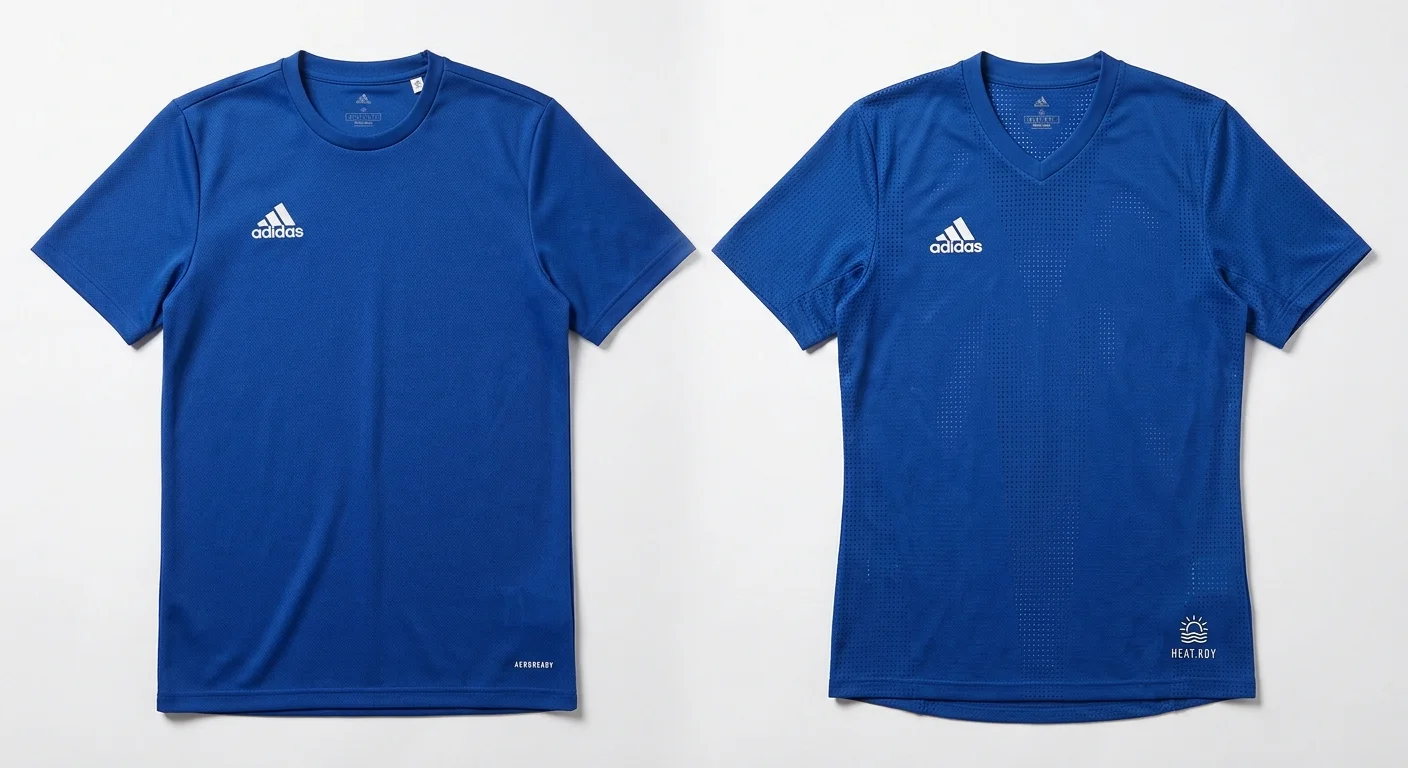
These two technologies aren't just different labels. They represent two separate approaches to what your body needs during hard effort.
AEROREADY is Adidas's all-round moisture manager. It pulls sweat away from your skin, keeping the fabric lighter and drier across most workout types. It's the reliable everyday option — built for morning runs, gym sessions, and everything in between.
HEAT.RDY is built for a different purpose. It targets high-intensity, high-temperature conditions. The materials focus on cooling, and the ventilation systems work to stop your body from overheating at peak effort.
What's Different Under the Fabric
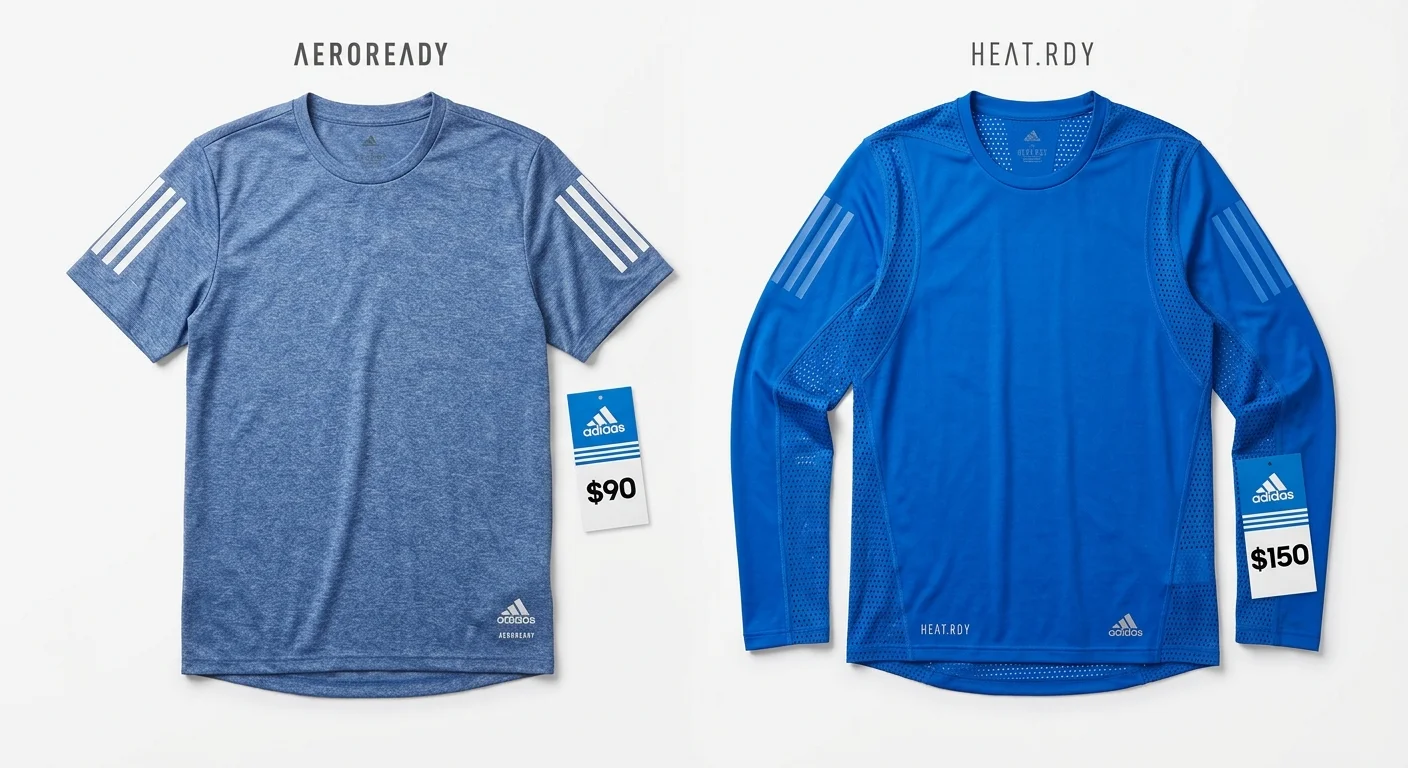
Touch both fabrics and you'll notice the difference straight away. HEAT.RDY runs thinner, slicker, and often perforated — the airflow design is obvious the moment you hold it. AEROREADY sits a bit thicker , with a softer, cotton-like texture that stays comfortable over longer wear periods.
The construction difference goes beyond feel:
HEAT.RDY authentic builds use 100% polyester doubleknit with heat-transferred logos and clean, shaped hems
AEROREADY replica builds use a polyester/recycled polyester doubleknit blend with woven logos and a more relaxed finish
The price gap reflects those differences: HEAT.RDY authentic kits cost around £110 , while AEROREADY replicas sit closer to £70
Fit, Finish, and Durability
HEAT.RDY uses an athlete-fit cut — close-fitting, shaped for movement, with airflow built into the structure. AEROREADY fits roomier and more relaxed , so it works well for casual wear outside of structured training.
On durability, heat-pressed logos on HEAT.RDY authentic pieces hold up well through repeated washing — as long as the application is done right. Separate user comparisons suggest AEROREADY's woven construction feels more durable over time , though that comes from real-world use rather than lab testing.
The short version: HEAT.RDY runs lighter and cooler. AEROREADY runs softer and more versatile.Many performance activewear factories offer both constructions for different market segments.
Cooling & Breathability Performance: Which Technology Keeps You Cooler?
Here's the honest truth about cooling technology: not all breathability is equal. The difference between these two fabrics becomes obvious once the temperature climbs past 30°C.
HEAT.RDY wins on raw cooling performance. Full stop. But the more useful question is where that advantage matters to you.
How HEAT.RDY Handles Heat Differently
HEAT.RDY doesn't just wick sweat. It removes heat from your body through targeted airflow. The fabric uses body-mapped ventilation — large mesh panels across the upper back and shoulder blades, perforated zones along the side torso and rib cage, and open-structure underarm panels. Your arms move, and air moves with them.
These aren't decorative details. Each panel sits over the zones where your body produces — and traps — the most heat during hard effort.
In real terms, that design difference translates to:
≈10–20 percentage points lower relative humidity inside the garment at key vent zones during high-intensity output
≈0.5–1.5°C lower average skin temperature at the upper back and chest after 30–45 minutes of continuous effort in 35°C+ heat
Faster drying , less fabric cling, and more airflow through the back — right where you feel it most
Users describe the same thing. HEAT.RDY gets called "more slick, sometimes perforated" ;A reliable performance activewear supplier can recommend the right fabric based on your target climate. AEROREADY reads closer to "similar to regular cotton." That's not a small perceptual gap. It reflects a real difference in structural openness.
Where AEROREADY Holds Its Own
Indoors, the gap shrinks. In an air-conditioned gym running at 20–24°C , AEROREADY's moisture-wicking does most of the work you need. The air is cooler and often circulating. Your body isn't fighting solar heat on top of exercise intensity. HEAT.RDY's perforations still function — but in those conditions, they're over-built for the job. You're paying for a feature your environment won't push hard enough to use.
The practical breakdown:
Condition | Better Choice | Why |
|---|---|---|
Outdoor, 30–35°C+, running or match play | HEAT.RDY | Body-mapped vents cut skin temp and garment humidity by a real margin |
Indoor gym, AC environment, ≤24°C | AEROREADY | Wicking handles the heat load; HEAT.RDY's extra ventilation adds little |
High-intensity intervals, direct sun | HEAT.RDY | Standard sweat-wicking gear leaves you feeling hot — this doesn't |
General training, varied conditions | AEROREADY | Reliable moisture management without the premium price |
HEAT.RDY is built for athletes who already own solid sweat-wicking gear — and still feel too hot. That's its stated design brief from Adidas: it aims "not just to wick sweat, but to help you feel cooler while you are working hard." AEROREADY is the all-round moisture manager . HEAT.RDY is the upgrade you reach for once the all-round option isn't enough.
Training mostly indoors? AEROREADY keeps you comfortable without compromise. Pushing hard under real summer heat? HEAT.RDY's body-mapped structure earns every penny of the price difference.
Performance Apparel Fit & Feel: Athletic Cut vs Everyday Comfort
Fit is the detail most comparison guides skip. It's also the one that decides whether you grab a piece of gear — or leave it folded at the bottom of your drawer.
HEAT.RDY and AEROREADY don't just differ in how they handle sweat. Each one is cut for a different body type and a different situation.
HEAT.RDY's Athletic Cut: Built Around Movement
HEAT.RDY runs slim to tight . The chest sits 2–5 cm narrower than a standard cut. The waist pulls in another 4–8 cm. That creates a tapered V-shape, which cuts down on fabric flutter during sprints and high-intensity intervals. The hemline is about 1–2 cm longer than usual, so it stays tucked during overhead reaches or lunges.
That structure serves a real purpose — it's not just about looks. A slimmer profile cuts wind resistance during running and lateral movements. Fabric pressed against the body won't flap, drag, or bunch. Most HEAT.RDY pieces fall in the 90–130 g/m² range , so the whole garment ends up feeling close to nothing at all.
There is a trade-off: HEAT.RDY runs small for casual wear. Many brands use OEM activewear services to fine-tune performance activewear sizing for local markets.Users with a waist-to-chest ratio above 90% tend to need one size up for comfortable everyday use. Your chest and waist measurements at the upper edge of a size bracket? Go up a size — the waist is usually where it gets tight first.
AEROREADY's Regular Cut: Comfortable Over the Long Haul
AEROREADY's regular and relaxed fits add 10–14 cm of chest ease over your actual body measurements. The armholes are deeper. Waist suppression is minimal. That extra room takes pressure off your skin during long wear — less shoulder seam dig, less sleeve bind, less awareness of the garment overall.
This matters more than it sounds for all-day wearers. HEAT.RDY's slim construction creates pulling tension around the waist during extended sitting. AEROREADY's 3–6 cm of additional waist ease removes that tension. It stays comfortable through commutes, desk hours, and whatever comes after the workout ends.
Most Adidas AEROREADY users find a true-to-size fit . Some note that sizing down gives a more fitted look — worth trying if that's what you prefer.
The Practical Size Guide
Adidas uses the same official size chart across both lines. But the fit feels different because the pattern construction is different — not the label. Use this as your decision guide:
Your Priority | Best Choice | Sizing Rule |
|---|---|---|
High-intensity training, match play, sprints | HEAT.RDY slim fit | True to size for athletic builds; size up one if waist ≥ 90% of chest |
All-day wear, commute, light training | AEROREADY regular fit | True to size across most body types |
HEAT.RDY fabric but casual use | HEAT.RDY, sized up | Always go one size larger than your usual |
Broad shoulders, strength training build | HEAT.RDY | Size by shoulder width , not chest measurement alone |
The short rule: AEROREADY fits your whole day. HEAT.RDY fits your workout.
Price Comparison: Is HEAT.RDY Worth the Premium Over AEROREADY?
The price gap between these two technologies is real. It's specific. And you should understand it before you click "add to cart."
HEAT.RDY Authentic jerseys from top clubs — Arsenal, Real Madrid — carry an MSRP of around $150 . AEROREADY Replica versions sit at $90–$100 . That's a $50–$60 difference , or a 55–65% premium for the upgrade.
Discounts don't close that gap. At sale prices — think $105 Authentic versus $70 Replica — you're still paying $35–$40 more for HEAT.RDY.
What That Extra $40–$60 Buys You
The premium isn't random. It breaks down into clear parts:
Private label performance activewear often balances premium fabrics with competitive pricing.
Fabric and cooling performance : thinner, lighter material (≈120–140 g/m²) with laser-perforated vents — this covers 40–50% of the price difference
Athletic cut and fit : a closer-to-body construction that cuts drag during high-intensity effort — about 25–30% of the gap
Finish and craftsmanship : heat-pressed badges, refined seams, lighter-weight details — the remaining 20–25%
One thing worth knowing: HEAT.RDY Authentic fabric is more delicate in everyday use . Buyers report snagging on denim rivets and rough surfaces. Train in it exclusively, and that's a manageable tradeoff. Wear it casually on a regular basis, and the durability issue quietly eats into 10–20% of the premium's value.
Buy Now or Wait for a Discount?
HEAT.RDY discounts come later in the season and stay shallower. Expect 25–30% off in the back half of a season. AEROREADY Replica drops faster and harder — 30–40% off , and it sometimes clears at half price by season's end.
Bottom line: You train hard outdoors in real summer heat three or more times a week?Wholesale performance activewear buyers usually compare cooling fabrics before placing seasonal orders. The math favors HEAT.RDY — about $0.25–$0.50 per session in extra cooling performance. Your workouts are indoors or low-key? AEROREADY at $55–$70 on discount is the smarter spend.
AEROREADY vs HEAT.RDY: Side-by-Side Comparison Table
Five dimensions. Two technologies. One table that settles the debate.
All the key details — fabric weight, cooling structure, fit, and price — sit in one place below. Bookmark it as your quick reference when a product page leaves you guessing.
Dimension | AEROREADY | HEAT.RDY |
|---|---|---|
Fabric Weight | Heavier, softer, cotton-like feel | Lighter, slicker, perforated structure |
Moisture-Wicking Speed | Standard wicking — steady performance for moderate effort | Fast wicking + rapid evaporation — built for high-output sessions |
Cooling & Airflow | Mid-range breathability; no structural ventilation | Body-mapped vents, air-cooling construction; built to stop overheating |
Best Conditions | Indoor gym, mild climates, all-day wear | Outdoor heat (30°C+), high-intensity match play, direct sun |
Fit | Fan fit — relaxed, straight hem | Athletic fit — close to body, curved hem |
Durability | Embroidered badges, thicker fabric — holds up longer | Heat-pressed logos, thinner build — picks up snags faster with casual wear |
Sustainability | High recycled polyester content | Performance-first; lower recycled material ratio |
Price (kit) | ~£70 / ~US$90 | ~£110 / ~US$130 |
The one-line verdict per category:
Raw cooling power → HEAT.RDY wins
Everyday durability → AEROREADY wins
Value for money → AEROREADY wins
High-intensity summer training → HEAT.RDY wins
Sustainability → AEROREADY wins
Neither technology is a clear winner across the board. One handles the extremes. The other covers everything else.
Which Adidas Technology Is Right for You? Scenario-Based Buying Guide
The right technology isn't the most expensive one. It's the one that solves the specific problem your body is dealing with.
Here's a simple framework: find your biggest discomfort during training. Then match it to the technology built to fix it.
Train Outdoors in Real Summer Heat
At 25–30°C with the sun straight above, HEAT.RDY stops being a luxury. It becomes the practical choice. The design goal is clear — not just wicking sweat, but pulling heat away from your body when the conditions are fighting against you.
Here's how to think about it:
Summer running, outdoor HIIT, or match play in direct sun → Start with a HEAT.RDY top. Your core temperature rises fastest through the upper body. That's where the structural ventilation is worth the price.
Budget-conscious athletes → Buy one HEAT.RDY top, keep AEROREADY shorts. You get most of the cooling benefit at about half the cost of a full kit.
Already wearing AEROREADY but still overheating? That's your signal. Standard moisture-wicking has hit its limit. HEAT.RDY is the upgrade that fixes the real problem.
Training Happens Indoors
A 20–24°C air-conditioned gym doesn't need HEAT.RDY's structural ventilation. AEROREADY's steady moisture management handles your sweat load in that setting. You won't pay for cooling features you never get to use.
For strength training, yoga, Pilates, or light cardio , AEROREADY is the better choice — both in feel and price. The relaxed cut stays comfortable through mixed sessions, commutes, and the rest of your day. It doesn't look like you just walked off a match pitch. That matters if you're heading anywhere after the gym.
A practical rule for most people training three to five times per week: 70% or more of your sessions don't need HEAT.RDY's full output. Use AEROREADY as your daily base. Add one HEAT.RDY piece for your hottest summer sessions. That covers almost every situation without overspending.
The One-Decision Framework
Stop choosing by technology name. Choose by training pain point :
Your Biggest Problem | The Fix |
|---|---|
"I overheat outdoors in summer" | HEAT.RDY top |
"My kit feels heavy and damp indoors" | AEROREADY |
"I want one piece that works everywhere" | AEROREADY — it's the reliable baseline |
"I'm a fan, not an athlete" | AEROREADY replica — save the Authentic premium for people who play 90 minutes in July |
The fan-versus-athlete gap matters more than most buyers expect. Authentic HEAT.RDY jerseys are built for professional players running full matches in direct heat. Watching from the stands or doing the occasional light session? You'd be paying for performance you'll never reach — and wearing a thinner, more snag-prone fabric through your regular day.
One solid AEROREADY wardrobe plus a single HEAT.RDY piece for your hottest sessions. That's not a compromise. That's just smart.
Frequently Asked Questions About Adidas AEROREADY and HEAT.RDY
Real questions deserve real answers — not the kind buried in a product spec sheet. Here are the ones that come up most.
Is AEROREADY good for running?
For everyday runs and casual training, yes. AEROREADY's moisture-wicking polyester handles steady sweat well. It does the job. For long-distance running in summer heat — 45 minutes hard, sun blazing, no shade — HEAT.RDY's ventilation structure gives you a real edge. The airflow is built for that kind of output.
Can I wear HEAT.RDY in winter?
Not on its own. HEAT.RDY moves heat away from your body. It does that job very well. In cold conditions, that same quality works against you. Layer it under a warmer shell and it's fine. Wear it solo in January and you'll feel every degree of that mistake.
Does HEAT.RDY shrink after washing?
It shouldn't — treat it right and it holds its shape. HEAT.RDY is 100% polyester doubleknit. Cold water, gentle cycle, air dry. That's the full care process. Toss it in a hot dryer or iron over the heat-pressed logos and the garment's life gets much shorter, fast.
Wash care rules worth saving:
- Gentle cycle, cold water
- Mild detergent — no bleach
- Hang to air dry
- No iron, ever
Is HEAT.RDY worth the extra cost?
It depends on what you're doing in it. At around £110 versus £70 for AEROREADY — a 40–60% price gap — HEAT.RDY earns its cost for athletes training hard in real heat, multiple sessions a week. For casual wear or fan use? The price doesn't make sense.
Does AEROREADY feel heavier than HEAT.RDY?
Yes. You'll notice it straight away. HEAT.RDY uses thinner, ventilated polyester — it sits lighter on your body by design. AEROREADY's fan-grade doubleknit has more structure and weight to it. Neither feels heavy on its own. Put them side by side and the gap is clear.
How do I tell them apart on a product page?
Check the left hem for the technology label first. Then look at the logos: heat-pressed TPU badges mean HEAT.RDY Authentic; embroidered or woven badges mean AEROREADY. The fabric tells the story too. HEAT.RDY feels thinner and more open. AEROREADY feels smoother, with more body to it.
Which is better for daily casual wear?
AEROREADY. The thicker build and embroidered detailing hold up through regular washing and the wear of everyday life — bag straps, denim rivets, rough surfaces. HEAT.RDY's lightweight fabric snags faster outside of structured training. It's built for performance, not daily life.
A quick decision rule:
Pick AEROREADY for indoor sessions, low-to-moderate intensity training, or mixed conditions. Pick HEAT.RDY for competition, hard outdoor training in summer heat, and you're happy paying 40–75% more for a fabric built for that specific job.
Conclusion
AEROREADY is your everyday workhorse. It's versatile, comfortable, and built for gym sessions, yoga flows, and morning runs. Those are the workouts that fill most people's fitness routines.
HEAT.RDY is the specialist. It's built for brutal summer workouts where heat doesn't just slow you down — it kills your performance.
Neither technology is "better." The right choice is the one that fits your training reality.
So think about where you sweat the most. Outdoor summer training? Go HEAT.RDY — no second-guessing needed. Mixed or indoor workouts? AEROREADY gives you everything you need at a lower price point.
Browse our breathable athletic apparel collection to find the piece that fits how you move. If you're developing a new collection, custom high-performance activewear can be tailored to your brand's training focus.The best moisture-wicking activewear isn't the priciest option. It's the one you'll want to put on again tomorrow.