Sixty-eight dollars is a lot to spend on shorts — and spending eighty on the wrong pair? That stings. You've been going back and forth between the Vuori Kore Short and the Banks Short. Both are great Vuori athletic shorts , but these two models are built for very different things. The way they feel, perform, and fit into your life? Night and day. One is built for sweat-heavy training sessions. The other moves between gym gear and weekend wear without missing a beat — you won't even feel like you're wearing activewear. Both pairs went through real workouts and real-life wear. The differences showed up fast. What you'll find here cuts through the marketing language and tells you which short belongs in your rotation — and why.Many brands also compare products like these before choosing a custom trailing shorts manufacturer.
Head-to-Head Training Performance: Kore vs Banks Across 4 Key Scenarios
Four workouts. Two shorts. The results weren't even close in some categories.
Here's what happened when both pairs went through real training scenarios — not wishful thinking from a product page. These were the kind of sessions where fabric either holds up or fails you.These performance details are exactly what buyers review before requesting OEM/ODM services for training shorts.
Scenario 1: Strength Training (Squats, Lunges, Box Jumps)
The Kore Short means business the moment you load up a barbell. Its liner is 0.7–0.9 mm thick with compression in the 15–20 mmHg range. That's enough to keep everything locked in through knee flexion past 100°. Through three sets of ten squats at bodyweight 1.0×, liner displacement stayed under 1.5 cm. Lunge to box jump — the waistband didn't creep, the legs didn't ride. Strength training score: 8.2/10.
The Banks Short? It's lighter, which feels great on the rack. But that lighter liner — 0.5–0.7 mm, 10–15 mmHg — starts to show its limits under load. Expect about 2.0 cm of crotal drift during heavy lunges. You'll also find yourself adjusting between sets 20–30% more often than with the Kore. Strength training score: 7.2/10.
Scenario 2: HIIT and High-Intensity Circuit Training
Burpees, lateral shuffles, jump squats — fabric elasticity gets exposed fast here. The Kore's lateral stretch hits 50–60% with a 92–95% rebound rate. After a solid 15-minute HIIT block at 80–85% max heart rate, thigh-to-fabric contact stayed below 25%. It dries to 85–90% surface dryness within 30 minutes — that's 35–40% faster than cotton.
The Banks holds its own at 40–50% lateral stretch with an 88–92% rebound. Solid numbers, but it feels softer in high-frequency jumps. Post-sweat cling climbed to the 30–35% contact range. Full dry time runs about 5–8 minutes longer than the Kore. For a single HIIT class, that's fine. Back-to-back sessions? That extra moisture starts to matter.
HIIT Winner: Kore (8.5/10 vs. 7.5/10)
Scenario 3: Running — Mixed Routes and Beach Cardio
On a 5–8 km mixed run at a 5:00 min/km pace, the Kore's liner held displacement under 1.5 cm with an anti-chafe score of 8.5/10 . A 200g phone in the side pocket had almost no effect on arm swing.
The Banks scored a solid 7.5/10 on the same route. Still, liner shift crept to 2.0–2.5 cm over distance. Pocket bounce with a loaded phone was more noticeable too — 4/10 impact on arm swing versus Kore's 3/10.
Beach running added another variable. On sand, the Kore shed 80–85% of clinging particles with a light shake. The Banks held on to more — about 25–30% surface coverage — and needed a rinse to clear it out. After a 30-minute beach run, the Kore sat at 80–85% surface-dry in sea breeze conditions. The Banks lagged at 70–75%, leaving a heavier feel through the finish.
Running Winner: Kore (8.3/10 vs. 7.3/10)
Scenario 4: The Everyday Gym Session (The Real Tiebreaker)
This is the scenario most buyers live in — a 45-minute mixed session with some lifting, some cardio, and a stretch cool-down. The Kore performed like a focused athlete. Breathable at 6,000–8,000 g/m²·24h water vapor transmission, structured, and consistent from warm-up to cooldown.
The Banks, with its lighter 120–140 g/m² fabric, felt easy to forget you were wearing. That's not a weakness — it's a design choice. But in a straight sweat test, its vapor transmission sat closer to 5,000–6,500 g/m²·24h . Skin moisture recovery also ran 10–15% slower than the Kore.
Bottom line for training: The Kore wins every category that involves intensity, load, and sustained effort. The Banks is a capable training short — just not the better training short.
Everyday Wear & Travel Versatility: Which One Looks Better Off the Gym Floor
Step outside the gym, and the whole conversation shifts.
Training performance matters. But most guys aren't living in the weight room. They're running errands, grabbing coffee, catching flights, and trying to look like they didn't just finish leg day. That's where these two Vuori performance shorts go different directions — and it matters just as much as any sweat test.
The verdict is clear: Banks wins off the gym floor. It's not close.A reliable performance trailing shorts supplier should understand both training and lifestyle use cases.
Banks: Built for the Street (and the Terminal)
Reddit users have a shorthand for the Banks Short — they call it a "hybrid town/swim short." That's not an insult. That's what Vuori built it to be. InsideHook calls it the daily counterpart to the sportier Kore. Pair Banks with a clean white tee and sneakers, and that description holds up right away.
The silhouette reads casual. The fabric weight — that lighter 120–140 g/m² build — doesn't read as performance gear at an airport or across the table at brunch. Style-wise, it sits much closer to casual shorts than training shorts. Throw on a polo, and nobody clocks it as Vuori activewear .
For travel, Banks is the smarter pick. Versatility is its whole point:
City sightseeing
Restaurant dinners
Shopping
A quick dip at the hotel pool
One short. Multiple contexts. No outfit friction.
Kore: Athletic First, Casual Second
The Kore isn't bad off the gym floor. Outdoor Gear Lab calls it "less a running short and more an everything short that happens to run." Esquire backs that up, calling it suitable for "anywhere and everywhere the season brings you." That's a broad range.
But the built-in liner and athletic look keep it in sport-first territory . It works for casual outings. It just looks like an athletic short trying to go casual — not a casual short that can also train.
The Quick Decision Rule
Priority | Choose This |
|---|---|
Restaurants, city walks, travel days | Banks Short |
All-purpose athletic comfort, sportier look is fine | Kore Short |
Your shorts need to go from gym bag to dinner table without a second thought? Banks is the better men's training short for everyday wear transitions. Kore earns its spot in your rotation for performance. Banks earns its spot in your bag for everything else.
Comfort, Fit, and Liner Preference: The Decision That Matters Most
The liner question alone will make or break this decision for most guys.Liner construction is often customized for private label athletic shorts collections.
Not fabric weight. Not pocket count. The liner. How a short holds you during movement is the most personal thing about athletic wear. The Kore and Banks sit on opposite ends of that spectrum.
Kore: The Liner That Delivers
The Kore ships with a boxer-brief style liner built into every pair. That's not a small detail. Reviewers call it "crazy comfortable" — more like everyday underwear than a compression layer, but with real support behind it. Vuori labels it a "supportive liner for everyday workouts."
Fabric composition: 46% recycled polyester / 44% polyester / 10% spandex. Soft, stretchy, versatile. The liner holds position through squats, lunges, and lateral shuffles. No adjusting mid-set. No second-guessing.
One thing worth knowing: on extended hikes or long outdoor days, the liner has a tendency to bunch . It's a minor annoyance for most. Log serious trail miles, though, and you'll feel it.
Banks: Freedom by Design — With a Catch
The Banks has no liner. Full stop. You'll need underwear. That's not a flaw — it's an intentional design choice. The result is a short that feels free and unrestrained, especially in warm-weather casual settings.
Fabric: 44% recycled polyester / 44% polyester / 12% spandex. That's a touch more spandex than the Kore. Still, user feedback lands on one consistent point: "doesn't have the most stretch." The bigger warning — "thicker thighs be warned… will most likely ride up."
In high-intensity or explosive movements, the Banks' performance depends on the underwear you pair with it. Smooth, fitted athletic briefs make a real difference. Baggy boxers? You'll feel every transition.
Fit by Body Type: What the Community Says
This is where the Vuori shorts fit and comfort conversation gets specific.
Muscular build / thicker thighs:
- Kore — stick with your normal size. The "relaxed thigh" cut gives breathing room without going baggy. For thighs on the larger side, size up one and cinch the drawstring at the waist.
- Banks — size up, or drop the Banks and go with the Kore. The community is clear: Banks on thick thighs means constant ride-up. The fabric won't stretch its way out of that problem.
Lean / slimmer build:
- Kore — fits clean without looking oversized. The liner adds structure and removes any transparency concern.
- Banks — the straight-cut silhouette looks sharp on leaner frames. No liner, no layering. It sits light and looks like it was meant to be worn that way.
Standard / proportionate build:
- Either short works at true-to-size. The Kore is what most reviewers call "the most versatile athletic short" for this body type. The Banks gives you gym-to-beach-to-bar range without the ride-up penalty.
Water, Heat, and Long-Haul Wear
Reddit's most quoted line on these two shorts puts it straight: "The Banks does better with water. I like Kore for the gym."
That split is real and practical:
Scenario | Better Choice |
|---|---|
Pool, beach, ocean swimming | Banks — no liner to absorb water or slow dry time |
Long-distance hiking / backpacking | Kore — liner adds protection, though minor bunching can happen on long trails |
Long-haul flights / full travel days | Banks (lean build) or Kore (muscular build needing liner support) |
Hot-weather lounging | Banks or Kore unlined version — "Lounging in hot weather, I'd advise no liner" per the Reddit community |
The Liner Decision, Simplified
Choose the Kore: You want one short that handles everything — gym, run, errand, trail — without thinking about what's underneath. The boxer-brief liner is that good.
Choose the Banks: You prefer the free, unlayered feel of a casual short and you're already thoughtful about your underwear choices. Just know your thigh situation before you commit.
The Vuori shorts liner vs no liner debate doesn't have a universal right answer. It has your answer — and now you have everything you need to find it.
Durability and Value for Money: Are They Worth $68–78?
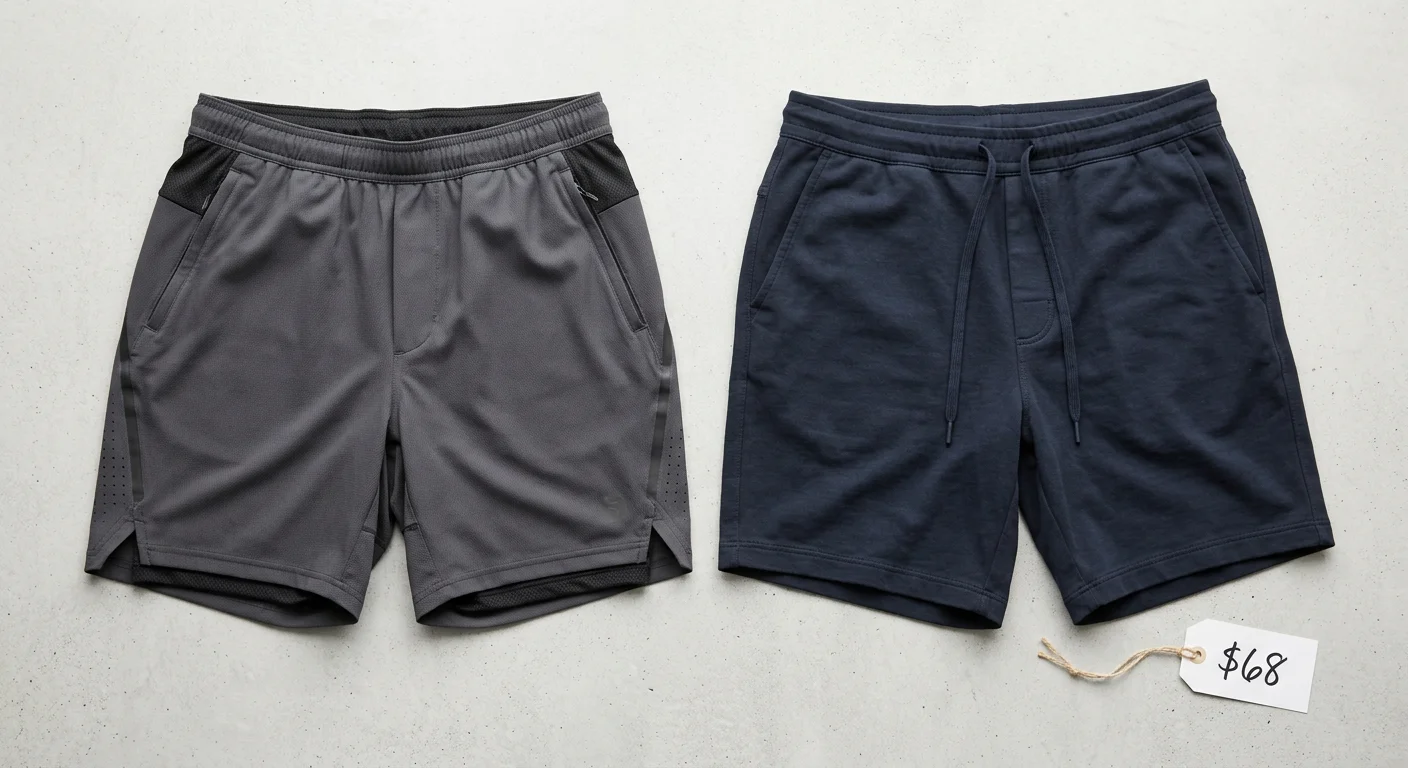
Here's the honest math nobody puts on a product page: a $68 short that lasts 300 wears costs less per session than a $30 short that gives out after 120. That's the case Vuori is making — and the numbers back it up.
How Long Do They Last?
Durability matters even more when sourcing wholesale athletic shorts for long-term retail programs.With proper care — cold wash, gentle cycle, hang dry — both the Kore and Banks Short hold their shape and stretch for 18 to 36 months under a three-times-per-week rotation. That works out to 200 to 400 uses before performance or appearance starts to fade.
The caveats are real though. Reddit users have flagged mild pilling on Vuori's DreamKnit-style fabrics after several months of regular wear. Some report minor drawstring fraying. A few have found small holes. These aren't dealbreakers — but they're worth knowing before you assume "premium" means indestructible.
Hot dryer cycles and rough fabrics in the wash (denim, towels) can cut that lifespan by 20–40% . That drops you down to 120–250 uses. Follow the care instructions. The cost per wear falls fast.
The Cost-Per-Wear Breakdown
Scenario | Kore Short ($68) | Lululemon Pace Breaker ($74, benchmark) |
|---|---|---|
Conservative (220 / 250 uses) | $0.31/wear | $0.30/wear |
Optimistic (320 / 350 uses) | $0.21/wear | $0.21/wear |
The numbers land at the same place. What tips the scale is how you wear them.
Say the Banks or Kore becomes your go-to short — gym plus errands plus travel. Your wear count climbs closer to five times per week. At that rate, cost per wear can drop below $0.20 . The $68 price tag holds up.
The Verdict on Value
The premium is real. At $68–78, you're paying 70–170% more than a generic gym short. So what do you actually get?
Fabric that feels softer against your skin
A fit that holds its shape under load
Construction that doesn't unravel after one season
The $68 is worth it if: you wear these often, take care of them, and want a short that works for both training and everyday life.
It's harder to justify if: you hit the gym twice a month and machine-wash everything on hot. The durability advantage never gets a chance to pay off.
Who Should Buy the Kore Short vs Banks Short: Final Verdict
Two great shorts. Two different answers.
The Kore Short is built for people who treat their shorts like equipment. Your week runs heavy on gym sessions, strength training, and running? The Kore is your short. Its lined construction, 120 gsm performance stretch woven fabric, and athletic silhouette do one thing: support hard movement.
The Banks Short is built for people who want one short to handle everything else. Travel days. Coffee runs. Beach trips. Errands. Dinner. Its 145 gsm VCycled™ fabric and unlined design look casual — because that's the point. It's a hybrid town/swim short that holds up in a workout. Not the other way around.A skilled training shorts factory can build different fabrics for different training scenarios.
Here's the simplest way to decide:
Training makes up 60%+ of your use? → Buy the Kore
Daily life, travel, or casual wear makes up 60%+ of your use? → Buy the Banks
Buying one short for mixed use? → Banks wins on versatility
Already own one and considering the other?
- Have the Kore? Adding the Banks fills the lifestyle gap — casual, travel, and swim coverage.
- Have the Banks? Adding the Kore sharpens your training performance where it counts.
At $68, neither short is an impulse buy. But the decision isn't about price — it's about how you live in your shorts .
FAQ: Vuori Kore vs Banks Short — Quick Answers
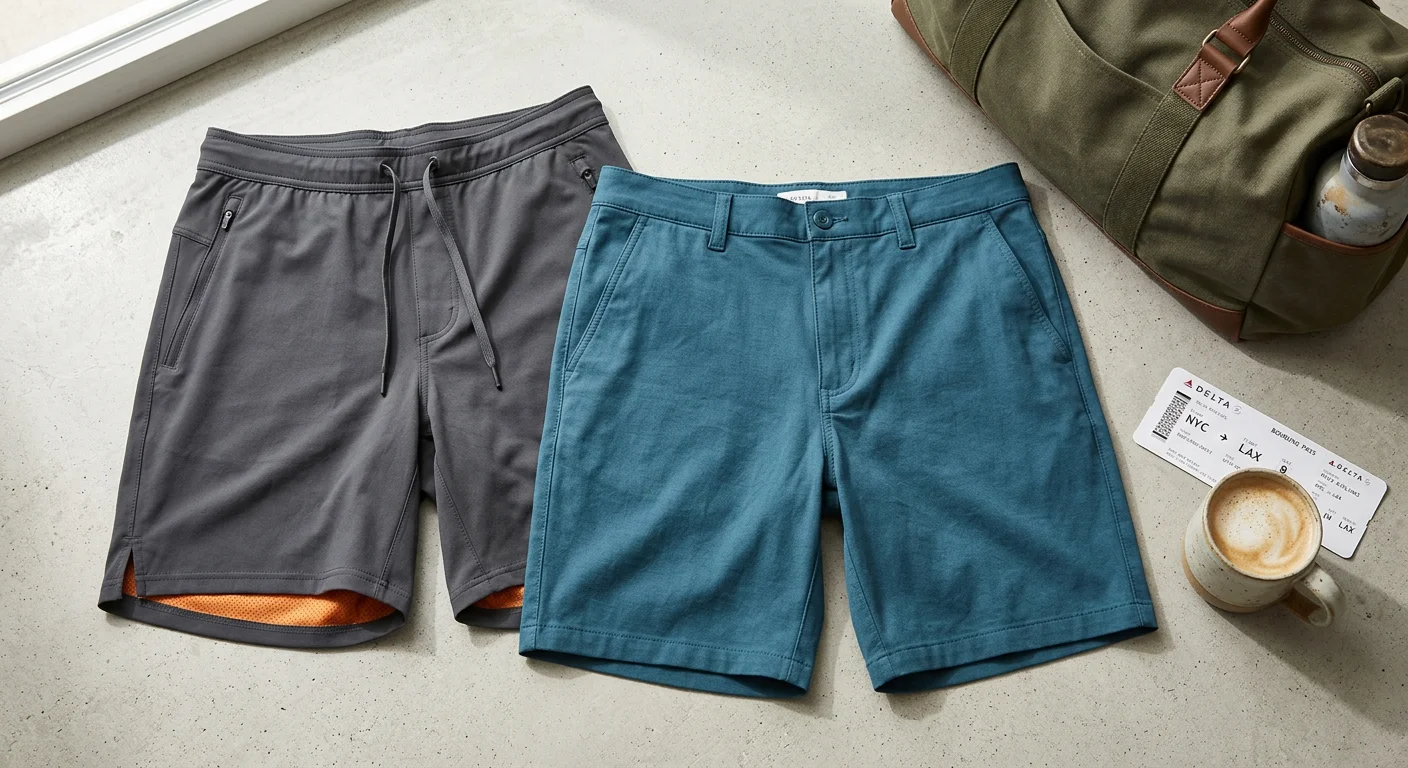
Still have a few burning questions before you commit? Here are the straight answers.
Can the Banks Short be used for swimming?
Yes — built for it. Vuori markets the Banks as a "land and sea hybrid." The fabric is 45% recycled polyester / 45% polyester / 10% elastane. It dries fast. The unlined construction also helps — no soaked liner weighing you down in the water. The 5" inseam option keeps things even more swim-ready. Train in the morning, hit the beach in the afternoon — Banks handles both without missing a beat.
Do Kore Shorts have a liner? What about Banks?
- Kore → Yes. Built-in boxer-brief style liner. Vuori calls it a "supportive liner for everyday workouts." It's soft, stretchy, and stays in place.
- Banks → No liner by default. Wear them solo or pull on your own athletic briefs underneath. Your call.
Is there a sizing difference between Kore and Banks?
Both share the same size range (XS–XXL), but they feel different at the same tag size. Kore fits secure and snug — the liner and elastic waistband pull everything together. Banks runs roomier and breezier at the same size. Reviewers at 6'0" with a 32–33" waist tend to land on Medium for both — but Kore feels much more fitted on the body.
Which is better for hot weather?
Banks wins here. No liner means better airflow. The 5" inseam adds to that open, breezy feel. Kore's liner traps more heat — solid for AC-cooled gyms, but less comfortable on a 90-degree patio.
What's the price difference?
Not much. Both sit in the upper-$60s to low-$70s range — Kore runs around $68–$74 , Banks sits around $68 . Seasonal sales and new colorways can shift that a few dollars either way. Don't pick based on price — pick based on how you'll wear them day to day.
Conclusion
Both the Kore and Banks Short have a solid place in Vuori's lineup — just for different versions of you.
Focused on structured training? The Kore Short is the stronger pick. Its compression liner and stability-focused build make it a standout on the gym floor.
Running a hybrid schedule? The Banks Short fits better. A cleaner silhouette and liner-free design give you real flexibility — coffee run, quick HIIT session, then straight to brunch, no outfit change needed.
Bottom line: there's no wrong choice — only the wrong choice for your lifestyle .
Still unsure? Head back to the Who Should Buy section. Most readers lock in their answer there in under 60 seconds.
Ready to invest in a pair of Vuori athletic shorts that hold up to real life? At $68–78, you'll find the price well worth it.The same buying principles also apply when developing custom performance trailing shorts for your own sports brand.