Made in Italy isn't just a label — it's a promise. A promise of obsessive craftsmanship. Fabrics that move with your body like a second skin. Silhouettes built to make you feel powerful, whether you're mid-workout or walking into a board meeting.
But here's what nobody tells you at the start of building a luxury activewear brand: finding the right Italian fitness clothing manufacturer is everything . The wrong partner can water down your vision before a single stitch is sewn.
So I've done the hard work for you. I've gone through the best luxury sportswear production Italy has to offer — from heritage ateliers to high-tech performance fabric specialists. You get a list worth bookmarking, plus the clarity and confidence to make your sourcing decisions count.
SIAWEAR — Best for Seamless Women's Athleisure
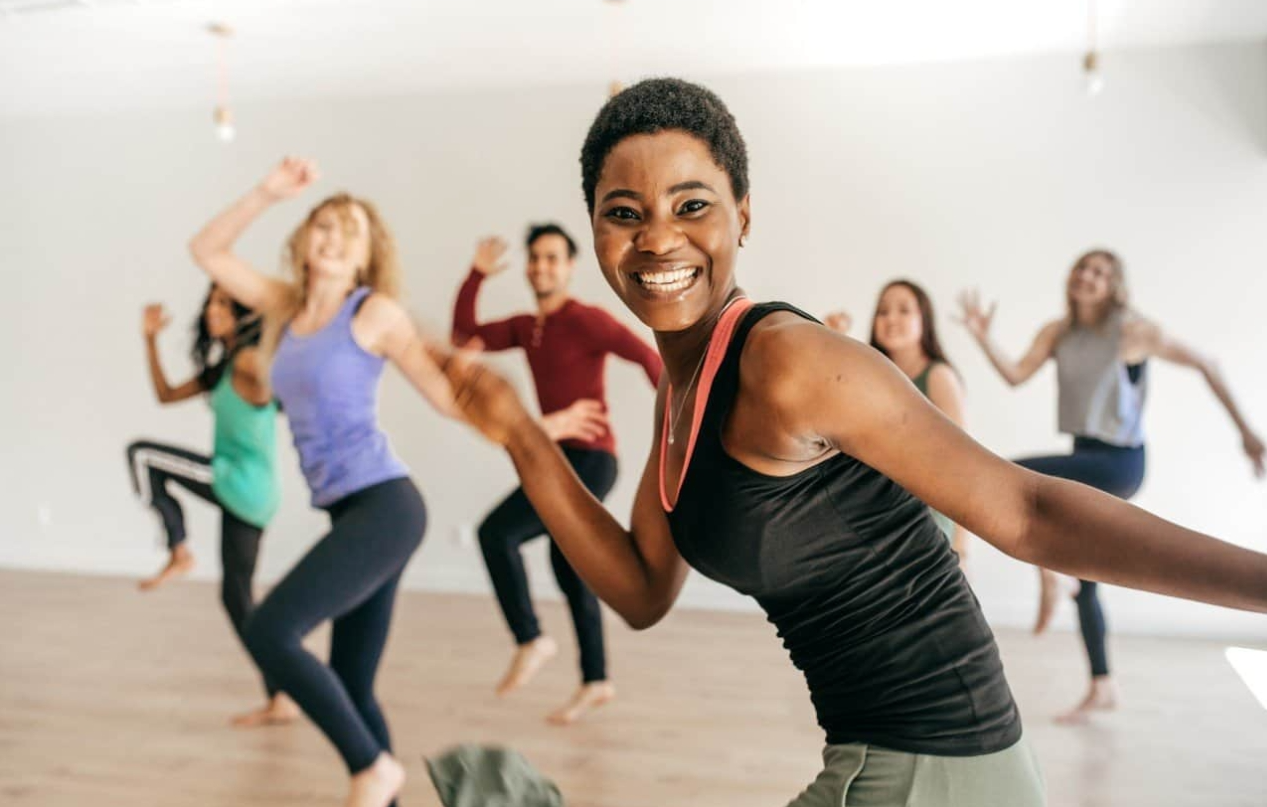
Once you wear seamless construction, standard activewear feels off. There's no going back.
SIAWEAR is a Milan-based sportswear manufacturer and wholesaler. They focus on women's seamless athleisure — and that's all they do. Every piece is 100% made in Italy . Their base is Via San Gregorio 55 in Milano. That address alone signals where they sit in the market. No walk-ins. You book a showroom appointment — very per appuntamento , very Italian.
What they make:
- Seamless leggings (circular-knit, body-contouring, 180–260 g/m²)
- Seamless tops and crop styles
- Seamless slips and coordinating underwear — the full athleisure set, built right
The technology is worth understanding. SIAWEAR uses seamless circular knitting . Each garment knits into shape in one process. Compression zones and ventilation panels go straight into the fabric — they're not added on afterward. The result is leggings that hold their shape. Tops that stay put mid-movement.
For brands, here are the numbers:
- MOQ starts at 150–200 pcs per style per color for private-label orders
- Ex-factory pricing: leggings at €8–15/piece , tops at €6–12/piece
- Sample turnaround: 10–20 days
- Bulk production: 30–45 days for standard styles
Brands selling Italian seamless athleisure at €80–150 — and luxury labels at €150–300+ — source from factories like this one. The "Made in Italy" label on seamless pieces isn't just branding. It's what justifies the margin.
Contact: +39 351 723 1828 (Monday–Friday, 09:00–19:00 CET)
CiaoGym — Best for Premium Luxury Activewear Positioning
Rome designed it. Italy made it. The rest of the world is still catching up.
CiaoGym refuses to separate performance from beauty. This is not a factory churning out generic compression leggings. It's a Rome-based luxury activewear label built on one unapologetic belief: you should get noticed in and out of the gym .
The product line covers both men and women:
- Women's high-waist sculpting leggings with contouring compression fits
- Coordinated sports bras and crop tops — full sets, built to photograph
- Men's fitted technical tops, shorts, and joggers with structured performance fabrics
The technical story holds up. CiaoGym builds around body temperature control and muscle support technologies. These are the same performance features you find in Italian mills like Carvico (warp-knit nylon/Elastane, 190–250 g/m²) and Schoeller -type technical weaves. The sculpting fits point to high-recovery fabrics in the 230–280 g/m² range for leggings. None of that is accidental.
Where CiaoGym sits in the market:
Think Alo Yoga or Varley — but with a Roman origin story instead. CiaoGym targets boutique gyms, pilates studios, and high-end retail spaces. In these places, where it's made carries as much weight as how it performs .
Where CiaoGym sits in the market:
CiaoGym does not advertise OEM or private-label services. So brands exploring luxury activewear positioning will need to reach out directly. Any B2B collaboration — co-branded capsules, limited runs for premium studios — goes through direct negotiation. For reference, Italian luxury activewear at this tier runs 45–90 days for new styles. MOQs land around 150–300 units per color .
The label's tagline puts it simply: "Say ciao to mass-produced activewear." Brands that want that energy built into their supply chain story — this is the reference point.
Active Apparel Group — Best for Full-Range Activewear & Swimwear Production
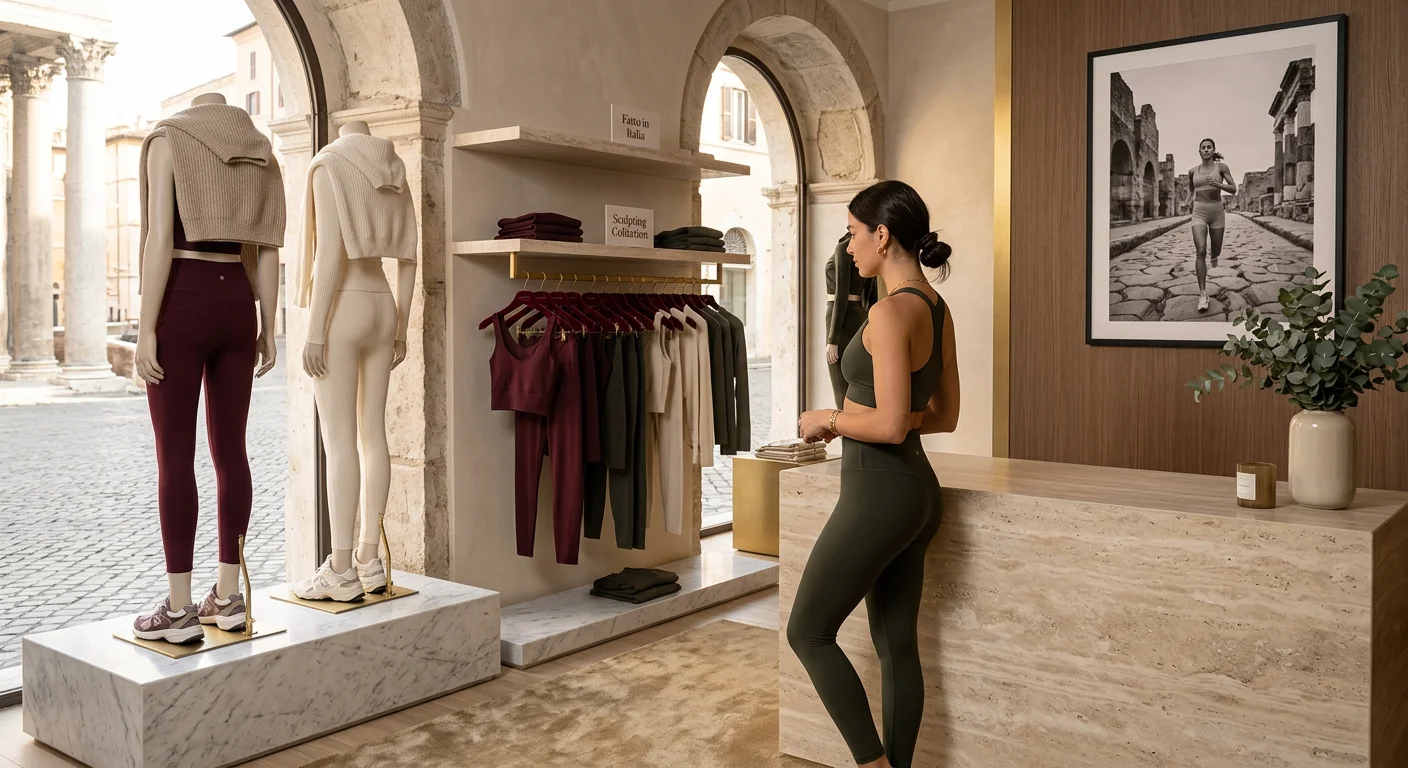
Some brands outgrow their fitness clothing manufacturers before they outgrow their ambitions. AAG exists for exactly that moment.
AAG is a multi-continent manufacturing group. Offices span Brisbane, Los Angeles, New York, Milan , and Ningbo. The Milan office sits at Corso Garibaldi 79 and works as the European sales and product development hub. It connects design-driven brands across Europe to a global production network. That setup makes scaling feel a lot less overwhelming.
What sets AAG apart is the breadth:
Performance activewear — leggings, sports bras, compression styles, seamless knits, and technical knits
Athleisure & lifestyle pieces — hoodies, joggers, gym-to-street soft wovens
Technical outerwear — waterproof shells, insulated jackets, taped-seam performance styles
Swimwear — bikinis, one-pieces, chlorine-resistant and UV-protective performance swim
Building a resort-sport-athleisure collection across multiple categories? Consolidating activewear + swim + outerwear under one OEM fitness clothing partner cuts development lead time by 15–30% . You also keep color and fit consistent across your entire range. That's a real advantage when presenting a cohesive luxury collection.
AAG manufactures for 37 partner brands across the world. Their certifications carry weight here. AAG holds B Corp status (impact score: 84.9 , against a global median of ~50.9) and WRAP certification . That combination is rare among garment OEMs. For premium Western brands with ESG commitments, those credentials are now a baseline requirement, not a bonus.
MOQs aren't published, but the profile fits emerging to mid-mature brands . Expect flexibility around 150–300 units/style for early capsule launches. Volume scales up as your program grows. Production lead times run 75–120 days for activewear and swim from pre-production approval.
The Milan office isn't a factory floor. Actual production runs through the Ningbo hub and a global factory network. But for European luxury brands, that Milan address delivers something real — faster development conversations, local fit sessions, and a team that understands the aesthetic you're building toward.
Italian Artisan — Best Sourcing Platform for Accessing Multiple Italian Factories
Most brands waste 4–8 weeks cold-emailing Italian factories. They hit language barriers, chase quotes, and still land the wrong partner. Italian Artisan fixes that.
Founded in Milan in 2014, Italian Artisan is a managed B2B sourcing platform . It's not a factory. It's a vetted network connecting international brands to 800+ Italian fitness clothing manufacturers across 16 regions and 24 manufacturing districts . Think of it as your insider Italian rolodex — pre-screened and ready to go.
What makes it useful for luxury activewear brands:
100+ onboarded workshops covering RTW knits, wovens, and functional fabrics. Knit leggings and tops start at 80–150 pcs MOQ . Woven track pieces run 100–200 pcs
Sampling takes 2–4 weeks (RTW). Bulk production runs 6–10 weeks
All fitness clothing manufacturers are pre-screened for ethical, sustainable production — no extra due diligence on your end
One platform handles multi-category orders (apparel + accessories + leather). Separate specialist workshops run each category in parallel
The sweet spot? Brands producing 500–10,000 pcs per year across multiple styles, with no existing Italian factory network. You manage one contact point — not 10 separate factory relationships. Plus, the "Made in Italy" story stays intact.
Belee Milano — Best for Sustainable Luxury Apparel Manufacturing
Sustainability in luxury fashion is no longer a trend — it's the new standard. Belee Milano gets this.
The company operates under the legal entity BELEE SRLS . It's Milan-registered, but production runs out of Perugia (Via Cestellini 17) — a quieter, artisan-rich corner of Italy where real craftsmanship thrives. Their positioning is clear: "100% made in Italy knitwear and apparel sampling and production for worldwide fashion brands."
What they specialize in:
- Fashion knitwear and full apparel sampling
- Custom production for global brand clients
- Made in Italy origin-compliant manufacturing — cutting, sewing, and finishing all happen on Italian soil
Luxury brands looking at sustainable activewear production in Italy will find Belee Milano worth considering. That said, direct verification is a must. They don't list certifications like GOTS, GRS, or OEKO-TEX on any public channel. So before you commit, ask for:
Full certification matrix — scope, expiry date, and certifying body
CO₂e per garment benchmarks
Machine setup details for high-elastane performance knits
These three points tell you a lot about whether a manufacturer is genuinely sustainable or just claiming it. Don't skip this step.
Contact: [email protected] | +39 (0)2 30310492
Con.Fi. Fashion Service — Best for High-Tech Performance Fabric Construction
Fiesso d'Artico, Venezia. Since 1986. Four decades of dressing Europe's most prestigious fashion houses — that track record speaks for itself.
Con.Fi. Fashion Service Srl is a full-service Italian apparel manufacturer. One standard drives everything: high-tech construction at luxury quality . Their process covers the full chain — development, cutting, packaging, logistics — all under one roof. Quality checks run at every stage, no exceptions.
What makes their construction technical:
Laser cutting and automatic CNC fabric spreaders — precision at ±1 mm tolerance, essential for stretch panels and bonded seams on performance pieces
Heat-press lamination and thermobonding — seam sealing, reflective tape application, ultrasonic welding for polyamide and polyester blends without needle perforation
4-way stretch fabric handling — extension >50% in both directions, recovery >85%, with compression pattern mapping across graded sizes
Their QC holds at AQL 1.0–1.5 for critical defects. Rework targets stay below 5%. For bonded or coated technical garments, that level of discipline is rare to find.
Order volumes that work here:
Category | MOQ | Production Range |
|---|---|---|
Technical outerwear / bonded pieces | 150–250 pcs | 200–1,500 pcs/style |
Tailored jackets & coats | 80–150 pcs | 500–3,000 pcs/style |
Jersey tops & knit styles | 150–300 pcs | up to 40,000 pcs/month |
Con.Fi. doesn't publicize OEM terms — direct outreach is your path in. Once you reach them, ask about three things: their laser-cutting capability for stretch fabrics , their seam-sealing equipment , and their target AQL level per category . Those three questions will tell you everything you need to know.
MakersValley — Best Transparent Manufacturing Network for Brand Startups
Starting a luxury activewear brand from scratch means every sourcing decision matters. MakersValley was built for that exact challenge.
This Milan-based B2B platform connects emerging brands straight to vetted Italian garment factories. The focus is on high-end and luxury-tier production . It's not a factory. It's a pre-screened network. Brands normally spend 2–3 months cold-contacting Italian activewear manufacturers — dealing with language barriers and time zones. MakersValley cuts that process out.
What makes it useful for brand startups:
MOQs start at 30–100 pcs per style — built for test launches, not bulk commitments
Factory matching based on product category (leggings, sports bras, technical knits) and fabric type
Online milestone tracking across every production stage: cutting, sewing, QC, shipping
Sample development runs €150–400 per style , with 1–5 pieces per sampling round
The standout feature is Orma — MakersValley's traceability marketing tool. It creates embeddable supply chain modules you can add to your website. Your customers see where and how each piece was made. For luxury activewear brands charging €150–300+ , that "Made in Italy + transparent supply chain" story isn't optional. It justifies the price tag. It's also what investors want to see.
Italian activewear factories on the platform work with 200–260 g/m² high-elastane knits, four-way stretch (≥150%), and OEKO-TEX–compliant materials. The quality baseline is real.
Best for: New luxury activewear or athleisure labels focused on Italian craftsmanship, small-batch launches, and traceable supply chain storytelling from day one.
Arbo Moda — Best for Heritage Italian Craftsmanship Since 1970
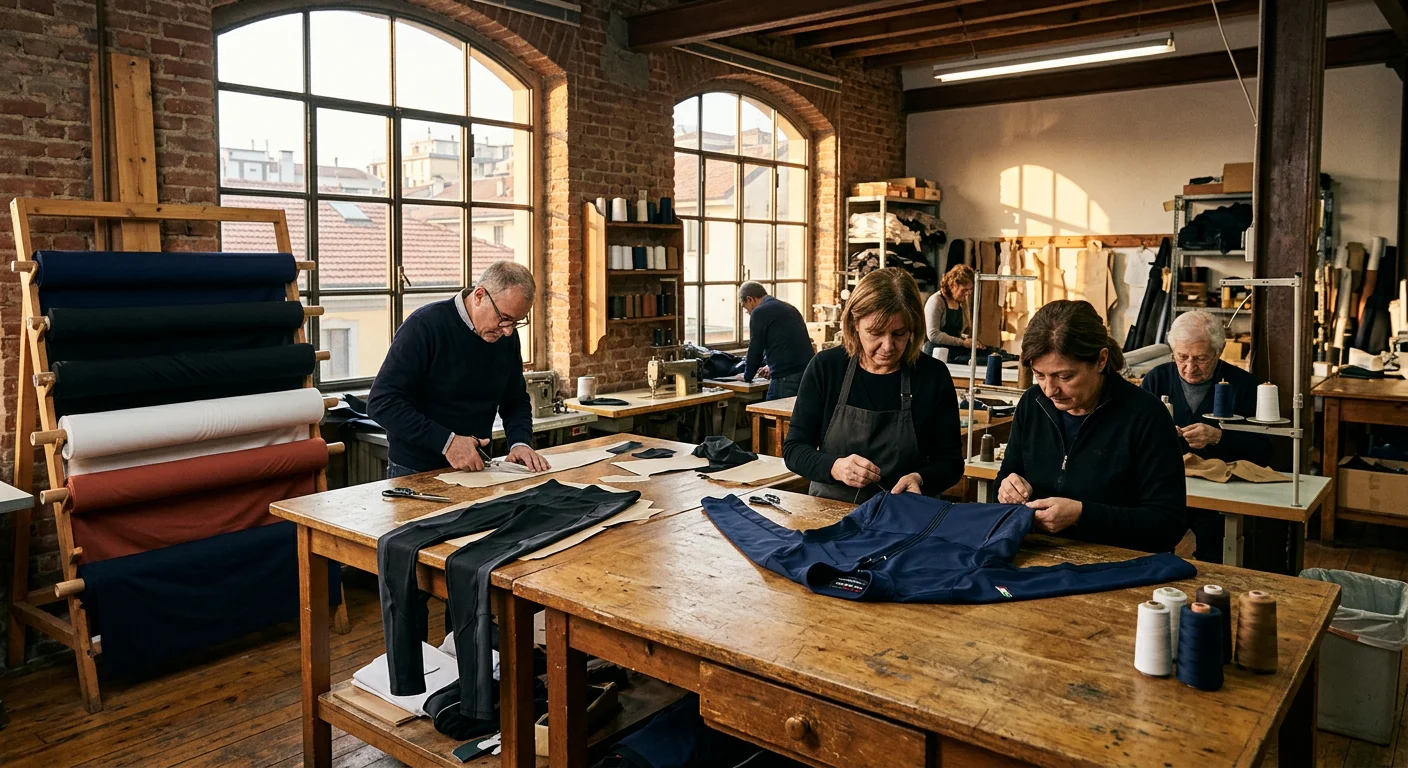
Fifty-four years. That's how long Arbo Moda has been cutting, constructing, and finishing outerwear for third-party luxury brands. That number carries real weight for any brand building a heritage story.
Founded in 1970, Arbo runs as a full-service manufacturing laboratory : design consultation, prototyping, industrial production, and even jacket reconditioning — all under one roof. Want to stamp a genuine "since 1970 Italian activewear manufacturer" narrative onto your outerwear capsule? This is where that story gets made.
Their core specialization:
- Structured jackets and custom-cut coats
- Down jackets (classic constructions, woven shells)
- Custom clothing with sharp Italian silhouettes
- Import/export management support for international clients
MOQs sit in line with heritage outerwear benchmarks — 80–150 pcs per style for custom coats, 150–300 pcs for down jackets. Pattern precision holds at industry-standard ±1–2 mm at critical seams.
One thing to know upfront: Arbo's strength is outerwear craftsmanship, not performance sportswear. High-stretch technical knits, bonded membranes, and RF-welded seams fall outside their core territory. Your luxury activewear line needs heritage outerwear pieces — a structured parka, a custom down jacket? Arbo does this exceptionally well. It needs laser-cut compression panels? Look elsewhere.
Best for: Luxury heritage labels building Italian-made coat or jacket capsules where craftsmanship is the entire point.
How to Choose the Right Italian Fitness Clothing Manufacturer for Your Luxury Brand
The manufacturer you choose doesn't just produce your clothes — it either protects your brand positioning or slowly destroys it.
I worked through eight manufacturers across Milan, Venice, and Perugia for this guide. Most sourcing mistakes happen before the first sample is even requested. Brands skip verification steps, rush MOQ negotiation, and assume an Italian company address equals Italian production. It doesn't. Here's how to avoid that.
Step 1: Verify "Made in Italy" Is Real — Not Just a Label
This is non-negotiable. Real Made in Italy means cutting, sewing, and finishing all happen on Italian soil — not just final packaging.
Ask every potential activewear manufacturer these questions upfront:
"Which production steps are carried out in Italy?" Get them to list each stage: cutting, sewing, finishing, packaging.
"Can you share your factory registration details and confirm whether any production is subcontracted outside Italy?"
Then request a video or in-person factory visit. You want to see the machines — not the showroom. Factories in core Italian textile regions carry more weight. Veneto, Lombardia, and Emilia-Romagna are your benchmarks. A Milan design studio with Chinese production is not Italian manufacturing.
Step 2: Match Their Craft to Fitness Apparel
General apparel experience isn't enough. Luxury activewear requires specific technical skills. Ask whether the factory has direct experience with:
High-performance fabrics : moisture-wicking, ≥15–20% elastane content, four-way stretch
Durability testing : Martindale pilling resistance at ≥20,000 cycles is a strong baseline
Technical construction details : flatlock stitching on inner leg seams, reinforced multi-needle stitching at shoulder and gusset, laser cutting, seamless technology, bonded seam tape
Ask for lab test reports covering stretch recovery rate, colorfastness, perspiration fastness, and shrinkage. Also confirm which standards they test against — ISO or EN numbers.
A factory that can't produce these documents? That tells you everything.
Step 3: Know the Real Numbers Before You Negotiate
Here's the Italian fitness OEM industry benchmark to keep in mind before any conversation:
Parameter | Standard Range | Notes |
|---|---|---|
MOQ per style/color | 100–300 pcs | 50–100 pcs possible, but expect +15–30% unit price |
First sample lead time | 10–20 days | Custom fabric or complex construction: 4–6 weeks |
Sample revision | +7–10 days | Per round |
Bulk production lead time | 45–75 days | Complex seasons can reach 90 days |
Full project cycle (sample to first delivery) | 3–6 months | Realistic for luxury positioning |
Ask for a tiered price sheet — 100/300/500 units per style — with all extra costs listed out separately: pattern-making fees, revision fees, print screen fees, label and hangtag fees. Factories that bury these costs in verbal commitments are a red flag.
Step 4: Check Certifications Against Your Brand Promise
Your certification needs depend on how you're positioning the brand. For luxury activewear , here's what matters:
OEKO-TEX Standard 100 — non-negotiable for performance activewear worn against skin. Your primary fabric and dyeing supplier must hold this.
ISO 9001 — signals consistent quality management across production runs.
GOTS — essential if your brand carries an organic or sustainable narrative. It allows on-label certification claims.
GRS (Global Recycled Standard) — required for recycled nylons or polyesters.
The baseline for luxury Italian activewear: ISO 9001 + OEKO-TEX Standard 100 . Add GOTS or GRS if sustainability is part of your story.
The Traps That Kill Luxury Brand Launches
Four patterns show up again and again in failed Italian sourcing projects:
Fake Italian origin — production happens in Asia, packaging in Italy. Fix this by putting it in the contract. Require all primary production steps to take place in Italy, with a breach-of-contract clause attached.
Sample-to-bulk fabric drift — the sample is perfect, but the bulk order uses different fabric weight or elastane content. Lock the fabric supplier, GSM, and elastane percentage in a signed technical specification sheet before bulk approval.
Vague delivery timelines — "around Q3" is not a commitment. Require a Gantt chart. Key milestones — fabric arrival, first piece confirmation, production start, shipping date — go into the contract with delay liability terms.
Unquantified quality standards — "luxury quality" means nothing unless it's measurable. Define it in numbers: AQL level, stitch count per centimeter, seam strength in Newtons.
The right Italian activewear manufacturer isn't just a supplier. It's the difference between a product that commands €200 and one that struggles to justify €80. Verify first. Negotiate second. Sign nothing until the numbers are in writing.
Frequently Asked Questions About Italian Fitness Clothing Manufacturers
Sourcing from Italy raises real questions — and vague answers cost you time and money. Here are the most common ones.
What is the typical MOQ for Italian fitness clothing manufacturers?
Factory size and design complexity both play a role. Small Italian producers that work well with startups start from 50–100 pcs per style per color — solid for test capsules. Mid-size performance OEMs ask for 200–300 pcs per style . Push that to 500+ pcs if you need custom technical fabrics. For a first Italian order, plan on 100–200 pcs per core style (leggings, bra, top). That's a workable starting range.
How long does sampling take?
Budget 6–8 weeks from first contact to an approved pre-production sample:
- Briefing + fabric selection: 1–2 weeks
- Pattern-making + 1–2 sample rounds: 2–4 weeks
- Final PPS adjustments: 1–2 weeks
Custom Italian technical fabrics — compression polyamide, recycled nylon — can add 1–3 extra weeks. Mill schedules get tight, so factor that in early.
Can Italian factories do private label / OEM?
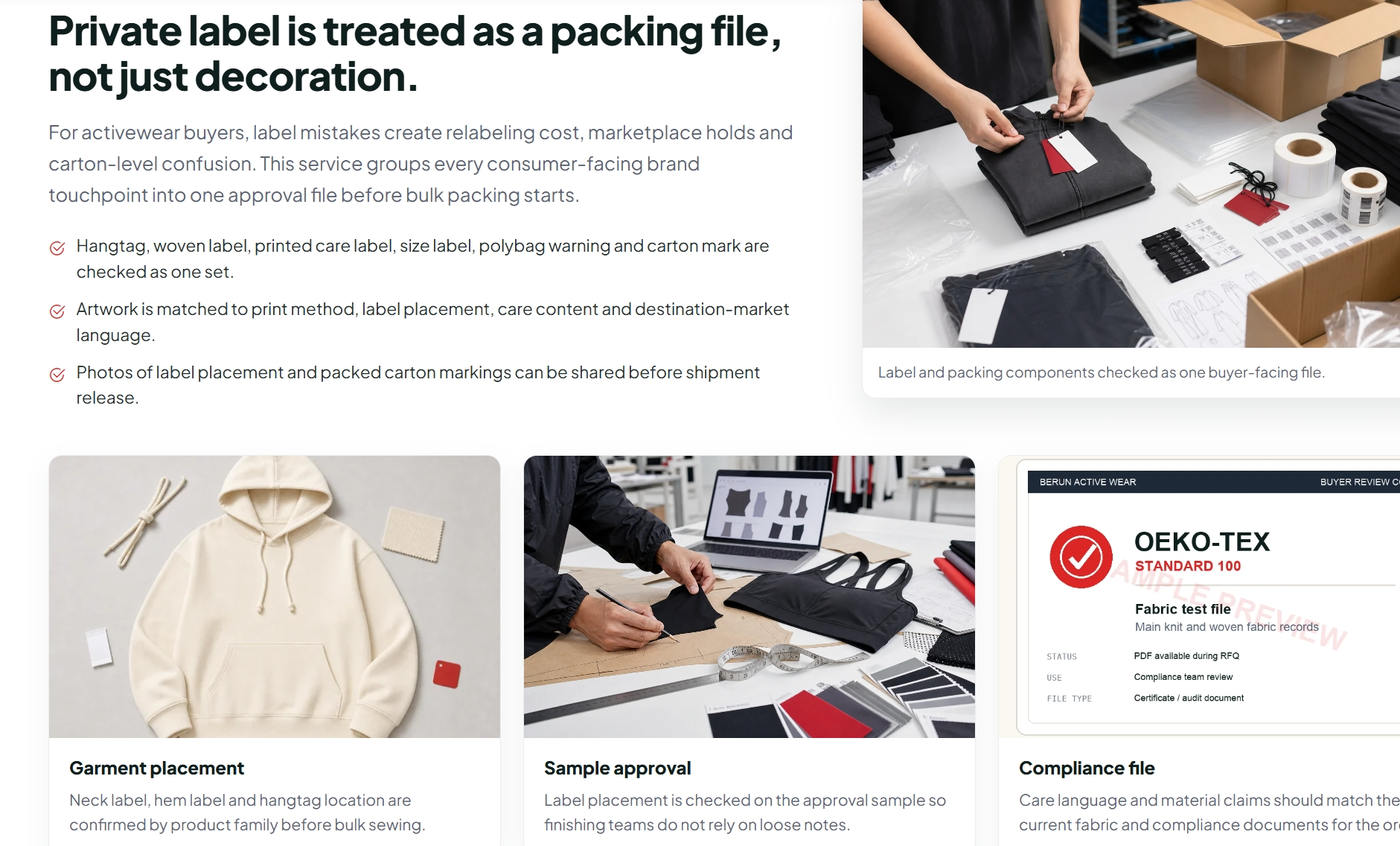
Yes — it's standard. Most factories offer full OEM services: exclusive pattern development, branded labels, heat-transfer logos, hangtags, and Pantone-matched custom fabrics. What's not included : marketing assets, branding strategy, or distribution support. Smaller workshops may cap customization at logo and colorway. Clarify the full scope before signing anything.
What certifications should I expect?
The baseline for Italian activewear:
- OEKO-TEX Standard 100 — fabric safety for skin-contact performance wear
- GRS (Global Recycled Standard) — needed for recycled polyester or nylon
- EU textile labeling compliance — all Italian manufacturers must carry this
Add GOTS if your brand runs an organic story. Ask for SMETA or ISO 14001 audits if ESG positioning matters to your buyers.
What are realistic bulk production lead times?
Simple styles with stock fabrics: 4–6 weeks post-PPS approval
Complex constructions (laser-cut, bonded seams, custom-dyed fabric): 8–12 weeks
A real example: 3 styles at 150 pcs each — sampling runs 6–8 weeks, bulk production another 5–7 weeks. Total: 11–15 weeks from concept to delivery.
What does Italian production cost versus Asian alternatives?
More — but the gap is measurable. Standard Italian-made leggings or sports bras run €10–20 ex-works at 100–300 pcs MOQ. Luxury hybrid fitness pieces with specialized finishing reach €25–40+ ex-works . Request a tiered price sheet at 100, 300, and 500 units. Break out fabric, CMT, printing, and packaging as separate line items. That way you see exactly where the cost sits.
What do Italian manufacturers need from you at first contact?
Send a clear brief from day one:
- Tech pack or detailed sketches with measurements by size
- Fabric specification (e.g., 250–280 gsm polyamide-elastane, recycled polyester)
- Quantity per style and per color
- Target delivery date and destination
- Required certifications
Send complete information and you'll get a quote back within 3–7 business days .
Conclusion
Italy doesn't just manufacture fitness clothing — it manufactures credibility .
From SIAWEAR's seamless precision to Arbo Moda's five decades of heritage craftsmanship, every manufacturer on this list offers something your brand can't replicate elsewhere. That's the quiet authority of Made in Italy — stitched into every seam.
The right Italian partner won't just produce your garments. They'll lift your entire brand story. In the luxury activewear market, that story is everything.
So now it's time to move from research to action. Shortlist two or three luxury sportswear production Italy manufacturers. Check that their MOQ, specialty, and aesthetic match your vision. Request samples. Ask the hard questions. Visit the factory if you can — the brands that win here are the ones who treat their supply chain as a competitive edge, not an afterthought.
The label matters. Choose it with care.