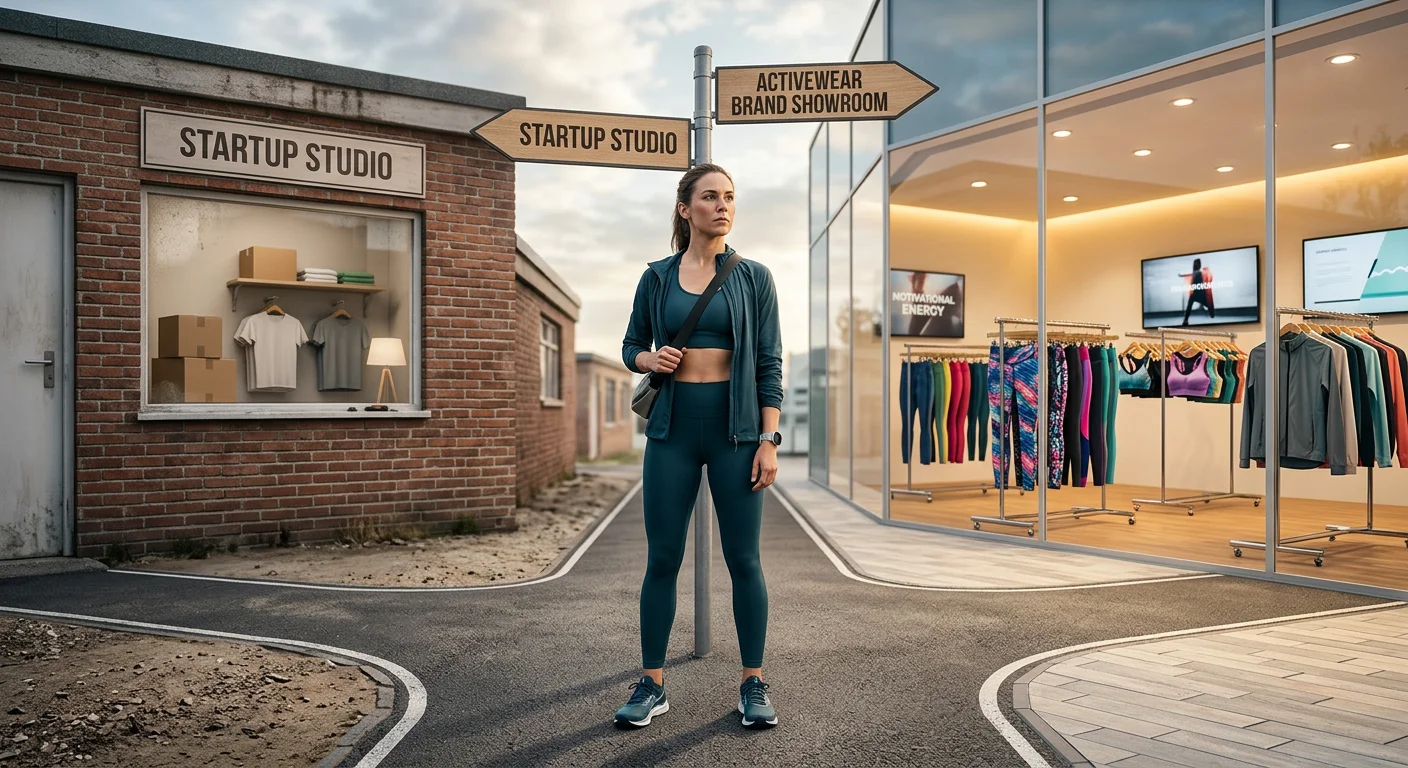
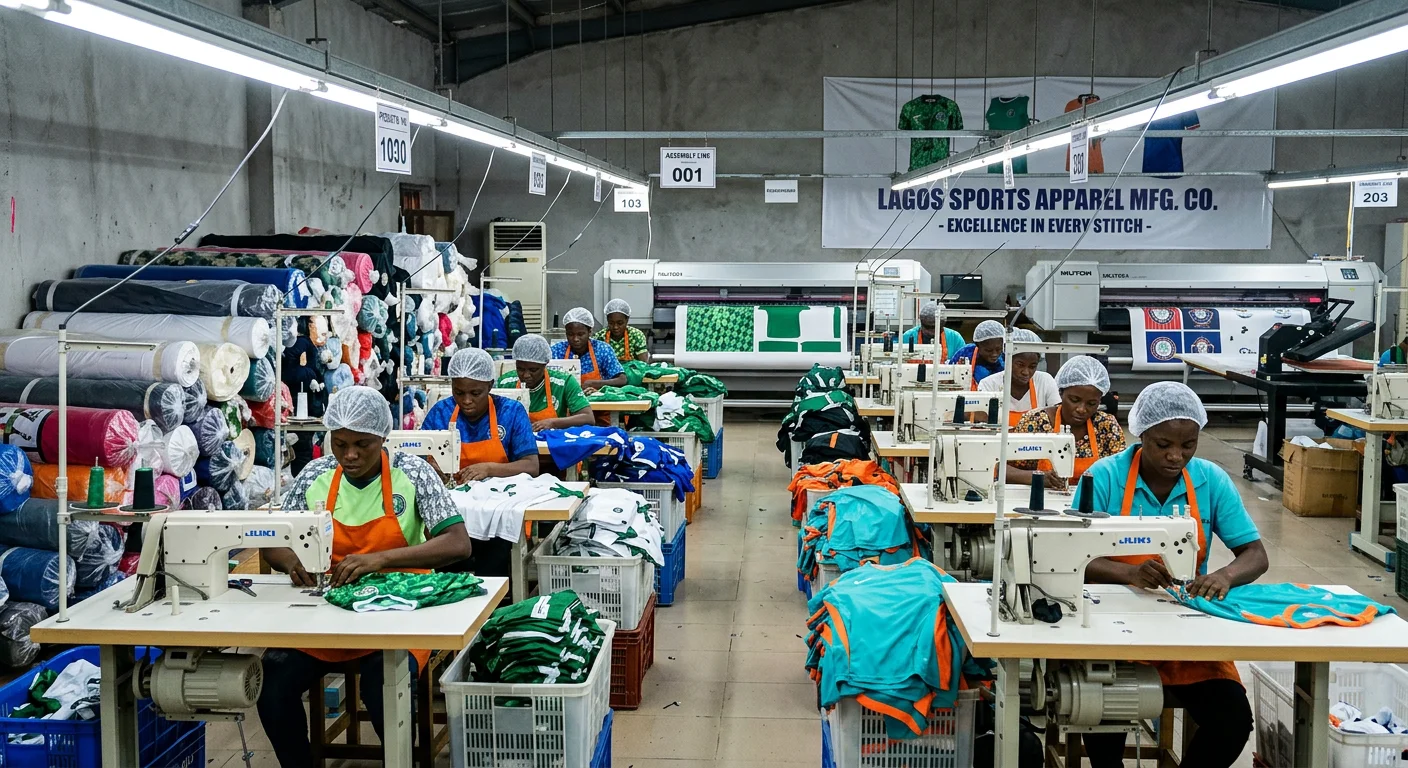
The apparel market doesn't reward guessing. It rewards manufacturers who read demand signals and position their production lines before the wave hits.
Global private label sportswear clothing is projected to grow through 2026. The real edge isn't just speed-to-market — it's knowing which categories deserve your factory floor, your MOQs, and your client acquisition budget.
Not every trending silhouette turns into profitable, repeatable wholesale private label activewear clothing orders.
So this guide skips the noise. It focuses on four high-demand, high-margin apparel categories backed by consumer behavior data, supply chain viability, and real growth trajectories. You get a clear framework to decide where to double down — and where to walk away.
Performance Activewear & Moisture-Wicking Athleisure
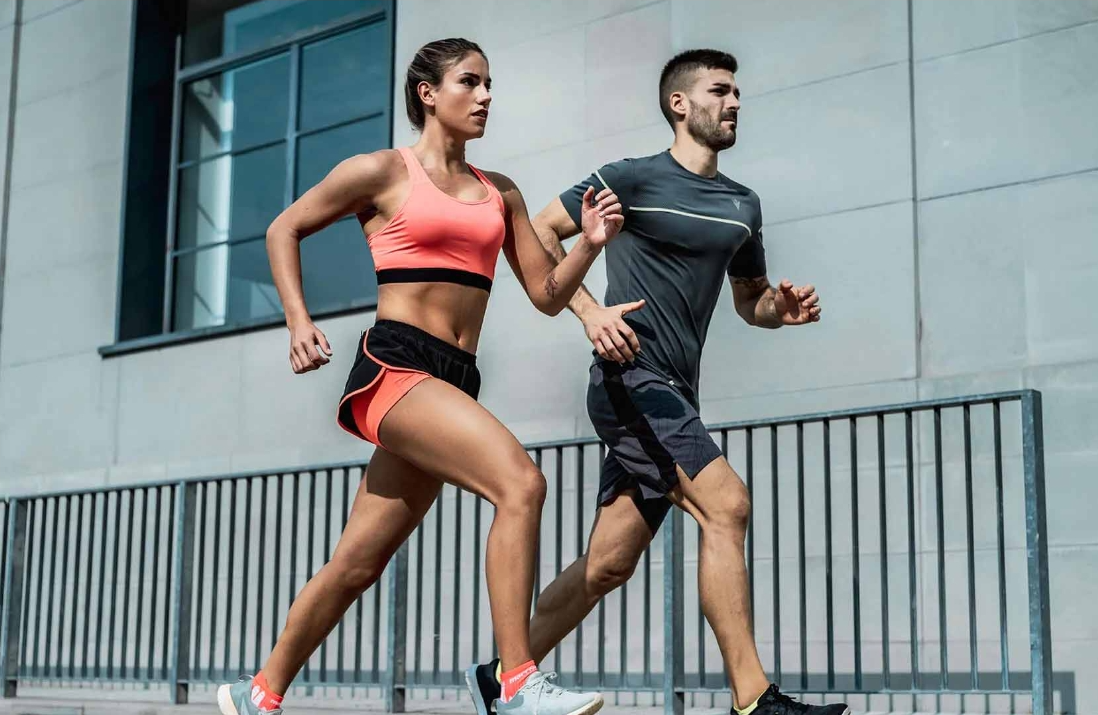
Athleisure isn't a trend anymore. It's a permanent shift in how people dress — and the performance segment is where the real manufacturing opportunity sits in 2026.
The consumer logic here is simple: people want clothes that keep up with them. A HIIT session at 6am. A client meeting at 9am. Same outfit. That dual-use demand is why performance activewear and moisture-wicking athleisure keeps generating repeatable wholesale private label fitness wear orders at strong margins.
Why This Category Wins for Manufacturers
The product brief comes down to one line: wick sweat fast, dry fast, stretch in four directions, and look retail-ready doing it.
That's an engineering problem — not a fashion problem. And that makes it a manufacturer's category.
Your strongest target buyer segments are:
Remote workers and gym-to-office buyers (28–45 professionals) who need technical comfort and a clean silhouette they can wear all day
Boutique fitness users in yoga, Pilates, HIIT, and running who put breathability and movement freedom first
Consumers who won't budge on fit, opacity, or quick-dry performance — and will return anything that falls short on any of those three
REI's sourcing guidelines back this up: moisture-wicking functionality matters most in apparel worn against the skin during sweat-producing activity. That's your product brief confirmed by one of the biggest retail validators in the category.
Fabric Stack and Construction Standards
Material selection is what separates a real performance product from a fashion piece dressed up in athletic clothes.
The proven commercial fabric mix:
- Polyester-spandex or nylon-spandex for stretch and shape recovery
- 280–320 GSM four-way stretch knit — the industry benchmark for training leggings, sets, and bra tops. Heavy enough for opacity and support. Light enough not to restrict movement.
- Mesh ventilation panels on HIIT and hot-weather SKU variants
- Skip merino blends unless the brief calls for temperature regulation. They add cost and production complexity with no performance gain in core athleisure.
Construction details that affect return rates:
- Flatlock stitching removes chafing friction points
- Seamless or laser-cut edges give a cleaner finish and cut down on skin irritation
- Hydrophilic inner / hydrophobic outer layer construction is the technical mechanism that moves sweat outward. This is what supports any moisture-wicking claim you make to brand clients.
- Run fit testing across multiple body types before bulk production — non-negotiable for compression pieces, leggings, and bra tops
Margin Structure and MOQ Benchmarks
Here's the commercial picture for OEM sportswear apparel suppliers entering this category:
Metric | Benchmark | |
|---|---|---|
MOQ per SKU | 300–500 units | |
$22–$38 per piece | ||
Target retail markup (private label) | 3x–4.5x |
Those margins hold when design positioning and brand story are solid. Brands paying at the top of that wholesale range are buying engineered comfort — quick-dry, anti-stick, breathable, movement-tested. Not just fabric with a logo.
How to Differentiate as a Cut and Sew Manufacturer
Most garment factories offer similar base fabrics. Your edge comes from the services built around production:
In-house apparel product development — tech-pack refinement, fit revisions, and 3D simulation show brands you're a development partner, not just a production vendor
3-week sample turnaround — for agile DTC brands and clothing line startups, fast sampling is a real competitive advantage. Make sure you promote it.
Size grading controls and fit consistency guarantees — sizing inconsistency is the top driver of returns in stretch apparel. Brand founders already know this. Show them you've solved it.
Risk Points to Lock Down Before Scaling
Two risks can eat your margin in this category without warning:
Elastane and spandex cost volatility — lock in fixed-rate yarn contracts before bulk production runs. This shields you from input cost spikes.
Fit failures at scale — weak opacity, poor shape recovery, or uneven compression drive returns fast and kill repeat orders.
The fix is straightforward: fixed yarn contracts + grading controls + fit testing before bulk. Handle those three, and this category runs at strong margins.
Best-performing SKUs to anchor your line: high-rise training leggings (polyester-spandex, flatlock seams), moisture-wicking tanks and tees with breathable panels, longline sports bras with stretch recovery, and jogger sets with a quick-dry finish for the office-crossover buyer.
Berun Activewear — A Private Label Production Partner Worth Evaluating
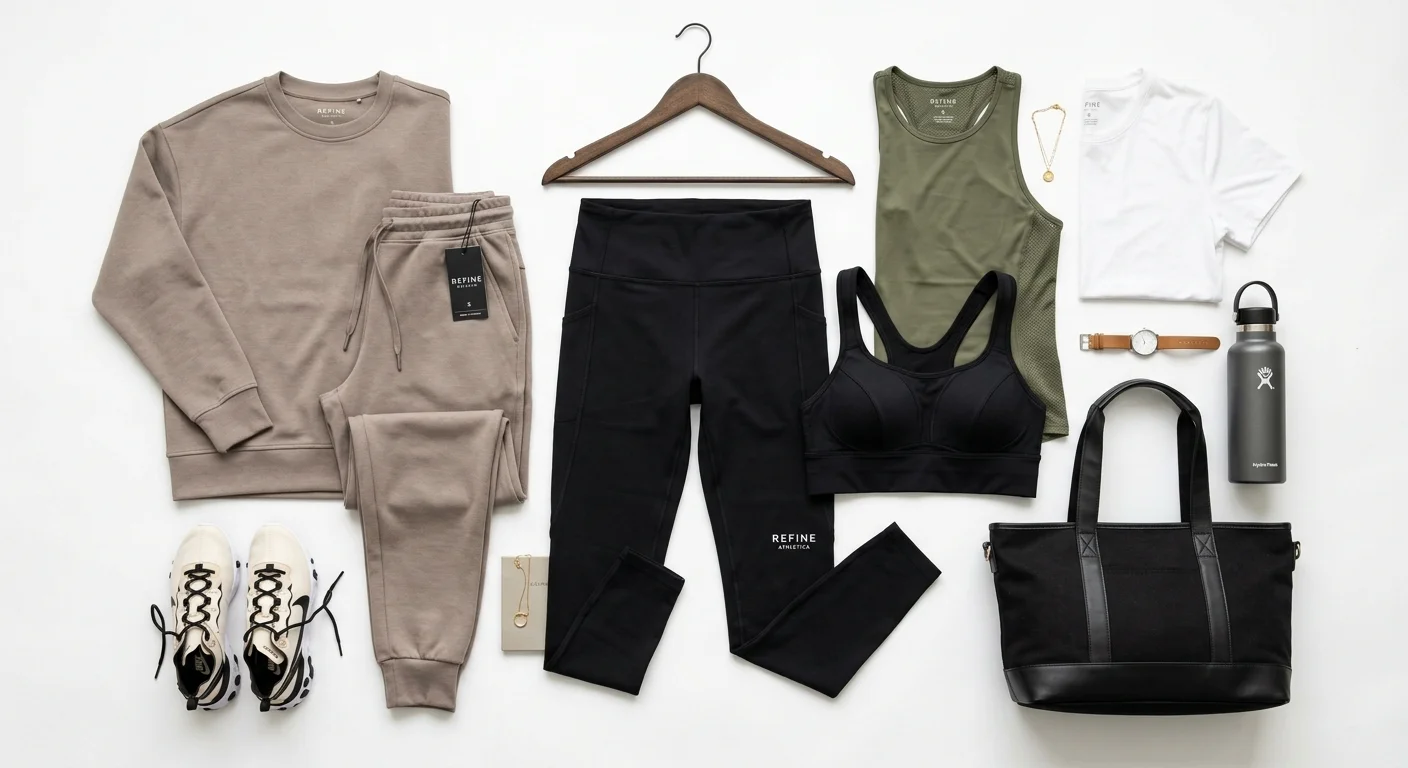
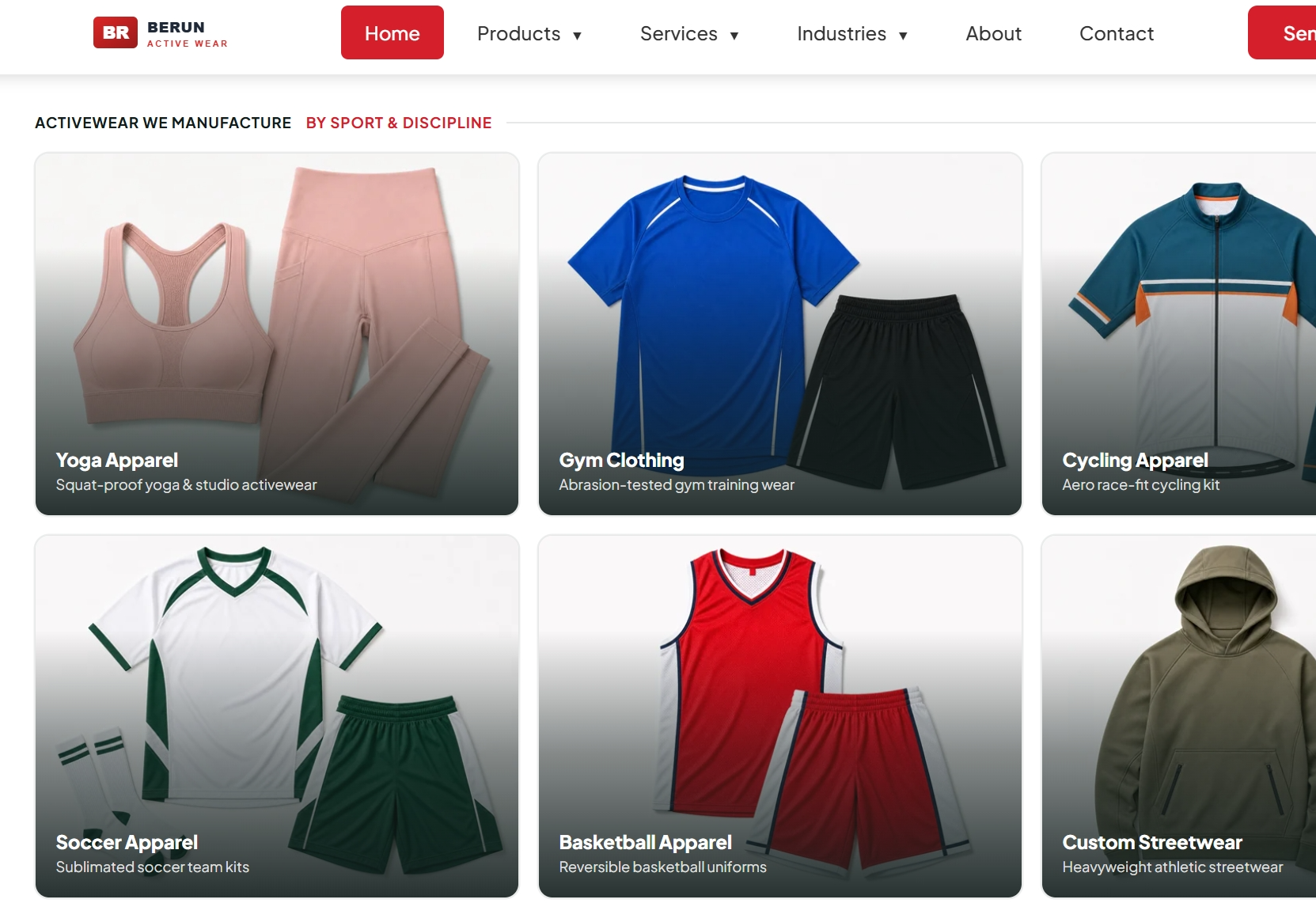
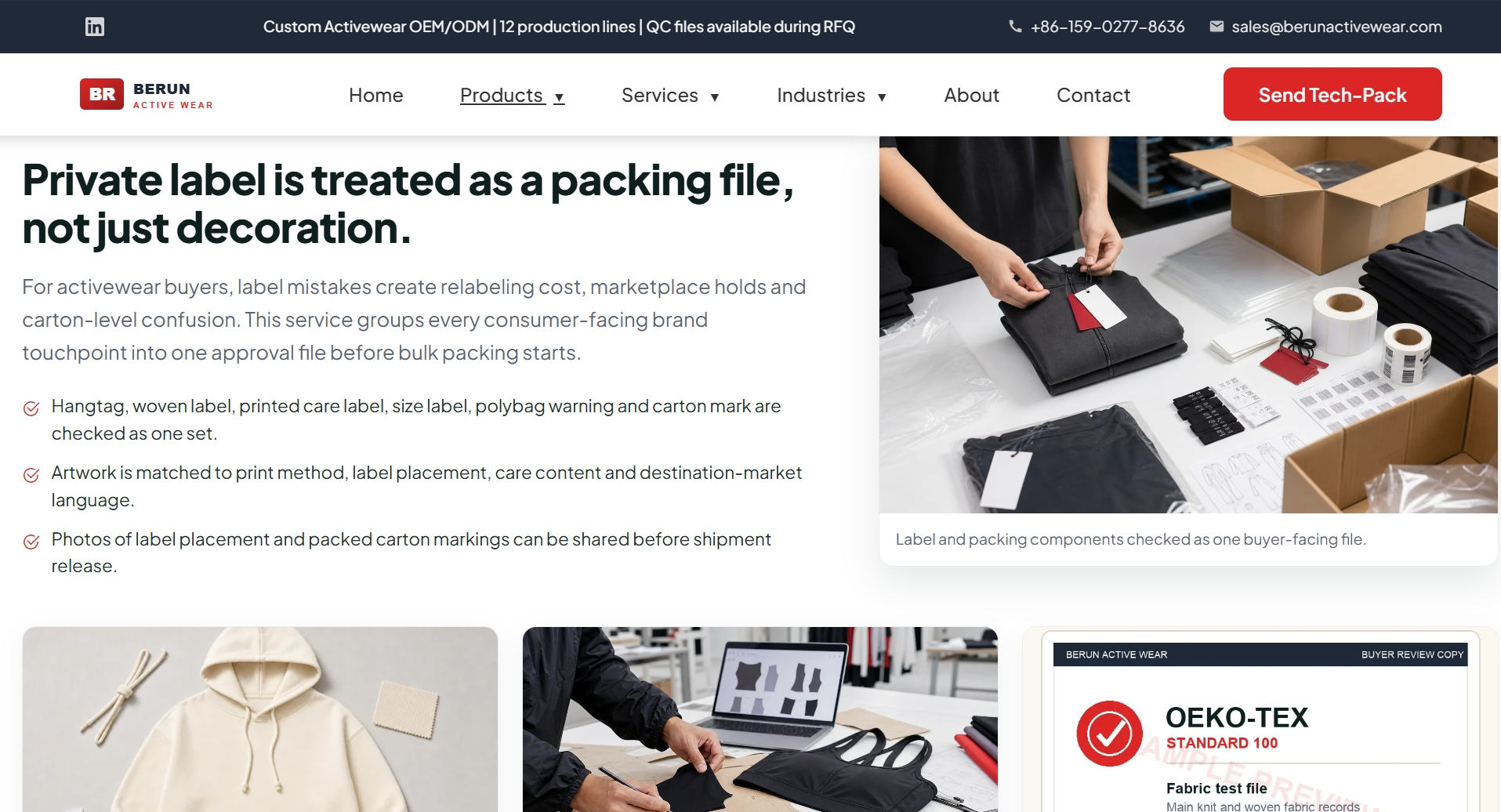
China's sportswear manufacturing space is full of factories claiming OEM capability. Berun Activewear (berunactivewear.com) stands out. Its production scope covers the two highest-demand segments heading into 2026: branded activewear for DTC fitness lines and custom teamwear for clubs and collegiate programs .
Berun runs as a full OEM/ODM cut and sew sportswear manufacturer. That means pattern development, sampling, bulk production, and branded packaging — all under one roof. For a startup clothing brand or an established label moving into private label, that matters. You deal with one vendor, not three, to get from tech pack to finished carton.
What They Produce
The core product mix covers:
Leggings, sports bras, gym tops, compression sets — polyester/spandex knit at 180–260 GSM, four-way stretch, flatlock seaming at high-friction zones
Team uniforms — football, basketball, baseball, ice hockey — full-panel sublimation printing with variable name, number, and sponsor logo options
Custom gym wear — all-over sublimation, embroidery, and screen print options to meet brand-specific identity needs
The sublimation setup is the real differentiator. Repeat orders on the same template — where only player names and numbers change — cut per-unit design costs after the first run. The savings add up fast across a season.
MOQ and Pricing Reference
Order Type | MOQ | Est. FOB Unit Price |
|---|---|---|
Brand activewear (leggings/bra sets) | 50–100 pcs/style/color | US$15–30/set |
Team uniforms (sublimation) | 10–30 sets/design | US$12–20/set |
Scale orders (500+ units) | Negotiable | Lower tier pricing |
Factory gross margin lands in the 40–52% range on standard silhouettes with rolling fabric procurement. That's a solid commercial reason to anchor repeat clients on your core pattern library. Rebuilding specs each season eats into that margin fast.
Operational Recommendation
Set tiered pricing at 50–99, 100–299, and 300+ unit thresholds. Bill pattern development and sublimation plate setup as separate line items. This keeps bulk unit pricing clean and protects your margin on low-volume sampling work.
For color-sensitive brand clients, build a Pantone-to-CMYK-to-print SOP and maintain a client color archive. Pull repeat orders from the same color file every time. This removes the most common complaint in custom apparel: batch-to-batch color drift.
Recycled-Fiber Sustainable Loungewear & Basics
Sustainable apparel used to be a differentiator. In 2026, it's a procurement requirement.
Buyers aren't browsing sustainability pages on your website anymore. They're asking for certification documentation before they issue a purchase order. Recycled-fiber loungewear and basics have moved from ethical preference to verified supply chain standard. That shift is your manufacturing opportunity.
The global sustainable apparel market is moving fast. The brands gaining traction aren't the ones making vague eco-claims. They're the ones who can hand a buyer a GOTS or OEKO-TEX certificate and say: here's the material origin, here's the mill, here's the end-of-life plan. That's the new sales conversation — and it starts with how you build your production line.
Who's Buying This Category
Three consumer segments are driving demand for recycled-fiber basics. Each one carries high repeat-purchase potential:
Eco-conscious urban consumers who filter brands by material transparency and ethical sourcing standards
Minimalist and capsule-wardrobe shoppers who prioritize durability and wearability over seasonal trend cycles
Gen Z buyers who tie product sustainability to brand identity — and will drop a brand fast if the "recycled" claim doesn't hold up
Organic Basics is the benchmark brand here. Designed in Denmark, manufactured in Europe, built around organic and recycled materials with certified facilities. Their positioning isn't about fashion — it's about durable everyday essentials that don't compromise on comfort or accountability . That's the brief your production line needs to answer.
Fabric Stack That Supports the Story
Generic "recycled" claims are a liability now. Certified recycled inputs are an asset.
The material stack that works for this category:
1.Recycled polyester and recycled cotton blends for tees, sweatshirts, hoodies, and joggers — the core SKU set
2.Recycled nylon for stretch basics and active-crossover pieces where recovery and durability matter
3.Organic cotton with recycled fiber blends for underwear and close-contact basics where softness retention is non-negotiable
Treat these certifications as the baseline — not the bonus: GOTS (for organic fiber verification) and OEKO-TEX (for harmful substance testing). Your suppliers need to provide current certification status on their recycled fabric mills. Find new acivewear suppliers if they can't.
Margin Structure and SKU Focus
SKU Type | Wholesale Range | Retail Markup |
|---|---|---|
Recycled tees & long sleeves | $18–$28 | 3x–4x |
Sweatshirts & hoodies | $32–$52 | 3x–3.5x |
Joggers & lounge bottoms | $26–$40 | 3x–4x |
Underwear & base-layer basics | $14–$22 | 3.5x–4.5x |
Timeless silhouettes protect this margin. Fashion-forward categories get hit with markdowns at end-of-season. Recycled basics don't age out. A classic crew-neck sweatshirt in a certified recycled cotton-poly blend sells in Q1 and Q4. That's the inventory advantage brands building capsule lines care about most.
How to Position Your Production Capability
Here's what separates credible sustainable-basics sportswear manufacturers from the crowded field of vague eco-vendors:
1. Lead with certified traceable materials — not marketing language. Show brand clients the paper trail from recycled input to finished garment.
2. Build comfort-first finishing into your quality standard. Softness retention across wash cycles is the primary product requirement in this category. Trend-driven styling is secondary. A scratchy recycled-fiber tee doesn't get a second order.
3. Package the story at the product level. Traceability packaging and material disclosure inserts are high-value add-ons. They cost little to produce. Plus, they give brands the confidence to charge a premium retail price.
4. Set MOQs at 200–300 units per SKU. That's low enough to bring in DTC startups and clothing line founders testing their first sustainable collection. It's also high enough to protect your production economics.
One risk to flag now: "recycled" without certification is a brand liability, not an asset. Buyers in this segment know the difference between verified claims and greenwashing. Your supply chain needs to support documentation — or don't lead with sustainability positioning. Build the certification infrastructure first. Then scale client acquisition around it.
Technical Utility Streetwear & Modular Outerwear
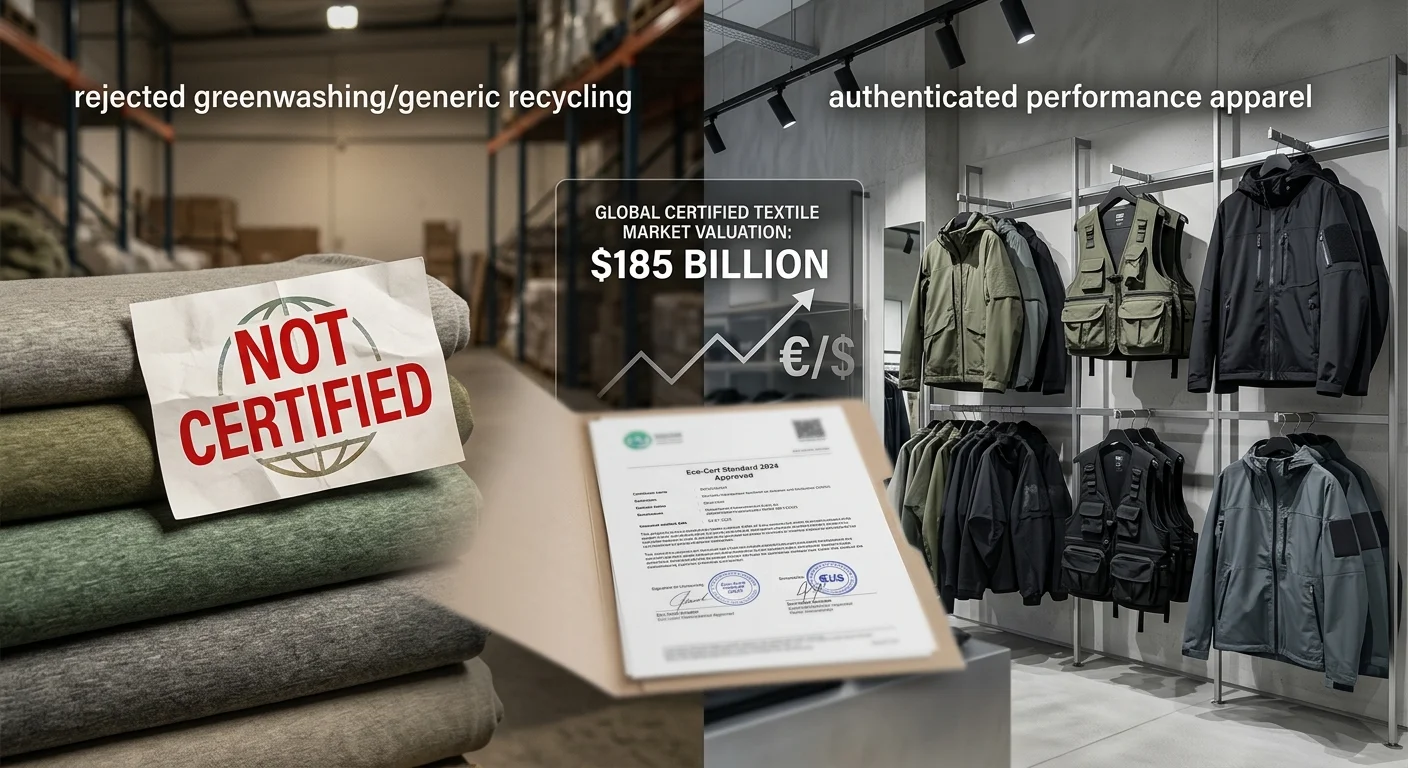
The global streetwear market sits at $185 billion — and most of it is packed with basic hoodies, graphic tees, and logo-heavy pieces all fighting on price. The manufacturers winning in 2026 aren't in that fight. They've moved into the technical utility segment, where engineering complexity builds a natural barrier, margins stay strong, and brand clients pay premium prices without pushing back.
Here's why that matters for your production line.
The Market Signal Manufacturers Shouldn't Ignore
60% of Gen Z consumers now prioritize functionality over fashion when buying clothing — durability, multi-scenario utility, and all-weather adaptability matter more than seasonal trends. That shift is pushing demand for techwear and modular outerwear hard. Waterproof and windproof outerwear is growing at 5.9% CAGR through 2026 — steady, defensible growth built on real lifestyle needs, not hype.
The consumer logic is simple. Urban dwellers need clothing that handles morning rain, afternoon meetings, and an evening commute — no wardrobe change required. That's not fashion. That's infrastructure. Infrastructure demand doesn't fade when trends shift.
Your primary buyer segments:
- Urban commuters aged 18–35 in metro markets who move through multiple environments each day
- Streetwear enthusiasts and content creators who value engineered aesthetics and functional credibility
- Outdoor-adjacent consumers who want technical performance without losing street-ready style
These buyers pay more per piece. They also return less and skip sale pricing — which protects your wholesale clients' margins and keeps repeat orders coming back to your factory floor.
Fabric and Construction Requirements
This category punishes factories that miss the technical specs. There's no room for "close enough" on waterproof performance or modular system integrity.
Core fabric specifications:
- Ripstop nylon or ripstop polyester for exterior shells and tactical trousers — the tear-resistant grid structure holds up to hard, regular use
- TPU/PU waterproof-breathable membranes in 2L, 2.5L, or 3L composite builds for urban shells
- Cordura® or ballistic nylon reinforcement at high-wear zones: knees, elbows, shoulders
- Organic cotton and technical fiber blends for pieces that need both good hand-feel and weather resistance
Hardware and trims that make or break the product:
- Waterproof zippers — YKK AquaGuard or TIZIP fully-sealed options. A premium shell with a cheap zipper is a return waiting to happen.
- High-strength snap fasteners, Fidlock-style magnetic buckles , and military-spec webbing for modular attachment points
- Breathable metal or rubber eyelets at underarm and back panels for pressure release — this kills the "plastic raincoat" heat trap that destroys reviews
Critical construction processes:
- Full seam sealing and heat tape on all structural seams. Plan the tape routing from the pattern stage. Adding pressure tape to complex seams after the fact causes bond failures.
- 3D pattern drafting and articulated cutting — gusseted knees, underarm diamond inserts, and action pleats that keep full range of motion under load
- Underarm or back zip ventilation ports to manage moisture during active use
Modular design is where most factories fall short. Detachable hoods, removable liners, and zip-on/zip-off hem extensions all need standardized connection systems — same zipper gauge, same magnetic lock format across every SKU in the line. Inconsistent hardware specs break the modular concept before it reaches the customer.
Margin Structure
Product Type | FOB Unit Cost | Retail Price Range | Estimated Brand Margin |
|---|---|---|---|
Lightweight tech shell / tactical vest | $38–$55 | $100–$180 | ~50–65% |
High-spec 3L shell with removable liner | $55–$85 | $180–$350 | ~55–72% |
Modular accessories (hood, neck gaiter, chest pack) | $12–$22 | $45–$90 | ~50–65% |
Low markdown dependency is the category's real edge. Core colorways — black, slate grey, olive, khaki — move through Q3 and Q4 without clearance pressure. Selling modular accessories as separate add-ons raises the average order value per customer and generates extra factory orders beyond the core shell program.
Operational Recommendations for Manufacturers
MOQ structure:
- Set 200–400 units per SKU with color-combined cutting to keep minimums reachable for mid-size brands
- For modular systems, price and set MOQ on accessories separately: 200–300 units on the shell, 150–200 units per modular add-on. This creates upsell conversations with brand clients on every reorder.
Pricing and positioning:
- Use value-based pricing , not cost-plus. Lead with waterproof ratings (10,000–20,000mm hydrostatic head), zipper cycle test counts, and membrane breathability specs (g/m²/24h). These are hard proof points that back up premium FOB pricing.
- Offer volume tiers at 200, 500, and 1,000 units. This pushes brands to consolidate SKU counts and increase per-style quantities — which cuts your material procurement costs.
The capability that closes deals:
Position your operation as a technical cut and sew sportswear manufacturer , not a general apparel vendor. The credentials that matter: in-house or lab-partnered waterproof and breathability testing, documented seam seal integrity, and 2–3 week sample turnaround on complex shell patterns. Brands shopping OEM suppliers in this category screen out factories that can't prove these capabilities — often before they even ask for a quote.
Consolidate your hardware sourcing — zippers, webbing, buckles, D-rings — into one managed library. Give brand clients access to pre-vetted hardware specs. This cuts a major friction point out of the product development process and puts your factory in the position of a full-service development partner, not just a production vendor.
Conclusion
Brands that win in 2026 won't just spot trends. They'll build the supply chain before demand spikes.
Performance activewear, sustainable loungewear, technical utility streetwear, and modular outerwear — these aren't guesses. Each one is a category bet. Consumer behavior is shifting. Market growth is measurable. And structural gaps exist that white label garment production is built to fill.
So what separates activewear manufacturers who scale from those who stagnate? Two things: timing and specialization. Pick two of these four categories. Go deep on materials, MOQ flexibility, and construction quality. Don't spread thin across everything at once.
Your next move:
Check your current production capabilities against the fabric and technique requirements listed above
Identify which category fits closest with your existing equipment and client base
Commit to that direction before your competitors do
The window to become the go-to OEM sportswear apparel supplier for these high-growth segments is open right now. It won't stay open long.