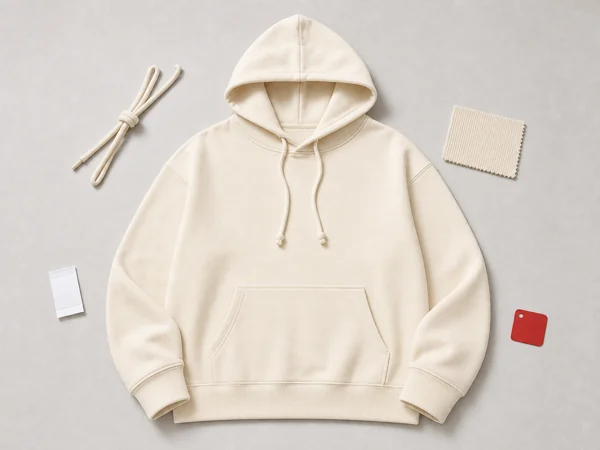
Garment placement
Neck label, hem label and hangtag location are confirmed by product family before bulk sewing.
You supply the artwork. We handle hangtags, care labels, size labels, branded polybags, and carton marking — bundled into your OEM or ODM order at no extra MOQ.
For activewear buyers, label mistakes create relabeling cost, marketplace holds and carton-level confusion. This service groups every consumer-facing brand touchpoint into one approval file before bulk packing starts.
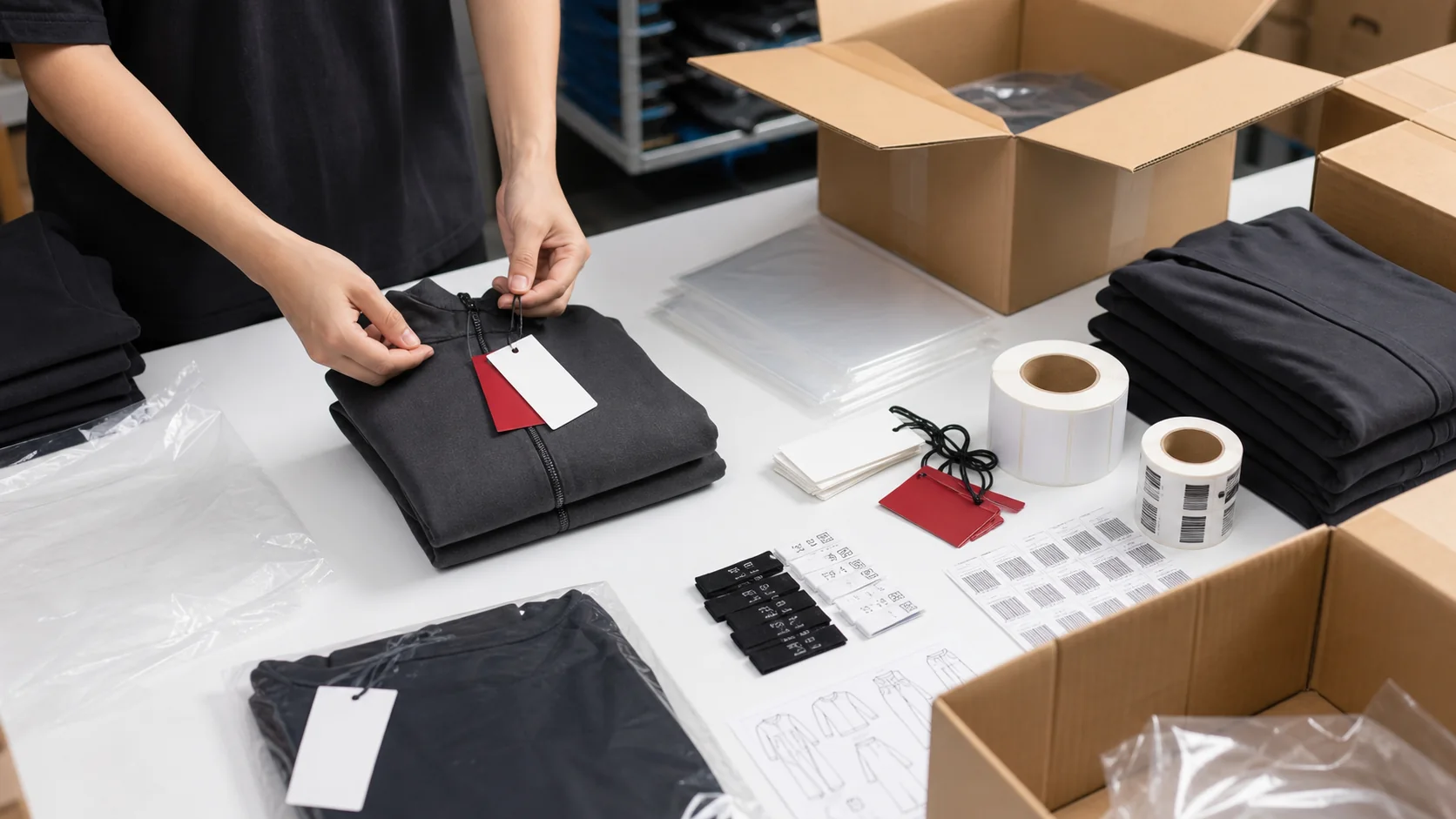
Neck label, hem label and hangtag location are confirmed by product family before bulk sewing.
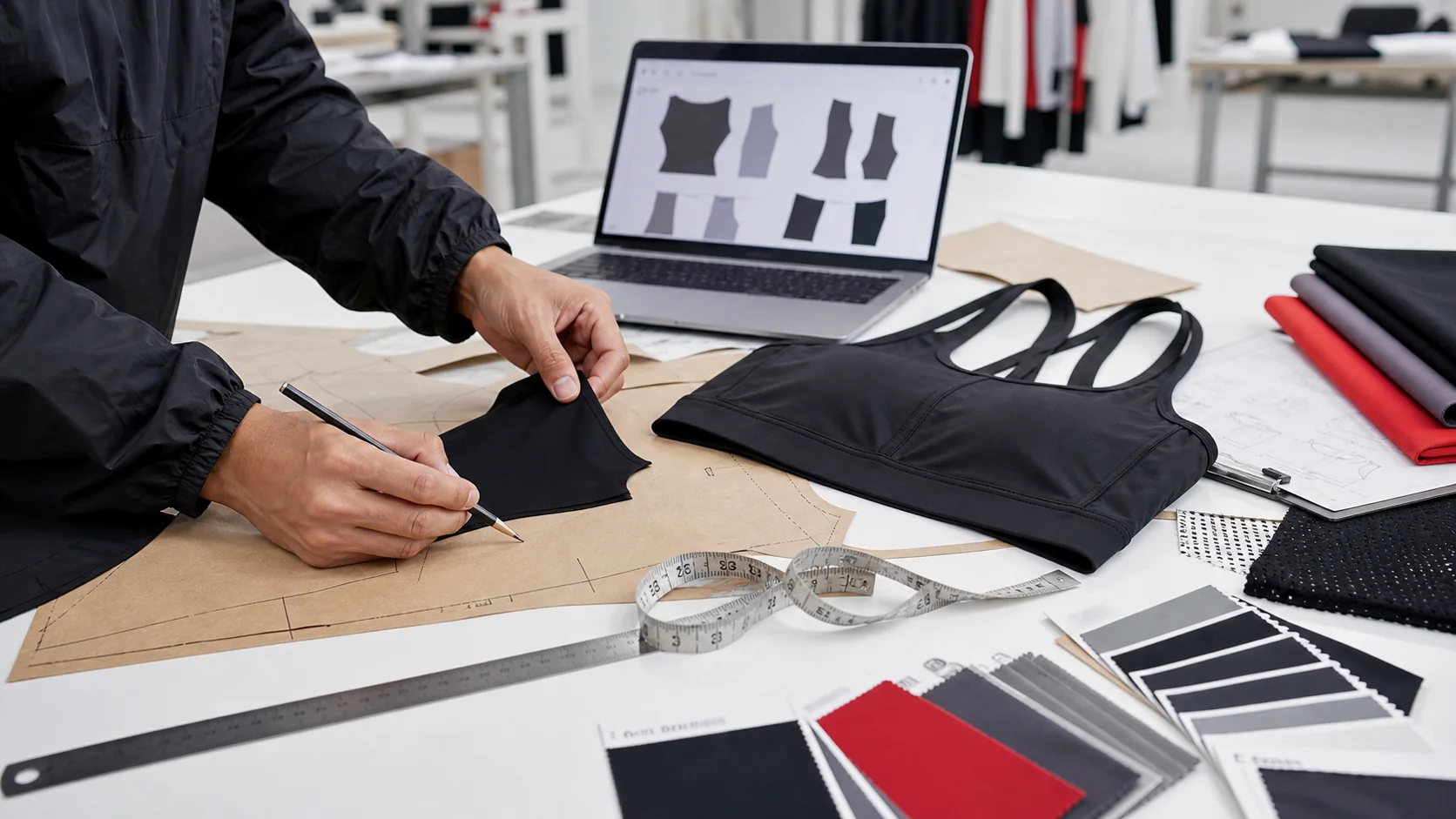
Label placement is checked on the approval sample so finishing teams do not rely on loose notes.
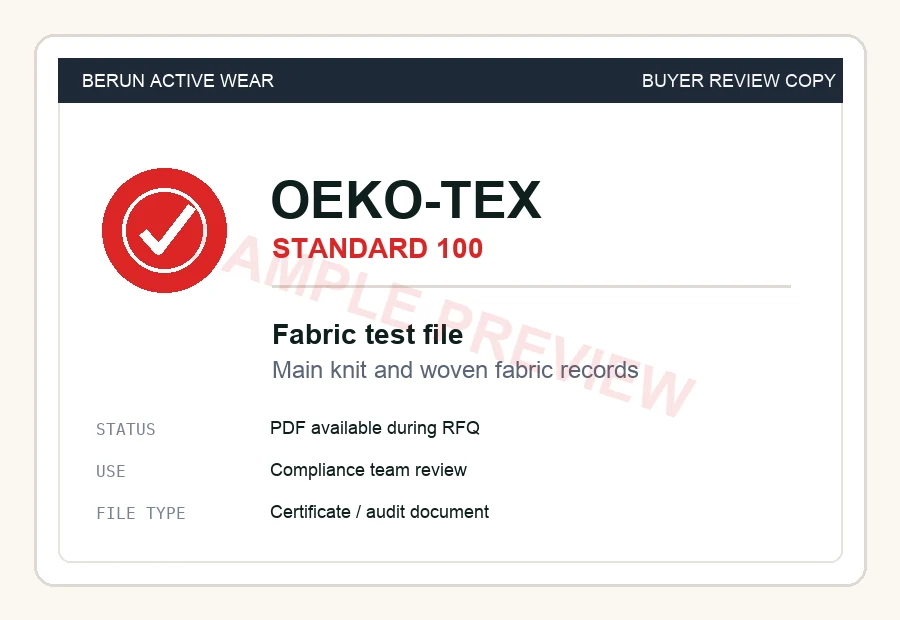
Care language and material claims should match the current fabric and compliance documents for the order.
Every private label order covers these five brand touchpoints — all assembled during your existing OEM or ODM production.
Branded swing tag attached to each garment. Your logo, tagline, and product info on coated card stock.
Woven or printed fabric label sewn at the neck or side seam. Washing instructions, fiber content, country of origin per your target market regs.
Heat-transfer or woven size tab at the center back neck or waistband. Your size system (US/UK/EU) with your brand mark.
Individual poly wrap printed with your logo and SKU barcode. Ready for FBA, 3PL, or retail shelf.
Outer shipping carton with your logo, PO number, and packing list window. Clean unboxing for your warehouse team.
You send vector files (AI or PDF). We confirm Pantone colors, bleed, and label dimensions inside one working day.
Hangtags printed on 350 gsm coated stock. Care labels woven or printed on satin. Size labels heat-transfer or woven per your spec.
All 5 components grouped per SKU and staged at the packing station before garment production completes.
Labels attached, garments folded into branded polybags, packed into branded cartons. Ships as one finished order.
Forward this to your designer. Correct files on first submission keep label proofs in sync with the sample approval window — late or incorrect artwork is the most preventable cause of label-side delay.
No extra MOQ — private labeling bundles into your OEM or ODM order (see MOQ policy)
In your OEM/ODM unit price — no separate label surcharge
Label components per garment (hangtag, care, size, polybag, carton)
AI or PDF artwork required — Pantone color matching standard
Forward this table to your designer at RFQ stage. Each row covers the file format, standard sizing, submission timing and the most common rework trigger for that component.
| Component | Artwork File Format | Standard Size (custom OK) | Submission Timing | Common Rework Trigger |
|---|---|---|---|---|
| Hangtag | AI/PDF vector · Pantone PMS · 3 mm bleed · fonts outlined | 90 × 50 mm on 350 gsm coated stock | RFQ stage, synced with main garment spec | Premature price printing · fonts not outlined · low-resolution raster imported into vector file |
| Care Label (woven / printed) |
AI/PDF vector · Pantone (no bleed needed, cut-to-edge by weave) | 40 × 60 mm | After main-garment fabric is confirmed and before sample stage | Stale composition (mid-project fabric swap not synced) · multilingual list added after artwork lock · wash content contradicting lab-tested behavior |
| Size Label | AI/PDF vector · single size system locked (US, UK or EU) | 20 × 40 mm | After main-garment grading is approved | Size-system mismatch (sewn tab vs polybag sticker disagreement) · size nomenclature not locked in grading file |
| Branded Polybag | AI/PDF vector · logo + SKU barcode + channel-specific warning text (FBA / 3PL / retail) | Per channel requirement | Before main-garment sample finalizes | Barcode drift (SKU codes disagree with carton manifest) · missing channel warning copy · logo placement outside fold-safe zone |
| Master Carton | AI/PDF vector · logo + PO number + packing-list window placement | Per shipping mode (sea / air / courier) | RFQ stage, synced with shipping booking | Carton mark inconsistent with polybag barcode · PO number string typo · packing-list window placement obstructed by branding |
These five submission dimensions are the controls that prevent the ‘late label kits’ delay flagged on our OEM service page. Sending all five components in a single artwork bundle at RFQ stage keeps the label side tracking the apparel sample/approval window rather than waiting for it after bulk garment production completes.
The same hoodie needs different words sewn into it depending on where it will be sold. We check four content layers against your target market before anything prints.
Composition percentages and country-of-origin wording are pulled from our actual fabric record for your order — not copied from your last supplier’s label, which is how inherited errors propagate.
Wash instructions are written from the fabric’s tested behavior. A care label whose wash instructions disagree with the lab’s tested fabric performance generates predictable returns; we cross-check care content against the lab record before plates are made.
Multi-market distribution often needs multilingual care content on one label. We confirm the language list with you at artwork stage — adding a language later means reprinting the whole run.
FBA and 3PL destinations bring barcode placement rules and polybag warning-print requirements. Tell us the channel and we set up scannable packaging the warehouse accepts on first receipt.
A mid-project fabric substitution that nobody told the label file about. Our system links label content to the fabric record, so a substitution automatically reopens label approval.
SKU barcodes that disagree with the carton manifest strand pallets at receiving docks. Codes are scan-verified against the packing list before cartons close.
A sewn tab saying M while the polybag sticker says 10 confuses every step downstream. Size nomenclature is locked once, in the grading file, and every label component inherits it.
Printing retail prices on hangtags feels efficient until the price changes. We flag it whenever a buyer requests it; a sticker field usually serves better than reprinted tags.