You've already done the hard part. You picked your niche, validated the demand, and maybe even have supplier quotes sitting in your inbox.
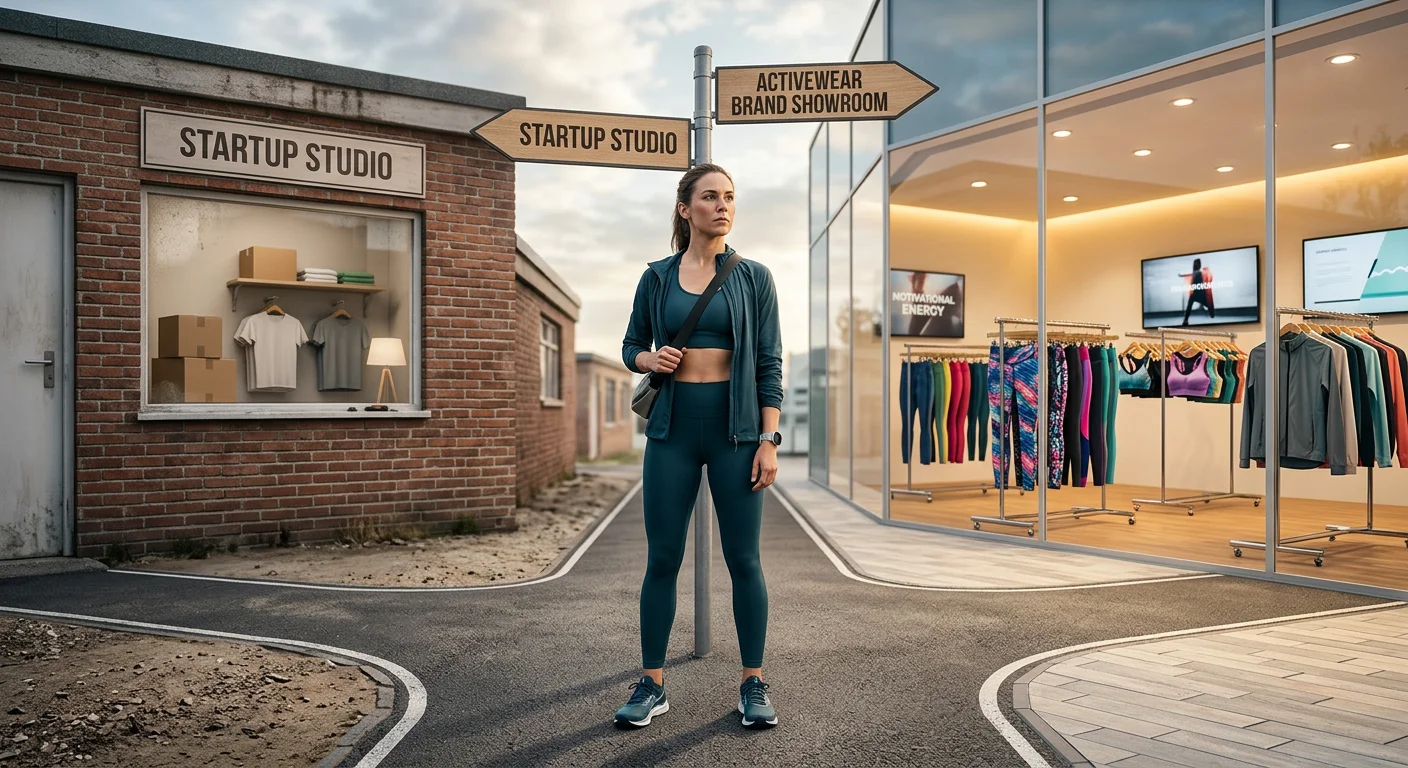
But here's where most activewear startups stall — not from lack of hustle, but from picking the wrong business model at the wrong stage.
private label activewear gets you to market in 6–8 weeks with a $3K–$5K buy-in. Custom OEM/ODM gives you a brand that's truly yours — but it takes more capital, more time, and more decisions than most first-timers expect.
Neither path is better by default. The right choice depends on three things:
Your current cash position
Your tolerance for inventory risk
Where you want this brand to be in 18 months
What follows isn't theory. It's a hard-data decision framework built for early-stage founders who need clarity — not another blog post that tells you to "consider your options."
6-Dimensional Hard Data Comparison: Private Label vs Custom Activewear
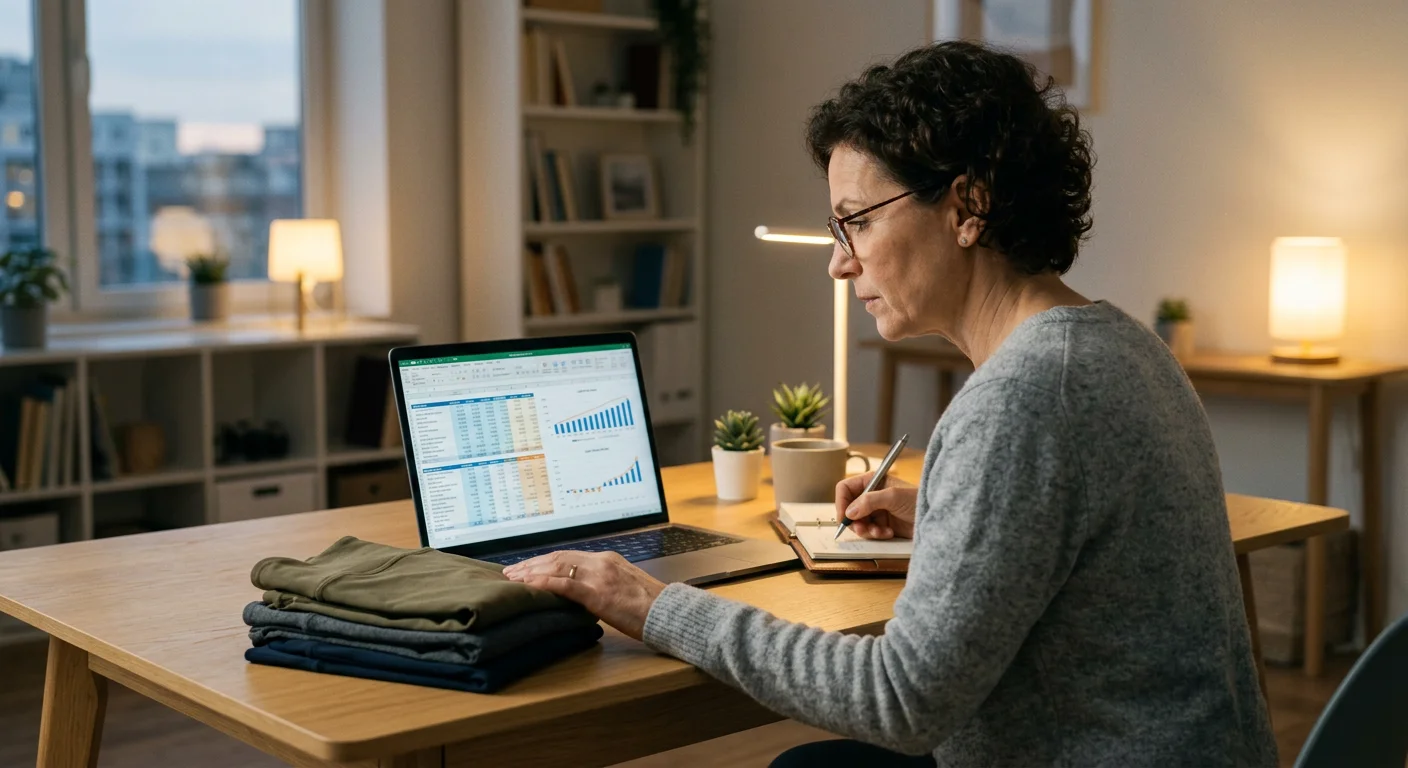
Six numbers separate a brand that survives its first year from one that runs out of cash in month four. Here they are — no fluff, no hedging.
This table covers the six dimensions that move the needle for early-stage activewear founders: MOQ, unit cost, startup capital, time to market, gross margin, and activewear supplier control. Study it before you sign anything.
The Full-Spectrum Comparison Table
Dimension | Private Label / White Label | Custom OEM/ODM Activewear |
|---|---|---|
MOQ (per style-color) | 50–200 units | 300–1,000+ units |
Unit Production Cost (FOB) | $8–$15/pc at startup MOQs | $7–$13/pc at scale + dev fees |
Startup Capital Required | $3,000–$8,000 | $12,000–$20,000+ |
Time to First Sale | 6–10 weeks | 3–6 months |
Gross Margin Range | ~55–65% | ~65–75%+ |
Pattern / IP Ownership | None — factory owns it | Full — you own tech packs + patterns |
Breaking Down Each Dimension
① MOQ — The Entry Gate
Private label activewear suppliers built to serve new activewear brands will accept orders starting at 50–100 pieces per style. Some Alibaba-sourced and specialist low-MOQ manufacturers go as low as 30 pcs per design. That's the realistic floor.
Custom OEM/ODM is a different conversation. Performance activewear lines open at 300–500 pcs/style minimum. Technical compression or proprietary-fabric styles push toward 500–1,000 units. Why? Fabric mills impose their own minimums, and pattern development costs need to spread across a large enough production run to make sense.
② Unit Production Cost — The Number That Deceives
On the surface, custom looks cheaper per unit: $7–$13/pc FOB vs private label's $8–$15/pc FOB . But that comparison is incomplete.
Custom activewear manufacturing adds costs on top of the unit price:
- $500–$2,000 per style for tech packs
- $300–$800 per style for pattern development
- $400–$1,500 per style across two to three sample rounds
Spread those development costs across a 300-unit run. Your true landed cost per unit climbs fast — often past the private label equivalent. You won't close that gap until you hit 500+ units per style with some consistency.
Private label hides its cost in a different way. You pay a premium baked into the unit price. The factory has already absorbed R&D, grading, and fabric sourcing — and priced it in. The margin ceiling is lower, but the upfront risk is far smaller.
③ Startup Capital — Where Most Founders Miscalculate
Private label brands launching 2–5 styles at 50–200 pcs need roughly $3,000–$8,000 all-in. That covers samples, initial inventory, basic branding, and a freight buffer.
Custom OEM/ODM activewear services startups launching 3–5 styles need $12,000–$20,000+ before their first unit ships. That capital goes to tech pack creation, pattern fees, multiple sample rounds, and larger minimum production runs — all paid before a single customer validates the product.
The gap isn't small. It's 3–5x. That's why most successful activewear brands with sub-$15K budgets start on private label.
④ Time to Market — The Competitive Clock
Private label's practical timeline:
- Style selection: 3–7 days
- Sample approval: 7–14 days
- Bulk production: 2–4 weeks
- Plus freight
Total: 6–10 weeks door-to-door.
Custom OEM/ODM's realistic timeline:
- Tech pack creation: 2–4 weeks
- First prototype: 2–3 weeks
- Two to three fit revision rounds: 3–6 weeks
- Bulk production: 4–8 weeks
- Plus freight
Total: 3–6 months minimum.
That gap hits hardest in trend-sensitive niches. It also matters a lot when you need to validate demand before a competitor moves first.
⑤ Gross Margin — The Long-Game Metric
With private label, assume a landed cost of $10–$15/unit and a mid-market activewear's retail price of $35–$50 . Gross margins land in the 55–65% range — solid, but limited. Your base product isn't exclusive. You compete on brand and marketing, not product differentiation. That caps your pricing power.
Custom activewear changes the math. Landed costs run $9–$13/unit at 500+ unit volumes. Retail pricing hits $50–$80 , backed by real technical differentiation. Gross margins of 65–75%+ are achievable on hero styles. That's not theoretical. It's the cost structure that makes premium activewear brands defensible at scale.
⑥ Supplier Control & IP Ownership — The Asset Nobody Talks About
This is where private label's hidden cost becomes permanent.
With private label, you own the label. That's it. The factory owns the patterns, the grading, the construction specifications, and the fit IP. Switch suppliers — because of quality issues, price hikes, or capacity problems — and you start from zero. You can't take their pattern library with you.
With custom OEM/ODM, you own the tech packs, patterns, and specifications . Those are transferable, auditable brand assets. They make your business more valuable to acquirers. They give you leverage in supplier negotiations. And they let you move production without rebuilding your product from scratch.
Private label builds a brand. Custom builds a brand and a proprietary product asset. That distinction carries real weight — especially around exits, investment rounds, or long-term competitive positioning.
The bottom line: Private label wins on speed, capital efficiency, and risk. Custom wins on margin, IP ownership, and long-term brand defensibility. Neither is the right answer for every situation — but at specific capital thresholds and growth stages, one clearly outperforms the other. The next section maps that out.
Budget-Tier Decision Matrix: <$5K / $5K–$20K / $20K+
Your budget doesn't just determine what you can buy. It determines which business model you can run.
Stop treating this as a preference question. At certain capital levels, custom activewear manufacturing is not executable. At others, staying on private label means leaving serious margin and IP on the table. Here's where each threshold puts you.
Tier 1: Under $5,000 — Private Label Only, Zero Exceptions
At this budget, custom OEM isn't a bad idea. It's a math impossibility.
After covering branding, your Shopify store, and a bare-minimum marketing budget, you're left with $1,500–$2,500 for inventory. That buys you 100–200 units across 2–4 private-label SKUs at $10–$18 landed cost per piece. It does not cover tech packs ($500–$2,000/style), pattern development ($300–$800/style), or sample rounds ($400–$1,500/style) — and that's before a single unit ships.
Your viable execution path:
2–4 private-label styles (legging, bra, biker short, or top) in evergreen colors — black, charcoal, navy. Avoid custom dye requests. They trigger their own MOQ minimums.
50 units per color maximum for held inventory. Or go full dropship/POD to cut stock risk out of the picture.
Lock 40%+ of your total budget for traffic and content. A beautiful product with no marketing budget becomes a warehouse problem, not a brand.
Check your CAC against AOV in the first 60–90 days. A first buy that doesn't sell through in that window signals a positioning problem — not a product problem.
The real risk at this tier isn't picking the wrong product. It's over-ordering slow-moving sizes and colors, then running out of cash to drive traffic to the store you just built.
Tier 2: $5,000–$20,000 — The Hybrid Model That Most Startups Miss
This is the most powerful tier in activewear startup strategy — and the most underused.
You have enough capital to build one defensible product without going all-in on full custom. The play is a hybrid: 1–2 custom "hero" styles that anchor your brand identity, backed by 2–3 private-label styles that extend your assortment without blowing your MOQ budget.
Here's how the capital breaks down:
Tech packs for custom hero styles of activewear: $300–$1,000 total (budget $100–$300 per style)
Fit samples and revision rounds: $400–$1,200
Hero style production (1–2 styles × 100–150 pcs/color × 2–3 colors at ~$14–$22 landed): $5,000–$10,000
Supporting private-label styles (2–3 styles × 50–100 pcs/color × 2 colors at ~$10–$16 landed): $2,000–$5,000
Launch marketing (lookbook shoot, initial ad tests, influencer seeding): $3,000–$8,000
Why does 100–150 pcs per color matter? That's the sweet spot where per-unit COGS drops 10–25% compared to 50-piece runs — without locking up the cash that sinks first-year brands.
The strategic advantage here is built-in A/B testing. Your custom hero SKU runs against your private-label SKUs in real market conditions. Whichever wins repeat purchases shows you where to put your next production budget.
Choose this tier if you have some existing traction — a waitlist, a social audience, or prior product sales. You want at least one product that competitors can't copy with a $300 Alibaba search.
Your milestone targets: Repeat purchase rate of 20–30% within six months. At least one wholesale or studio partnership to move volume beyond DTC.
Tier 3: $20,000+ — Full Custom, Built for Wholesale and Long-Term Brand Architecture
At this level, the goal shifts. You're not validating anymore. You're building.
A $20K–$60K budget funds a 4–6 piece coordinated collection with full custom manufacturing — complete tech packs, graded specs, performance fabric sourcing, and MOQs in the 200–400 pcs per style per color range. That's not just a product launch. That's a line sheet. That's a lookbook. That's a credible pitch to boutiques, gym chains, and wholesale buyers.
Capital allocation at this tier:
Tech packs + grading across 4–6 styles: $2,000–$5,000
Performance fabric testing (lab dips, strike-offs): $500–$2,000
Bulk production (4–6 styles × 200–400 pcs × 2–4 colors at ~$12–$20 landed): $18,000–$45,000
Brand system, packaging, sales collateral: $2,500–$8,000
Marketing, PR, and trade-show presence: $5,000–$15,000
At 200–400 units per style, your COGS drops 20–40% compared to low-MOQ runs . That's what opens up real wholesale math — keystone 2× wholesale, 4× retail — while keeping your DTC gross margins at 60–70%.
The primary risk at this tier isn't the product. It's timing. Development timelines run 4–8 months before cash comes back in. The fix is staged production: run a pilot at reduced MOQ first. Then use wholesale pre-orders from your line sheets to set final quantities before committing to full runs.
Choose this tier if you're pitching wholesale from day one, building a capsule drop strategy, or you need coordinated collections to be taken seriously by retail partners and distributors.
One-Line Decision Rule Per Tier
Your Situation | Your Tier |
|---|---|
No sales data, can't absorb a $2K inventory loss | <$5K → Private label only |
Have traction, want 1 differentiated product, have 3–6 months runway | $5K–$20K → Hybrid model |
Targeting wholesale, want brand architecture, have operational capacity | $20K+ → Full custom line |
The founders who waste the most money in activewear aren't the ones who pick the wrong activewear supplier. They're the ones who pick the right model for the wrong budget tier — then spend the next six months trying to force the math to work.
Hidden Cost Traps & Real Cash Flow Pressure Points
Most activewear startups don't fail because they picked the wrong product. They fail because they ran out of cash three months before the product had a chance to prove itself.
The comparison table above shows you unit costs and margins. What it doesn't show you is the cash flow gap between "I placed my first order" and "I have money coming back in." That gap is where brands die without drama — no big implosion, just a slow bleed across six pressure points nobody talks about.
Here's where the money goes.
The Six Cash Drains Nobody Puts in Their Business Plan
① Inventory Timing Miscalculation
Ordering too much inventory on your first run isn't ambition — it's the most common cash trap in activewear. Slow-moving SKUs absorb 10–25% of annual operating cash in early-stage product businesses. Dead stock — wrong sizes, wrong colors, trend-specific styles that missed — can lock up 20–30% of your on-hand inventory value in product that won't move without deep discounting.
Every 15 extra days of inventory sitting on your shelf eats 4–6% of annual COGS in extra working capital. At a $50K annual COGS run rate, that's $2,000–$3,000 per 15-day drag. You fund that either from your own cash or short-term debt.
The fix feels wrong at first: buy less than you think you need on your first run. Stockouts are recoverable. Cash insolvency is not.
② Payment Timing Float — The "Invisible" Cash Killer
This one costs founders thousands without ever showing up as a line item on the P&L.
Many first-time founders pay supplier invoices on receipt instead of waiting until payment terms are due. That one habit pulls 15–30 days of payables forward. It ties up 5–10% of monthly operating expenses in float you didn't need to give away. Your activewear supplier isn't charging you a penalty. You're just handing them your working capital for free.
The right move: pay at the end of your agreed terms, not on receipt. At the same time, push your own receivables hard — getting customers to pay even 5–10 days faster creates real free cash flow without touching your margins.
Doing wholesale? This gets critical fast. A shift from Net 30 to Net 60 payment terms with retail partners on a $200K annual revenue run locks up $33,000 in extra working capital . That cash has to come from somewhere.
③ Late Payment Penalties & Forfeited Discounts
Miss a supplier payment during a cash crunch, and you're not just late. You're borrowing at 12–18% APR in penalty charges (standard rate: 1–1.5% per month on overdue balances).
On top of that, early-pay and volume discounts of 1–3% on materials vanish the moment cash is tight. These aren't rounding errors. A 2% discount forfeited on $40,000 in annual fabric and production costs is $800 out of gross margin — every single year.
④ Payment Processing Fees Nobody Accounts For
Standard credit card processing fees run 2.5–4% of transaction value . At thin activewear margins, that's not a rounding error. It can erase 20–40% of net profit on individual transactions if you don't price it in from day one.
Run the numbers on a $55 legging with a $14 landed cost and a 60% gross margin target. A 3% card fee on $55 is $1.65. That seems small. Scale it to 500 units a month and you're looking at $825/month in pure fee drag — close to $10,000 a year in cash that never needed to leave your business.
⑤ Short-Term Debt as a Cash Gap Band-Aid
Cash gets thin at some point — it happens to almost every early brand. The easy reach is the credit card or overdraft facility. The real cost is 15–25% APR . Leaning too hard on revolving credit can burn through 2–5% of annual revenue in interest charges alone.
The problem compounds fast. Carrying high-rate balances means every slow month digs the hole deeper. Rolling those balances into a longer-term facility at single-digit rates can save 50–70% of your interest expense and turn it into free cash flow. Most founders don't make that move until the damage is already deep.
⑥ Operational Cost Creep After Launch
Your launch cost model will not match your month-six cost model. Payroll, warehousing, insurance, returns processing, and customer service costs tend to climb at 8–10% per year — while your pricing stays flat.
A brand running at 10–15% net margin can watch 50–100% of net profit disappear within two years just from unchecked operating expense growth — no bad product decisions required. The erosion is slow and invisible right up until it isn't.
The Cash Buffer Rule You Need Before You Launch
Before committing to any activewear manufacturing order — private label or custom — build this into your financial model as non-negotiable:
Keep liquid reserves covering:
- 1–2 months of fixed operating costs
- 1 month of debt service obligations
- Working capital matched to your actual inventory cycle (from purchase order to cash receipt)
Founders who skip this buffer don't run leaner businesses. They make worse decisions under pressure — taking lower wholesale margins, discounting DTC to clear stuck inventory, or skipping a restock on a winning SKU because the cash simply isn't there.
The brands that survive year one aren't always the ones with the best product or the sharpest business model. They're the ones who kept enough cash in reserve to stay in the game while the market showed them what needed fixing.
Transition Triggers: When to Switch from White Label to OEM/ODM
Most activewear founders get this decision wrong — not because they lack ambition, but because they switch too soon. They spot margin upside on a spreadsheet and jump to full custom. The market hasn't given them enough signal yet to justify it.
Here's the framework that works.
Volume is your primary trigger — not time, not gut feel, not competitor envy.
The numbers are specific: ~5,000 units/month is your planning threshold. At that point, the economics of custom tooling, spec work, and sampling start to make sense. At ~10,000 units/month , OEM becomes cost-competitive with ODM. Your production volume is large enough to spread development costs without destroying your margins.
Below those thresholds? Stay white label. The supplier carries the design burden. You avoid upfront R&D costs. Your capital stays flexible.
The Four-Signal Checklist
Don't base this transition on a single metric. Watch all four:
Monthly sales volume crosses 5,000 units — enough to spread tooling and sampling costs across real production runs
Repeat purchase rate shows consistent reorder demand — customers coming back signals product-market fit worth locking in with proprietary specs
Customer feedback keeps hitting the same wall — repeated requests for fit adjustments, specific fabrics, or functional features that white label can't deliver
Gross profit has built enough runway — you need capital reserves to fund prototypes, pilot runs, and 2–3 sample revision rounds before bulk production starts
The Rollout Sequence That Reduces Transition Risk
Don't cut over your entire SKU lineup at once. That's how brands stall in production limbo for six months.
The proven sequence: prototype → pilot → production. Start with one hero style. Validate the custom spec. Then scale.
Trigger Metric | Switch Threshold | What It Unlocks |
|---|---|---|
Monthly Volume | ~5,000 units (plan); ~10,000 units (full economic case) | Tooling and spec costs become defensible |
Repeat Purchase Rate | Consistent reorder demand across 2–3 cycles | Cuts market risk before committing to OEM complexity |
Customer Feedback | Repeated fit/fabric/feature requests white label can't solve | Differentiation must live in the product, not just the logo |
Gross Profit Reserve | Enough to cover sampling + pilot run + working capital buffer | Funds the transition without killing operating cash flow |
The brands that make this transition work aren't the fastest growers. They're the ones who waited for real data — then moved with conviction.
Year 1 Operational Data: Two Activewear Startup Case Breakdowns
Two founders. Same market. Same year. Different outcomes — for different reasons.
These aren't made-up scenarios. They're built from real operational patterns seen across bootstrapped private-label launches and seed-funded custom manufacturing projects. The numbers match real activewear startup data. Treat them like a case file.
Case A: Private Label, Bootstrapped — The Fast-Validation Play
Starting budget: ~$6,000 total. After branding, a Shopify build, and a small ad reserve, $2,500–$3,000 went toward inventory.
Product lineup: Three proven basics — leggings, a sports bra, and a seamless tank . No custom dye lots. No experimental cuts. Stick to classic colorways. The selection logic was simple: what sells itself?
Time to first sale: 7 weeks from supplier contact to live store. Private label's biggest structural advantage isn't cost. It's that the development work is already done for you.
Q1 marketing: UGC creators and TikTok Reels pulled in the first wave of traffic. Total Q1 acquisition spend stayed under $1,800. CAC ran high in weeks one and two, then fell as organic content built up.
Month-6 revenue run-rate: ~$11,000/month. Gross margin held at 58–62% , in line with shared-block private label economics. Repeat purchase rate at month six: 24% — short of the 30–40% retention benchmark that marks real product-market fit.
Year-1 reality check: The brand survived. It proved demand. But the margin ceiling showed up by month four. Any competitor with a $300 Alibaba budget could source the same base product. The moat was marketing — not the product.
Key year-1 risk that almost ended it: Overproduction in month two. One colorway didn't sell. That reorder locked up $1,400 in dead stock for eleven weeks — about 23% of operating cash at the time.
Case B: Custom OEM/ODM, Seed-Funded — The Product-First Build
Starting budget: $28,000. Split across tech packs, two prototype rounds, performance fabric testing, bulk production, and a brand system.
Product lineup: Two hero SKUs — a custom compression legging with a proprietary waistband and a crossback sports bra with custom-graded sizing. One private-label short filled out the range without eating into the development budget.
Time to first sale: 19 weeks. Tech pack creation took three weeks. The first prototype arrived at week six. Two fit revision rounds pushed bulk production to week twelve. First units landed at week nineteen.
That's five months before a single dollar came back in. Managing cash during that stretch was the biggest operational challenge of Year 1.
Q1 marketing: Influencer seeding with 8 micro-influencers ($200–$400 gifting value each), a professional lookbook shoot ($1,800), and test Meta ads aimed at existing fitness community audiences.
Month-6 revenue run-rate: ~$14,500/month — slower to build than Case A, but climbing faster by month five as repeat customers drove reorder volume. Repeat purchase rate at month six: 34% — right inside the target benchmark range.
Gross margin: 67–71% on hero SKUs. The custom waistband and sizing precision cut fit-related returns to under 4%. Case A ran 9–11% return rates on its shared-block legging.
Year-1 net position: Tighter than the seed funding made it look. A third prototype round — not needed, looking back — burned $1,900 that could have stayed in the business. That's why the rule exists: no more than two prototypes before committing to production.
Side-by-Side: What Year 1 Really Looked Like
Metric | Case A: Private Label | Case B: Custom OEM/ODM |
|---|---|---|
Starting budget | ~$6,000 | ~$28,000 |
Time to first sale | 7 weeks | 19 weeks |
Month-6 revenue run-rate | ~$11K/month | ~$14.5K/month |
Gross margin (hero SKUs) | 58–62% | 67–71% |
Repeat purchase rate (month 6) | 24% | 34% |
Return/exchange rate | 9–11% | ~4% |
Biggest year-1 risk | Dead stock, margin ceiling | Cash timing, prototype creep |
Year-1 moat | Brand + marketing | Product IP + proprietary fit |
The data is clear: Case A wins on speed and capital efficiency. Case B wins on retention, margin, and long-term defensibility. Neither founder got it wrong. Each made the right call for their budget tier — and that's the core framework this article is built around.
3-Stage Decision Tree: Match Your Capital, Team & Brand Position
Three variables determine which activewear business model you should run. Not your passion for the brand. Not your Instagram aesthetic. Not your competitor research. It comes down to capital in the bank, technical capability on your team, and where your product sits in the market.
Get these three inputs wrong and no amount of hustle fixes it. Get them right and the decision tree below writes itself.
Work through it in order.
Stage 1: Solo Founder, Under $8K, No Technical Team
Your model: Private label only. No exceptions.
After branding, Shopify setup, and a freight buffer, you'll have $3K–$6K left for product. That funds 2 hero styles — one lower body, one upper body — at 50 units per color per style. Opening buy math: 2 styles × 2 colors × 50 pcs = 200 units total .
Target landed cost: $10–$15/unit . Target retail: $39–$69 . Target gross margin: 60–70% DTC .
Your niche needs to be tight. Tight enough to convert 20–40 core community members — a yoga studio, a CrossFit box, a running club — into first-month buyers. That's your validation engine. Not paid ads.
Stay here until every single one of these is true:
Cash reserve exceeds $12K after paying existing POs
At least one hero SKU hits ≥8 units/week for 8+ consecutive weeks
Gross margin holds at ≥60% on that SKU
Return rate stays below 15%
You've built up 100–150 total customers with clear reorder behavior
Miss any one of these? You don't have enough signal yet. Moving up too fast is how brands hit a cash crunch at month five and stall out.
Stage 2: Small Team, $15K–$25K, Access to a Designer or Pattern Maker
Your model: Hybrid — one custom hero, two private-label support styles.
This is the most powerful structure in early-stage athleisure brand building — and the most overlooked. You're not going full custom. You're investing in one defensible product while private label carries the rest of your assortment.
Capital split on a $20K budget:
$3K–$5K — custom hero development (tech pack, two sample rounds, grading)
$7K–$10K — inventory (150–250 units custom hero + 100–150 units × 2 private label styles)
$3K–$5K — launch marketing
$3K–$5K — cash buffer held in reserve
Your custom hero should be one high-impact piece. Think: a compression legging with a proprietary waistband, performance fabric with a specific GSM spec, functional pockets. Something a competitor can't copy with a $300 Alibaba search. Target landed cost on the hero: $16–$22 . Retail: $69–$98 . Gross margin: ≥68% .
Lock your tech pack before you contact any sportswear manufacturer. It needs graded measurements for the full size run, a fabric spec sheet (composition, GSM, stretch recovery), stitching and seam details, and colorway/trim codes. A tech pack missing this detail is a liability in negotiations, not a production asset.
Upgrade trigger to Stage 3:
Hero SKU velocity: ≥10–15 units/week for 8+ weeks
Repurchase rate: >25% within 90 days on customer cohort
Hero gross margin: ≥68% across two production batches
Sell-through: ≥70% per PO within 90 days without heavy discounting
Available capital: $30K+ after covering reorders
All five need to hold at the same time. Not before.
Stage 3: Funded Brand, $30K+, In-House QA and Marketing
Your model: Full custom OEM/ODM, built for wholesale architecture.
At this level, you're done validating product. You're building a real business — one with a line sheet, a seasonal calendar, and wholesale-ready unit economics.
Initial development and sampling: $10K–$20K across multiple styles. Bulk inventory: $50K–$150K depending on channel mix. Working capital buffer: keep at least 30–50% of projected annual COGS available as cash or credit. That reserve is your reorder engine.
Three operational moves separate Stage 3 brands from Stage 2 brands that over-capitalized:
① Lock 12-month fabric sourcing contracts. Commit to 1,000–3,000 meters per core fabric with fixed or banded pricing. Negotiate 30–45 day lead times and reserved capacity. Your fitness apparel supply chain becomes a competitive advantage while competitors stay stuck at spot pricing.
② Build a 4-season release calendar. Four major drops, each anchored by 1–2 hero launches plus 2–4 carryover styles in new colorways. Book fabric 90–120 days ahead of cut-and-sew. No calendar means no supply chain discipline. It's that simple.
③ Run a dual-factory strategy on any SKU driving more than 20% of total revenue. Two approved factories. Two approved mills for core fabrics. A single-source setup at this volume isn't lean — it's fragile.
Pricing structure that makes wholesale math work:
DTC target gross margin: 65–70%
Wholesale target gross margin: 50–60% (keystone at 2.2–2.5×)
Any SKU that can't hit its channel margin target at the expected wholesale price gets cut or re-specced before bulk production. That's the discipline that gives brands pricing power. Brands without it discount their way through every season.
The Single Decision Rule That Ties All Three Stages Together
Your Profile | Your Stage | Your Model |
|---|---|---|
Solo founder, <$8K, no tech team | Stage 1 | Private label only |
Small team, $15K–$25K, designer access | Stage 2 | Hybrid (1 custom hero + private label support) |
Funded brand, $30K+, in-house ops | Stage 3 | Full custom OEM/ODM |
The upgrade rule stays the same across every transition: your cash buffer must be ≥3× the minimum test budget for the next stage, and at least one hero SKU must show stable unit velocity for 8–12 consecutive weeks. Skip either condition and you're spending operations money on ambition.
Conclusion
The activewear market doesn't reward the most creative founder — it rewards the one who makes the right move at the right budget level .
Here's what the data shows: private label gets you to market fast with lower risk. Custom OEM/ODM builds the brand moat that survives year three and beyond. These aren't competing philosophies — they're sequential stages of the same playbook .
Under $5K? Stop debating. Start testing with white label sportswear. Hit 200+ orders a month and your repeat purchase rate is climbing past 25%? That's your green light to start the custom transition. Don't wait for "perfect timing" — that moment never comes.
Your next move is straightforward: - Pick the budget tier that matches your current reality - Revisit the decision tree - Contact two to three low MOQ activewear manufacturers this week for comparative quotes
The gap between a successful activewear startup and a stalled idea comes down to one decision made with clarity rather than fear.
Make yours today.