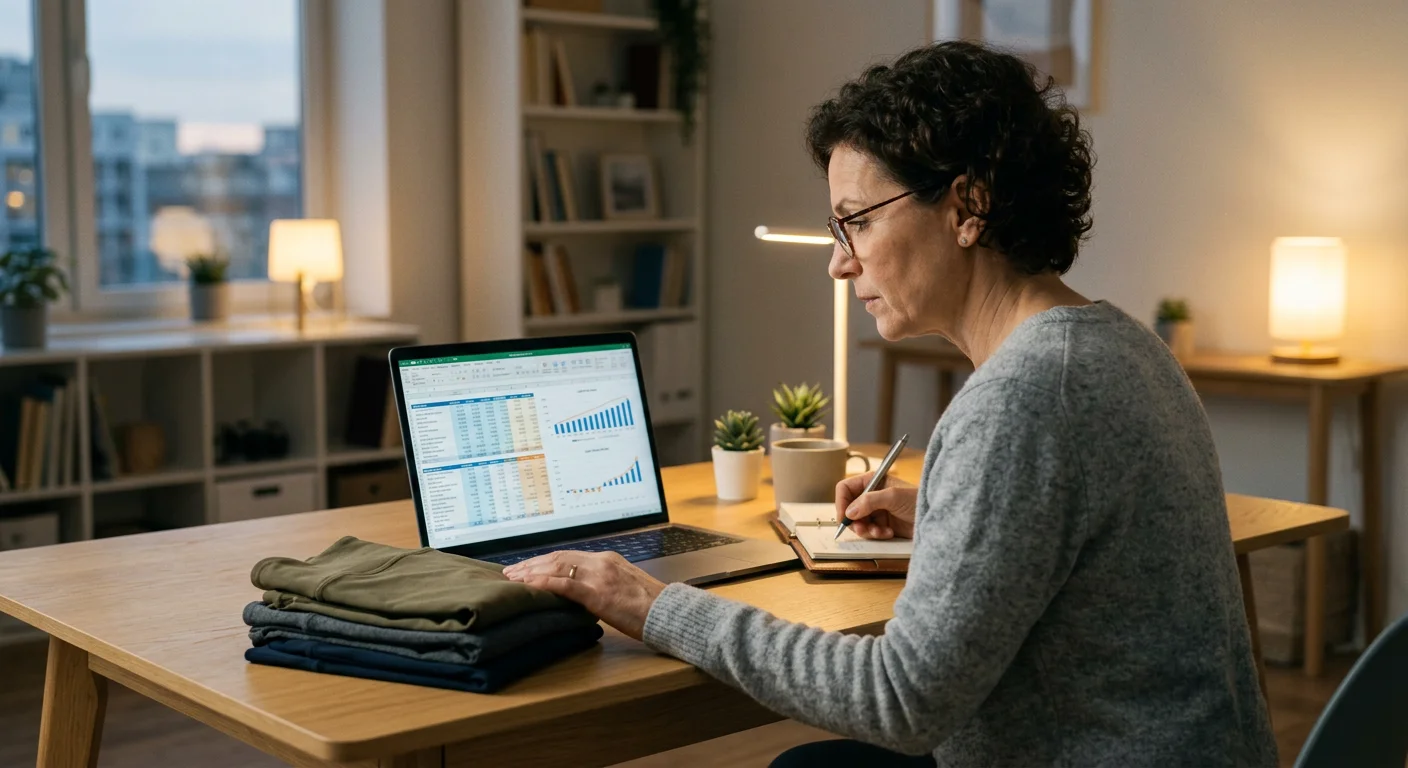
You've got the product. You've got a manufacturer. You might even have a logo and a name that gets you excited. But then comes the part nobody warned you about — you have to sell the thing. The market is flooded with everyone else's custom leggings and branded sports bras.
Here's what successful small activewear founders figured out: you don't need a Lululemon budget to build real momentum. You need the right seven moves, in the right order.
This is a field-tested playbook built for private label activewear brands doing under $500K a year. You get seven promotion and sales strategies. Each one costs under $500 to launch. Plus, you get exact tools, realistic timelines, and honest conversion data. That data helps you decide where to put your energy first.
Local Gym Alpha-User Seeding & Pop-Up Trunk Sales
Before you spend a single dollar on Instagram ads, walk into the CrossFit box three blocks away.
This is the most overlooked cold-start strategy for a new custom activewear brand. It costs less than a decent pair of running shoes to pull off. The loop is simple: seed real product with real people → capture real content → convert in person → retain through community . No ad budget needed.
How to Execute It (Week by Week)
Week 1 — Find Your Alpha Users
Go after high-visibility members and coaches at local CrossFit boxes, private training studios, and MMA gyms. These people wear workout gear every single day in front of a crowd. Walk up and talk to them. Offer 3 free custom samples . All they need to do is wear the gear during morning sessions and let you film.
Week 2 — Build Your Content Bank
Most founders skip this week. That's a mistake — it's the most valuable one. Shoot vertical video and training photos during real workouts. Grab coach testimonials. Film behind-the-scenes fitting moments. Do fabric stretch tests mid-WOD. All of that becomes your Instagram Reels, TikTok content, and presale page imagery in one shoot. Real gym footage converts at a far higher rate than studio shoots.
Week 3 — Run the Trunk Sale
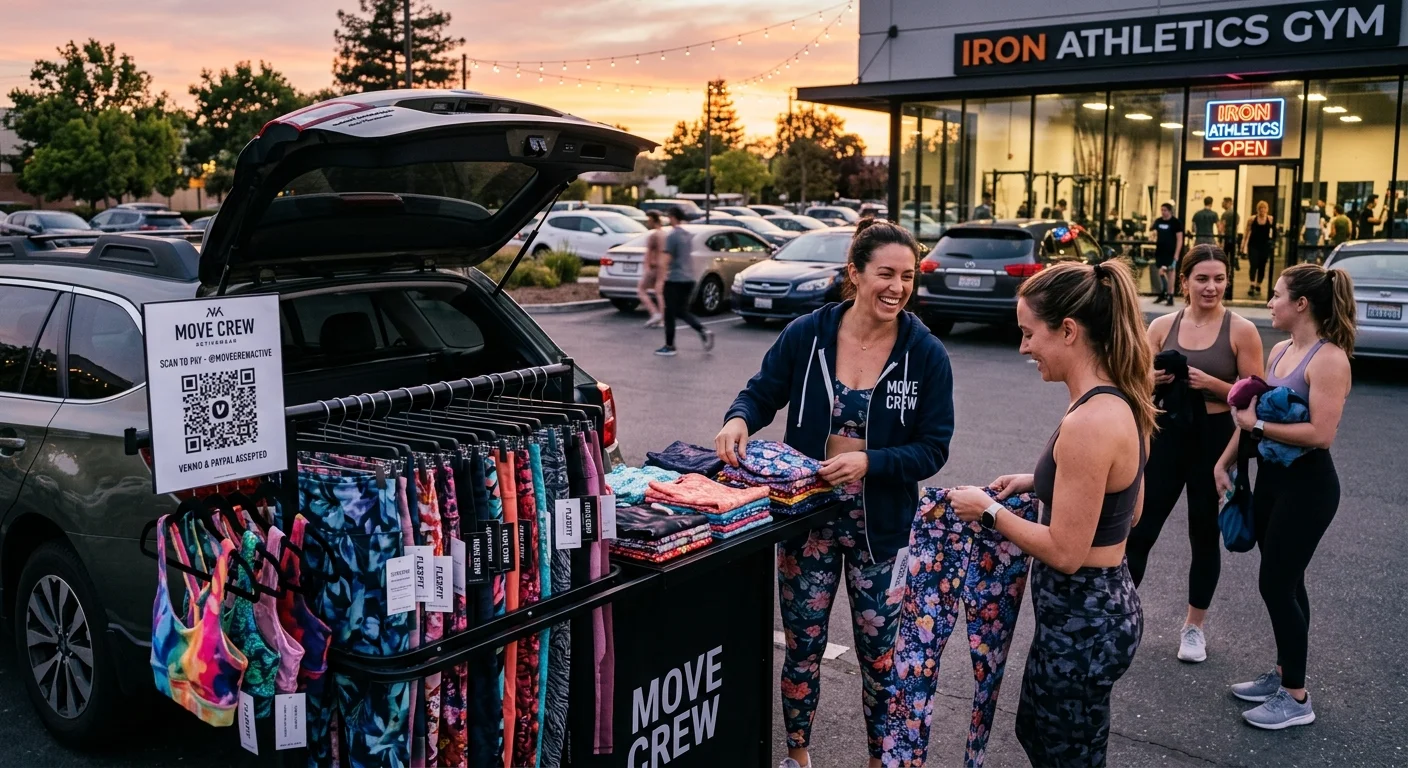
Friday or Saturday, 5–8 PM, gym parking lot. Bring 10–20 units across core sizes , a clean display, and a mobile payment QR code. That's all you need. This format works because trust is already there — people have seen the product on someone they know.
Real conversion benchmarks from this format:
- On-site conversion rate: 8–12% of people who stop
- Customer acquisition cost: under $3.50
- QR code scan-to-group rate: 40%+
Week 4 — Lock In Repeat Buyers
Every purchase gets a community group invite plus a discount code for their next order. Offer a Founding Member price lock for anyone who commits to a second purchase that week. Stack referral incentives on top — "bring a gym buddy, both get 15% off" — and you get organic word-of-mouth at zero extra cost.
Budget Breakdown
Item | Estimated Cost |
|---|---|
3 sample garments | $90–$180 |
Pop-up display / banner | $30–$60 |
Payment setup (Square or QR) | Free–$20 |
Printed cards / hang tags | $15–$30 |
Total | $150–$300 |
Best for : Launch phase. Run this during the 4–8 weeks before your official store opens. It tests your pricing. It confirms which fits people actually want. It builds your first 40–60 customers into a real community — the exact group who will write your first reviews and send you your first organic buyers.
Your Custom Activewear Manufacturer: Berunactivewear.com
Behind every great product launch is a factory that picks up the phone.
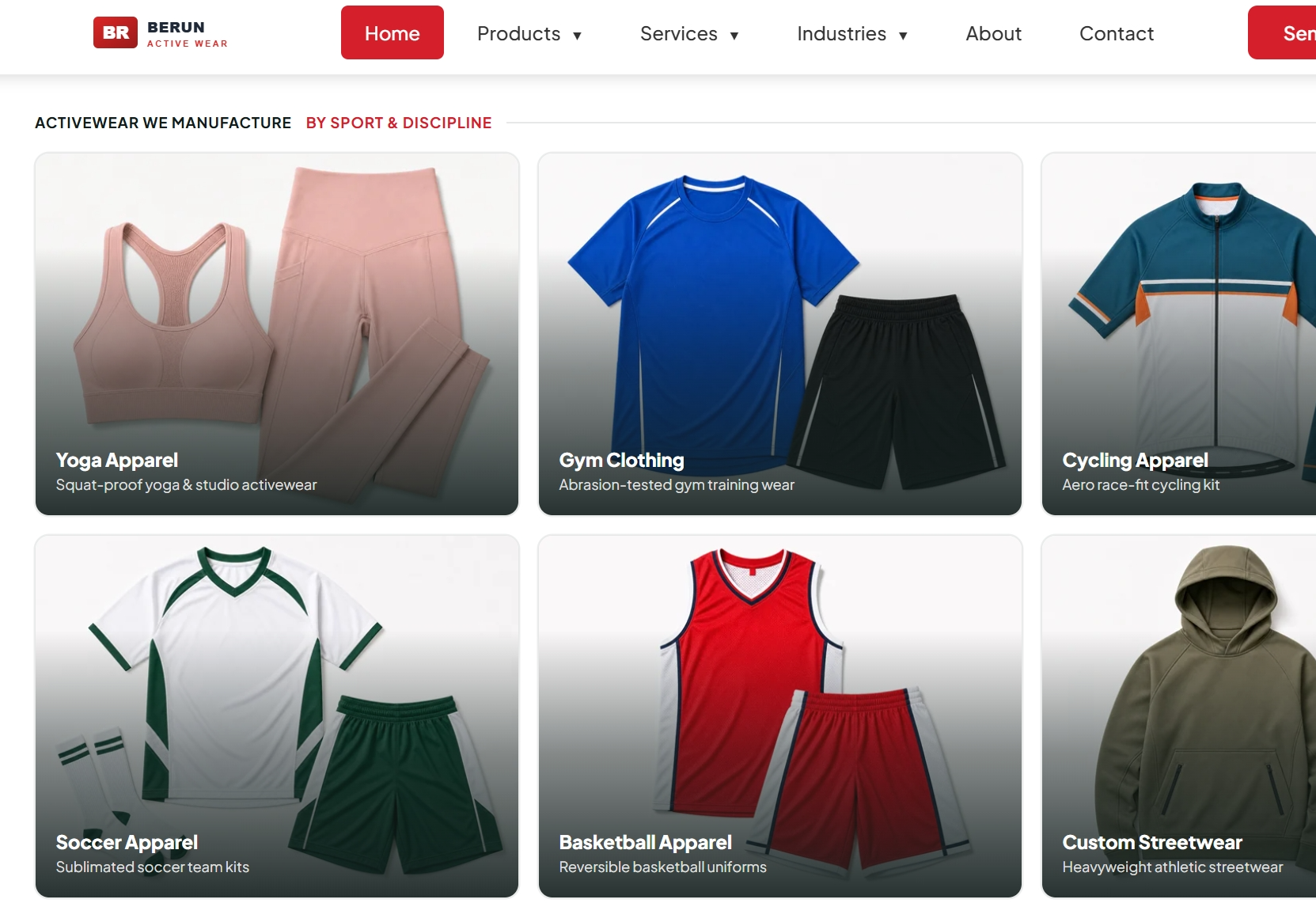
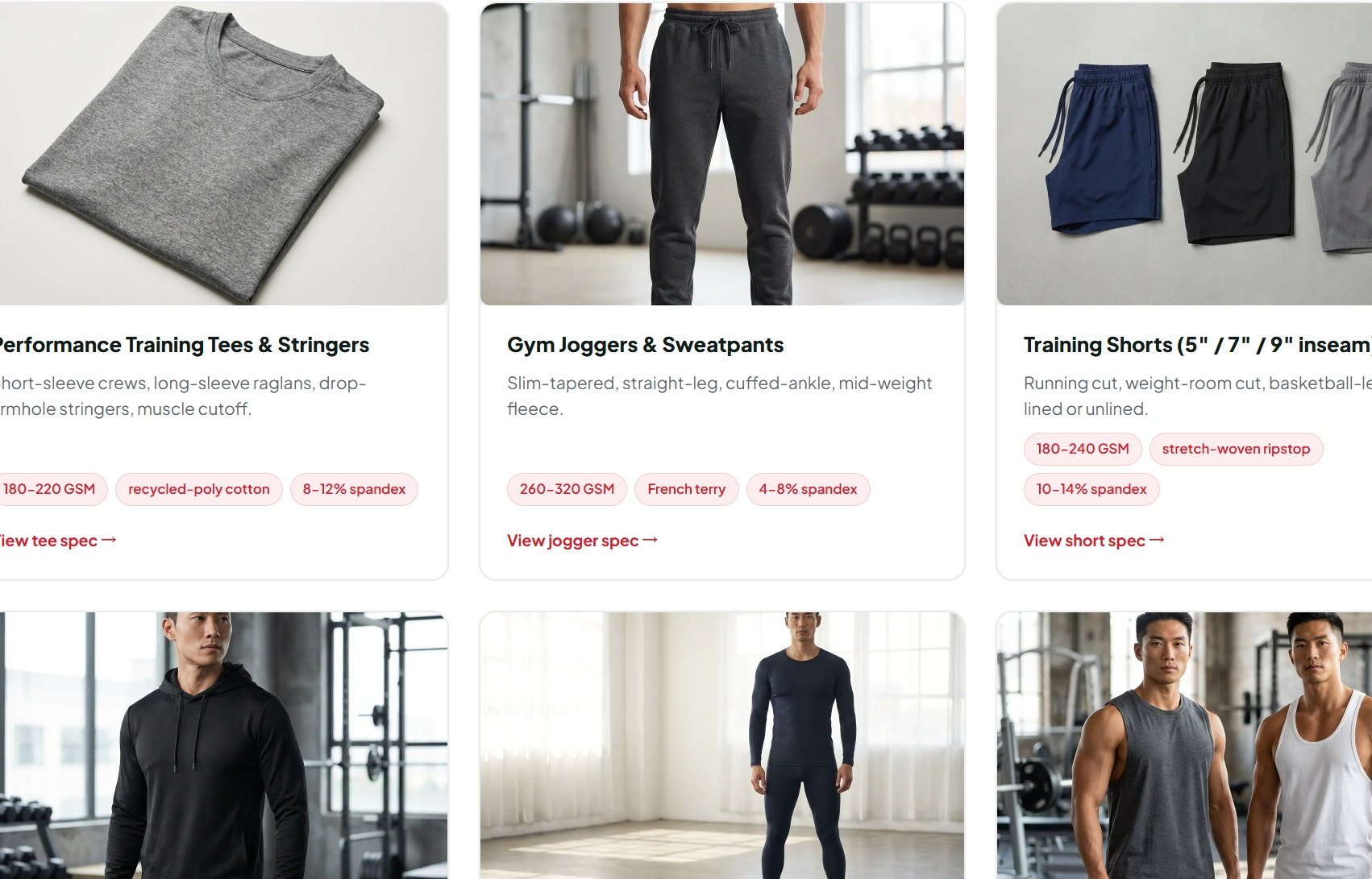
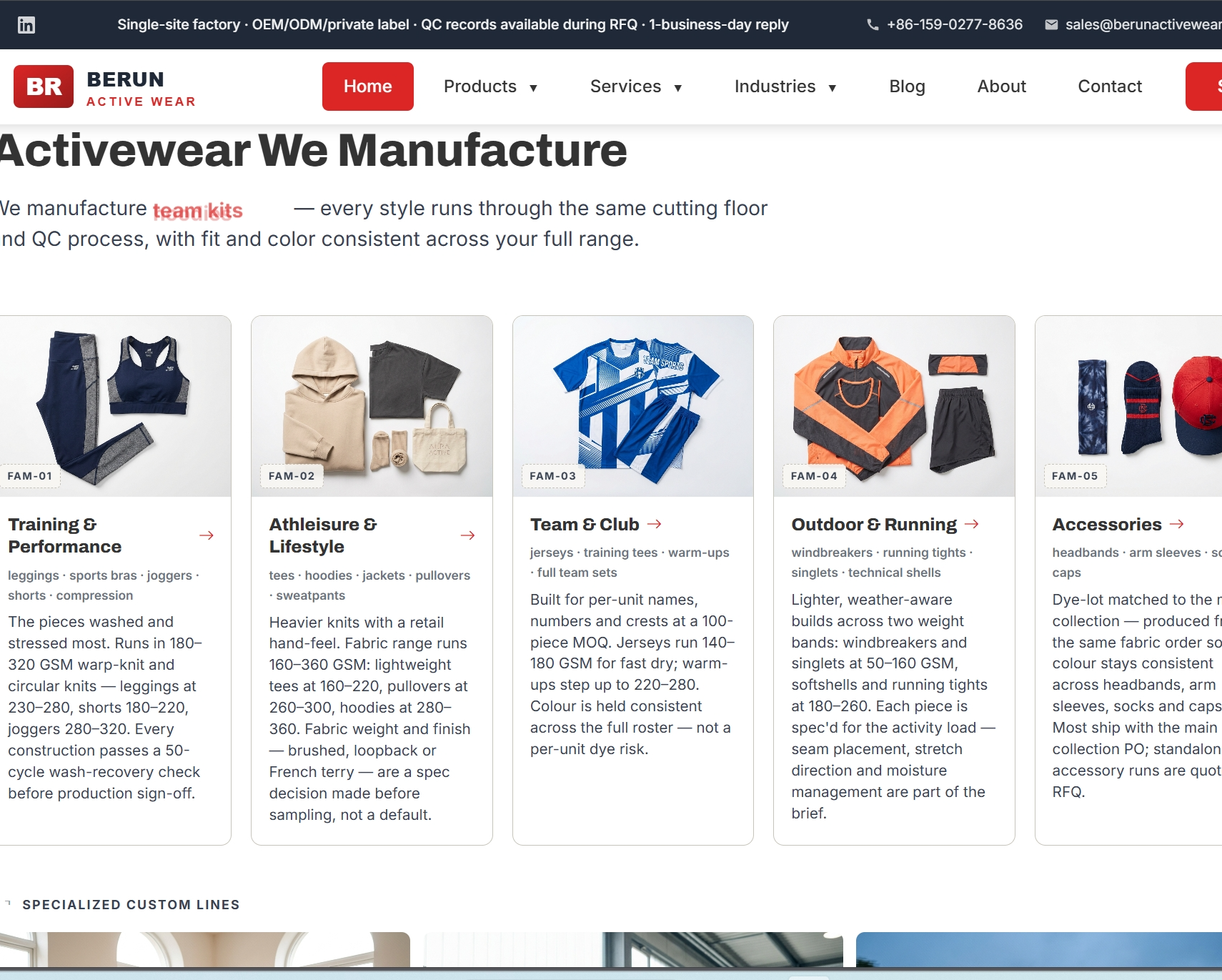
berunactivewear.com (also operating as Berunwear) is a China-based custom sportswear manufacturer . They handle full OEM/ODM activewear production — pattern-making, fabric sourcing, and finished packaging. Their clients include fitness brands, yoga labels, ecommerce store owners, and sports clubs across North America, Europe, and Australia.
What sets them apart for small brands: MOQ starts at 10–20 pieces for sublimation team jerseys . For training wear and custom leggings, it's 50–100 pieces. Those are numbers you can budget for on day one.
What It Costs to Get Started
Item | Estimated Cost |
|---|---|
Sampling (2–3 styles) + shipping | US$80–150 |
Digital mockups / B2B catalog design | US$50–120 |
B2B outreach tools (email + WhatsApp setup) | US$70–180 |
Total launch budget | US$200–450 |
The Production Timeline (Realistic)
Day 1 — Submit your tech pack or reference images to [email protected]
Day 7–10 — First samples shipped
Day 14 — Launch your presale page using Berun's size charts and fabric specs
Day 25–30 — Place your bulk order after sample approval. Production runs 15–25 days
Best for : Launch and growth phases. Use Berun as your flexible back-end factory. Start with low MOQ to test your designs. Then scale confirmed styles into private label runs of 300–500 pieces as demand grows.
Micro-Influencer Product Exchange & Affiliate Tracking
Forget the celebrity collab fantasy. The best customer acquisition channel for a small custom activewear brand right now is a fitness coach with 22,000 followers who responds to DMs.
Micro-influencers — creators in the 10K–100K range on Instagram, TikTok, or YouTube — outperform mega-influencers for one simple reason. Their audiences trust them like a friend who loves something and means it. For a private label activewear startup, that trust beats raw reach every time.
How to Find the Right Creators
Start with hashtags. Search #pilatesinstructor , #crossfitcoach , #yogaeveryday , and #fitnesscreator . Look for creators who post on a regular schedule. Check their comment sections too. Real conversations are a good sign. Emoji-only replies are not.
Then narrow your list with tools like Modash , Heepsy , or HypeAuditor . Filter by niche, engagement rate, audience location, and platform. Build a simple spreadsheet with 30–50 candidates. Tag each one by platform, follower count, and engagement quality. That list becomes your outreach pipeline.
The DM That Gets a Reply
Keep it short. Keep it specific. Here's the structure that works:
One line on your brand : who it's for and what problem it solves
The offer : "I'd love to send you a free set — no strings attached"
The ask : "If you love it, share it in your own style"
The upside : "You'll get a custom code — 10–15% commission on every sale you drive"
That's it. No lengthy pitch decks. No formal contracts on the first message. Lead with value first, paperwork later.
The Four-Week Execution Loop
Week | Action |
|---|---|
Week 1 | Outreach 5–10 creators per day. Build and tag your candidate pool. |
Week 2 | Ship samples. Confirm the content brief. Lock the delivery window. |
Week 3 | Content goes live. Track clicks, saves, and DM inquiries in real time. |
Week 4 | Review ROI, conversion rate, and CAC. Move your top 1–2 performers into full distribution partnerships. |
Tracking That Tells You Something Real
Give every creator a unique affiliate link plus a personalized discount code . Set a 30–60 day attribution window . Content takes time to build momentum. A single Reel can drive sales weeks after it goes up. Tools like Tapfiliate handle the payout math for you. You also get a live dashboard showing exactly who is converting.
Don't try to run twenty influencers at once. Test three to five. Find the one or two driving real conversions. Then put more budget and energy behind those.
Budget Reference
Item | Estimated Cost |
|---|---|
3–5 sample sets + shipping | $90–$200 |
Affiliate tracking tool (starter tier) | $0–$60/month |
Commission payouts (performance-based) | 10–15% of revenue driven |
Total upfront cost | ~$150–$260 |
Best for : Growth phase. Run this campaign once you have 20–30 real customers and at least a few strong product photos. The social proof you've built makes creator partnerships hit harder — and close faster.
Short-Form UGC Video Matrix & DM Sales Funnel
You've sent twenty cold emails with no replies. You've retaken that product photo three times and it still looks off. There's a better way — and it's sitting on your phone right now.
Short-form video paired with an automated DM funnel is the highest-ROI system a bootstrapped custom activewear brand can run right now. Not because it's trendy. Because it compresses three sales stages — awareness, trust, and conversion — into one loop that keeps running while you sleep.
Here's how to build it.
Step 1: Build Your Three-Pillar Content Matrix
Stop posting random workout clips and hoping for the best. Structure every video around one of three specific jobs.
Pillar 1: Fabric Trust Videos (Cold Traffic Entry Point)
Film real stretch tests, sweat-dry speed comparisons, and durability tests against a competitor's gear. Skip the intro. Skip the branding montage. Your first frame shows the fabric being pulled. These 15–30 second clips answer the one question every first-time buyer has — is this stuff any good? — before they've even followed your account.
Pillar 2: Body-Type Fit Guides (Warm Traffic Conversion)
Pick three or four real body types — 5'1" and curvy, 5'8" and athletic, anything in between. Show the same style in multiple sizes, on real people. Add honest on-screen text about fit details:
"Sits higher on the waist than it looks"
"Runs a little long in the inseam"
This one content type removes the return-anxiety that kills conversions on activewear ecommerce stores .
Pillar 3: Factory Floor Behind-the-Scenes (Supplier Credibility)
Walk through fabric inspection, cutting, stitching, and final QC. Overlay text like low MOQ accepted or new fabrics available on request . Buyers looking at a custom sportswear manufacturer for the first time have trust questions they'll never ask out loud. This footage answers them.
Your publishing rhythm: 3–5 short videos per day across Reels, TikTok, and Shorts . Follow a simple funnel ratio — 50% fabric trust content, 30% fit guides, 20% factory content with a direct CTA . Keep every clip under 35 seconds. Open the first three seconds on the action itself — the stretch test, the fabric, the fit reveal. No black screens. No logos. No music-only intros.
Step 2: Design the Comment-to-DM Funnel
Most activewear social media marketing advice stops at views. Views are not the goal. Getting into someone's DMs with a warm lead is.
The system is simple and repeatable. In your voiceover and on-screen text, ask for a specific keyword in the comments:
"Comment MATERIAL and I'll send you the full fabric spec sheet and pricing."
"Drop SIZE in the comments for a fit guide based on your measurements."
Use ManyChat to detect those keywords and fire an instant DM sequence. The messages should read like a real person wrote them — because the structure behind them is real. Build it across three to four messages:
Opening question — "Are you building a women's, men's, or unisex line?" or "What's your first-order quantity?" This filters intent and splits your leads into clear segments right away.
Value drop — Send a PDF or image card with fabric specs, MOQ tiers, and price ranges. Add a size chart and on-body reference photos.
Urgency close — "I have 10 spots this month for first-time sampling at a reduced rate — want me to hold one?" Attach a direct payment or inquiry link.
For B2B or wholesale leads on private label activewear , a solid DM funnel converts at 18–22% from qualified inquiry to actual order. That's not a vanity metric. It's the number that tells you whether the system is worth running.
Step 3: Run the Four-Week SOP
Weeks 1–2: Batch-Shoot Your Content Library
Set aside one to two full shooting days. Build at least 33 video scripts — 15 fabric tests, 10 body-type fit guides, 8 factory walk-throughs. Use a Notion or Excel matrix to track each video's content pillar, hook line, on-screen CTA keyword, and the DM flow it connects to. Batch shoots by location. Same ring light setup, different fabrics and outfits. You'll build two to three weeks of content in a single weekend.
Week 3: A/B Test Everything
Go live and run tests side by side. Try two hook versions:
"We pulled this until it broke. It didn't."
"Lululemon vs. our custom blend — stretch test."
Test CTA placement — voiceover versus pinned comment text. Test DM flow length — a tight three-step sequence versus a five-question qualification flow. Track these numbers:
Watch completion rate : Target ≥ 35% for videos under 30 seconds
3-second retention rate : Your real hook score
Keyword comment rate : What percentage of viewers responded to your CTA
Week 4: Lock In What Works
Drop any creative direction with completion rates below 25%. Find your top two or three hook formats — the ones pulling the most DM entries — and turn them into repeatable templates. Pull every question that keeps showing up in your DM conversations and build a semi-automated FAQ response block. By the end of week four, you'll have three working SOPs: a video production checklist, a DM sales script, and a data review template to run each week.
Budget and Tools
Item | Estimated Cost |
|---|---|
Ring light + phone mount | $40–$70 (one-time) |
CapCut or VN (editing + captions) | Free |
Metricool scheduling (starter plan) | $12–$20/month |
ManyChat DM automation (starter tier) | $15–$25/month |
Monthly total (lean setup) | ~$80/month + $50–$70 hardware |
Monthly total (scaled setup) | ~$130–$200/month |
What to Expect
A single short video on a mid-size account — even one with under 5,000 followers — can pull in one to three qualified DM inquiries per post without paid promotion. At an average order value of $200–$400 for a small custom sports leggings or sample run, and an 18–22% DM close rate, ten posts per week builds a real pipeline. Zero ad spend required.
The math isn't glamorous, but it's honest. This strategy runs at about $80 a month and takes six hours of focused effort in week one. What you get out of it — a repeatable content engine feeding a self-qualifying sales funnel — is the foundation most fitness clothing line founders wish they'd set up from day one.
Best for : Launch and early growth phase. Start this system the moment samples are in your hands. The content you create here becomes the raw material for every other channel in this playbook.
Private Community Pre-Sales & Group Buying System
One way to launch a product: manufacture 300 units, hope for the best, and spend six months trying to move stock. Here's another way — sell the product before you make it, using a private group of 80 people who already want it.
That's the logic behind a community pre-sale system. No inventory risk. Cash comes in before production starts. Build it around a real sports community — a running club, a CrossFit Facebook group, a Telegram channel for local triathletes — and your conversion rates will beat paid advertising every time.
Build the Group First (Week 1)
Pick the platform where your people already spend time:
Discord : Best for fitness niches with multiple sub-interests. Set up channels for gear reviews, group buy announcements, and training check-ins. Free bots take care of automated reminders and polls.
Facebook Groups : A solid choice if you already have a following. Built-in event and poll features make pre-sale launches simple.
WhatsApp / Telegram : Best for local communities and high open-rate markets. Broadcast lists let you reach everyone at once.
Start with 50–150 people . That range hits a sweet spot — big enough to reach real order volumes, small enough to feel like a community rather than a mailing list. Bring in two to three moderators to lead training topics and keep the group active between drops.
Co-Design the Product Together (Week 2)
Most small activewear brands skip this step. That's a mistake. It makes everything that follows much easier.
Run a poll inside the group. Ask about size distribution, fit preference (compression vs. relaxed), colorways, and functional details like reflective strips or waistband phone pockets. Add a light incentive through Gleam or KingSumo : complete the poll, share a training photo, win a small prize.
Collect intent through a Google Form or Typeform . Ask each member how many pieces they plan to order. Your target: confirmed intent of 1.5× your minimum order quantity . Your factory MOQ is 100 units? Get 150 expressions of intent before moving forward. That buffer covers the gap between intent and actual payment.
Narrow down to one to two winning styles based on the vote results. Focused production protects your margin and keeps logistics simple.
Open the Pre-Sale Window (Week 3)
Keep the ordering window to 3–7 days — nothing longer. Interest falls fast after day seven. Longer windows lead to second-guessing and refund requests.
Use tiered pricing to drive collective momentum:
Order Quantity | Price Per Item |
|---|---|
1–4 pieces | $60 (full retail) |
5–9 pieces | $54 (10% off) |
10–19 pieces | $45 (25% off) |
20+ pieces | $39–$42 (team/custom rate) |
Post live order counts inside the group. Call out each new milestone: "We've hit 47 units — one more push and we unlock the next tier." That public tracker turns quiet members into active recruiters. People pull their friends in — there's a shared discount on the line, and that's real motivation.
For payment, Stripe Pre-orders or a Shopify pre-order app handles full upfront payment or a 30–50% deposit with the balance due at shipment. Transaction fees sit at 2.9% — no fixed cost to get started.
Fulfill and Activate Repeat Buyers (Week 4 onward)
Close the window. Export your full order within 24–48 hours and send it to your manufacturer with confirmed size breakdowns and print specs. Post the production timeline in the group — fabric stage, printing stage, shipping stage. Full visibility cuts follow-up messages way down.
Orders arrive. Now run a post-delivery UGC loop :
Post a workout photo in the group + a 30-word written review → get $5–$10 cashback or store credit
Post on Instagram, TikTok, or YouTube and tag the brand → get an exclusive discount code for the next drop
That content feeds your next pre-sale cycle. Each round builds on the last.
Budget Reference
Item | Estimated Monthly Cost |
|---|---|
Discord / Facebook Groups / WhatsApp | $0 |
Gleam or KingSumo (pro tier) | $10–$29 |
Shopify pre-order app | $9–$29 |
Stripe / PayPal payment processing | $0 (transaction % only) |
Total launch budget | $0–$50 to start; $50–$150 at scale |
Realistic Conversion Benchmarks
An active, interest-specific community — a dedicated running group, not a general fitness page — converts at 35–45% from group member to paying pre-sale customer . That's not a projection. That's the range small custom activewear and DTC sportswear brands report from community-first drops.
Returns on made-to-order community pre-sales run under 3% . The industry average for standard ecommerce sits at 8–15%. Detailed size guidance and co-design involvement mean buyers know what they ordered. Fewer surprises, fewer returns.
Best for : Launch and growth phases. This model works best with a genuine community — even a small one — not a cold audience. Already run a gym seeding strategy? Built an engaged DM list from short-form content? This is the natural next step. You already have the people. Now you have a system to turn them into buyers, production partners, and repeat customers — all in one four-week cycle.
Automated Cart Recovery & Subscription Email Loops
The average online store loses 70% of its shopping carts before checkout. For a small custom activewear brand running lean, that number isn't just a statistic. It's real money walking out the door — after someone already decided they wanted your leggings.
More ad spend won't fix it. What works is an email system that runs in the background. It recovers revenue you've already earned, without any extra effort on your end.
The Three-Email Cart Recovery Sequence
Build this once. Let it run forever.
Email #1 — 1–2 Hours After Abandonment (No Discount)
Send it fast, before interest fades. Lead with a product image — the exact item they left behind — and one CTA: "Complete your order." Skip the brand story paragraph. No discount. Just the cart, one button, and a short line about limited sizing if it applies. Sending within one hour can lift conversion by up to 20% compared to delayed sends .
Email #2 — 24–36 Hours Later (Social Proof)
This email does the trust work. Drop in a 4.7-star rating , two or three real customer lines, and an on-body photo from your UGC library. Add your return policy and shipping window — make it visible, not buried in fine print. Send this to people who didn't click Email #1. Set it to stop on purchase.
Email #3 — 48–72 Hours Later (Light Incentive)
Offer free shipping or a 5–10% one-time discount. Keep the window tight — 48 hours only . Don't offer discounts too soon. That trains buyers to wait for a deal every time. A full three-email sequence converts 10–15% of abandoned carts. For a fitness apparel store doing 30+ orders a day, that adds up fast.
Post-Purchase Flow: Turn One-Time Buyers Into Repeat Customers
Most activewear ecommerce stores stop at the confirmation email. That's a missed opportunity.
PP1 (Day 0–1): Care & Wear Guide
Send fabric care instructions tied to your specific materials — wash temperature, hang dry vs. tumble dry, how to keep the waistband's stretch intact. This one email cuts "it shrunk" complaints. It also shows customers your brand cares about the product's lifespan, not just the sale.
PP2 (Day 5–7): Fit Feedback Survey
Three questions. That's it. Does it fit as expected? How often do you train? What's your primary workout? Tag every response: HIIT / Yoga / Strength / Outdoor Running . These tags become the backbone of every product launch email you send going forward.
PP3 (Day 10–14): Review Request + UGC Incentive
Ask for a review on Loox or Shopify Reviews. Offer 5% off their next order or a contest entry. The reviews you gather here feed the social proof block in cart recovery Email #2. The loop keeps feeding itself.
Newsletter Subscription Hook: The Training PDF Strategy
Skip the discount offer for email sign-ups. Discounts pull in bargain hunters. Offer a free training PDF instead. A 4-week HIIT plan. A 30-day yoga challenge. A strength training template. Embed the sign-up form in your blog posts and product pages.
This pulls in people who train regularly. Those are the people who need workout apparel . Subscribers you get this way hold open rates of 40–60% long-term — close to what you'd see from cart abandonment emails.
Tools & Budget
Item | Estimated Cost |
|---|---|
Klaviyo (up to 1K–2K subscribers) | $30–$60/month |
Omnisend / Moosend (budget alternative) | $20–$40/month |
Loox or Okendo (review collection) | $9–$19/month |
Total per month | $30–$80/month |
Four-Week Setup Timeline
Week | Action |
|---|---|
Week 1 | Connect Shopify events in Klaviyo. Build the 3-email cart recovery flow + PP1 care guide. |
Week 2 | A/B test Email #1 subject lines (name vs. no name; urgency vs. neutral). Track open rate, CTR, and Revenue per Recipient. |
Week 3 | Launch PP2 (feedback + tagging) and PP3 (review request). Set up the PDF subscription hook on your site. |
Week 4 | Check recovered order rate, days-to-second-purchase, and newsletter quality. Fix the touchpoints that are underperforming. |
Best for : Growth and mature phases. Your store is doing 20+ orders per day and running paid traffic on Meta or TikTok? This system turns that ad spend into compounding returns. The email ROI benchmark for direct-to-consumer brands sits at $36–$42 for every $1 invested . For a custom leggings or private label activewear brand with a growing list, that's the highest-leverage $50 you'll spend each month.
Long-Tail SEO Content Hub & Niche Platform Storefront

Here's something worth knowing about search traffic: people typing "custom activewear wholesale MOQ guide" into Google at 11 PM are already close to buying. They're not browsing. They're deciding. A long-tail SEO content hub catches that moment — and turns it into a sale.
This strategy combines a set of high-intent blog guides with product pages built around low-competition keywords. You get compounding organic traffic. After the initial setup, it costs nothing to keep running.
Step 1: Build Your Keyword Map (Week 1)
Open Ubersuggest or the free tier of Ahrefs . Search seed terms like "custom activewear," "gym wear," and "team apparel." Filter for:
Search volume: 0–1,000
Keyword difficulty: under 29
Word count: 3+ words
Go after commercial investigation queries — the kind people search before placing an order:
"POD vs cut-and-sew custom leggings price comparison"
"private label gym wear sublimation printing cost"
"custom athletic wear wholesale MOQ guide"
Map each keyword to one page only. Two pages fighting for the same term — keyword cannibalization — will drag down your rankings fast.
Step 2: Write 5 High-Intent Guides (Weeks 2–3)
Each guide should run 1,500–3,000 words . Every one of them needs to push the reader toward a purchase decision. Build each post around real cost data:
Production Method | Cost Per Unit | Lead Time |
|---|---|---|
Print-on-demand | $18–$28 | 3–7 days |
Cut-and-sew (MOQ 100) | $7–$15 | 25–45 days |
End every guide with a clear conversion anchor: "Need a quote for 50–200 units? Request pricing here."
Step 3: Sync Listings to Etsy and B2B Platforms (Week 4)
List on Etsy using long-tail titles like "custom moisture-wicking team jerseys – sublimation print, low MOQ." Add Alibaba or Faire to pull in wholesale leads. Keep your pricing and images consistent across all storefronts.
Budget Reference
Tool | Monthly Cost |
|---|---|
Ubersuggest or Ahrefs Lite | $29–$99 |
SurferSEO (content scoring) | $20–$60 |
Canva Pro (guide visuals) | $13–$17 |
Total | ~$60–$175 |
Brands that publish 5–10 targeted long-tail guides tend to see 50–70% organic traffic growth within 90 days . Commercial-intent pages — anything with "price," "MOQ," or "vs" in the keyword — convert at 3–5.5% . That's two to three times the rate of generic traffic.
Best for : Growth and mature phases. Your store is already getting consistent orders but leaning on paid ads to keep them coming? This is how you build a traffic asset that makes those ad costs optional.
Conclusion
Here's the truth: you don't need a massive budget. You need a system .
You're standing at the starting line. You've got a garage full of custom leggings and zero customers. That's fine. The budget isn't the problem.
The seven strategies in this guide aren't theoretical. They're the exact playbook that private label activewear founders have used to build real revenue. Seed samples at local gyms. Trade product for authentic UGC. Run a pre-sale campaign to confirm demand before spending a single dollar on inventory.
Start small. Pick two methods that match where you are right now — not where you hope to be in two years. Mix them with purpose. A micro-influencer partnership that drives traffic into a pre-sale waitlist? That's a complete sales funnel. Launch cost: under $300.
You have the product. You found this guide for a reason.
Now go sell something — and let berunactivewear.com help you build the custom pieces worth selling.