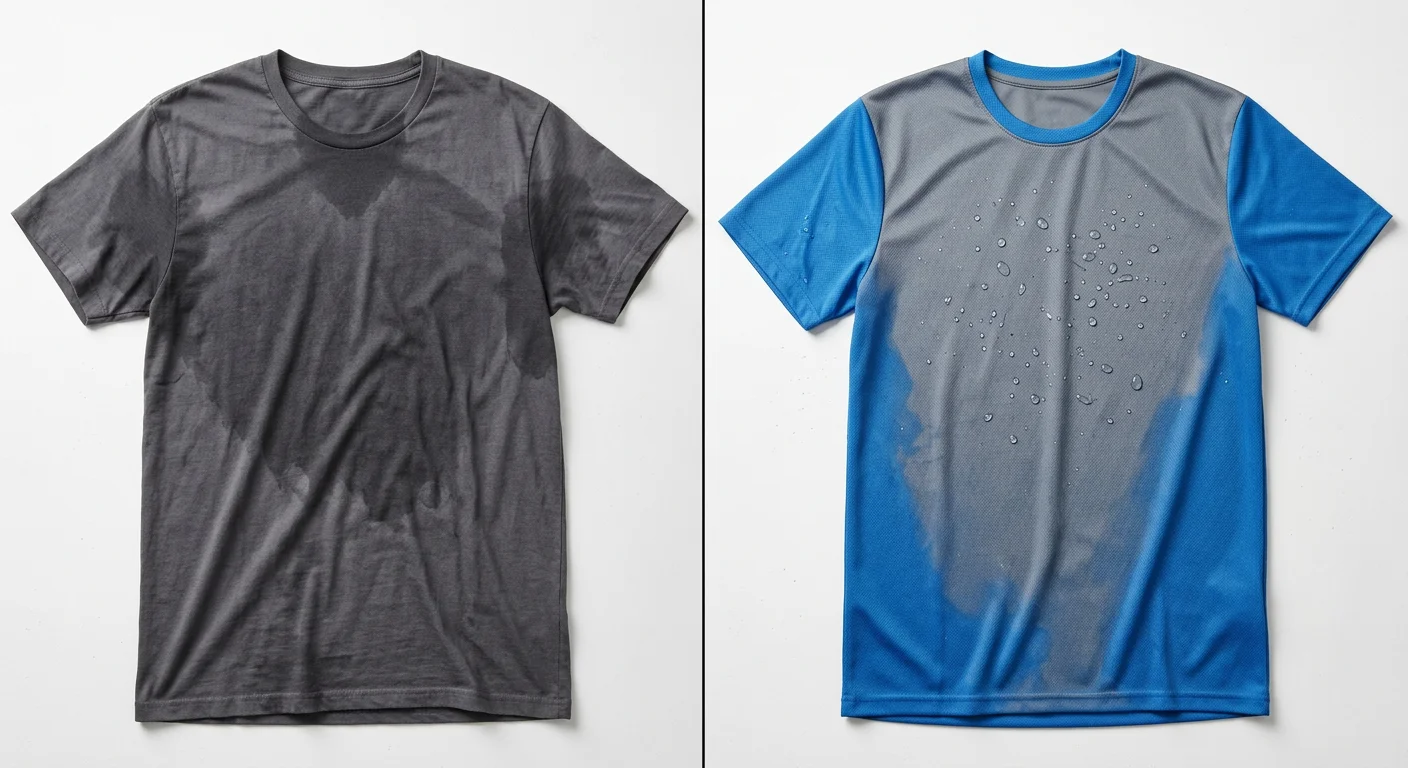
That soaking-wet cotton shirt clinging to your back at mile three. The leggings that feel like a straitjacket the moment you drop into a squat. The gym bag that smells like a crime scene after one HIIT session. If any of this sounds familiar, the problem isn't your fitness level — it's your fabric.
I've spent years testing gear through marathon training blocks, high-altitude hikes, and sweat-drenched CrossFit WODs. One thing became clear fast: a great workout versus a miserable one often comes down to textile engineering, not willpower. The right moisture wicking fabric and breathable workout material do more than keep you comfortable. They change how your body performs under load — and the difference shows up in your output, not just your mood.
So here's how to evaluate what's worth wearing — and what's holding your training back.The same performance principles also help brands developing custom activewear choose fabrics that deliver measurable benefits instead of relying on marketing claims alone.
Moisture Management & Friction Reduction via Capillary Wicking
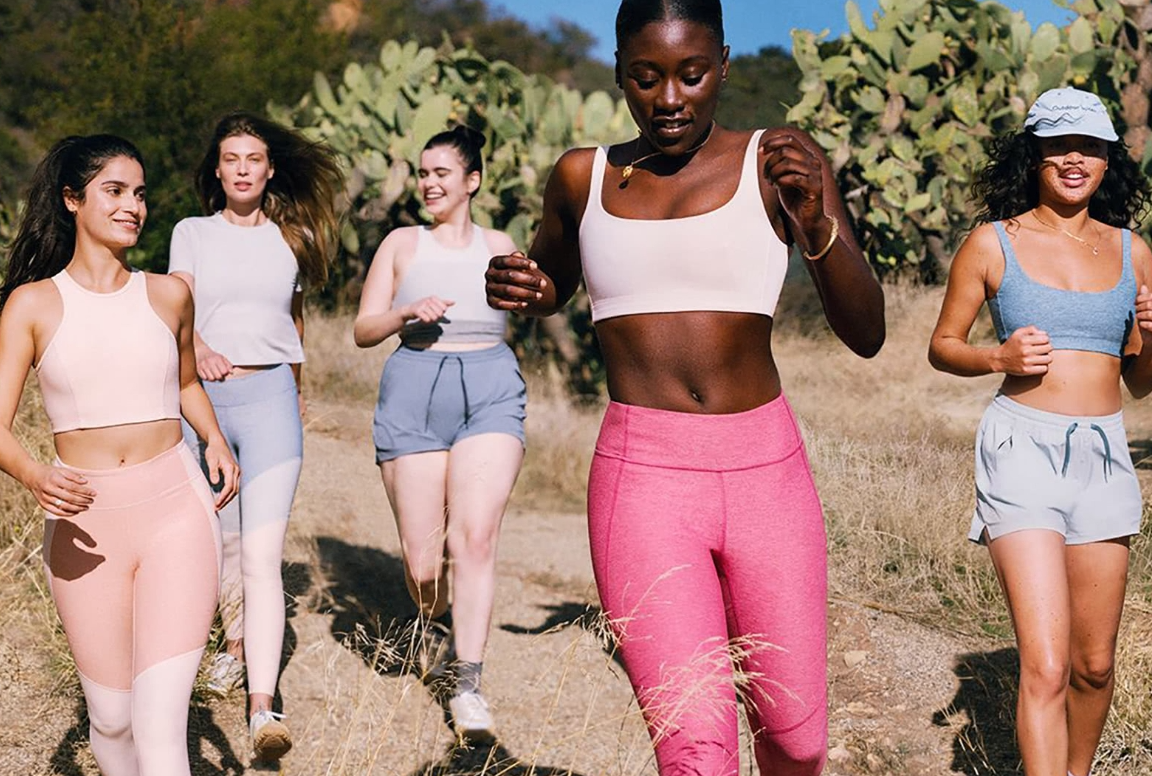
Here's a number that should change how you shop for workout gear: 0.8 to 1.5 liters per hour .
That's how much sweat your body produces during a mid-intensity 5K or HIIT session. A standard cotton T-shirt — dry weight 140 to 180 g/m² — hits near-fiber saturation in 10 to 20 minutes at that rate. The math is unforgiving. Your torso alone generates sweat fluxes of 200 to 500 g/m²·h during steady-state running. Cotton absorbs all of it. Then it holds it. That's where the performance damage begins.
What you feel at mile three isn't just discomfort. It's physics.An experienced activewear manufacturer evaluates moisture transport, drying speed, and fabric construction together to ensure garments perform consistently under real training conditions.
Why Saturated Fabric Destroys Your Output
Once a cotton layer saturates, three things happen at once — and none of them are good:
A liquid film forms between your skin and the cloth , turning the fabric surface into a friction amplifier
Skin-on-fabric friction spikes in high-movement zones: inner thighs, underarms, under the bra band
The garment grows heavier and colder, creating a "clammy drag" effect that builds fatigue during recovery intervals
The friction part is worth understanding on a technical level. Capillary adhesion between wet fabric and skin can double the friction coefficient compared to dry contact. Saturated cotton jerseys make this far worse — fiber swelling and rough surface texture both contribute. Engineered polyester knits with directional wicking structures show 30 to 50% lower wet friction coefficients at the same contact pressures. That means fewer chafe points on a 10K route or a 45-minute HIIT block.
That's not marketing language. That's tribology.
How Capillary Wicking Works
The technology behind quality moisture wicking fabric isn't complicated once you see the mechanism. Synthetic filaments — polyester or polyamide — get engineered with asymmetric or profiled cross-sections : channels, trilobal grooves, multi-groove geometries. These micro-structures act as capillaries. They pull liquid away from your skin through pressure differential, not absorption.
That difference matters a lot:
Fabric Type | Mechanism | Moisture Regain | Behavior When Wet |
|---|---|---|---|
Cotton | Fiber absorption | ~8–9% | Swells, retains water, stays damp |
Basic polyester | Surface wetting only | ~0.4% | Limited spread, can pool |
Engineered wicking polyester | Capillary transport | ≤0.4% | Pulls, spreads, evaporates |
The best quick dry athletic fabric constructions use a double-knit or bi-layer structure — a hydrophobic inner layer sits against your skin, and a more hydrophilic outer layer faces out. This builds a moisture gradient. Sweat moves away from your body and spreads across a larger surface area, so it evaporates faster.
The performance numbers from standardized testing (AATCC 197 vertical wicking protocol) are concrete:
High-performance wicking knits : ≥100 mm capillary rise within 3 minutes
Cotton and basic blends : under 50–70 mm in the same window
Evaporation target : near-dry (90–95% mass loss) within 10 to 15 minutes for a ~20 mL sweat load under normal airflow conditions
Cotton, in the same test? Drying times run 2 to 3× longer — keeping your skin-fabric interface wet well into your cooldown.
The Numbers You Should Demand From a Label
Most activewear brands talk about "moisture wicking" like it's a yes-or-no feature. It's not. There's a measurable performance spectrum. Knowing where a garment sits on that spectrum is the difference between sweat management clothing that does its job and marketing copy on a hangtag.
Check any piece of breathable workout material for these specific indicators:
Vertical capillary rise ≥ 100 mm at 3 minutes (AATCC 197)
Moisture regain ≤ 0.4% — confirms synthetic base, not hidden cotton blending
Evaporation percentage (Ep) > 70% — most absorbed moisture leaves via evaporation, not long-term retention
Surface dry time < 12 minutes for ~20 mL water load under standard lab conditions
Fiber cross-section type disclosed : channel, trilobal, or multi-groove — not just "polyester"
Fast-dry performance has one benefit most people overlook: it strengthens anti-odor sportswear technology . Silver-ion and bio-based antimicrobial finishes limit bacterial growth — but bacteria need moisture and time to spread. A fabric that dries in under 12 minutes cuts off both. A fabric that stays damp for 30+ minutes post-workout? That's a different story, no matter how advanced the chemical finish.
The right sweat management clothing keeps garment weight gain under 5 to 8% of dry weight during moderate exercise. The wrong choice — high cotton content, plain jersey construction, no engineered gradient — can push that figure past 15 to 20% . You feel every gram of that difference when you're pushing through the final kilometer.
Biomechanical Freedom Through High-Fidelity Stretch Recovery
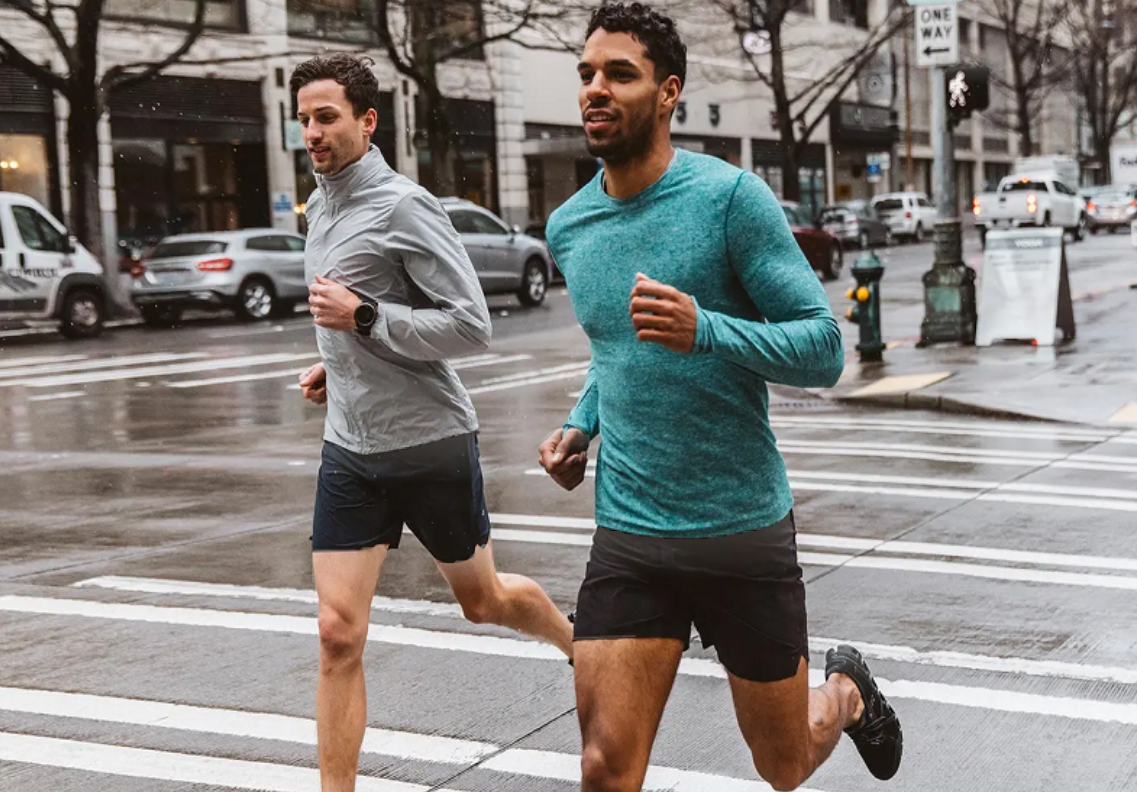
Your squat depth tells you everything you need to know about your leggings.
Not your mobility. Not your hip flexor flexibility. Your leggings. I've watched athletes cut their range of motion short — stopping three to four inches above parallel — not because their body couldn't go deeper, but because their fabric was pushing back. It built resistance around the hip and knee. Going lower felt like fighting a brace. Research using joint mechanics protocols from compression hosiery design backs this up. Degraded stretch fabrics can cut comfortable flexion range by 10 to 15 degrees in deep squats and lunges, compared to high-recovery compression alternatives. That's not a small margin in athletic movement. That's the difference between hitting depth and grinding through a broken pattern.
The failure is mechanical. It starts at the yarn level.This is why many private label activewear brands pay close attention to yarn selection and stretch-recovery testing before approving a new fabric for production.
How Cheap Elastane Destroys Your Range of Motion Over Time
Low-cost leggings and shorts carry 5 to 8% elastane content — enough to feel stretchy on a hanger. Under repeated high-strain use, though, the material breaks down. We're talking 20 to 100% elongation cycles, combined with heat, sweat, and detergent stress. Materials engineers call this plastic deformation : the fibers stop returning to their original shape after each cycle. Standard spandex yarns at this grade can lose 50 to 60% of initial modulus after repeated exposure. In practical terms, you'll see bagging at the knees and seat within 20 to 30 wash cycles .
And it cascades:
Compressive pressure drops from 12 to 15 mmHg down to under 8 mmHg at the thigh and calf — wiping out the pressure threshold needed for real compression fabric benefits
Waistbands roll down between sets; knee panels sag and bunch during box jump landings
Fabric that stops tracking joint movement creates "tight spots" at the hip flexor line and behind the knee. Over hundreds of reps, athletes shift into compensatory movement patterns without noticing
None of this is dramatic. That's what makes it dangerous. You adapt to restricted movement without realizing you're doing it.
What High-Fidelity Stretch Actually Requires
True four-way stretch material built for serious training runs on a different specification stack than lifestyle stretch. The differences show up at every layer.
Elastane content: Functional training tights need ≥15 to 20% high-tenacity elastane — not 5 to 8%. High-compression variants for HIIT and plyometrics push that to 25 to 30%. The elastane filament is core-spun with nylon 6,6 or polyester microfilament sheaths, making up 70 to 85% of total fabric weight. This protects the elastic core from abrasion and keeps moisture management working.
Elastic recovery rate: This number separates stretch fabric for exercise from stretch fabric for brunch. High-tenacity Lycra-grade elastane hits ≥95 to 98% elastic recovery after 50,000 bidirectional stretch cycles at 40 to 60% elongation — tested to the same standards used in medical compression hosiery. Lower-grade alternatives drop below 90% recovery after just 5,000 to 10,000 cycles . Quality construction holds permanent set at ≤5%. Budget alternatives can show visible knee and seat bagging — 5 to 10% growth — after just 20 wash cycles.
Knit architecture: Genuine four-way stretch material uses seamless warp-knit construction — Raschel or tricot warp knits — delivering ≥70 to 100% elongation in both wale and course directions (ASTM D2594 benchmarks). Warp-knits hold their shape better than weft-knits under repeated loading. Seamless construction also removes sewn seam stress points at the groin and inner thigh — the exact spots where fabric shear peaks during deep hip flexion.
Zoned Compression: Where Engineering Meets Movement
The best compression fabric benefits don't come from uniform pressure across the whole garment. They come from graduated tension zoning — different stitch densities and elastane concentrations mapped to specific body functions:
Zone | Target Compression | Functional Requirement |
|---|---|---|
Quads, hamstrings, glutes, calves | 15–22 mmHg at rest | Sustained across ≥40% strain without permanent set |
Knees, hip flexion lines, groin | Lower stitch density, reduced elastane load | Unrestricted flexion >140° — no "hard stops" |
That 15 to 22 mmHg range in the muscle zones isn't arbitrary. Sports compression research shows pressure in this band cuts soft-tissue oscillation by 15 to 30% during running and jump tasks. That links directly to lower perceived exertion and delayed muscle soreness. Light-to-moderate compression around the knee and hip also sharpens joint position sense accuracy by 5 to 10% in balance testing. You get cleaner landing mechanics and less valgus drift in multi-directional cuts.
Here's the detail most brands skip: these benefits hold only if the fabric keeps near-constant pressure under dynamic movement . Once recovery drops and compression falls below the functional threshold, soft-tissue oscillation returns to baseline. So does the fatigue and proprioceptive noise that comes with it.
The Right-vs-Wrong Reality Check
Here's what the gear gap feels like in a real training session — not in a lab:
Right choice (≥15% high-tenacity elastane, warp-knit, ≥95% recovery): You drop into an ATG squat and the fabric follows your hip crease without bunching. Box jumps land clean — no wobble from thigh panels shifting mid-air. After 45 minutes of dynamic flows and loaded squats, the waistband sits right where you left it. Zero readjustments. The leggings stop feeling like something you're fighting. They disappear.
Wrong choice (5–8% elastane, weft-knit, degraded recovery): By set three of your squat circuit, the fabric behind the knee is folding against joint movement. You're pulling the waistband up between every other set. Landings feel off — not because your ankles are weak, but because loose fabric at the thigh is feeding micro-instability into your base. You start shifting your squat stance to work around the fabric, not your anatomy.
Field testing for this category follows a clear protocol: 8 to 12 weeks of deep squat sessions, plyometric blocks (100 to 200 box jumps per week), and daily dynamic mobility flows . A quality garment should score 0 to 1 out of 10 on subjective ROM restriction , need ≤1 waistband or leg adjustment per 60-minute session , and show no meaningful knee or seat bagging at the end of the test period.
The Checklist Before You Buy
Before buying any stretch fabric for exercise , check these specs on the product sheet or ask the brand:
Elastane content: ≥15% for HIIT, lifting, and plyometrics; ≥20% for high-compression variants
Elastic recovery: ≥95% after 50,000 cycles at 40–60% elongation — permanent set ≤5%
Four-way stretch: ≥70–100% extension in both directions (warp and course)
Compression: 15–22 mmHg in primary muscle zones, maintained across ≥40% elongation
Dimensional stability: ≤2–3% growth at knee and seat after 20 to 30 wash/dry cycles at 30–40°C
Construction: seamless or minimal-seam warp-knit with contoured knees, hips, and gusseted crotch
Gear performs at its best when the garment moves the way your body moves. It doesn't, and you're not just uncomfortable — you're training around your gear instead of through it.
Core Temperature Control Through Engineered Breathability
Elite coaches don't wait until athletes feel overheated. They watch the numbers.
In serious endurance and heat-adaptation programs, core body temperature gets tracked non-stop during 45 to 60-minute efforts. By the time an athlete feels dangerously hot, the thermal damage to output has already started. That same logic applies to what you wear. A fabric that traps heat doesn't just make you uncomfortable. It speeds up your temperature rise, adds to cardiovascular load, and forces your body to slow down before your legs are even tired.
This failure mode hits hardest in outdoor summer training, hot yoga, and indoor cycling. Three environments where sweat alone isn't the enemy. Trapped heat is.
What "Breathable" Really Means in Performance Terms
Most activewear brands print "breathable" on the hang tag like it settles something. It doesn't. Breathability is a spectrum with measurable endpoints. The gap between a fabric that performs and one that just claims to is enormous.
Here are the numbers that separate real thermoregulation workout clothes from marketing copy:
Air permeability: >500 L/m²/s — the threshold where convective airflow moves heat away from the skin surface
MVTR (Moisture Vapor Transmission Rate): ≥8,000 g/m²/24h — measures how well water vapor escapes the space between fabric and skin
Microclimate temperature reduction: 2–3°C vs. solid-weave alternatives — the real-world gap between engineered mesh and standard tight-knit constructions
UPF 50+ for any outdoor use where radiant heat adds to total thermal strain
That 2 to 3°C microclimate difference isn't small. In sustained cardio, a lower skin-surface temperature slows the rate at which your core climbs. That gives you more time to hold output before heat stress forces your body to back off.
The Engineering Behind Real Heat Management
True breathable workout material built for heat control doesn't lean on a single mechanism. The best constructions stack multiple technologies against the same problem:
Zoned micro-perforation mapping places targeted ventilation panels at the back, underarms, upper spine, and chest. These are the zones where heat peaks during hard exercise. Variable-density knit structures let these zones breathe while keeping coverage and stretch intact everywhere else.
Hydrophilic fiber spacing works alongside the ventilation layout. It pulls moisture away from your skin before it pools and reheats. This stops the damp-heat buildup that makes a soaked garment feel like a steam pack pressed against your torso.
For sustained cardio, some high-spec fabrics use phase-change microcapsules — materials that absorb heat as they shift from solid to liquid. This creates a short thermal buffer during peak intensity intervals.
For outdoor sessions, infrared-reflective yarns block radiant heat before it reaches your skin. That matters a lot when sun exposure piles onto ambient temperature. Pair this with UV protection activewear rated at UPF 50+, and you get a measurable drop in total heat absorbed across a 60-minute outdoor run versus a standard unprotected fabric.
Right Choice vs. Wrong Choice: What You'll Actually Feel
Wrong choice — dense, tightly woven fabric with no ventilation zoning: Heat builds inside the garment with nowhere to go. Airflow across the skin drops. Sweat stops evaporating because the trapped air space gets saturated. You're not just wet. You're hot and wet — and that's a different physiological problem altogether.
Right choice — lightweight thermoregulation workout clothes with zoned ventilation and MVTR ≥8,000 g/m²/24h: The fabric handles heat transfer, not just moisture. Your core temperature climbs more slowly under the same workload. You hold output longer before heat stress forces your body to compensate.
Before buying any breathable workout material for high-heat training, check for these specs:
Air permeability >500 L/m²/s
MVTR ≥8,000 g/m²/24h
Zoned ventilation panels at the back, underarms, and chest
UPF 50+ for any outdoor use
Phase-change or infrared technology listed for sustained-cardio or outdoor variants
A brand that can't give you the MVTR or air permeability rating is making a claim — not a specification. In training environments where heat management shapes how long you can perform without risk, that difference is real.
Lifecycle Cost Optimization Through Abrasion & Tensile Durability
The cheapest leggings you've ever bought likely cost you the most money.
That's not a paradox — it's a math problem. Run the numbers once, and you'll never evaluate activewear the same way again.
Here's what happens with budget gym wear. A 180–190 g/m² single-jersey polyester/spandex legging — low-denier yarns, loose knit structure, no finishing treatment — starts showing visible pilling after 5,000 to 10,000 Martindale abrasion cycles . In real training time, that's 2 to 3 months of three-sessions-per-week use — burpees, rope work, treadmill friction. Tensile strength drops ≥30% after just 20 to 30 wash cycles . By 40 to 60 wears, the fabric tears through at the inner thighs, seams split at the inseam, and the waistband loses its hold. Most people throw the garment out right around this point.
At $10 ex-factory of activewear and ~50 functional wears, that's $0.20 per wear .
Now compare that to a well-built alternative: 250 g/m² double-knit nylon 6,6 interlock with high-denier microfilament yarns, enzymatic anti-pilling finish, and flatlock seams throughout. In standardized testing, this construction reaches ≥30,000 Martindale cycles (ISO 12947) with no yarn breakage and less than 5% mass loss. Tensile strength holds at ≥85% after 50 industrial wash/dry cycles . Pilling grades stay at ≥4 on ISO 12945 through 7,000 to 10,000 abrasion cycles plus 25 to 50 washes. Squat opacity — a real failure point for thin leggings under load — stays above 90% coverage after 50 wash cycles.
Service life in high-friction training: 150 wears over 18 to 24 months .
At $18 ex-factory of sportswear, that's $0.12 per wear .
The budget option costs 67% more per use . Over 24 months, a single user going through three cheap garments spends $30 on fabric. One durable garment costs $18 . That's a 40% lifecycle savings — and that's before you count seam failures mid-session, the opacity problem that ruins a squat at the worst moment, or the return rate and brand complaints that pile up after.
The Spec Stack That Makes Durability Real
Durability in durable gym clothing fabric isn't one feature. It's a set of layered engineering choices that build on each other.
Yarn and denier selection is the first gate. High-abrasion zones — inner thighs, knees, glutes — need 70 to 100D nylon 6,6 microfilaments or 40 to 70D high-tenacity polyester microfilament . Fine surface denier gives you a smooth feel against the skin. High total yarn denier gives you the abrasion mass that resists breakdown. Low-denier single-jersey constructions skip this balance entirely. They go for soft feel and low cost — and they break down on friction surfaces in under three months.
Knit construction controls how well the fabric holds its shape under repeated stress. Double-knit interlock and warp-knit structures beat loose single-jersey at the same GSM. You get higher bursting strength, better cover factor, a lower snag rate, and stronger opacity under strain. Target 230 to 280 g/m² GSM for leggings and tights , 220 to 260 g/m² for shorts that contact floors and equipment. Drop below 200 g/m², and fabric thinning in friction zones becomes a sure outcome — 5 to 10% measurable thickness loss after 10,000 to 15,000 abrasion cycles. That's not bad luck. It's predictable.
Seam engineering is where budget activewear breaks down under real training loads. Overlock seams in high-stretch areas lose >20% seam strength after 20 to 30 wash/dry cycles — particularly with low-tex thread at high stitches per inch. The right spec: 4-needle, 6-thread flatlock seams across all high-strain regions (inseam, seat yoke, side seam), using 20 to 30 tex high-tenacity polyester or nylon thread . Seam efficiency needs to clear 80% of base fabric tensile strength under ISO 13935 testing. That's the line between a seam that holds a 200-lb squat and one that splits mid-WOD.
The Buying Checklist
Sourcing performance fabrics activewear ? These numbers tell you whether a garment is a long-term cost asset or just another replacement cycle:
Martindale abrasion: ≥30,000 cycles (ISO 12947) — no holes, mass loss <5%
Tensile strength retention: ≥85% after 50 industrial wash/dry cycles
Pilling grade: ≥4 (ISO 12945) after 7,000–10,000 cycles + 25–50 washes
Seam efficiency: ≥80% of fabric tensile strength; flatlock in all high-strain zones
Colorfastness: ≥Grade 4 for washing (ISO 105-C06), perspiration (ISO 105-E04), and rubbing (ISO 105-X12)
Stretch retention: ≥85–90% recovery after 50 wash cycles; elongation loss <10–15%
Squat opacity: >90% coverage at 30–40% strain after 50 wash cycles
Cost-per-wear target: ≤$0.12 over 150 wears / 24 months
Any brand or activewear supplier that can't hand you Martindale data and tensile retention numbers isn't selling you high-performance clothes . They're selling you a price point. Those are two completely different things — and over 24 months of serious training, the gap shows up in your wallet and in your workouts.
Conclusion
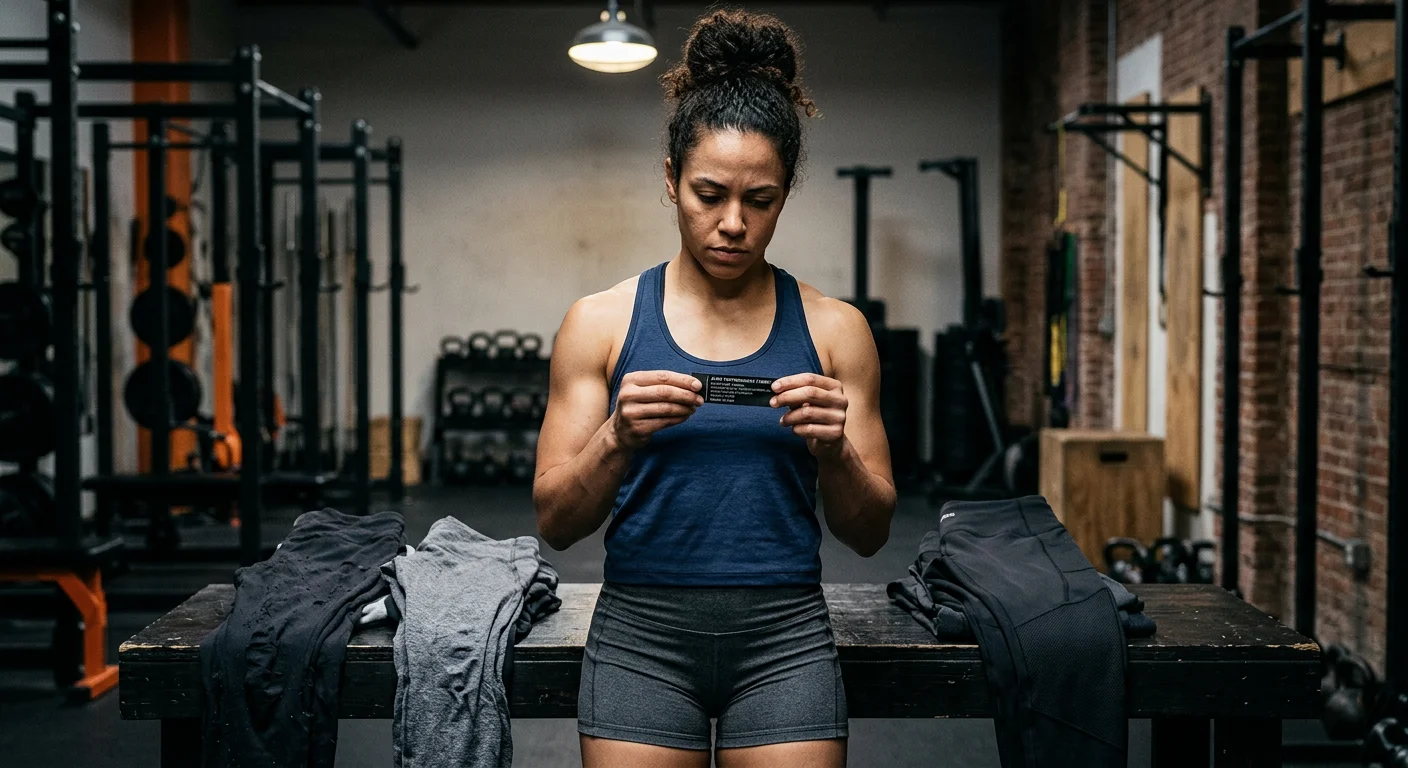
Your workout doesn't fail you — your fabric does.
Miles logged. Circuits completed. Sessions pushed hard. The gap between clothing that supports your performance and clothing that sabotages it comes down to four measurable realities:
How fast moisture leaves your skin
How well the fabric rebounds after every stride
How engineered breathability holds your core temperature in check
How many wash cycles pass before it stops performing like day one
This isn't about chasing premium labels. It's about knowing what to look for. Wicking rates, stretch recovery percentages, GSM ratings, abrasion resistance — these are the numbers that decide whether your sweat management clothing earns its price tag over the long run.
Next time you're in a store or scrolling a product page, flip the tag. Ask the hard questions. The fabric specs don't lie.
The best activewear isn't the most expensive one. It's the one that keeps working long after you've stopped.Whether you're sourcing from an activewear wholesaler or developing your own collection, understanding these performance metrics leads to better purchasing decisions and longer-lasting products.