Most trend reports will tell you what's hot . This one tells you what to buy — and when .
You're mapping out your 2026 product line right now. The real pressure isn't staying fashionable. It's making sourcing decisions 6 to 12 months ahead of the market — without betting your inventory on the wrong call. The fitness apparel space is moving fast. Performance fabric technology is crossing from R&D labs into MOQs that actually work at scale. Sustainable activewear materials are moving out of premium niches and into mass-market expectations. Consumer silhouette preferences are shifting too — and the brands that read that shift early will pull ahead of those scrambling to catch up.
What follows is a category-by-category sourcing roadmap. Built for decision-makers, not trend watchers.
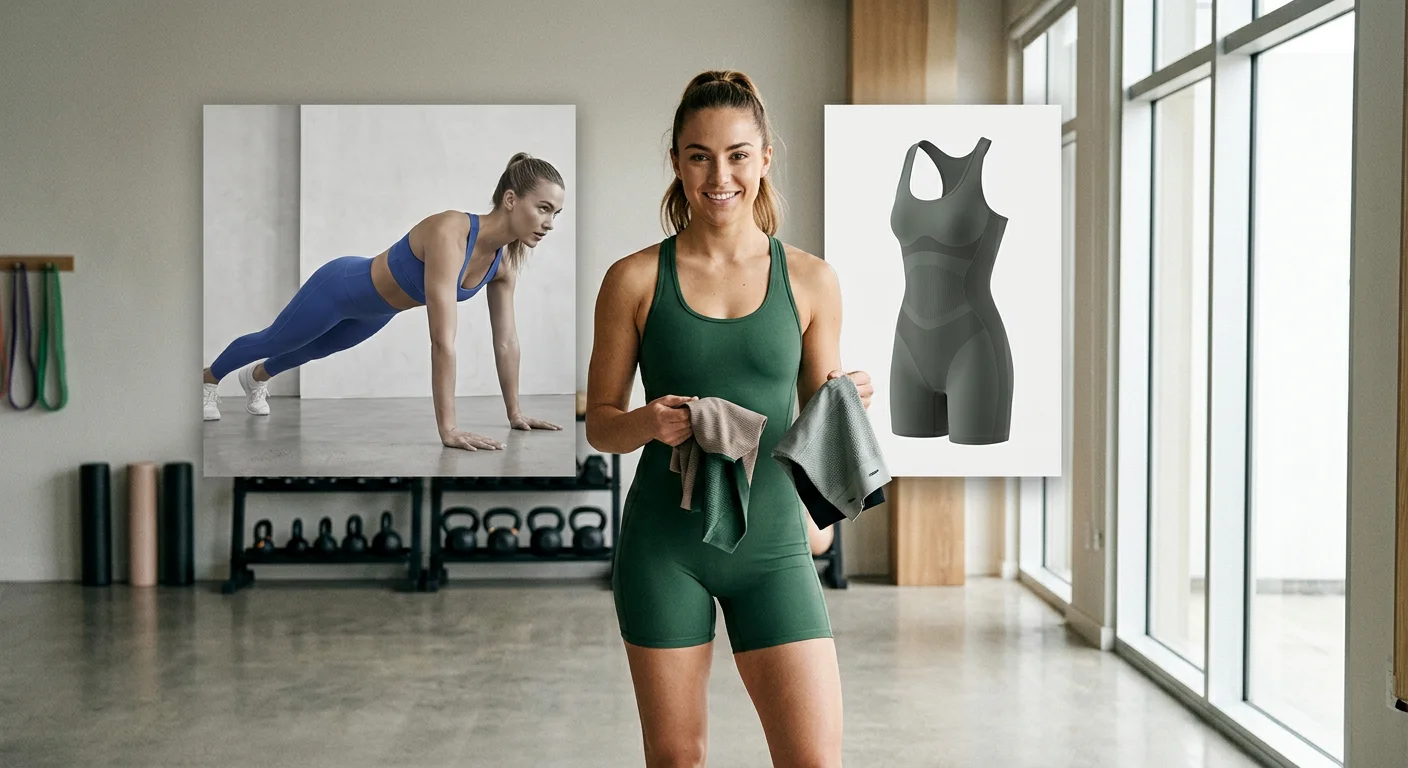
Compression Wear Innovation & Seamless Knit Sportswear
The old compression story was simple: squeeze harder, support more. Consumers have moved past that idea.
Today's high-repeat fitness buyers aren't chasing maximum compression. They want graduated, zone-specific pressure that moves with the body — not against it . The shift toward "soft-sculpt" compression runs deeper than aesthetics. It's a structural change. And the fabric engineering behind it has matured enough to source at real scale.
The Fabric Formula That Works
Most sourcing briefs underestimate how precise the technical foundation needs to be. 220–260 GSM nylon-spandex knit — 78% Nylon / 22% Spandex — hits the tension-recovery balance that soft-sculpt compression requires. Lock these specs into your next RFQ:
Stretch: ≥150% in both warp and weft directions
Recovery rate: ≥90% after two stretch cycles
Yarn: 40D–70D nylon filament face yarn; 40D–78D covered spandex for the elastic layer
Finishing: Mild heat-set — over-processing kills recovery performance
The real differentiator isn't the GSM. It's zonal modulus engineering — the fabric's stiffness changes based on panel placement. Thigh-front panels use lower spandex tension and a looser loop length. That removes the locked-in feeling. Seat and rear-thigh panels bump spandex denier by 20–30%. You get lift and posterior support, with no visible seam required.
Seamless Knit: Past the Pilot Stage
China's textile infrastructure has hit a milestone worth noting for your MOQ math. Under the 2023–2025 Textile Industry Upgrade Plan , 70% of scaled fitness wear manufacturers are pushing toward full digital-network integration. That includes seamless circular knitting lines and intelligent heat-setting equipment. The result: seamless one-piece construction is now available beyond premium fitness wear factories.
Here are the current benchmarks from mature nylon/spandex seamless lines:
Metric | Achievable Standard |
|---|---|
Yield rate | ≥92% |
Bulk lead time | 30–40 days (25–30 days, optimized lines) |
Waistband integration | Seamless, no elastic insert required |
The invisible waistband gets knitted into the garment body through density and spandex content variation. No elastic insert. No pressure ridge. No roll-down. That single feature cuts a major return driver in traditional high-waisted leggings.
Sourcing Action Checklist
Confirm these deliverables before you brief your factory:
Request stretch modulus test data split by warp and weft — not just overall elongation figures
Specify zonal spandex denier in your tech pack (rear panel and front panel are different specs — treat them that way)
Confirm seamless circular machine availability and sample-to-bulk switching time
Require soft-finish + controlled heat-set process documentation — no aggressive calendering
For non-seamless styles, specify four-needle six-thread coverstitch to match seam stretch to fabric stretch
Supply chain maturity for this category: production-ready. The risk isn't capability — it's spec clarity. Factories can deliver soft-sculpt compression. Most just haven't received a detailed enough brief to do it right.
Sustainable Activewear Materials & Recycled Polyester Activewear
The numbers have already made the decision for you. China's recycled fiber output now diverts the equivalent of 30 billion waste plastic bottles per year from landfill. It also cuts 1.3 million metric tons of carbon emissions each year compared to virgin polyester production. That's not a pilot program. That's a full industrial infrastructure — ready to anchor your next product line.
What's changed for 2026 isn't consumer appetite. That's been building for years. What's changed is supply chain readiness . Recycled polyester (rPET) has moved from premium-niche material into a truly scalable sourcing option. Brands that haven't updated their cost assumptions in the last 18 months are working from outdated math.
What Scale Looks Like Now
China's recycled polyester capacity hit 9.5 million metric tons as far back as 2018 — and it's kept growing since. Multiple fitness wear manufacturers now run GRS-certified rPET lines at multi-million-ton annual capacity . Single-factory "10,000-ton-plus" production runs are no longer exceptional. They're standard.
For activewear sourcing, here's how supply chain maturity breaks down:
Material | Availability | Sourcing Confidence |
|---|---|---|
GRS-certified rPET | Multi-million ton capacity, widely certified | ★★★★★ |
Recycled nylon | Established, fewer certified lines | ★★★★☆ |
Bio-based fibers (Lyocell, etc.) | ~300K ton capacity, growing | ★★★☆☆ |
The bottom line: rPET is production-ready for your core SKUs . Recycled nylon works well for mid-to-premium lines. Bio-based blends are worth sampling now for 2027 positioning, but don't build your primary range around them yet.
The Fabric Spec That Moves
For leggings, bras, and fitted tops, one formulation consistently balances stretch performance with recycled content:
85% rPET + 15% Elastane/Spandex
Lock in these certifications before briefing fitness apparel suppliers:
GRS (Global Recycled Standard) — confirms recycled content percentage and full supply chain traceability
OEKO-TEX Standard 100 — confirms no harmful residues in the finished garment. This one is non-negotiable for skin-contact activewear.
For performance finishing, specify cross-section rPET filament if moisture-wicking is a priority SKU requirement. The fiber geometry speeds up capillary action — no additional chemical treatments needed.
Low-Impact Dyeing: The Sourcing Math
This is where eco-friendly fitness wear brands most often leave margin on the table. Not by over-investing in sustainable materials — but by pairing them with conventional dyeing that kills the entire ESG story.
Two dye approaches are worth adding to your RFQ process now:
1. Solution-dyeing
Colorant goes in before extrusion — not applied after weaving. Per-ton savings versus conventional dyeing:
- Water consumption: –140 m³/ton
- COD discharge: –56 kg/ton
- Energy use: –70%
Per finished garment (at ~0.3 kg fiber per piece), solution-dyeing saves 42 liters of water . That's a real number for your product page, hangtag, and fitness wear wholesale deck. It's also the most cost-accessible low-impact option. No equipment premium. Available through most scaled rPET mills. Ideal for high-volume base colors — black, charcoal, deep navy.
2. Waterless dyeing
Supercritical CO₂ replaces water as the dye medium. Zero effluent. The CO₂ gets recovered and recirculated after processing. The cost premium runs 5–15% above conventional dyeing — mainly equipment depreciation and gas cycling costs. Best suited for premium or limited-run styles where "zero-discharge dyeing" is a core brand claim, not just a footnote.
Retail Pricing Reality Check
The price premium on sustainable activewear is real — and it's holding. Brands that have moved to recycled fiber construction and transparent supply chain labeling report:
Entry eco line (rPET primary, functional basics): USD 39–59 retail — leggings, hoodies, sports bras
Mid-to-premium ESG line (GRS-certified, solution-dyed, brand sustainability narrative): USD 69–89 retail , with select collabs or limited editions pushing past $100
The fiber-level cost difference between virgin and recycled polyester runs 5–15% higher at the yarn stage — depending on oil prices and regional collection infrastructure. At the retail prices above, that gap is easy to absorb with room left for margin.
Sourcing Action Checklist
Before you brief your next sustainable activewear production run:
Confirm GRS certification scope — verify it covers the fiber, yarn, and fabric stages, not just the finished cut-and-sew
Request solution-dyed rPET options for base colors before defaulting to conventional reactive dyeing
Specify pilling resistance ≥ Grade 4 (ISO/GB standard) and Martindale abrasion > 20,000 cycles — recycled fibers vary in surface durability, and this is where shortcuts show up after launch
Set wash dimensional stability ≤ 3–5% shrinkage (warp and weft) — confirm with wash-test data, not just factory declarations
Require color fastness ≥ Grade 4 for both wash (ISO 105-C06) and perspiration tests — non-negotiable for activewear
Check recycled-content trims : elastic, zippers, care labels — these details raise your overall recycled percentage and strengthen the product story without adding significant cost
Supply chain maturity for this category: production-ready at scale. The question isn't whether you can source it. It's whether your tech pack is detailed enough to spec it out right — and whether your retail pricing is set up to convert the consumer who's out there searching for it.
Zoned Mesh Ventilation & Smart Thermal Regulation: The Performance Fabric Technology Matrix
Summer training exposes what ordinary fabric can't hide. A customer finishes a HIIT session soaked through the back panel of a $70 legging. No colorway saves the return. No marketing fixes the review.
The solution isn't better moisture-wicking. It's structural . Leading brands in 2026 are building ventilation directly into the garment's construction, then adding smart thermal response on top. Two distinct technologies. One clear sourcing decision.
Zoned Mesh: From Design Detail to Functional System
Nike and several major performance labels have made "mapped ventilation" a standard feature in their summer training lines. That means mesh paneling at the anterior thigh, popliteal hollow, and posterior waist. These SKUs command 20–40% price premiums over standard leggings. Consumer reviews keep surfacing the same words: breathable , no heat buildup , wearable in summer . That's not a styling preference. That's unmet functional demand.
The engineering behind that demand runs on 3D sandwich mesh construction : an inner contact layer, an outer breathable shell, and a spandex-filament spacer layer between them that creates a continuous air corridor. Think of it as a built-in ventilation channel — not just holes, but structured airflow.
Key structural specs for your tech pack:
Panel placement: Axillary zone, scapular back, posterior waist, inner thigh, popliteal fold — all high-sweat-rate areas confirmed by heat-mapping studies
Aperture size: 0.5–1.5 mm pore diameter — small enough for coverage integrity, large enough for real convective airflow
Mesh panel weight: 160–190 GSM (versus 200–220 GSM for primary coverage panels at seat and outer thigh)
Fiber spec: High-tenacity polyester or nylon elastic yarn with antimicrobial finishing — odor control across repeated wear cycles is where cheap mesh panels break down first
For the primary body fabric flanking those panels, use 180–210 GSM functional polyester + 8–18% spandex , warp knit or double-knit circular construction for recovery and opacity. The mesh zone reduces weight. The body panel holds structure. That contrast is the point.
Supply chain note: Domestic warp-knit manufacturers (Karl Mayer RD 6 lines and equivalents) produce 3D sandwich mesh at volume. Pricing runs ¥20–50/meter (around USD 3–7/meter) for standard activewear-grade constructions. Custom fitness wear colorways, antibacterial finishes, and GSM adjustments are all negotiable at scale. This is a mature, production-ready supply chain — ★★★★☆ . The limiting factor is spec clarity from your end, not factory capability.
Laser perforation is a secondary option for non-mesh styles. It's already standard on athletic shoe uppers and shell outerwear, and it works well with nylon/polyester knit bases. It's a lower visual-impact route, but it adds no meaningful lead time.
Smart Thermal Regulation: Two Technologies, Two Tiers
Performance fabric technology has moved past passive moisture management. The next tier responds to the body — activating as temperature and sweat output rise, then pulling back as they drop. Two accessible systems define the 2026 sourcing landscape:
PCM Microcapsule Coating (Phase-Change Materials)
Microencapsulated phase-change materials absorb heat during the solid-to-liquid transition. This buffers skin-surface temperature spikes during peak exertion. Apply it as a coating or pad-bath finish to the contact layer — best across chest-back panels, waist, and abdomen where heat builds up most.
The practical constraint is cost. PCM finishing adds 20–40% to base fabric cost . That's a real number. Price it into your retail positioning before you brief the factory — not after.
HeiQ Smart Temp (Moisture-Sensitive / Thermo-Responsive Finishing)
This is the sharper option for 2026. HeiQ Smart Temp works differently from static "ice-feel" yarns. Cooling activates as body heat and perspiration rise, then eases off as temperature drops. The body isn't held at a constant chill — it's regulated. That distinction is easier to explain to consumers, easier to verify in wear-testing, and far more compelling as a product claim than "cooling fabric."
It's built for skin-contact knits. Brands across performance sportswear and premium base layers already use it. The positioning language writes itself: active thermal response , body-interactive comfort , smart heat management for HIIT and hot yoga .
Retail Positioning by Technology Tier
Configuration | Technology Stack | Suggested Retail Range |
|---|---|---|
Zoned mesh + functional moisture-wicking yarn | No smart coating | USD 55–75 (Performance Functional Line) |
Zoned mesh + HeiQ Smart Temp or PCM system | Brand-level smart thermal finishing | USD 85–110 (Tech Flagship Line) |
The cost gap between tiers is real — driven mostly by the finishing premium on smart thermal treatments. At the retail prices above, that gap is manageable. The harder question is whether your brand story supports the $85–110 price point. Your line sits below $70? A tech flagship SKU needs backup: wear-test data, certification callouts, and clear copy explaining what "smart" means for the customer's actual training session.
Sourcing Action Checklist
Specify 3D sandwich mesh panel placement in your tech pack by anatomical zone — don't leave mesh positioning to the factory's discretion
Confirm aperture diameter and GSM for mesh panels as separate specs from body fabric
Request antimicrobial finish documentation for mesh yarn — this directly affects long-term product performance and return rates
List smart thermal finishing as a separate line item in your costing request — PCM and Smart Temp add 20–40% to fabric cost; lock that number before setting your retail price
For HeiQ Smart Temp or equivalent, require brand licensing confirmation and wash-durability test data (functional persistence across ≥30 wash cycles minimum)
Add laser-cut or heat-bonded edge finishing at mesh-to-body panel joins — raw-edge mesh abrades against skin in high-rep movement; catch this at the sampling stage and it stops being a return driver
Specify 360° perforated elastic at interior waistband for continuous ventilation at the highest heat-accumulation zone
Supply chain maturity: Zoned mesh construction — production-ready ★★★★☆ . Smart thermal finishing (PCM / Smart Temp) — viable at select tiers ★★★☆☆ , best used as a flagship differentiator rather than a core-range standard until per-unit costs come down further.
Retro Low-Rise Silhouettes & Flare Leg Revival
The Y2K silhouette never disappeared — it just waited for a generation that missed it the first time.
Low-rise waistlines and flare-leg construction are back on 2026 editorial shortlists. You'll see them across ELLE Hong Kong, major Chinese fashion media, and international trend platforms. The supply chain behind them is already mature . This isn't a trend you need to test carefully. You can move on it now.
The Silhouette Specs That Sell
Skip the extreme low-rise if you want commercial results. A 2–3cm drop below the natural waist gets the look right without fit complaints. Save the ultra-low (8cm below navel) for limited-edition Z-Gen drops where that risk is intentional.
Flare geometry that works at volume:
Hem width: 18–22cm per panel (25–27" waist sizing baseline)
Flare origin: From knee point — not mid-thigh
Inseam length: 3–5cm beyond natural leg length — built to graze thick-sole sneakers and platform trainers
For fabric, 10–12oz stretch denim (1–2% spandex) covers the lounge-to-gym crossover well. Mid-weight ribbed or flat knit with elastic yarn works just as well for activewear-positioned styles.
Sourcing Readiness
Most scaled denim and knitwear factories already have pattern and grading resources for flare-leg and low-rise builds. Retrofit sampling — adjusting an existing trouser block's waistline and hem width — wraps up in 7–10 days , including one revision round. Vintage wash, contrast piping, and oversized logo embroidery are standard add-ons. They push lead time by just 1–3 days.
Supply chain maturity: ★★★★☆ on pattern and construction. It drops to ★★★☆☆ on fit risk. The low-rise hip-to-waist differential is the one spot that drives returns. Test sample sizing across body types before going to bulk.
Retail Pricing by Line
Tier | Construction | Suggested Retail |
|---|---|---|
Core trend line | Stretch denim or knit, streamlined wash | USD 35–52 |
Designer / collab limited run | Multi-process logo, contrast piping, complex wash | USD 58–78 |
Sourcing Action Checklist
Set waistline drop at 2–3cm below natural waist in tech pack — call out front rise and back rise as separate specs
Confirm back rise maintains seat coverage at 0.5–1cm longer than front — this protects bend-forward safety at low-rise
Specify hidden drawstring or internal elastic at waistband — this gives fit range flexibility across different waist-hip ratios
Set side pocket depth ≥ 13–15cm — position rear pocket lower to line up with the low-rise hip line
Request graded size-specific hip-to-waist differential — run S/M in two hip ratio variants to cover diverse body types
Brief factories on vintage wash + small-area knee distressing — keep abrasion limited to non-structural zones only
Bold Color Palettes Workout Clothes & Contrast Seams: Cherry Red Moves First
Red doesn't ask permission. In 2026 activewear, Cherry Red and Tomato Red are the anchor colors worth building a seasonal story around. Not as accent details — as primary SKU drivers.
The color itself isn't the risk. Pairing it wrong is. High-saturation red with Black or Charcoal Grey structural lines turns visual intensity into athletic energy. Red-black and red-grey are your two most bankable combinations. They carry the look without overwhelming the wearer.
Color Architecture That Converts
Place red where the body draws attention — chest, shoulder, seat. Let neutral tones handle the compression zones: abdomen, side waist. That contrast isn't decorative. It's functional zoning made visible.
Contrast detail priority for your tech pack:
Contrast seam placement: Shoulder seams, side seams, crotch seam, armhole — each one reinforces body contour and marks performance zones clearly
Color-block mapping: High-visibility red at focal points; charcoal or black at cinching zones
High-visibility trim: Reflective piping, contrast binding, seam welting — builds functional credibility for running and training end-use
Layering-ready construction: Contrast inner-outer layers, color-split bra-top builds — these create strong content on their own
SKU Direction by Colorway
Colorway | Best Application | Retail Positioning |
|---|---|---|
Red + Black | Compression training set, leggings | USD 38–55 (volume line) |
Red + Grey | Running two-piece, fitted top | USD 38–55 (core range) |
Red + White | Layered bra top, oversized hoodie | USD 65–85 (limited colorway) |
Red + Black with reflective detail | Night-run jacket, training tight | USD 65–85 (premium detail) |
First-Order Sourcing Structure
Keep initial production to 2–4 colors maximum per style . Use multi-panel colorwork with clean zoning and standard pattern blocks. This keeps cutting waste under control. The construction techniques — reactive digital printing, yarn-dyed contrast stitching, reflective tape binding — are all mature, production-ready processes: ★★★★★ . No capability risk here.
Recommended first-order ratio: 60% red-dominant SKUs / 40% neutral contrast SKUs. Lead with high-saturation hero styles. Then bring in lower-saturation options to protect inventory turnover. This sequence keeps sell-through steady across both ends of the range.
Sourcing Action Checklist
Set Cherry Red or Tomato Red as primary colorway — specify Pantone reference in your tech pack to lock shade across fabrics and trims
Brief contrast seam placement by anatomical zone — shoulder, side seam, crotch line — don't leave it to pattern room default
Specify reflective tape width and placement apart from the base fabric spec — align with nightrun or outdoor training end-use
Confirm color fastness ≥ Grade 4 for wash and perspiration — high-saturation reds are where factories skip this standard most often
Cap first-order colorway count at 3 combinations: red-black, red-grey, red-white — enough range to cover the market without adding cut-and-sew complexity
Set your launch order: hero saturation styles first, neutral-balance styles as replenishment — this cuts initial inventory risk at launch
Supply chain maturity: production-ready ★★★★★. Your factory can handle high-saturation contrast construction. The real question is whether your brief is tight enough to stop color drift between sampling and bulk.
Oversized Pump Covers & Gym-to-Street Crossover
The pump cover didn't arrive quietly. It built up — video by video, millions of clips of someone pulling a boxy hoodie over a sports bra before entering the gym, then peeling it off mid warm-up. TikTok and Instagram searches for pump cover hoodie and oversized gym hoodie have hit billions in cumulative views . That's not a micro-trend. That's a category planting its flag.
The market logic is simple. Athleisure's gym-to-street segment grows at 7–10% per year — more than double the ~3–4% of traditional casual. The pump cover sits right at that crossover point. It's the one piece that makes a training outfit street-ready without a wardrobe change.
Supply chain maturity: ★★★★☆. The construction is familiar. The risk is in the details.
Fabric Specs That Work
The weight window is tight, and it matters. 160–190 GSM is your target range:
Below 160 GSM: too sheer for street wear — reads as loungewear
Above 200 GSM: too heavy; traps heat after training
Two proven fiber builds:
Line Tier | Composition | Why It Works |
|---|---|---|
Volume/core | Poly 70–80% + Viscose 20–30% | Durability + drape; removes the cheap-sportswear sheen |
Premium/upgrade | Poly 55–60% + Cotton 25–30% + Viscose 10–15% | Moisture absorption + pilling resistance |
Finish with light brushing (微磨毛) to flatten surface sheen and boost opacity. For colorways: black, deep grey, olive, oat, and off-white cover the base. Add cationic dyeing or stone-wash effect for street-leaning SKUs.
Construction Details Worth Specifying
The silhouette is the product. Lock these into your tech pack:
Chest allowance: +18–25 cm (women's) over body measurement — enough to layer over a sports bra without pulling
Shoulder drop: 3–6 cm, with wide sleeve width — this creates the "covering the unpumped physique" look that drives the category
Length: Hits upper-third to mid-seat — covers the legging waistband while standing, doesn't bulk up when seated
Two construction decisions that separate the good from the returned:
1/4 or 1/2 zip front opening — lets heat out after training. Pair it with a stand collar and it reads athletic on the street. Use nylon or plastic resin zippers. Metal pulls run cold against skin during training.
Drawcord hem with elastic cord + plastic lock — pull it tight and you get a cropped boxy shape over high-waisted leggings. Longer legs, cleaner silhouette. Release it and the hem drops loose for the commute. Skip metal hardware — it snags on bag straps and leaves scratches.
The Layering Logic Behind the SKU
The pump cover anchors a three-SKU set system — and that's where the margin lives:
Core set: Pump cover + sports bra + high-waisted legging
Position the pump cover as your traffic-driving entry SKU. Price it to pull customers in. Let the bra and bottom carry the margin. Promote the set as a bundle. Brands running "any 2 at 10% off / 3+ at 13% off" structures report solid lifts in average order value with the pump cover anchoring the deal.
Post-training, the same piece layers outward. Add a utility vest or lightweight wind vest over the pump cover and you extend into full gym-to-street dressing. For commute-ready builds, use the three-layer logic: legging or slip dress + short layer + pump cover as the outer shell.
Sourcing Action Checklist
Confirm GSM falls between 160–190 — request weight test data per roll, not factory declaration
Specify viscose or cotton blend ratio in your RFQ — pure poly knits will pill at the elbow and side seam within 20 washes
List micro-brushed finish as a standard process step — not an optional upgrade
Set chest allowance and shoulder drop as hard tech pack numbers , not "oversized fit" as a style note
Specify elastic drawcord + plastic lock at hem — no metal hardware
Request seam reinforcement at armhole and hem edge on any mesh-panel or open-weave build — these are the first spots to unravel at the lockstitch
Structure your first buy as a 3-SKU set bundle with the pump cover as the entry price point
The real risk here isn't sourcing capability — it's vague specs. Factories churn out oversized fleece every day. What they need from you is fabric weight, drape control, seam reinforcement placement, and hardware spec. Send a loose brief and you'll get a piece that looks fine on the hanger and falls flat in the fitting room.
Crossover Sports Bra Design & Built-In Cup Integration
The two-piece problem has a one-piece answer.
Shoppers don't want to layer a sports bra under a crop top and figure out which one to show. They want one piece — crossback, built-in cup, sweat-ready — that holds through a HIIT session and still looks great on the way out. Search data backs this up. Keyword clusters around "built-in bra tank" and "cute aesthetic workout tops" have posted 50–70% quarter-on-quarter growth in North American and UK markets. That's not noise. That's a category shifting fast.
Structure First
Back construction drives everything else. Consider splitting three configurations across your SKU mix:
Crossback (40% of range): 30–35mm wide elastic straps crossing from front panel to rear. Mid-to-high support, strong social visual — crossback silhouettes outperform standard racerback in engagement across fitness content platforms
Racerback (35%): Wide-body rear panel plus broad underband. Mid-intensity coverage, lower production complexity
Straight-back tank (25%): Low-to-mid support, positioned for all-day wear crossover
For the cup system, the commercial sweet spot is molded removable pads with a dual side-slot opening. Go modular on sizing — 2–3 standardized cup depths shared across your full line. This cuts tooling cost and removes the fit complaints that come from per-style cup development.
Fabric Specs That Support at Speed
Parameter | Target Range |
|---|---|
Composition | Nylon or polyester + 15–25% spandex |
Weight | 180–260 GSM (lighter for yoga; heavier for cardio) |
Stretch recovery | ≥90% after two cycles |
Underband width | 30–40mm, fabric-wrapped |
Specify dual-layer mesh lining across chest and rear panels. That's where moisture-wicking performance does the real work. Surface fabric handles structure. The mesh layer pulls sweat away from skin. Silicone grip tape at the interior underband edge handles the rest.
Sourcing Reality Check
Supply chain maturity here sits at ★★★☆☆ . Not because the construction is unusual, but because crossback tension distribution and cup placement stability both need fit iteration. Budget for three pattern rounds at minimum : basic block first, then strap angle and cup position, then sizing and finish details. Factories with real experience on international sports bra programs will move through that cycle faster. Ask for their case history before you brief them.
Sourcing Action Checklist
Specify crossback strap width (30–35mm) and crossing angle as separate specs from standard bra strap requirements
Confirm removable cup pocket opening — dual side-slot, not bottom-entry, to cut in-wash deformation
Standardize cup molds across 2–3 depths for the full line — reduces tooling cost and sizing returns
Require silicone grip strip at interior underband on all running and high-intensity SKUs
Set dual-layer mesh lining as a standard construction spec, not a premium upgrade
Run fit testing across at least three body types per size before bulk sign-off — crossback tension spreads across shoulder widths in varied ways, so catch issues early
Inclusive Sizing Activewear & Gym Skort Innovation
The numbers don't whisper — they insist. In the U.S. women's activewear market, 1X–3X sizes are growing at 2–3× the rate of standard sizing. Some brands report plus-size lines up 30–40% year-over-year. That's not a niche. That's a structural shift in who buys fitness apparel — and right now, most product lines aren't built to meet her.
Inclusive sizing activewear isn't just adding larger numbers to a size run. You're rebuilding the pattern for a different body — wider hip-to-waist differential, more thigh room, a waistband that doesn't roll. Brands that expanded from S–XL to XXS–4XL report a 20–35% drop in fit-related returns and a 10–15% lift in repeat purchase rate . That's the commercial case. It's already closed.
The Bottoms Matrix: What to Build and in What Order
Build your activewear bottoms range around a 70/30 inventory split :
Core Line — 70% of inventory (XS–3XL full-size run)
SKU | Primary Use | Fabric Spec |
|---|---|---|
High-waist legging (7/8 + full length) | Gym, yoga, commute layering | 220–260 GSM nylon or polyester + spandex |
Straight/tapered training pant | Daily wear, light training | Woven or mid-weight knit |
Gym skort (A-line outer + inner short) | Running, gym floor, casual | Skirt hem + anti-slip inner liner |
Tennis dress (built-in short or removable) | Court sports, vacation | XS–XXL to start; scale to 3XL on sell-through data |
Style Line — 30% of inventory (S–XXL primary, expand by data)
This covers goth/alt leg styles, color-block and metallic prints, modular skirts with detachable panels. Keep the inner construction stable — high-stretch safety shorts — no matter how far the outer silhouette goes. Large-size customers don't trade function for aesthetics. They shouldn't have to.
Gym Skort: The Construction Details That Prevent Returns
The gym skort and high waisted leggings trend together define what inclusive bottoms feel like in real movement. Three construction specs decide whether a skort gets a five-star review or a return label:
Hem line: Front panel shorter than rear by 2–3 cm — stops the front hem riding up during forward lunges or squats
Inner liner leg hem: Add a 1–1.5 cm silicone grip strip — holds the inner short in place without compression-level squeeze
Crotch construction: Diamond gusset with flat-lock stitching — removes seam friction. For 2XL–4XL, increase both crotch length and thigh circumference allowance, not just the hip grade
For tennis dresses, reinforce the waist-to-skirt junction seam on larger sizes. That's the first stress point to break under dynamic movement. Adjustable or crossback straps extend fit range across different shoulder widths and bust sizes.
Pattern Specs That Scale
Core range fabric spec: 18–25% spandex content in the main knit, with four-way high stretch confirmed. For sizes 2XL and above, run stretch and recovery tests on actual garments. Don't go off lab specs from standard-size samples. Stress distribution shifts across the waist, hip, and thigh as the garment scales up. A size M may recover clean — but that same fabric can roll at the waistband or go sheer at the seat in a 3XL without structural adjustments.
Build 10–18% functional stretch allowance into the finished pattern at key circumferences. Keep maximum comfort stretch below 30–40%. Go over that and the fabric thins under tension.
Supply chain maturity:
- Multi-size grading system: ★★★★☆ — mainstream factories handle XS–3XL grading without issues
- Fabric stretch consistency across sizes and colorways: ★★★☆☆ — test each size run; don't assume
- Skort / tennis dress matrix (design + production): ★★★☆☆–★★★★☆ — base leggings are production-ready; skorts and tennis dresses are picking up speed but still need closer QC attention on lining and trim standardization
Sourcing Action Checklist
Set size run at XS–3XL for all core SKUs — don't launch a legging or skort without full inclusive sizing coverage
Specify separate pattern grades for waist, hip, and thigh — grading from a standard block won't fit 2XL+ bodies the right way
Confirm 18–25% spandex content in knit specification and request stretch/recovery test data per size, not per fabric roll average
Add silicone grip strip at inner liner hem as a standard skort spec — not an optional premium detail
Brief factories on diamond gusset construction with flat-lock seaming at the crotch; specify increased gusset width for sizes 2XL and above
For tennis dresses, specify reinforced waist-to-skirt seam allowance (at minimum double-stitched or bound) and confirm adjustable strap option
Structure first buy as 70% core full-size run / 30% style-trend standard sizes — let replenishment data guide 3XL–4XL expansion on the style line
The real sourcing risk isn't capability — it's grading assumptions. Most factories can produce a skort. Fewer have tested how that skort fits a 3XL body in motion. That's the brief they need from you.
Category Sourcing Playbook: Leggings, Bras, Tops & Outerwear
Four categories. Dozens of decisions. Here's what moves in 2026 — broken down by silhouette, fabric spec, colorway, and price point. Walk into your next activewear supplier meeting with a real brief.
Leggings
High-Waist Seamless Compression (Your Volume Driver)
This is your core SKU. Everything else in the range orbits it. Target spec: 220–260 GSM , with 240 GSM as the commercial sweet spot. Opaque enough for real-world wear, light enough that customers don't feel wrapped. Two fiber builds worth locking in:
75–80% Nylon / 20–25% Spandex — softer hand feel, better body-contact performance, ideal for yoga and everyday wear crossover
70–78% Polyester / 22–30% Spandex — stronger abrasion resistance, firmer compression, better suited to high-intensity training SKUs
Must-haves for your tech pack: 9–11 cm waistband with anti-roll double-layer construction , rear V-seam for lift and visual leg-length, and a no-seam crotch panel front. That last detail takes care of one of the top fit complaints in mid-market leggings — quietly, but effectively.
Colorway priority: Red-black contrast at side panel or waistband edge, plus matte black as your baseline replenishment SKU. Secondary palette — deep plum, cool grey-blue, charcoal — serves the customer who wants gym-to-commute versatility.
Suggested retail: USD 42–78
Retro Mid-Rise Flare (Your Trend Conversion SKU)
Position this as your trend statement, not your workhorse. The silhouette does the selling — pair it with a cropped top and let the set tell the story.
Key specs:
Waist sits 2–4 cm below the navel — mid-rise, not ultra-low
Flare breaks from the knee, not mid-thigh
Inseam: 30–32 inches to hit the right break point on a 160–172 cm frame
GSM bumps to 260–300 here — heavier knit feels more substantial, drapes better, hides more
For fiber, a 75% Nylon / 25% Spandex blend delivers the right recovery. A Rayon/Nylon/Spandex blend (45–60% / 35% / 5–10%) adds an athleisure drape that reads fashion-forward without losing stretch. Consider a fold-over waistband or V-front waistline to reinforce the retro identity.
Suggested retail: USD 45–82
Zoned Mesh Training Legging (Your Performance SKU)
Built for summer training, not the studio. Mesh panels sit at the back of the knee, outer thigh, and rear waistband — the exact zones where heat builds and sweat pools fastest. Primary body fabric stays at 220–260 GSM for compression at the seat and front thigh. Mesh panels drop to 180–200 GSM to keep real airflow moving.
Add-ons that justify the price premium:
Reflective tape at side seam or rear waistband
Hidden rear zip pocket
Anti-slip waistband with light compression
These aren't decorative. They're the functional details that convert the performance-focused buyer.
Colorway: Matte black body with contrast mesh in tonal or low-gloss finish. Red-black paneling works well as a lateral stripe or mesh zone accent.
Suggested retail: USD 48–85
Bras
Crossback Medium-Support (Core Profit SKU)
The crossback silhouette punches well above its weight in social content. Wide multi-strap cross construction at the rear creates a strong visual anchor. It photographs well, films well, and converts at higher rates than standard racerback in influencer-led campaigns.
Fabric: 200–240 GSM Nylon or Polyester / Spandex . Underband: 3–4 cm wide , fabric-wrapped elastic. Cup: 3D molded removable pad, 0.8–1.3 cm depth — use modular sizing across 2–3 standard depths to keep tooling costs manageable across your line.
Colorway: Cherry Red as your hero visual, grey-white contrast at straps or underband. Sell it as a set alongside your high-waist legging. Bundle pricing — "any 2 pieces at 10% off" — lifts average order value reliably when the bra anchors the deal.
Suggested retail: USD 35–65
Wide-Strap High-Support (Performance Anchor)
HIIT, running, cycling — this SKU needs to do serious structural work. Strap width: 4–5 cm minimum , no exceptions. Underband: 4–6 cm , high-elastic, high-recovery construction. Side panels extend to cover lateral breast tissue. Use an internal half-cup or full-cup integrated mold for high-intensity containment.
Fabric weight jumps here: 260–320 GSM , with 20–28% Spandex to maintain recovery across repeated high-rep movement.
Suggested retail: USD 42–72
Built-In Bra Tank (Crossover SKU)
One piece that replaces two. The hem lands at or just below the natural waistline. It sits clean over high-waist leggings — no bunching. Built-in cup pocket with removable pad. Neckline: square or round. Strap width: 2–3 cm or full tank silhouette.
Fabric: 200–260 GSM stretch knit — cotton blend or high-stretch nylon. Carry the cherry red and grey-white palette here. Add black and white as standalone neutrals to broaden outfit compatibility.
Suggested retail: USD 38–69
Tops
Drop-Shoulder Layering Shell (Highest Attach Rate)
This is your bundle connector. It layers over bra tops and tanks, raises average order value, and anchors the gym-to-street story without adding weight. Keep the GSM light on purpose: 140–200 GSM open-knit or air-layer construction. A sheer finish isn't a flaw here — it reads as intentional styling, not a shortcut.
Finish with vintage wash or mild distress — faded wash, light brushing, soft-bleach tonal effects. Colorway: low-saturation neutrals — oat, dusty grey, washed indigo, pale blush. These work as add-on pieces in a bundle without competing with the hero bra or legging for attention.
Suggested retail: USD 32–52
Cropped Short-Sleeve or 3/4 Sleeve Top
The styling core of your retro legging set. Hem lands at the natural waist or 2–4 cm above it . That visual tension between a high crop and a high waist is where the set earns its margin premium.
Fabric: 180–220 GSM stretch knit — cotton/modal + Spandex, or Nylon/Spandex. Both work well. Modal blends add softness for the lifestyle-crossover customer. Specify vintage wash surface treatment and light pilling resistance finishing — both worth calling out in your tech pack. Colorway: vintage black, graphite, washed blue, oat.
Suggested retail: USD 28–45
2-in-1 Layered Tank
This solves the layered-look problem without two separate purchases. The build: a fitted inner layer (high-stretch, 200–240 GSM ) sits under a wider outer layer ( 120–160 GSM micro-mesh or air-layer knit). The outer armhole and neckline are cut larger on purpose — the inner edge shows through. The result looks like a planned outfit, not a workaround.
Colorway pairing logic: Inner dark / outer light, or inner bright / outer muted. Classic black-white also works as a clean entry point.
Suggested retail: USD 30–52
Outerwear
Windbreaker Training Jacket (Spring/Fall Primary)
Lightweight, DWR-coated, dual-function. The fabric does the positioning work: 70–120 GSM windproof shell with DWR finish. The silhouette handles the rest — hooded with drawcord, hem adjustment cord for cropped or standard length, underarm ventilation panel or rear mesh panel for heat release after training.
This piece goes from track to transit. It's not up against technical mountaineering shells. It's up against the hooded zip-up someone already wears to the gym — and it needs to look better and do more.
Colorway: Low-saturation olive, deep terracotta red, graphite black. These three cover the fashion-forward performance buyer without drifting into fashion-only territory.
Suggested retail: USD 65–95
Quick-Reference Sourcing Matrix
Category | SKU Type | Key Fabric Spec | Suggested Retail |
|---|---|---|---|
Leggings | High-waist seamless compression | 240 GSM Nylon/Spandex | USD 42–78 |
Leggings | Retro flare mid-rise | 260–300 GSM, Rayon blend option | USD 45–82 |
Leggings | Zoned mesh training | 220–260 GSM body + 180–200 GSM mesh | USD 48–85 |
Bras | Crossback medium-support | 200–240 GSM, molded cup | USD 35–65 |
Bras | Wide-strap high-support | 260–320 GSM, 20–28% Spandex | USD 42–72 |
Bras | Built-in bra tank | 200–260 GSM knit | USD 38–69 |
Tops | Drop-shoulder layering shell | 140–200 GSM air-layer | USD 32–52 |
Tops | Cropped short/¾ sleeve | 180–220 GSM stretch knit | USD 28–45 |
Tops | 2-in-1 layered tank | 120–240 GSM dual layer | USD 30–52 |
Outerwear | Windbreaker training jacket | 70–120 GSM DWR shell | USD 65–95 |
First-buy allocation recommendation: Lead with the high-waist seamless legging and crossback bra as your set anchor. Keep retro flare and mesh training leggings at 25–30% of initial legging inventory each. On tops, weight the layering shell hard — it's your highest-attach SKU and lowest production risk. For outerwear, start lean at 15–20% of total buy. Let sell-through data before October drive your reorder depth.
2026 Trend Implementation Timeline & Supply Chain Scheduling Guide
Timing isn't strategy. It is the strategy.
Every trend in this guide has a window. Miss it by one quarter and you're not just late — you're stuck with inventory nobody wants. Here's how to sequence your 2026 sourcing calendar so each decision lands at the right moment.
Phase 1 — Trend Lock & Fabric Development (2025 Q1–Q2)
January–February: Commit to your category direction.
By end of February, lock your primary silhouettes, colorways, and core fabric specs. Don't leave them in committee. Yarn mills and specialty fabric suppliers need 2–3 months of lead time to pull fiber, dye to spec, and book mill capacity. Sourcing GRS-certified rPET or recycled nylon ? Lock your yarn production schedule and certification documents before Q2 ends. GRS compliance files must be archived by 2025 Q4. That's what supports product-level traceability claims at launch.
February–June: Rolling fabric development.
Run fabric sampling in parallel, not in sequence. A single fabric round — weaving, dyeing, finishing, internal review — takes 7–12 days per cycle . Performance constructions like PCM coating, HeiQ Smart Temp, and 3D sandwich mesh add extra iteration time. Build that into your budget now.
For each core fabric category, develop at least 3 weight variants and 3 construction variations in your first sampling round. Narrow down to 1–2 final formulations by end of Q2.
Three fabric test benchmarks to clear before your Q2 sign-off:
Fabric Type | Key Test | Target Standard |
|---|---|---|
Soft-sculpt compression knit (200–260 GSM) | Wash dimensional stability | ≤±3% warp & weft after 5× 40°C wash |
Mesh ventilation panels (80–140 GSM) | Air permeability | ≥800–1,000 mm/s (ASTM D737 reference) |
Air-layer / spacer fabric (280–340 GSM) | Compression recovery | ≥95% thickness recovery after 10 compression cycles |
Hard deadline: Freeze your 2026 spring-summer master fabric list by June 30, 2025. Color cards, GSM, fabric width, finishing specs — all confirmed. This lets factories plan bulk production capacity 5–6 months out. Miss this window and you're negotiating for machine time that's already been sold.
Phase 2 — Pattern Calibration & Pre-Sale Testing (2025 Q3)
July–August: Pattern development and fit iteration.
Core silhouettes — high-waist leggings, crossback bras, retro flare bottoms — need to be fit-approved by end of August. For low-rise and flare-leg styles, run at least 3 hip-to-waist ratio templates covering Asian fit, Western fit, and high-hip body types. Don't grade a single block across all markets. Those fit problems show up in customer reviews instead.
Calibration targets to hit:
Low-rise flare: Waist-to-hip differential 10–14 cm (extend to 14–16 cm for low-rise tolerance). Flare hem 8–12 cm wider than knee for mini-flare; 12–18 cm for dramatic flare.
Sports bra underwire/band: Band height 4–6 cm; strap width ≥2.5 cm for medium-to-high intensity SKUs; cup mold BP point deviation within ±0.5 cm of pattern chest apex.
August–September: Pre-sale seeding and social testing.
Send 20–50 units per hero style to creators across different body types. TikTok and Xiaohongshu give you real-time conversion signals faster than any internal review cycle.
Decision thresholds:
Click-to-purchase ≥2–3% within the test window → treat it as a scaleable SKU; weight your bulk order to match
7-day re-add or repurchase rate → use this to decide whether to develop adjacent SKUs in the same colorway or construction range
Phase 3 — Bulk Production & Pre-Chinese-New-Year Execution (2025 Q4)
This is where the calendar gets unforgiving. Chinese New Year 2026 falls on February 17 . The high-risk disruption window runs from late January through mid-March — about 6–8 weeks where factory output drops, logistics capacity tightens, and spot booking premiums spike.
Work backwards from that date:
Order Type | Confirm Production By | Rationale |
|---|---|---|
Seamless activewear, composite fabric outerwear | August–September 2025 | 5–6 months lead; complex tooling and machine time |
Standard cut-and-sew garments | October–November 2025 | 4–5 months lead; lower complexity but still needs CNY buffer |
All orders (absolute deadline) | Early December 2025 | 8–10 weeks before CNY; no exceptions |
Rush/reorder only | Late January 2026 | 3–4 weeks before CNY; high premium, limited slot availability |
Color structure for bulk production:
Split your first-order color allocation with purpose:
- 70% core colors — black, white, deep navy, grey, earth tones. These are your inventory protection layer.
- 30% trend colors — cherry red, high-saturation contrast, seasonal accent colorways. These are your sell-through accelerators.
Reserve 15% flexible machine capacity at your primary factories — on seamless circular lines in particular. This is your Q1 2026 reorder buffer. A hero SKU sells out faster than projected? You need a 20–30 day cut-to-ship turnaround without pushing into a new production queue. That's possible only if you've held the capacity.
Phase 4 — Market Entry & Q1 Logistics Management (2026 Q1–Q2)
Safety stock targets for spring peak SKUs: Build 30–40% above projected monthly volume for high-waist compression leggings, crossback bra sets, and zoned mesh training bottoms. These are your fastest-moving categories — and the ones most at risk of stocking out during the CNY disruption window.
Full supply chain buffer timeline (production to delivery):
Stage | Buffer Allowance |
|---|---|
Production (complex styles) | Base lead time + 60–90 days |
Production (standard styles) | Base lead time + 30–45 days |
Third-party QC + corrective action | 15–20 days |
Inland transport to port | 7–10 days |
Chinese New Year disruption buffer | Additional 2–3 weeks |
Freight booking windows:
Ocean freight: Book 3–4 weeks before vessel departure; aim to load 2–3 weeks before CNY
Air freight: Lock capacity 1–2 weeks in advance; factor peak-season rate premiums into your landed cost calculations
Master Timeline at a Glance
Period | Key Action |
|---|---|
Jan–Feb 2025 | Lock category direction: silhouette, colorway, core fabric specs |
Feb–Jun 2025 | Rolling fabric development + iterative sampling (3 weight variants per fabric) |
Jun 30, 2025 | Freeze spring-summer 2026 master fabric list — hard deadline |
Jul–Aug 2025 | Pattern development + fit calibration across body types |
Aug–Sep 2025 | Pre-sale seeding (20–50 units/style); social conversion tracking |
Aug–Sep 2025 | Confirm bulk orders for seamless + complex construction styles |
Oct–Nov 2025 | Confirm standard cut-and-sew bulk production |
Early Dec 2025 | All production orders finalized — 8–10 weeks before CNY |
Dec 2025–Jan 2026 | QC + inland transport + vessel booking |
Jan–Mar 2026 | CNY disruption window — lean on pre-positioned inventory |
2026 Q1–Q2 | Market launch + reorder activation on hero SKUs |
The brands that outperform in fitness apparel year after year aren't the ones who spot trends fastest. They're the ones who turn those trends into supplier briefs, test data, and production orders — on a calendar that accounts for every week of lag between a great idea and a garment on the shelf. This timeline gives you that calendar. What you do with it starts now.
Pricing Tiers & Brand Sourcing Match: Which Lane Is Yours?
Three lanes. Three different games. Pick the wrong one and your margins suffer.
The fitness apparel market in 2026 doesn't reward brands that straddle price points. It rewards clarity — knowing which tier you're building for, and sourcing to match. Here's how to place yourself.
Tier 1 — Entry/Fast-Turn Line (USD 25–45 Retail)
Your margin lives in speed and volume, not material complexity. Anchor fabric spec: 70% rPET + 30% nylon/spandex blend, 220–260 GSM , matte finish, dry hand feel. Core colorways — matte black, navy, deep grey — should cover 60–70% of your annual buy . Add 2–3 seasonal accent colors for social exposure.
MOQ targets: 300–500 units per colorway on core styles; 100–300 units for color trials. Reorder window from cut to warehouse: 14–21 days . Factory EXW target: USD 7–12 .
Gross margin goal: 60–70% . That's enough room to absorb 10–20% promotional discounts without hurting your bottom line.
Tier 2 — Mid/Performance Line (USD 48–75 Retail)
Function earns the price here. Push fabric weight up to 250–280 GSM . Full opacity at deep squat depth is non-negotiable at this tier — don't cut corners on it.
Spec GRS-certified rPET (≥50% recycled content) as a clear product claim on packaging and listings. Add a 4–6 cm anti-roll waistband with silicone grip and contrast piping at side seams. Size run minimum: XS–XXL , with hip-to-waist grading built for your primary market.
Factory EXW range: USD 15–25 . Gross margin target: 65–75% — wide enough to fund KOL partnerships and in-store fit allowances.
Tier 3 — Premium/Tech Flagship Line (USD 80–120+ Retail)
This tier runs on proof, not promise. Smart thermal finishing (PCM or HeiQ Smart Temp), seamless circular construction, ESG-traceable supply chains with batch-level documentation — none of these are optional extras. They are the product story. Without them, you're just charging more for less reason.
Capsule collabs and limited drops (200–500 units, numbered hangtags) push brand reach further. They do it without watering down your core positioning.
Key specs to hit:
- MOQ: 500–800 units per style for seamless and smart-material builds
- Sampling-to-launch window: 12–14 weeks minimum
- Gross margin target: 70%+ , backed by strong brand narrative and real wear-test data on product pages
The Rule That Holds Across All Three Tiers
Keep retail price gaps between tiers at at least 20–30% . Overlap kills the hierarchy fast.
A customer who can't spot the difference between your mid line and your entry line won't pay more for it. Your margins take a hit at both ends. Clear separation protects every tier — and your brand as a whole.
Conclusion
The brands that win in 2026 won't be the ones who spotted trends late — they'll be the ones who moved first .
Recycled polyester activewear now runs on mature supply chains. Seamless knit sportswear delivers both performance and strong margins. The sourcing opportunities in this guide aren't predictions. They're procurement decisions ready to make. The gap between trend emergence and shelf saturation is shrinking fast. A 6-month head start on crossover silhouettes or inclusive sizing activewear isn't just a competitive edge. It's the difference between owning a category and playing catch-up.
You've got the trend intelligence. You've got the timeline. You've got a sourcing framework broken down category by category.
So the next step is simple — brief your activewear suppliers, lock your fabrics, and get samples in hand before your competitors finish reading this.
The market doesn't wait for ready. It rewards early .