The first time I swapped my sports bra and leggings for a leotard mid-training cycle, I expected to feel exposed. Something else happened instead. My instructor corrected my form twice in the first ten minutes. She caught alignment issues she'd had trouble seeing beneath my usual layers. That moment changed how I think about the bodysuit workout trend flooding your TikTok feed.For every activewear supplier, this shift is also redefining how functional training garments are designed and evaluated in real performance settings. It's not just a look — it's solving real problems most people never noticed.
You've probably been watching the one-piece activewear comeback with mixed feelings. Is it functional, or just photogenic? This breakdown covers what you need to know: the performance science behind it, a clear "is this for me" decision framework, and the specific pieces worth buying.
The Hidden Performance Advantages Driving the Leotard Comeback in Fitness
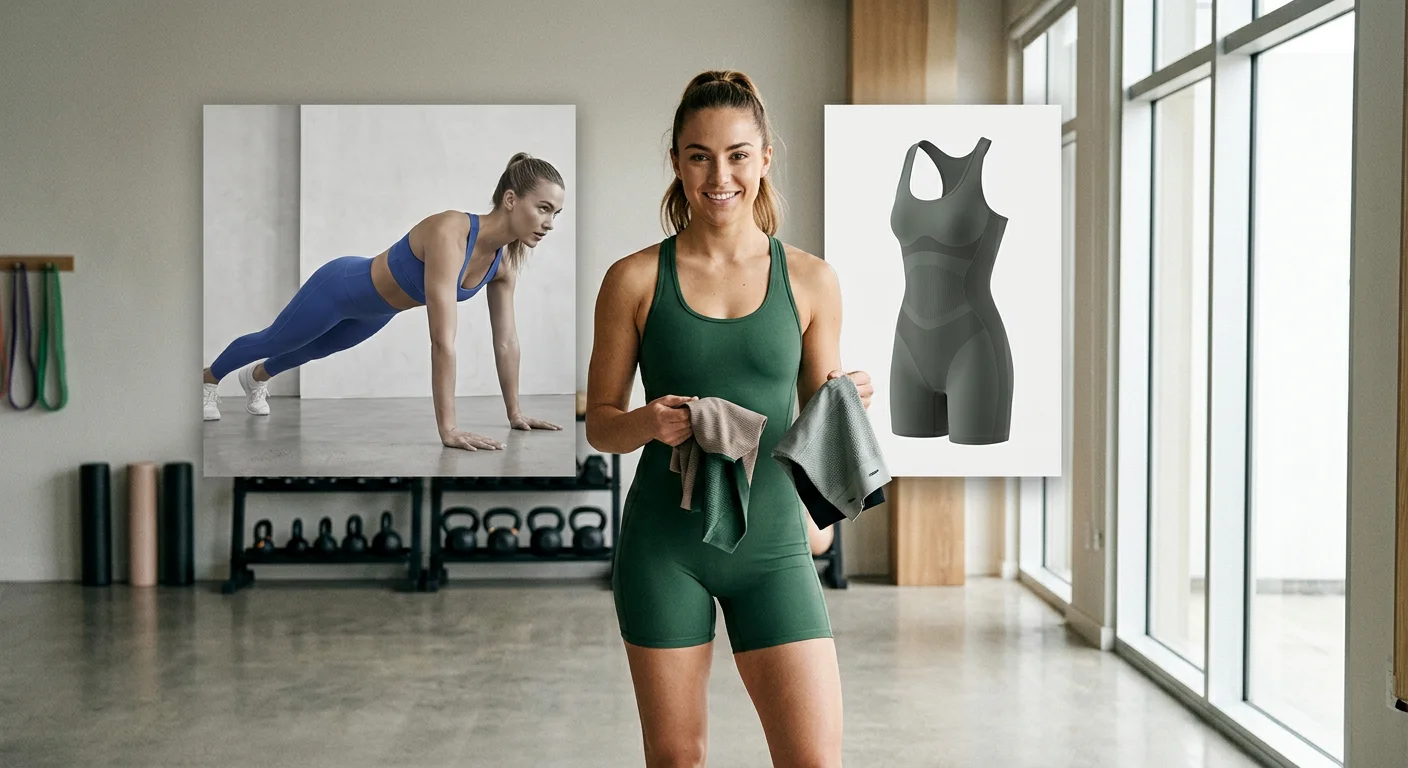
Most fitness gear solves the problems you already know about. Many brands working under an ODM activewear model are now rethinking how one-piece training garments can eliminate layered inefficiencies.The one-piece activewear revival is fixing several you never noticed.
These aren't surface-level style wins. The performance case for the leotard vs sports bra and leggings setup goes deeper than looks — and once you see the biomechanical logic, you can't ignore it.
1. Compression That Works From Top to Bottom
Here's what most people miss about standard two-piece kits: the support is broken up. Your sports bra compresses around your lower ribcage. Your leggings cinch at the waistband. Everything in between — your thoracic cage, abdomen, and the soft tissue connecting them — gets almost no support at all.
A well-built compression fit dancewear or fitness leotard uses 75–85% nylon/poly blended with 15–25% elastane . That fabric ratio delivers continuous tension from shoulders down through the torso and into the hips. The result isn't just a flatter look. This is why some performance-focused labels invest in custom fitness wear and dancing apparel pattern development instead of relying on standard sports bra and leggings templates.You get a stable, unified base layer that cuts pressure points and keeps breast tissue and soft tissue fully supported during plyometrics, jumps, and high-rep intervals. No waist seam means no dig-in — because there isn't one.
2. The No-Waistband Advantage Is Bigger Than You Think
"No annoying waistband" sounds like marketing copy. In practice, it's a real mobility gain.
An elastic waistband can block full spinal flexion and extension — the deep range you need in burpees, deep squats, handstands, and pliés. A full body movement freedom -focused one-piece removes that barrier. Your body moves through its full range without working around a band that rolls, digs, or constantly reminds you it's there. For gymnastics leotards for gym training or barre work, this isn't a minor comfort upgrade. It's a technical one.
3. Real-Time Visual Feedback That Sharpens Form
This is the advantage leotards have that most people don't notice walking into a fitness class.
Fitted 80s-style silhouettes became iconic for a reason. They let you see your muscles engage in real time — your hip isolations, spinal alignment, and shoulder positioning, as it's happening. That's not vanity. Researchers and coaches have noted that visual feedback speeds up proprioceptive learning — the body's ability to sense its own position in space.
A continuous torso-to-hip visual line, with no waistband breaking it up, makes pelvic tilt, rib flare, and spinal alignment far more visible. You can see it. Your instructor can see it in mirrors or on video. That's the exact reason ballet and gymnastics training have relied on form-fitting compression fit dancewear for decades. As one fitness brand put it, seeing your hips move through isolations "isn't just aesthetic — it's functional."
4. Proprioceptive Enhancement: The Skin-Level Coaching Effect
Continuous fabric contact does something measurable. It feeds your nervous system real-time information about your body.
Full body movement freedom garments stay in contact across your shoulders, torso, and hips throughout complex movements. That constant touch creates a low-level map of your body's position. Your skin and its underlying receptors register exactly where you are in space. For inversions, balances, and multi-planar lifts, that steady feedback is often the difference between a correction that clicks and one that doesn't.
High-performance gymnastics leotards are built for this purpose. The phrase "secure fit for flawless moves" isn't just about staying covered. It's about staying connected to your own body throughout every rep.
5. Thermal Intelligence — Core Warmth Without Trapped Heat
The open-back athleisure bodysuit trend isn't just a style choice. It solves a real temperature problem.
Strategic cutouts and mesh panels at the upper back and sides create a targeted thermal effect:
- Your core stays warm — which matters for spinal muscle performance
- Your highest-sweat zones get evaporative cooling to prevent overheating
Compare that to a cropped tank, which exposes your midriff to air-conditioned studio drafts. Or a full-coverage top that traps heat across your entire torso. The unitard fitness fashion approach — moisture-wicking synthetic knit with back ventilation — is a smarter temperature regulation setup than it looks.
6. Snag and Friction Risk, Eliminated
Training with equipment? This point matters. TRX, reformer straps, bar work, kettlebell swings, floor rolls — all of these create snag and friction risks with loose or cropped tops.
A one-piece base layer removes those risks. No flapping hem. No cropped-edge flip. No loose waistband. You eliminate the micro-friction that oversized tees or some cropped tops create during movement.
Dance apparel trends in gymnastics and acrobatics have demanded this for years: a non-shifting silhouette that doesn't catch on equipment or distort during landings. That same logic applies to HIIT circuits and reformer Pilates.
7. The Confidence Effect — Backed by More Than Anecdote
One balletwear brand reported that 85% of customers felt more confident in their fitness routines while wearing comfort-focused leotards. A separate study found women in fitted attire in fitness classes reported higher body satisfaction and confidence scores. Those scores tied directly to better focus, stronger training consistency, and higher intensity over time.
The reason is straightforward. Your outfit stays put. It moves with you. It gives you a clear visual of your own form. So you stop managing your clothes and start managing your training. That mental shift is real — and it builds on itself over time.
Leotard vs Sports Bra and Leggings: A Direct Functional Comparison
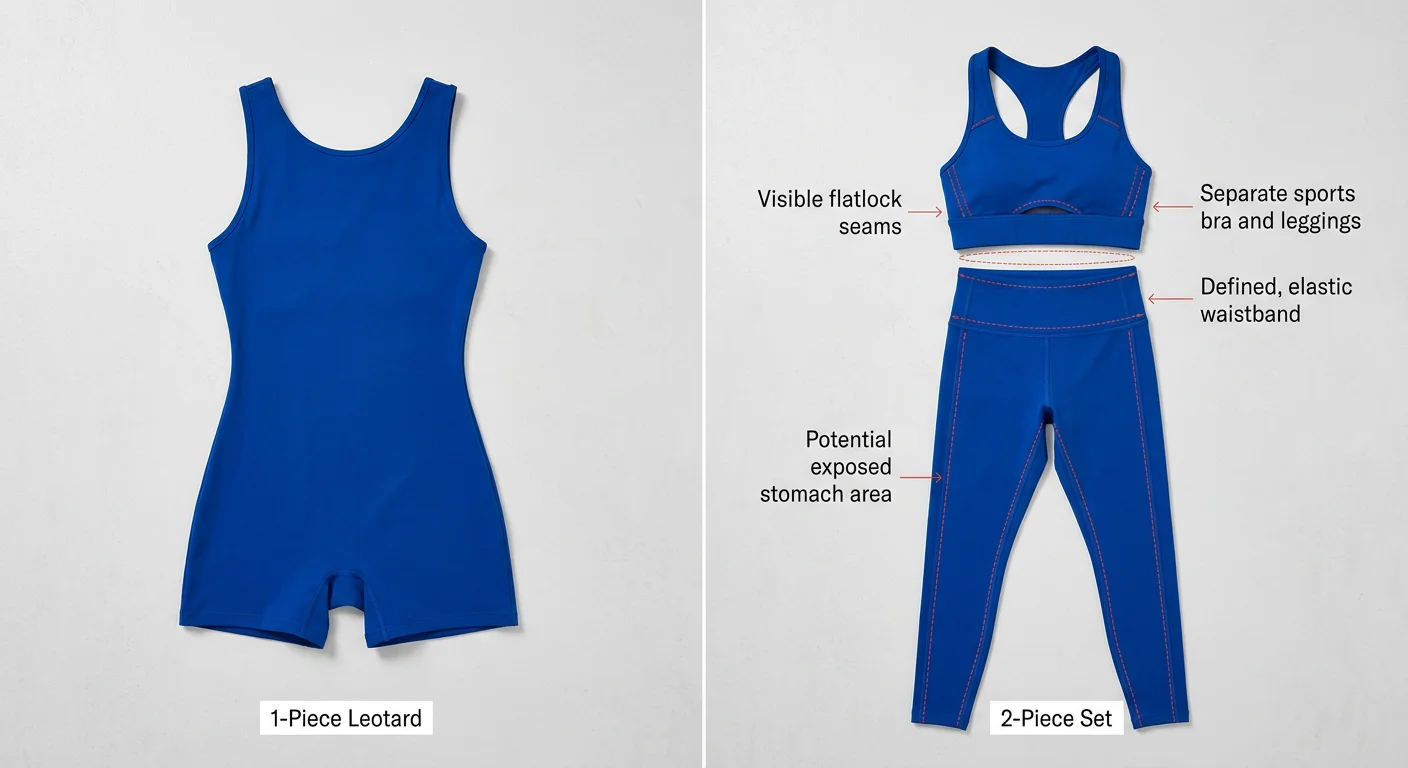
Seven seams. That's what you're working around every time you layer a sports bra over leggings — bra underband, bra hem, strap edges, legging waistband, side seams. Each one is a potential pressure point, drift zone, or gap waiting to open mid-burpee. The leotard has one continuous torso panel. That structural difference is where the real conversation starts.
This isn't about declaring a winner. It's about understanding what each system is built for. Once you see that clearly, you'll know which one has a technical edge for your training.
The Interface Problem Nobody Talks About
Think about what happens during a handstand or a deep forward fold. Your sports bra gets pulled upward by arm elevation. Your leggings get tugged downward by hip flexion. The result is a 1–3 cm gap at the natural waist. Not because the pieces don't fit — but because they were never built to work together as one system.
That gap isn't just a coverage issue. It's a thermal draft zone , a distraction, and a visual break. Coaches can't read your spinal alignment as cleanly in real time. Legging fit guides flag waistband "roll-down" and "slip" as common complaints during high-flexion work. That's the work where form visibility matters most.
A one-piece activewear silhouette removes the interface problem. One anchored unit. No drift between top and bottom. No exposed midriff reaching overhead. The torso panel runs from upper chest to hip crease with no break. Your body moves through spinal flexion, extension, and anterior pelvic tilt under a uniform fabric field — not around a compression ring at the waist.
Head-to-Head: The Metrics That Matter
Functional Metric | Leotard / One-Piece Bodysuit | Sports Bra + Leggings |
|---|---|---|
Waist Interface | Single continuous panel, no waistband roll, no gap during overhead or backbend work | Two separate elastic bands — bra underband (2–4 cm) + legging waistband (5–10 cm) — open a gap during inversions and deep flexion |
Full Range of Motion | High-cut hip designs reduce fabric tension over hip flexors in splits, straddles, and pike positions; no horizontal band restricting spinal movement | Waistband presses across the lower abdomen in deep folds; users report digging in, folding, and pulling it up mid-set |
Shift Resistance | One anchored unit — no hem rides up during bar work, burpees, or handstands; gymnastics uses this design to stop ride-up during flips and landings | Two pieces drift on their own — bra moves upward, leggings slide down, gap grows during overhead and hip flexion combinations |
Compression Profile | Even, low-to-moderate compression across the full torso panel; no single tight band creating a pressure hot spot | High localized compression under the bust (sports bra underband) plus a second ring at the waist; risk of raised intra-abdominal pressure in deep seated positions |
Technique & Line Visibility | Unbroken visual line from shoulder to hip — coaches read rib flare, lumbar curve, pelvic orientation, and femur tracking without interruption | Color-blocking, bra hem, and thick waistbands break the visual line at the lower ribs and true waist; subtle movement compensations are harder to catch |
Thermal Logic | One close-fitting layer traps a thin air film across the core; outer layers (joggers, legwarmers) add or remove without disrupting base coverage | The bra-legging gap becomes a draft zone during bending and twisting; keeping the core consistently warm often needs an extra mid-layer |
Failure Points | Leg openings and shoulder straps — size them right once, and shifting stays minimal even in high-impact movement | Two separate elastic systems double the failure modes: band roll, strap slip, waistband slide, hem curl |
Fit Complexity | One variable — torso length vs. size; torso length match distributes tension from shoulder to hip | Three variables: bra band size, cup size, strap setup + legging waist size, rise height, compression level — any mismatch creates uneven pressure |
Where Sports Bra + Leggings Still Wins
Let's be straight about this. For high-impact running or plyometrics in larger cup sizes , a dedicated high-support sports bra — compression plus encapsulation, wide underband, reinforced straps — outperforms the bust support built into most leotards. There's no workaround for that. A leotard's continuous torso panel spreads compression across the whole torso. That works well for A–C cups in low-to-moderate impact. It's not a substitute for structured encapsulation during sustained high-impact cardio.
The two-piece setup also wins for body composition variability . Small band with a large cup, plus a medium waist with a large hip? Separate sizing gives you better support for each zone — though you trade that for the extra seams and interface friction.
The Decision Is Simpler Than It Looks
Choose the leotard for inversions, barre, reformer Pilates, gymnastics, contemporary dance, or any coaching-heavy format where form visibility and shift resistance are priorities. The leotard vs sports bra and leggings question answers itself fast once you're clear on what each system does well.
Choose the two-piece for distance running, high-impact cardio in a larger cup size, or any sport that needs cup-specific breast support a one-piece torso panel can't match.
For everything in between — yoga flows, strength training, barre, and the mixed-format studio classes packed into your weekly schedule — the athleisure bodysuit isn't just the cleaner-looking option. It has fewer moving parts, fewer mid-session adjustments, and a cleaner visual line. You and your instructor can both see what your body is doing. That clarity is the whole point.
Is One-Piece Activewear Right for You? Sport & Body Type Decision Framework
Not every piece of gear belongs in every workout. That's the honest starting point.
The leotard revival isn't a one-size-fits-all prescription — it's a tool. Like any good tool, its value depends on what you're trying to do. The framework below cuts through the noise. Match your training style and your body's specific needs to the right silhouette. That shifts the decision away from trend-chasing and toward gear that works for you .
Match Your Sport First
Think of this as your first filter. Start with what your body is doing in the studio — before body type, before aesthetic preference.
Barre and ballet-inspired training — this is the leotard's native habitat. The discipline is built around alignment precision, hip mobility, and small controlled movements. Your instructor needs to read your silhouette. A stretch-knit one-piece stays snug through every plié and port de bras. No waistband interrupts the visual line. It was made for this.
Yoga and Pilates — a strong fit, with one practical note. Look for a style with a built-in shelf bra or seamless underlayer. Moisture-wicking nylon-spandex blends hold up best through long mat sessions and inverted sequences. A two-piece drifts and exposes. The one-piece activewear silhouette stays anchored from downward dog to child's pose.
Gymnastics and floor work — this is non-negotiable territory. Rolls, handstands, backward walkovers, apparatus contact — fabric interference isn't just annoying here. It's a technical liability. The gymnastics leotard for gym training exists because the sport demands a non-shifting base layer. It can't catch, bunch, or create friction mid-movement.
Strength training and HIIT — "conditional" is the right word here. A fitted athleisure bodysuit handles squat depth, deadlift setup, and plank holds with ease. But pay close attention to the shoulder cut. A too-narrow strap line restricts overhead pressing range. Pull-ups start to feel like you're fighting your own clothing. Before buying, raise your arms overhead and run through a pressing motion. Fabric pulling tight across your upper back or rolling your shoulders forward? Try a wider strap or racerback silhouette instead. Full body movement freedom is the standard — anything less is a downgrade.
Then Consider Your Body's Specific Needs
You've matched the sport. Now layer in fit details that work with your build, not against it.
Coverage is a priority. Go for a high-neck, cap-sleeve, or long-sleeve style. You get full torso coverage and a clean athletic silhouette. A modest neckline paired with compression fit dancewear fabric looks deliberate and polished — not restrictive.
Hip-dominant or pear-shaped frame. Look for high-cut leg openings and a fitted waist. That combination lengthens the leg line visually. It also avoids the pinching at the hips that a low-cut leg opening tends to cause. The waist taper fits hip width without squeezing.
Sensitive skin or heavy sweating. Nylon, polyester, and spandex blends are your baseline for moisture-wicking performance. Friction is a concern? Check natural-fiber or cotton-blend options for lower-intensity sessions. Cotton is not your friend in a long, sweaty class, though. It absorbs moisture and holds it. That's the opposite of what you need.
Postpartum or focused on core support. Most leotard guides skip this — and they shouldn't. Look for styles with firm-compression panels at the midsection plus a wide back cross-strap or structured upper construction. You want gentle abdominal support that doesn't compress your breathing. Stability without restriction is the goal.
Three Quick Selection Rules
Before you add anything to your cart, run through these:
Inversions, floor contact, or jump sequences? Look for secure leg openings and confirmed four-way stretch. These are non-negotiable for movement integrity.
Overhead pressing or wide arm reach? Test shoulder mobility before buying — not after. Narrow strap geometry is the most common fit complaint in leotard vs sports bra and leggings comparisons among strength athletes.
Studio-to-street versatility? A medium leg line or high-rise cut in a supportive fabric carries well beyond the studio. Skip anything that digs at the waist or hips — that defeats the whole point of the bodysuit workout trend doing double duty in your day.
The right one-piece doesn't ask you to compromise your training for your outfit. Get the fit right for your sport and your frame, and it fades into the background — so your focus lands exactly where it belongs.
Top Active Apparel Manufacturers & Styling Combinations for the 2024 Trend
The brands shaping your wardrobe right now didn't get there by accident. Behind every seamless ribbed set and open-back athleisure bodysuit flooding your feed is a manufacturing ecosystem that has been changing fast. Knowing who builds these pieces tells you a lot about where the bodysuit workout trend is headed.
The Brands Setting the Standard
Nike remains the top benchmark, with $49 billion in global sales in 2024 . Their Dri-FIT training collection keeps defining the gym-to-street formula. Think slim high-rise performance leggings, a cropped tank, and an oversized woven jacket. It's the run-commuter look — functional, color-blocked, and built for movement that doesn't stop at the studio door.
Lululemon owns the boutique fitness uniform. Their Align and Wunder Train lines sit at the premium end of one-piece activewear and yoga-focused wardrobes. You get buttery-soft high-rise leggings, a clean longline bra, and an oversized half-zip fleece in warm earth tones. It's understated in the best way. Nothing competes for attention except your form.
Adidas is going all-in on tonal monochrome for 2024. Three-stripe high-waist tights, a supportive bra, and a relaxed crop hoodie in black, charcoal, or cream. Their retro-track-meets-modern-bra pairing has become a go-to dance apparel trends reference for the athleisure crowd.
Puma brings saturated color and contrast piping into the mix. Second-skin leggings, a longline sports bra, a cropped bomber. It's bolder than Lululemon's palette — and it's working.
For Sourcing: What B2B Buyers Should Know
Building a private label activewear line? Or you just want to understand what goes into compression fit dancewear pieces worth buying. Either way, the manufacturing side is worth knowing.
Global OEM activewear manufacturers with 35+ years run operations out of Los Angeles, New York, Brisbane, and Ningbo. They are the backbone of many brands you already trust. Standard customization covers sublimation printing, heat-transfer logos, and jacquard elastic. Full-custom private label activewear designs start at 100–300 pieces per style per color . Stock rebranding programs come in lower.
Fabric specs that matter most for full body movement freedom garments:
- 75–78% recycled polyester + 22–25% spandex for sculpting leggings (250–280 gsm)
- 70–80% nylon + 20–30% elastane for compression tights that move like a second skin
- Seamless 3D knit nylon-elastane for ribbed sets that hold their shape session after session
The 2024 push toward recycled polyester and nylon blends is more than a sustainability talking point. OEKO-TEX compliant materials are now standard expectations for premium activewear buyers. Plus, they perform.
Five Styling Combinations Worth Building Around
These aren't mood board fantasies. They're production-ready templates based on what's selling right now.
1. Studio-to-Street Monochrome
Sculpting high-rise legging + longline bra with built-in shelf + oversized half-zip fleece in the same color range. Minimal branding, tonal dressing, maximum versatility. This is the Lululemon-influenced formula that leads boutique fitness aesthetics right now.
2. Seamless Ribbed Athleisure Set
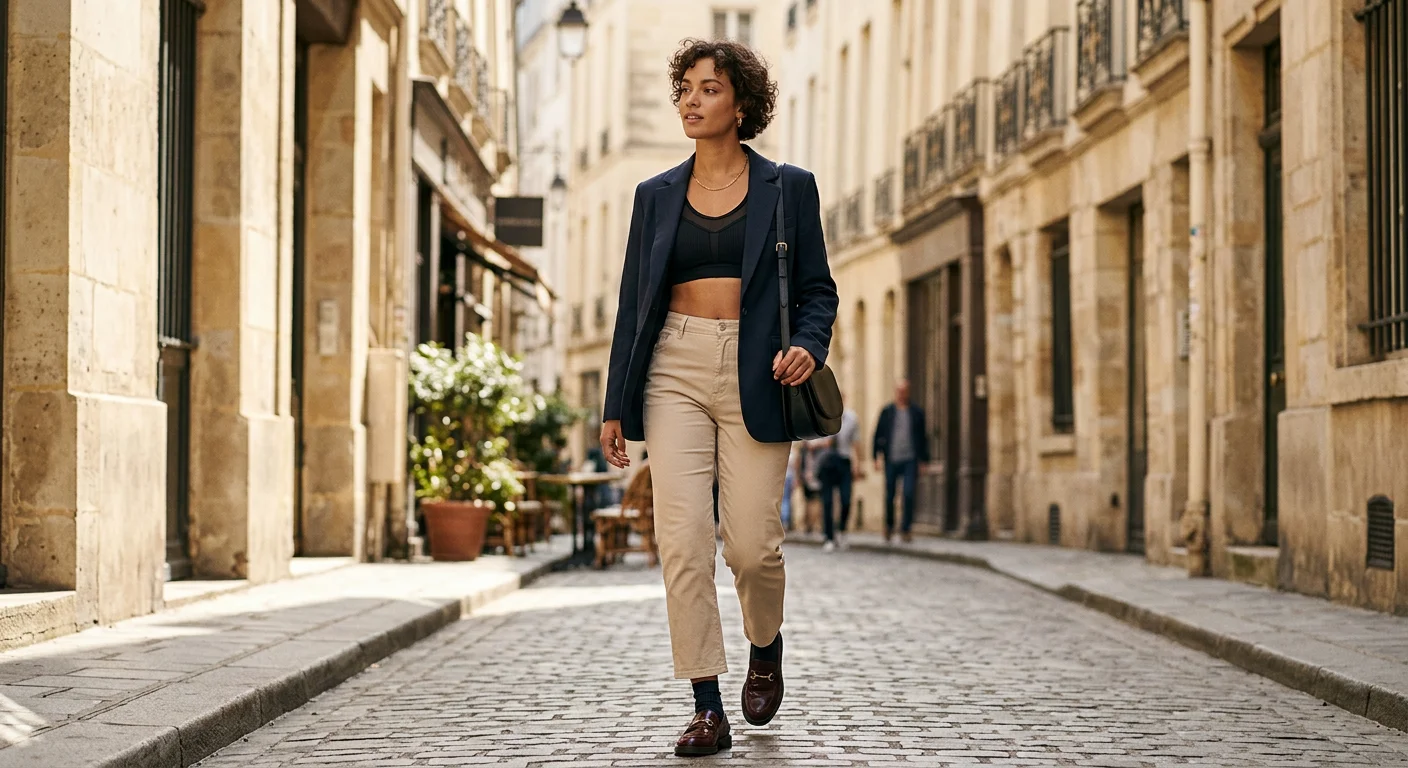
Ribbed high-waist legging + matching square-neck crop top + oversized woven shirt or blazer over the top. The unitard fitness fashion moment lives here. One outfit covers lounge and gym. No wardrobe change needed.
3. Yoga & Barre Minimalist Capsule
Brushed soft high-rise legging (think Align-level handfeel) + strappy low-impact bra + a wrap cardigan or soft shrug. Muted tones, relaxed silhouette, and a neckline that looks deliberate rather than exposed. This is where leotard styling tips meet everyday wearability.
4. Run-Commute Technical Layering
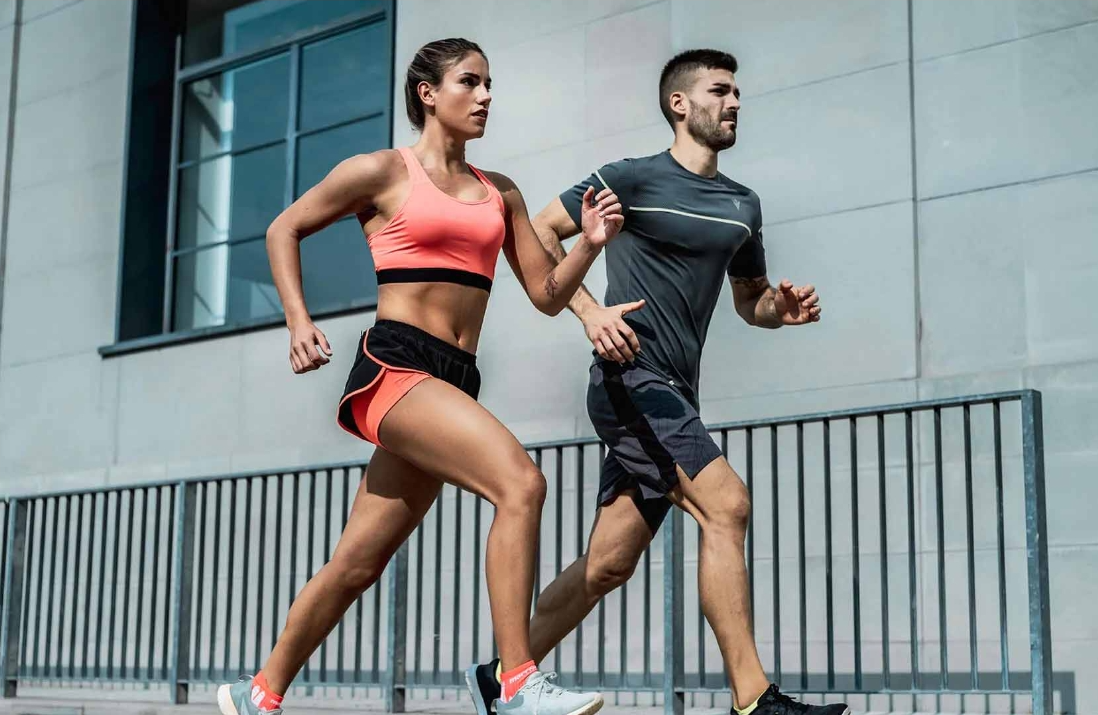
Lightweight compression tights + breathable tech tank with mesh back + packable wind-resistant shell with reflective taping. You get safety visibility and real performance. This look pulls from Nike and New Balance's run collections and fits the urban fitness commuter well.
5. Performance Training Set
Training shorts over compression tights + moisture-wicking sleeveless top + optional quarter-zip midlayer for branding space. This applies the gymnastics leotard for gym idea to team and club training. The base layer stays in place, range of motion stays clean, and nothing catches on equipment.
The common thread across all five: fewer layers, smarter fabrics, and silhouettes built to move without getting in the way. Sourcing, shopping, or picking an outfit for Tuesday's barre class — this is the standard worth holding to.
Conclusion
The leotard didn't come back because trends are cyclical — it came back because it works . Better body awareness, cleaner movement feedback, zero mid-workout wardrobe adjustments. The silhouette lets your body breathe. It lets you be seen doing the work you've put in. These aren't aesthetic arguments. They're functional ones.
And here's the part worth sitting with: the bodysuit workout trend isn't asking you to be bolder or braver. It's asking you to trust your body a little more than you did yesterday.
You've made it this far. You already know whether a leotard belongs in your gym bag. The question was never "is this for me?" — it was always "when am I starting?"
Pick one piece. One workout. See how it moves with you.
That's all it takes to never look back.For emerging brands exploring white label gym clothing options, the leotard category offers a fast entry point into the growing one-piece activewear segment.