Every pair of leggings starts to look the same. You're in the activewear aisle — or scrolling a product page late at night — and nothing feels right.
Is nylon better than polyester? Does waist height matter for downward dog? Will these go see-through the second I fold forward?
Buying your first yoga outfit shouldn't be this hard. A few fabric basics and fit rules change everything. For any yoga apparel supplier, these decision factors also determine whether a product succeeds in retail or gets returned after a single wear.Know them, and you'll pick the right pair with confidence — no size chart stress.
This guide covers moisture-wicking yoga fabrics , squat-proof construction, and compression vs. relaxed fit yoga pants . Your first purchase can also be your best purchase — on the mat and off it.
Yoga Fabric Performance: The 5-Metric Comparison Matrix
The label on your leggings tells a story — most people just don't know how to read it yet.
Fabric composition isn't marketing fluff. Many OEM yoga wear partners now build fabric testing directly into early sampling instead of treating it as a post-production check.It's the difference between a class where you move with ease and forget you're wearing anything, and one where you're tugging, sweating through, or watching your knees bag out by the second sun salutation. Five metrics separate genuinely functional moisture-wicking yoga fabric from fabric that just looks the part on a hanger.
The 5 Metrics That Matter
1. Moisture Transport (Wicking Efficiency)
This is about movement , not absorption. Synthetic fibers — nylon and polyester — don't hold water. They pull sweat away from your skin through capillary action and push it to the surface to evaporate fast. Polyester wins here for raw wicking speed. That makes it the top choice for hot yoga and high-heat Vinyasa .
Cotton does the opposite. It absorbs sweat and holds onto it , leaving fabric heavy, clingy, and slow to dry. Fine for a slow Yin session. A real problem in a heated flow class.
Actionable target: Look for 70–80% nylon or polyester + 15–25% spandex on the label if you sweat.
2. Breathability
Lighter construction means more airflow — but fiber type shapes the character of that breathability. Technical polyester and nylon jerseys in the 180–220 gsm range for tops push heat out fast. Bamboo, modal, and Tencel blends feel noticeably cool and soft. Their fine filaments create micro-airflow that works well for restorative and Yin practices. Dense, heavy cotton knits trap heat once wet — even though cotton itself lets air pass through.
3. Four-Way Stretch & Shape Recovery
Spandex percentage is non-negotiable here. ≥15–20% elastane is the industry benchmark for true four-way stretch material with solid recovery. That means your leggings return to their original shape after every lunge, squat, and fold forward.
Drop below 10–12% elastane , and you'll see the knees and seat bag out within a single class. Premium high waisted yoga leggings built for power yoga push this to 20–25% spandex in a nylon base , targeting >95% shape return across repeated sessions. Budget cotton-blend leggings don't reach these numbers.
4. Durability & Abrasion Resistance
Nylon-spandex blends (75–80% nylon) lead the field. Nylon's high strength-to-weight ratio handles constant friction from mat contact. That makes it the go-to for Ashtanga and Power yoga where knees and seat take a beating. Polyester sits close behind — a bit less soft, but great for colorfastness and pilling resistance over time. High-cotton blends pill and fuzz with repeated washing. They break down fastest in tight-knit constructions.
Durability tier for leggings, ranked straight:
- Best: Nylon–spandex (75–80% nylon)
- Mid: Polyester–spandex
- Lower for performance use: High-cotton blends
Care matters too: cold wash (≤30°C), no fabric softener, line dry. Fabric softener breaks down spandex fibers over time and destroys the wicking finish.
5. GSM (Fabric Weight) — The Squat-Proof Number
GSM — grams per square meter — is the most underrated spec on a product page. Higher GSM means denser fabric. Denser fabric gives you opacity, compression, and squat-proof performance .
Use Case | Recommended Legging GSM |
|---|---|
Hot / Bikram Yoga | 240–270 gsm |
Vinyasa / Flow | 250–280 gsm |
Power / Ashtanga | 280–320 gsm |
Yin / Restorative | 240–280 gsm |
For most beginners, 250–300 gsm is the sweet spot — opaque under stretch, durable, and compressive without feeling suffocating. Go under ~240 gsm, and sheerness under bright light or full hip flexion becomes a real risk. This is a bigger issue in open-knit or lower-spandex constructions.
Read the Label Like a Pro
Standing in the aisle or scrolling at midnight, here's what to scan for:
✅ "Moisture-wicking" — confirms a technical finish, not just synthetic fiber
✅ Nylon or polyester as the primary fiber (70–80%)
✅ Elastane/spandex ≥15% — aim for 20–25% in leggings
✅ 250–300 gsm for leggings (if listed — premium brands tend to include this)
⚠️ Modal / bamboo / Tencel — great for slow practices, not built for high-sweat flows
❌ Cotton-dominant without a technical finish — skip it for anything faster than restorative
Before buying, do this: hold the fabric to a light source and stretch it out. Goes sheer? The GSM is too low. Then do five deep squats in the fitting room and check the knee area. Shape doesn't spring back? The elastane content isn't strong enough to support anti-chafe workout clothes that hold up past the warm-up.
The fabric is doing invisible work every class. Once you know what to look for, you'll never read a label the same way again.
Silhouette & Coverage: Waist Height, Compression & Length Breakdown
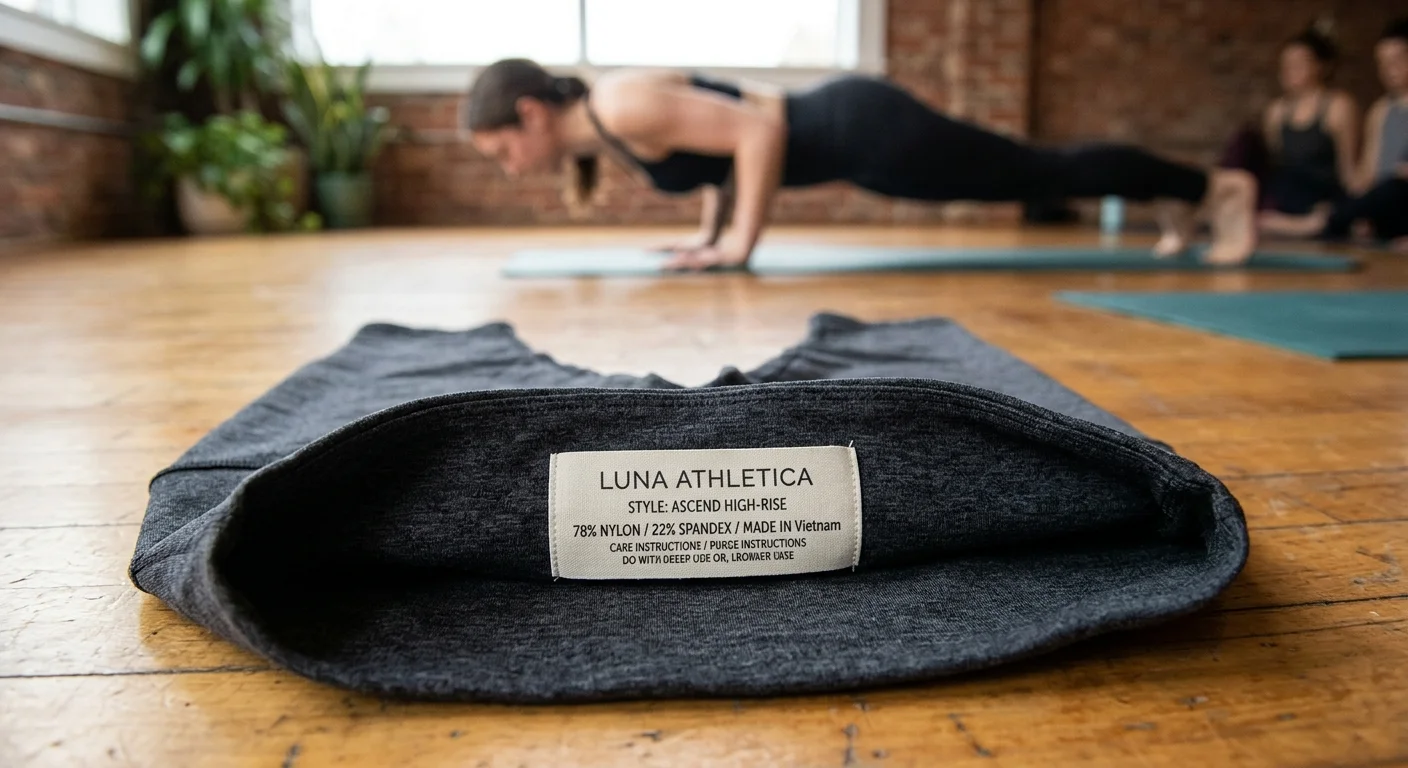
Waist height is not a style decision. This is why experienced ODM yoga apparel developers prioritize fit mapping before finalizing any yoga legging design.It's a structural one. It determines whether your leggings stay put through every chaturanga or creep down the moment you fold forward.
Three variables shape how leggings fit and perform on your body in motion: waist height , compression level , and leg length . Each one works on its own. Together, they either support your practice or interrupt it.
Waist Height: Where Coverage Starts
The rise of your leggings controls two things — lower back coverage and core stability feel .
High-waisted yoga leggings sit at or above the natural waist. They close the gap at the lower back during forward folds and inversions. No more fabric slipping below the hip in downward dog. They also create a gentle compression band across the low belly. Many practitioners find this stabilizing during standing balance poses.
Mid-rise styles sit below the natural waist, at the hips. They feel less restrictive around the torso. That can be freeing in deep twists. The trade-off: less back coverage and more shifting during dynamic sequences.
For beginners, high-waisted is the go-to choice. It cuts out the distraction of tugging and readjusting. Your attention stays on alignment, not your waistband.
Compression vs. Relaxed Fit: More Than a Comfort Preference
Compression fit means the fabric applies steady, active pressure against the muscle. This cuts down on micro-vibration in the tissue and supports circulation. It also keeps the legging anchored to your body through every transition. The core question in any compression vs. relaxed fit yoga pants comparison: how much do you want the fabric to move with you versus on its own?
Relaxed fit (also called support fit) offers soft containment without a sustained squeeze. It's comfortable, breathable, and ideal for Yin, restorative, and gentle Hatha classes. These are styles where you hold long, slow shapes.
Here's how to choose based on your practice:
Fit Type | Best For | What It Feels Like |
|---|---|---|
Compression | Vinyasa, Power, Ashtanga | Locked-in, second-skin |
Relaxed / Support | Yin, Restorative, Gentle Hatha | Soft, unrestricted |
Mid-compression | Mixed / general beginner | Secure without grip |
For most first-time buyers, mid-compression in a high-waisted cut covers the widest range of class types without losing comfort.
Leg Length: Coverage in Motion
Legging length affects more than looks. It changes friction points and coverage behavior as you move.
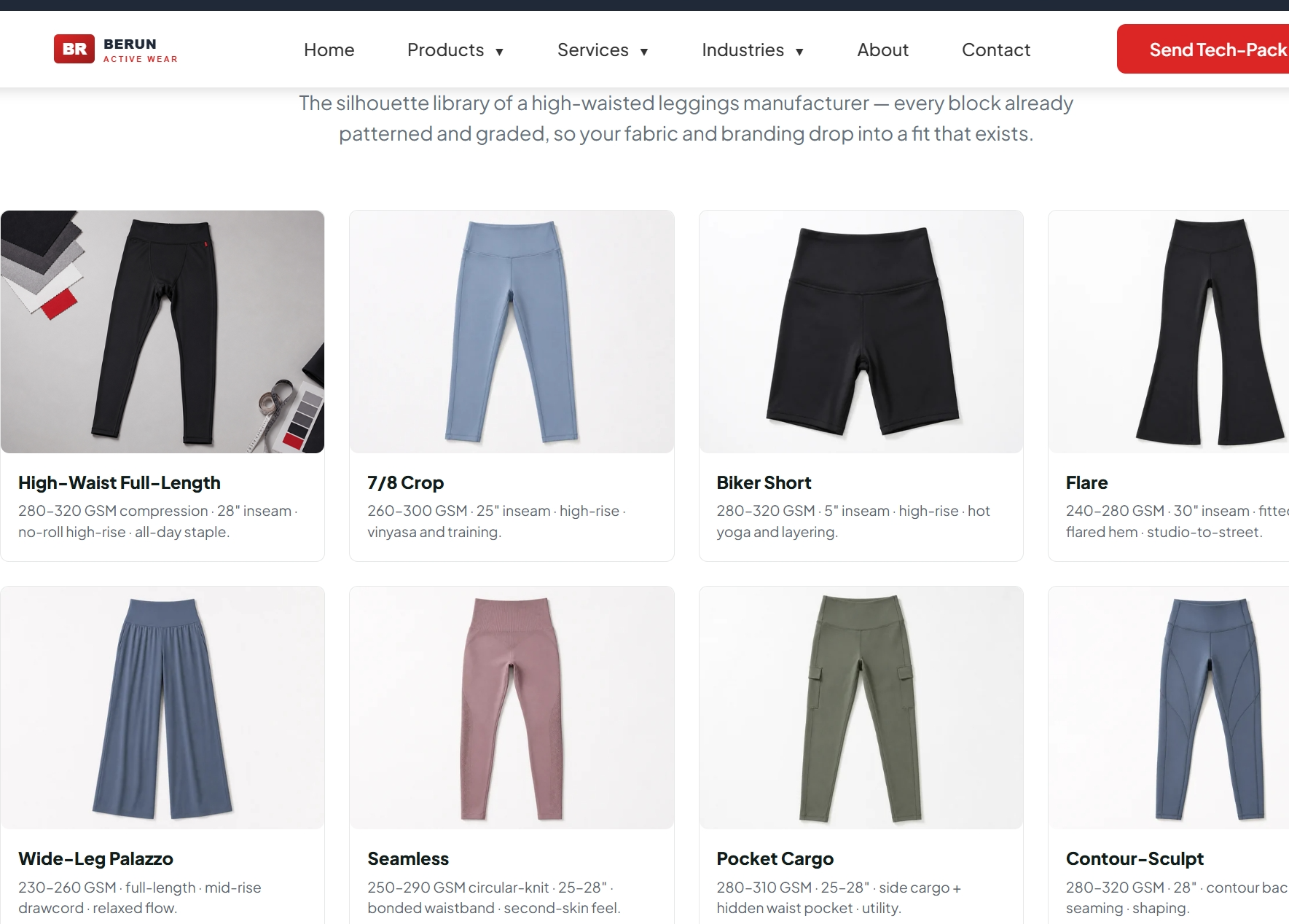
Full-length (7/8 or ankle): The most versatile option. Stays in place on the mat, minimal ride-up, and works for every yoga style. 7/8 length hits just above the ankle. That keeps the hem from bunching under your foot in seated poses.
Capri / cropped (mid-calf): More airflow, better for hot yoga studios. The trade-off: the hem can shift and bunch at the knee during deep lunges.
Shorts: Ideal for hot yoga and Bikram. Less coverage means more skin contact with the mat. This can affect grip in poses like pigeon or lizard.
Beginners' rule of thumb: Start with full-length or 7/8 leggings . You get the most consistent coverage across every pose — from child's pose to handstand prep. Plus, you avoid the mid-class distraction of fabric creeping toward your knee.
The Fit Variables Worth Measuring Before You Buy
The right fit isn't just about looks. It's about how the shape of the garment matches the shape of your body in motion.
Before you size up, know these four measurements:
Waist circumference — sets waistband placement and core compression feel
Hip circumference — the widest point; drives seat coverage and squat-proof performance
Thigh circumference — where compression and fabric stress build up most in lunges
Inseam / leg length — confirms your chosen length lands where the product claims
Some brand size charts give you a waist number and a basic S/M/L. That's not enough. Cross-reference the hip and thigh measurements too. Leggings that fit your waist but cut tight across the thigh will limit your hip flexion. No fabric technology fixes a fit that works against your body.
Construction & Seams: Essential Features vs. Marketing Extras
Seams are the quiet architecture of a legging — invisible when they work, unbearable when they don't.In many cases, a poorly executed custom seam layout of yoga apparel is the main reason beginner yoga leggings fail durability testing.
Turn any pair inside out and you'll see the truth fast. Count the seam lines. Note where they sit. Look at how they're stitched. That tells you more about real-world performance than any label claim.
The Two Features Worth Paying For
Gusseted crotch. This is a diamond or triangular fabric insert sewn into the crotch panel. It sounds minor. It isn't. Standard leggings have a single seam intersection at the crotch — right where the most tension builds during deep squats, wide lunges, and forward folds. A diamond gusset splits that tension across four shorter seams instead of one. This pulls the load away from the highest-stress point. You get less blowout risk, freer hip mobility, and a legging that moves with your body rather than against it. Check that the gusset fabric uses the same four-way stretch knit as the rest of the legging. A mismatched insert feels stiff. It can also show through as a pale patch under studio lighting.
Flatlock seams at friction zones. Run your finger along the inner thigh seam. A raised ridge of overlapping fabric means it's an overlock (serged) seam. That ridge presses against your skin through an entire flow class. Under compression, it turns into a chafe line. Flatlock seams join the fabric edges side by side and stitch them flat. This spreads pressure across a wider surface. Look for flatlock at the inner thigh, crotch, and seat. Overlock costs less to produce and works fine at outer leg panels or hems where pressure is low — but not where your skin meets the mat over and over.
What You Can Skip
Thumbhole cuffs — decorative, sometimes warm, no impact on seam performance
Reflective piping — useful for night running; adds stiffness and extra seam lines for yoga
Back-waist zip pockets — the zipper digs into your spine during supine poses
Graphic prints and branded "technical" panel names — aesthetic only, until an actual gusset proves otherwise
The 60-Second In-Store Checklist
Before you buy, flip the legging inside out and go through this fast:
Crotch panel — diamond or triangular gusset present? Seams around it flat and smooth?
Inner thigh — flatlock (flush) or raised overlock ridge?
Fabric stretch test — pull the seat panel taut toward a light source. Goes sheer? GSM is too low.
Waistband — wide, even pressure with no bulky stitching points or zip hardware at center-back?
Gusset and seams check out? Then the prints and pockets are yours to enjoy. They don't? No amount of technical branding saves the class you spend tugging and wincing through.
3D Decision Matrix: Body Type × Yoga Discipline × Optimal Cut
Your body already knows what it needs. Some yoga apparel manufacturer teams now use body-shape segmentation data to refine product cuts across different regions.The problem is that activewear marketing talks to an abstraction — a blended version of every customer that fits none of them. This matrix does the opposite. It takes three real variables — your body's dominant proportions, the yoga style you practice, and the cut that bridges both — and turns them into specific combinations you can act on right now.
The core logic is simple: shape responds to shape . Wide features look more balanced with open, flowing pieces. Narrow or straight frames look sharper in structured, fitted cuts. Soft, round proportions sit well in draped, clingy-but-unrigid fabrics. Work with that logic, not against it.
Body Type × Discipline: The Core Combinations
Pear shape (hip-thigh dominant) + Vinyasa or Hatha
Go high-waisted. A ~280 gsm nylon-spandex legging gives your lower body the support it needs without gripping the thighs. Pair it with a structured longline top that just grazes the hip. This balances the silhouette without adding bulk. Keep the fit moderate and intentional — let structure do the work, not extra fabric.
Inverted triangle (broad shoulders, narrower hips) + Restorative or Yin
The goal is softer lines above and gentle fullness below. A mid-rise waistband keeps the eye from traveling upward. Relaxed tapered joggers add width where the frame is narrow. Seamless layering pieces on top keep the upper body calm and understated. In slow, floor-based practices, this combination also gives your body real breathing room — your ribcage expands without restriction.
Rectangle (straight waist-hip line) + Power or Ashtanga
Rotational classes need torso control. High-compression high-waist bottoms build the waist definition your frame doesn't naturally show. A seamless fitted top holds the midsection steady through every twist and bind. Go structured, crisp, and tapered — these cuts suit straight, angular frames.
Apple shape (midsection-dominant) + Yin or Recovery
Skip anything that binds the abdomen. Soft bamboo-cotton blends in a mid-rise cut let the diaphragm expand in long-held shapes. A drape-front tee skims the body without gripping. Hard compression at the midsection cuts your breath short and kills your focus. Neither has a place in a restorative class.
Hot yoga (high-sweat, any body type) + Bikram or heated Vinyasa
Fabric load is the enemy. A bra-top or crop , 7/8 capri leggings , and an ultra-thin moisture-wicking base — that's the formula. Less surface area means faster evaporation. Everything else takes a back seat to heat management.
The Transition Protocol: Mat to Street
High-rise matte leggings are your foundation. Throw on a structured knit layer or an open overshirt to shift the look from activewear to polished athleisure. You keep full mobility — so you can roll your mat back out without changing a thing. The silhouette stays clean. The outer layer handles width and shape.
The Fast Fit Rule
Frame Type | Choose |
|---|---|
Wide features | Open, flowing, wide elements |
Narrow features | Closed, cinched, sharp details |
Straight / angular | Structured, geometric, fitted |
Round / soft | Soft, draped, clingy-but-unrigid |
Balanced / medium | Moderate, even, unfussy |
One rule worth holding onto: the more dynamic and rotational your class, the more compression and waist containment you need . The more restorative and breath-focused, the more softness and drape you want. Let the practice drive the purchase.
Budget Starter Sets & Athleisure Styling: Zero-Trial Error Configs
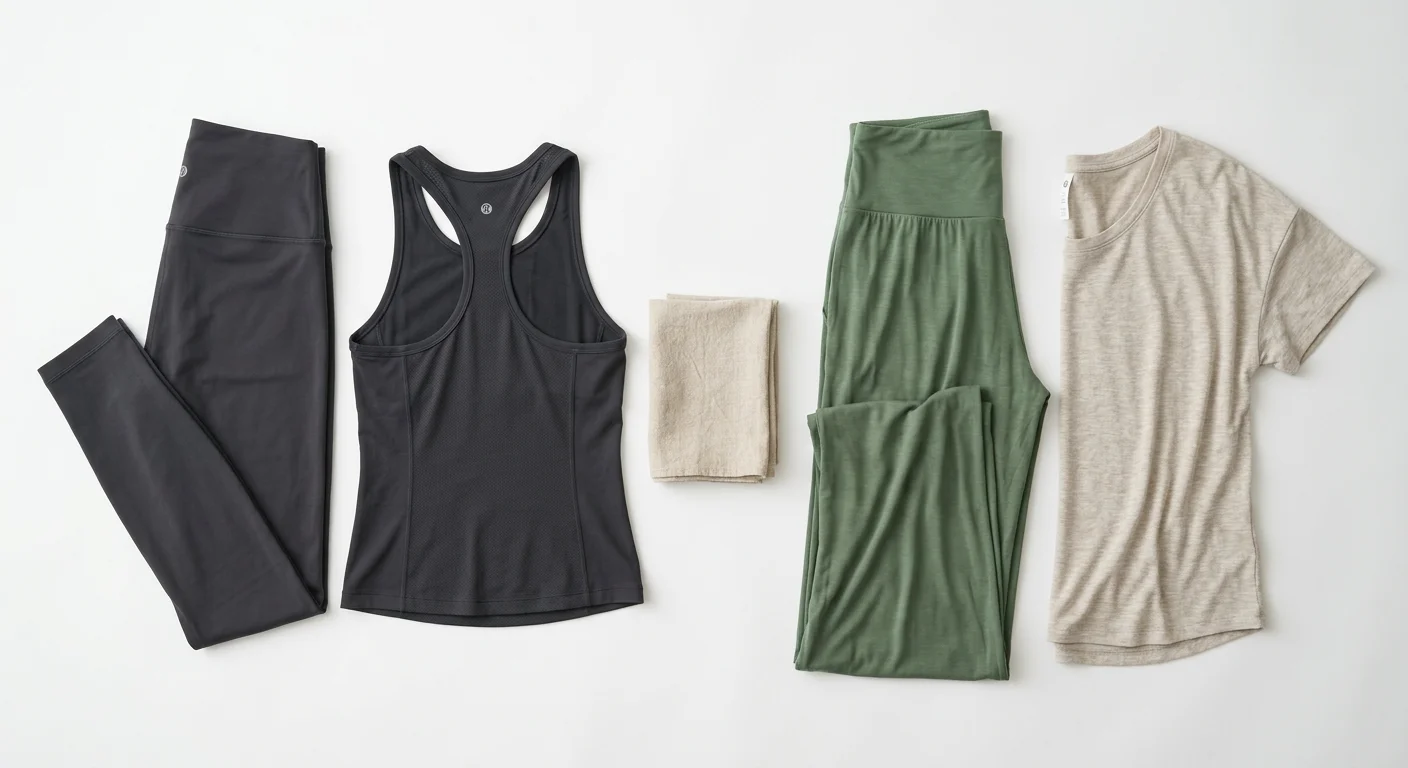
Three pieces. That's the whole formula.Entry-level yoga collections designed under a private label yoga clothing model often use this simplified capsule approach to reduce SKU complexity.
A fitted base. One structured outer layer. Restraint with accessories. That's the blueprint behind every athleisure outfit that looks put-together instead of thrown together. Budget doesn't change the logic. It just changes where you find the pieces.
Under $50: The Home Practice Foundation
At this range, keep the goal tight: leggings + fitted tank , nothing more. No excess, no styling pressure. This combo handles home practice, light stretching, and modest coverage — without stretching your wallet.
The pricing is more realistic than it sounds. Leggings that retail at $78 show up on resale platforms for $48 — new with tags still attached. That's your entry point. Buying secondhand? Scan for tag photos first. Check seller ratings. Then look hard at the seat and inner thigh panels — those are the first spots to show wear.
Keep the styling stripped back: fitted base, clean lines, nothing stacked on top. Simplicity at this budget is the strategy.
$50–$100: Studio-Ready With Street Credentials
This is where the third piece earns its place. A leggings + fitted top + sweater stack — or a matching workout set + blazer — moves the look out of gym territory and into real athleisure. The outer layer does all the work. The base stays the same.
Resale prices hold up here too. Tops that retail at $68 turn up for $29 . Items from $58 land at $39 . You can put together a full mid-budget set well below retail. That's a repeatable outcome, not a lucky find.
One structured accessory — a small bag or a simple shoe swap — finishes the look. Add more than that and the outfit starts working against itself.
$100+: The Elevated Transition Stack
At this tier, the formula hits its most flexible form: workout base + elevated outer layer + shoe or accessory swap . Here are the outer layer options ranked by impact:
Outer Layer | Vibe It Creates |
|---|---|
Long coat | Most elevated, sharpest street transition |
Blazer | Structured, polished, studio-to-errand ready |
Leather jacket | Effortless, put-together without trying |
Denim jacket | Casual, low-maintenance, wearable anywhere |
Neutral knit sweater | Softest transition, easiest everyday feel |
The base never changes. Everything shifts at the outer layer. Your seamless yoga clothing or high-waisted leggings stay on all day. The jacket is what tells the room you've switched contexts.
The One Rule That Holds Across Every Budget
Fitted base first. Outer layer second. Accessories last — and minimal.
A loose base makes every layer on top look bulky. Too many accessories make the outfit look like it's trying too hard. The goal is a look that seems effortless — but that kind of effortless takes deliberate choices up front. Start with fit. Add one layer. Stop before you think you should.
Conclusion
You walked in overwhelmed by a wall of leggings. You're leaving with a system.
The right yoga outfit isn't about the brand on the waistband. It's about fabric that pulls sweat away before you feel it . A waist height that stays put through every downward dog. Construction details that do their job without getting in your way. Nylon's moisture-wicking recovery, flat seams that disappear against skin, a squat-proof waistband you never have to think about — these are the things worth paying for. The rest is decoration.
So take the framework with you: fabric first, fit second, features third. Match your body type and your practice style. Skip the marketing noise. Spend your budget on what touches your body directly.For retailers evaluating sourcing options, comparing quality against yoga clothing wholesale price is still one of the most practical ways to build a profitable yoga line.
Your first yoga class has enough new things to figure out. Your clothes shouldn't be one of them.