Fall separates strategic buyers from those scrambling to restock in October.
Right now, you're building your autumn activewear collection — sourcing thermal leggings, long-sleeve layers, and cozy studio pieces your customers will reach for. The choices you make in the next few weeks shape your Q4 revenue.
Most retailers hit the same wall. They know they need fall yoga pieces. But they're unsure which categories sell fastest, which fabrics hold up to customer scrutiny, and what to ask a manufacturer before placing a bulk order.
This guide cuts through all of that. Think of it as your cheat sheet to the season's most profitable wholesale yoga clothing categories — complete with fabric specs, color direction, and sourcing questions to get you order-ready.
Long-Sleeve Moisture Wicking Yoga Tops & Crop Styles

Every September, activewear sales shift. You see it first in long-sleeve tops.
Temperatures drop — not enough for a hoodie, but too much for a tank. Your customers want something in between. That's the long-sleeve moisture-wicking yoga top. It bridges summer training habits into fall studio routines. Retailers underestimate this category every season, then rush to restock it.
Why this category earns its place in your fall wholesale order:
The market breaks into two style segments: full-length long sleeves and cropped long sleeves . Both sell well, but they attract different buyers. The full-length suits the woman who runs cold and wants coverage during outdoor flows. The cropped version — think CRZ Yoga's seamless slim-fit or WISKII's dedicated crop collection — draws the studio-to-street buyer. She wants technical performance without giving up the silhouette.
The fabric spec that matters here:
Drop cotton basics from this category. The best-selling styles use technical stretch knit blends — formulations close to 90% polyamide / 10% spandex . That construction gives you four things buyers should demand from any OEM yoga clothing factory : moisture-wicking, four-way stretch, ventilation, and anti-chafe seamless finishing.
These aren't marketing buzzwords. They're the feature claims that drive repeat purchases and cut return rates.
Wholesale pricing reality:
Consumer retail in this category runs around $24 for mid-market cropped long-sleeve styles on Amazon. That puts the product outside the premium-only tier. You have margin room to source from a private label yoga clothes manufacturer at a workable MOQ.
Color direction for fall bulk orders:
Black is your safest base — always. Add one fall accent on top of that. Petrol blue has appeared as a strong secondary color across major brands in this segment, season after season. Put those two together, and your assortment covers both the practical buyer and the style-driven one.
Before you finalize specs with your manufacturer, confirm these four things:
Fabric GSM (aim for 200–220 GSM for solid hand-feel without bulk)
Seamless or flatlock seam construction — this is what makes the anti-chafe claim hold up
Cropped and full-length variants should share the same base fabric — it keeps collection pricing clean
Minimum order quantities per colorway, not just per style
Commit early in this category. Spec with detail. Vague orders produce vague results.
berunactivewear.com
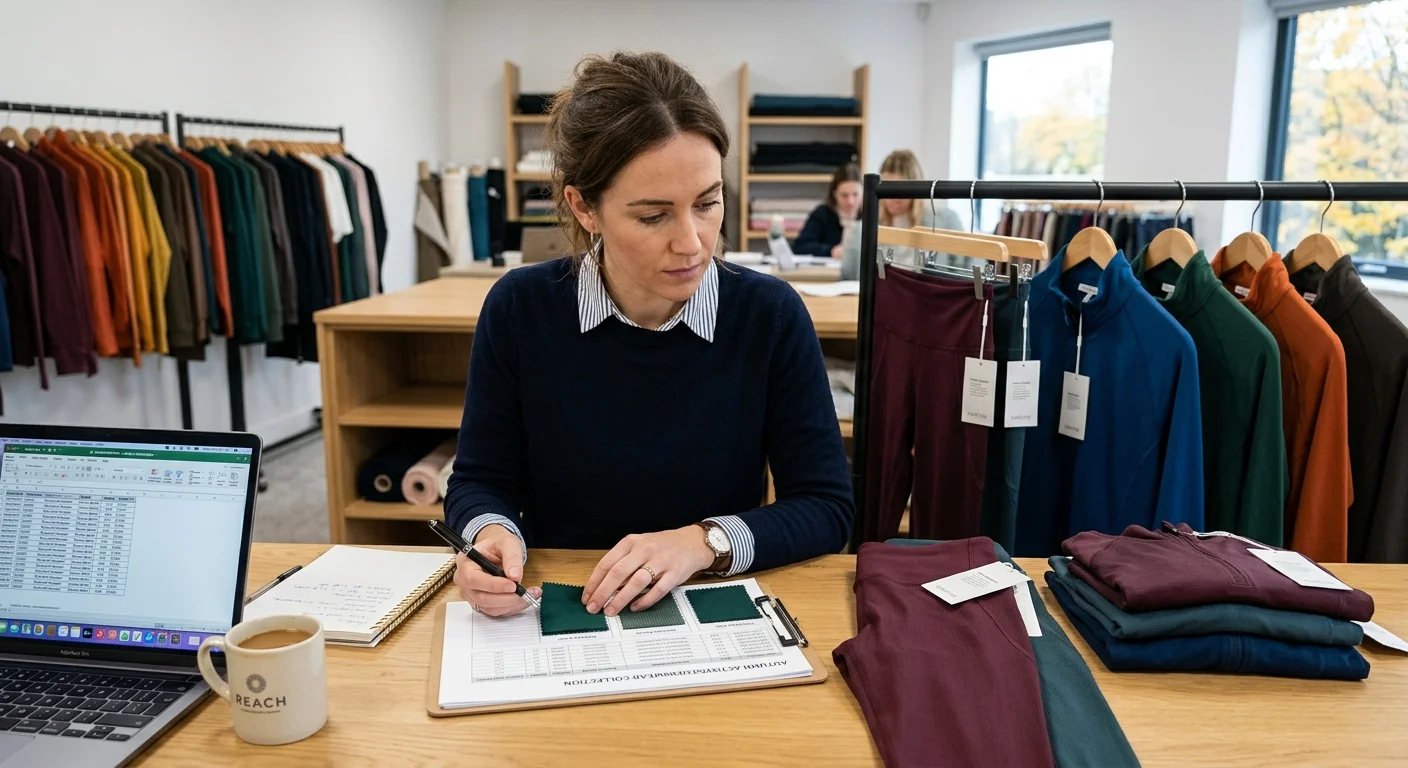
Here's a factory worth bookmarking before the season gets away from you.
Berunactivewear.com is a China-based OEM/ODM activewear manufacturer built for buyers without a 500-unit minimum budget. That means small-to-mid-sized brands, DTC labels, Amazon sellers, and boutique studio owners. You get real private label yoga clothes — no traditional factory overhead required. Their product range covers what fall demands: thermal yoga leggings, long-sleeve tops, zip hoodies, brushed-interior track suits, and compression sets.
Why they make sense for an autumn capsule:
The smartest move with a factory like this is lean and deliberate. Use their existing legging blocks. Specify a heavier GSM — target 240–260 gsm for leggings, 220–240 gsm for tops . Customize through color and branding rather than starting from scratch. This keeps development costs down, lowers your risk, and speeds up the timeline.
MOQ and pricing — the honest numbers:
Private label existing styles: 30–80 pieces per color
Custom fabric or print: 100–200 pieces per color
Yoga leggings ex-factory: $6–$10/piece (nylon or recycled fabric sits at the higher end)
Long-sleeve tops, hoodies, fall jackets: $8–$18 depending on fabric weight
Two-piece sets: $11–$18
Ask for tiered pricing upfront. Orders at 100–199 pieces per style should yield a 3–5% discount . At 200+ pieces, push for 5–10%.
Lead times — plan backwards from your shelf date:
First sample: 7–10 days using available fabric; 10–14 days for custom dyeing
Bulk production: 20–30 days post-deposit and sample approval
Add an extra 5–10 days buffer for orders near Chinese national holidays
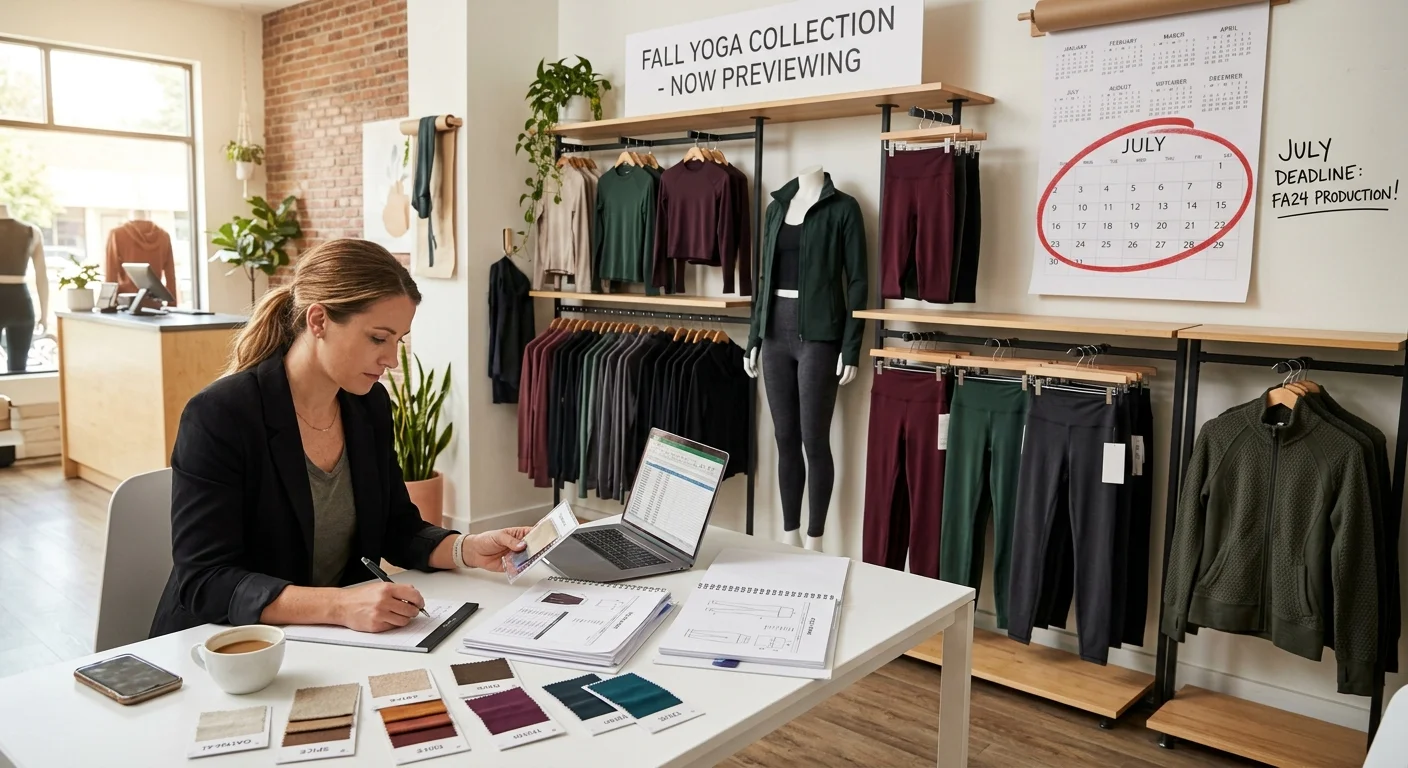
For September shelf dates, that math points to an early-to-mid July purchase order. Don't let this one slip.
Fabric specs to lock in writing:
Don't leave these as verbal agreements. Put them in your tech pack and purchase contract:
GSM range per style with ±5% tolerance
Elasticity recovery: ≥ 90–95% after 50% extension across 30–50 cycles
Colorfastness (washing, perspiration, rubbing): ≥ grade 4 per ISO 105-C06 or AATCC 61
Shade consistency across dye lots: ΔE < 1.0–1.5 , with signed lab dip approval before bulk runs
Fall color strategy with their dyeing capability:
They offer Pantone-matched custom dyeing. So you can run controlled color trials before committing to volume. Start with 4–6 colors . Anchor on neutrals — black, charcoal, dark navy, mocha. Then test one or two jewel tones (deep teal, burgundy, forest green) at the lower MOQ. Western fall activewear sales break down to roughly 60–75% neutrals and 25–40% jewel and earth tones . Let that ratio guide where you place your larger bets.
For e-commerce and dropshipping sellers:
They support custom branded polybags, size stickers, insert cards, and SKU-based packing for 3PL workflows. Ask upfront whether they can place FNSKU labels for Amazon FBA direct shipment. Confirm this before your first order — fixing it later wastes time and money.
The first conversation checklist:
Send a reference image or tech pack. Include your target GSM, fabric preference (recycled nylon-spandex for eco-conscious brands), size run, and destination market. Request physical fabric swatches at 200–280 gsm , plus a GSM report for each swatch. Require a golden sample sign-off before bulk production. Also ask them to retain bulk samples for traceability. That paper trail becomes critical as you scale into repeat orders.
Four-Way Stretch Thermal Yoga Leggings (Fleece-Backed)
Fleece-backed thermal leggings are the one fall category that sells itself. A customer tries them on in October — she's ordering two more pairs by November.
The mechanics are simple. Standard lightweight leggings become useless once temperatures drop below 45°F. Fleece-backed four-way stretch leggings fill that gap and hold strong through Q4 and into January. Brands like CRZ Yoga and Baleaf relaunch their thermal legging lines every season. Review counts keep climbing. That's not coincidence. That's a category with real repeat purchase behavior built in.
What the fabric needs to do:
Start with the shell. Go with a polyester-spandex or nylon-spandex blend — think 75–90% polyester / 10–25% spandex . Or try a nylon-forward blend around 54% nylon / 46% spandex for a softer handfeel your customers will notice right away. The interior is where thermal performance happens. You need a brushed fleece lining that creates tiny air pockets. It traps warmth without adding bulk.
For GSM, don't go light. Target 250–320 GSM for opaque, squat-proof, insulating performance your customers will rave about. Drop below 250 GSM and you risk sheering at full stretch. That's the return you don't want to deal with.
The construction checklist to hand your yoga apparel manufacturer:
Flatlock seams on inseam, outseam, and gusset — chafe-free for the full session
Diamond or triangular gusset for real yoga mobility
High-rise waistband with solid compression
Side phone pockets (bartack-reinforced, fits up to 6.7" phones)
Optional: hidden back zip pocket (+$0.40–$0.80/pc), reflective calf logo (+$0.20–$0.60/pc)
Wholesale pricing to anchor your negotiations:
Ex-factory runs $4.50–$9.00/piece for solid-color thermal leggings. A premium build — phone pockets plus reflective trims plus heavier fleece lining — adds $1.00–$2.00/pc on top of your base price. Retail in this category lands at $28–$48. Your margin structure is solid.
Color strategy for fall buy:
Black is non-negotiable. Plan on it taking up the majority of your thermal legging volume. Then add burgundy, deep forest green, and navy for your jewel-tone allocation. A solid planning ratio: ~60% black and charcoal neutrals, ~40% muted jewel tones . Finish preference runs matte, not glossy. These are studio and street pieces — not performance-race gear.
Four questions to ask before confirming bulk production:
Can you provide a mill spec sheet that lists shell GSM and fleece interior weight as two separate figures?
What is the spandex recovery rate after 50 extension cycles — is it ≥90%?
Does the fleece lining cover the full interior leg, not just the upper thigh?
Can you provide a pilling test result (Martindale grade ≥4) after five wash cycles at 30–40°C?
MOQ runs 80–200 pieces per color at flexible OEM sportswear factories. Start tiered pricing conversations early. Order at 200+ pieces and your unit cost drops in a meaningful way.
Coordinated Autumn Activewear Collection Sets (Top + Leggings)
Matching sets don't just look better — they sell better. A customer who doesn't need to think about whether her top matches her leggings buys faster, returns less, and tells her friends. That's why coordinated autumn activewear sets belong at the center of your Q4 wholesale order, not the edge of it.
Why sets outperform separates in fall:
Brands like Gymshark and Bombshell don't dedicate entire collection pages to matching sets by accident. Monochromatic looks photograph well for social content. Instagram and TikTok hauls drive purchasing decisions, and visual cohesion converts. Retailers report that bundled SKUs (top + leggings as one unit) lift average order value and simplify inventory planning. Fewer decisions at checkout. Higher sell-through at season end.
The fabric spec that holds a set together:
The biggest sourcing mistake with coordinated sets? Sourcing the top and leggings as separate specs — different GSM targets, different fabric blends, different dye batches. The result: two pieces that feel nothing alike when worn together.
For a fall-ready set, target 75% nylon / 25% spandex across both pieces at 250–260 GSM . That weight gives you squat-proof opacity, real compression, and enough warmth for studio use in cooler months. Insist on same-dye-lot production for both the top and leggings. Require a color difference tolerance of ≤ 1.0 CMC between both pieces. Wash-test 3–5 cycles before bulk approval. Colors must stay matched after laundry, not just on the hanger.
Pricing and MOQ reality:
Ex-factory cost for a solid-color performance set runs $8.50–$15.00 per set . Retail in this category reaches $60–$140 at Gymshark-tier brands — your margin structure is strong. Most mid-tier OEM yoga clothing factories start at 50–100 sets per color as a minimum MOQ. At 200+ sets, push for real unit cost reductions. A drop from $12.50 to $10.20 per set is a solid negotiation anchor.
Fall color direction:
Go with terracotta, espresso, oatmeal, and dusty mauve — full monochromes where top and leggings share the same tone. Add contrast flatlock stitching (oatmeal base with soft camel thread, for example) to lift perceived value without adding production complexity. Sets with subtle tonal detailing command 10–15% higher MSRP than plain solids. That's a detail worth putting in writing.
Before confirming bulk, ask your yoga apparel factory:
Can you provide dual dye-lot consistency certificates for both the top and leggings?
What is the residual strain after stretch recovery — is it ≤ 8% on both pieces?
Does grading stay consistent across sizes so an XS top fits an XS legging customer?
Are both pieces packed together as a single polybag unit with one master barcode?
Lock your fall set POs in July. September–November is peak production season for Chinese activewear factories. Orders confirmed early get better pricing and faster lead times.
Seamless Knit Base Layers & Studio Wrap Tops
The seamless category is loud — in numbers. It's already a USD 17.43 billion market in 2025 , and it's on track to double by 2033. The fall studio buyer is the one pushing that growth.
Seamless knit base layers and wrap tops fix a problem your customers feel but can't always name. That subtle irritation from side seams — during a long hold, a deep twist, a heated vinyasa class. Take away the seam, and the whole wearing experience shifts. That's the quiet pull behind this category. Boutique yoga retailers who stock it early tend to sell through before November.
Why seamless construction earns a dedicated spot in your fall wholesale order:
These go beyond comfortable. Circular-knit construction wraps the body without interruption. Tension-zoned ribs at the cuffs and waist give hold. Softer, open structures at the torso and underarm let skin breathe. For studio wrap tops, the wrap-front panels are built straight into the knit. Seam bulk stays at near zero.
The fabric spec that makes this work for fall:
Blend : 90% nylon 6.6 / 10% elastane — microfiber yarn, circular seamless
Weight : 230–250 GSM at size M — midweight, thermal without stuffiness
Machine gauge : 28G for opacity and structure; 30G for a finer, premium handfeel
Pricing and MOQ benchmarks:
Basic seamless long-sleeve or base-layer tops: USD 6–8/pc at 200–220 GSM
Wrap-front or engineered rib designs: USD 8–11/pc
Retail SRP in this range lands at USD 40–90 — your margin holds
MOQ: 50–100 pcs per color per style , often negotiable when colors share a production run
Fall color direction worth building around:
Heather and mélange finishes dominate seamless fall assortments — expect them to cover 25–35% of your SKU mix . They hide sweat, photograph well, and carry a texture that looks intentional and elevated. Build around those, then anchor your palette with dusty berries, wine, grape, moss, and charcoal heather.
Before placing bulk, confirm these specifics with your manufacturer:
Rib recovery: ≥ 90% width recovery after 50 stretch cycles to 130%
Pilling resistance: Martindale grade ≥ 4 after five wash cycles
Shrinkage: ≤ 5% in length and width after 3 home-launder cycles at 30–40°C
Deep-dye penetration on mid-weight fabric — lighter core yarn showing at full stretch turns into a return fast
Lead times run longer than cut-and-sew styles: 15–20 days for tension calibration samples , 30 days for bulk once machine programming is locked. Build that into your order calendar now.
Lightweight Zip-Front Studio Jackets & Yoga Cover-Ups
Studio jackets own a specific slice of time — the ten minutes before class and the fifteen minutes after. That's where this category earns its keep.
Your customer isn't wearing this piece during warrior sequences. She pulls it on over her sports bra in the parking lot. She keeps it zipped through warm-up, peels it off mid-flow, and throws it back on for the drive home. That's a different use case from thermal leggings or seamless base layers. It calls for a different sourcing conversation.
Why this earns dedicated budget in your fall wholesale order:
The silhouette does double work. A zip-front studio jacket bridges activewear and streetwear — errands, commutes, coffee after class. Elongated hemlines give proportions that work well over leggings. Cropped versions sit well with high-waist bottoms. Both styles photograph well, and that matters — your product lives on Instagram before it sells anywhere else. Boutique merchandisers report that contrast details — a metallic zipper pull against a neutral body, color-blocked sleeves — push impulse purchases higher on wall displays. Small detail, real lift.
The fabric spec that makes this category work:
Target 88–92% polyester / 8–12% spandex brushed knit at 200–250 GSM . Brushed or peached finishes give you the "buttery soft" handfeel that shoppers mention in positive reviews. For wind-resistant positioning, shift to a 100% polyester woven shell with DWR finishing — solid functional claim, meaningful price premium.
Two silhouettes worth building into your program:
Style A: Full-length, mock neck, elongated hem, set-in sleeve — suits the coverage-first buyer
Style B: Cropped, dropped shoulder, thumbhole cuffs — her athleisure piece, works with jeans just as well as leggings
Hardware matters more than most buyers realize:
The zipper is the first thing that fails. It's also the first thing your customer notices when it does. Specify coil or molded plastic front zippers with an internal QC benchmark of ≥ 10,000 pull cycles . For premium positioning, require YKK or YKK-equivalent sliders. Add a low-temperature flex test too. The slider needs to open on a cold fall morning — not just in a warm factory showroom.
Pricing and MOQ benchmarks:
Retail in this category runs $23.90–$37.99 for mid-market styles on Amazon. Your FOB target lands at $5.00–$9.50/piece , based on fabric, trims, and construction complexity. A solid private label program baseline:
Base jacket, core colors: $6.20–$6.50 FOB
With thumbholes + contrast zipper tape + chest embroidery: $7.00–$7.40 FOB
MOQ: 80–150 pcs per color per style at small-to-mid factories
Bulk lead time: 25–40 days post PP sample approval
Color strategy for fall buys:
Anchor 60–70% of your volume in black, charcoal, mist grey, sand, and olive . These colors sell steadily and photograph well against any background. Put the remaining 30–40% into accent options: a sand body with olive sleeves, a black base with contrast ivory zipper tape. Those color-block SKUs earn their spot on a display wall.
Pre-PO checklist before you confirm bulk:
Request a lab test report confirming ≥ 10,000 zipper pull cycles — no exceptions
Order fit samples in both cropped and full-length bodies. Test drape over a sports bra — that's the actual use case
Using sublimation or allover print? Confirm the fabric is ≥ 85% polyester . Ask for trial strike-offs with the zipper sewn in before committing to bulk
Confirm colorfastness to perspiration (ISO 105-E04, grade ≥ 4) — saturated fashion colors in studio environments sweat
Lock FOB terms and freight validity window before fall surcharges hit
For September floor dates, your purchase order needs to land by early-to-mid July . The lead time math is tight — there's no buffer to spare.
Plus-Size Curve-Friendly Fall Leggings & Extended Tunics
There's a gap in the market that most wholesale buyers walk right past — and it's costing them real Q4 revenue.
Most mainstream yoga legging programs cap out at XL or 1X. A size 2X or above customer walks into a boutique studio or scrolls through a fall activewear drop — her options disappear fast. Specialty plus retailers like Avenue and OneStopPlus have been building dedicated extended-size programs for years. Think 34-inch tunics paired with leggings , multi-buy promotions, and seasonal color drops. The repeat purchase rate in this segment is exceptional. A plus-size customer who finds a legging that fits well orders more. That's a lifetime value signal worth acting on.
Why the fabric specs here are non-negotiable:
Standard 180–220 GSM legging fabric fails at size 3X under bright light. For plus fall leggings, target 240–300 GSM double-knit or brushed polyester/nylon-spandex with 18–25% elastane content . Drop below 15% spandex and you get sheerness at full stretch plus seat bagging by mid-session. Neither is acceptable — and both drive returns.
Construction details that matter at larger sizes:
Waistband: minimum 6 cm finished height , 8–10 cm is better — this prevents roll-down across fuller midsections
Gusset: diamond or oval cut, +2.5 cm wider than a standard straight seam — this reduces thigh-crotch stress and prevents fit failure
Seams: flatlock or mock flatlock on inseam and rise — inner thigh friction runs higher in plus sizes, and cheap construction shows here first
Back rise: contoured and cut higher for full coverage during forward folds
Extended tunics — the pairing that lifts your average order value:
A legging sells better with a top built to match. Plus buyers search for 32–36" center-back length tunics — long enough to cover the hips and upper thighs in full. Two silhouettes worth adding to your program:
An A-line curved hem at 34" for clean, everyday coverage
A high-low style with side slits from 8–12" up for easier movement in 3X and above
Tunic fabric should sit at 180–240 GSM rayon-poly-spandex or cotton-modal-spandex . That's enough drape to skim the body without clinging across the bust and hip.
Wholesale pricing and MOQ reality:
Fall-weight plus leggings (240–300 GSM, flatlock seams, gusset): $5.50–$10.00 FOB per piece
Extended tunics (longline knit, rayon or cotton-modal): $6.00–$11.00 FOB per piece
MOQ: 50 pieces per style with a graded 1X–5X size run is achievable at mid-sized plus-program factories
Bulk lead time: 30–45 days for standard fabrics; add 10–15 days for custom fall color lab dips
Color direction for plus fall assortments:
Black, navy, and charcoal make up around 65% of plus fall legging volume — dark neutrals that photograph well and flatter a wide range of body types. The remaining 35% goes to deep seasonal tones: burgundy, plum, forest green, dark teal. Finish should be matte or soft brushed . That "buttery soft" descriptor showing up in top-reviewed plus leggings is no accident. It's a sourcing decision.
What to confirm before placing bulk:
Request graded spec sheets covering waist, hip, thigh, and rise across 1X–5X — confirm it's plus-first grading, not a straight-size small scaled up
Ask for fit photos or video on a 2X–3X model showing waistband stability through squats and seated bending
Run opacity testing on the largest graded size (3X–4X) under bright light while stretched
Ask whether the factory can pack coordinated sets — same color legging and tunic in one polybag, single barcode. That bundle pushes higher average order values and keeps inventory management clean.
Conclusion
Fall doesn't wait — and neither do your customers.
The six categories covered here aren't just trend forecasts. They're your roadmap to a stocked, sellable autumn collection. Move inventory before the first leaf hits the ground. Fleece-backed leggings, coordinated sets in earthy tones, seamless base layers — your buyers are already searching for these pieces. They may not know it yet, but the demand is real.
The smartest move right now? Don't walk into a manufacturer meeting with a vague wishlist. Come prepared with fabric weights, stretch specs, colorway references, and a clear MOQ target. That's the difference between a basic yoga clothing supplier relationship and a true sourcing partnership — one that actually delivers results.
Scaling an established boutique? Building your first private label yoga clothes line? berunactivewear.com brings real autumn activewear collection depth to the table. Plus, we offer the manufacturing flexibility that turns a seasonal restock into a real brand moment — something your customers will remember.
Your fall launch window is shorter than you think. Start the conversation today.