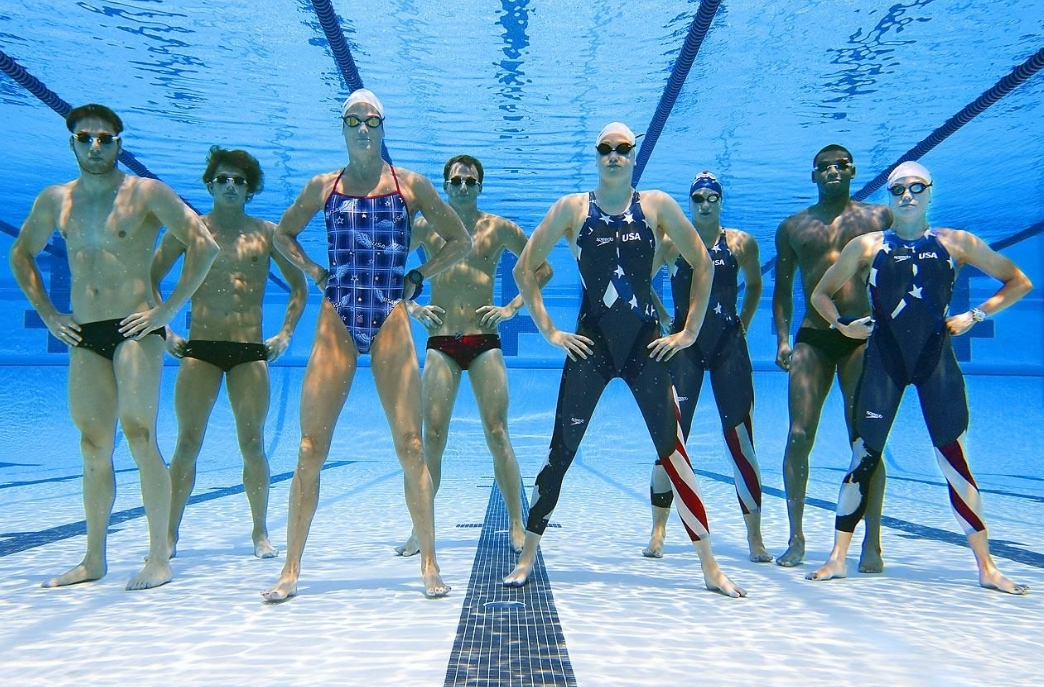
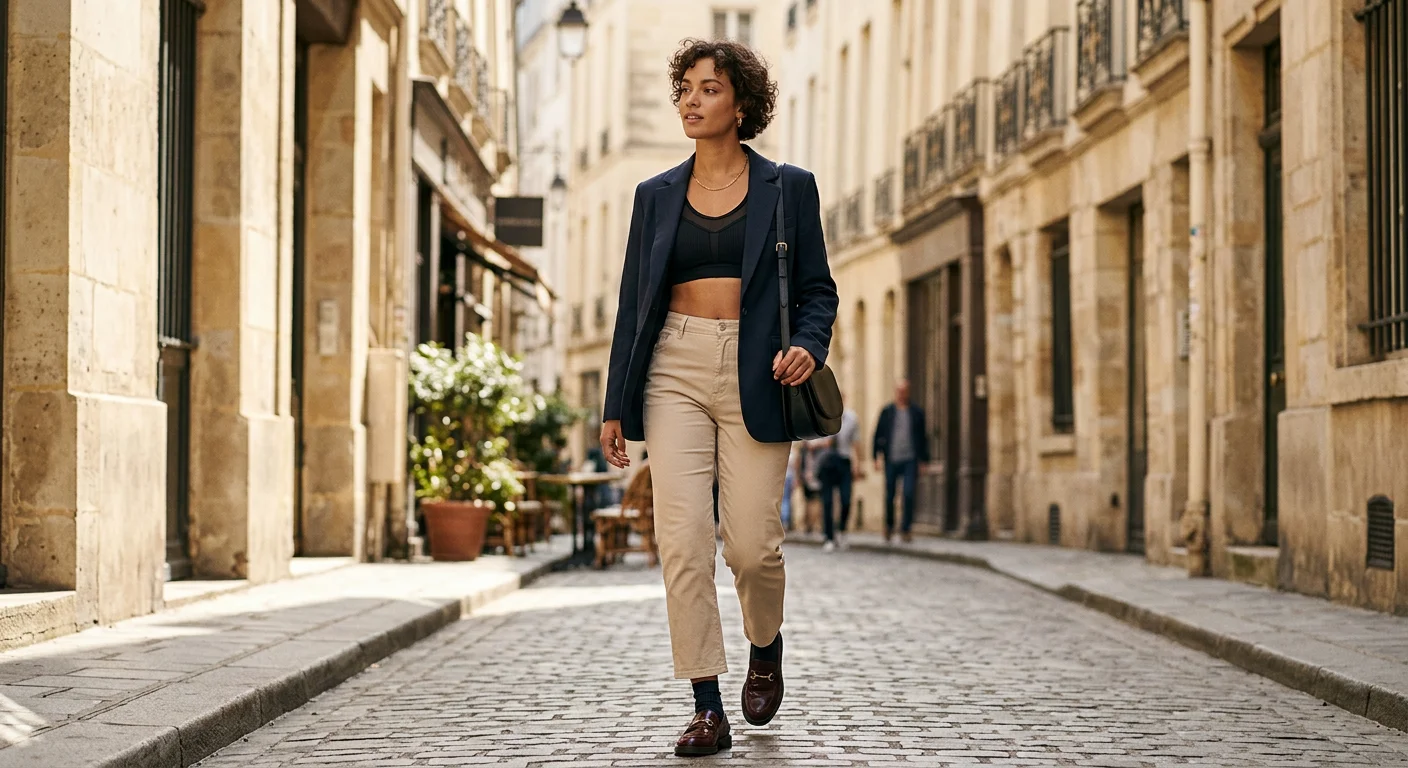
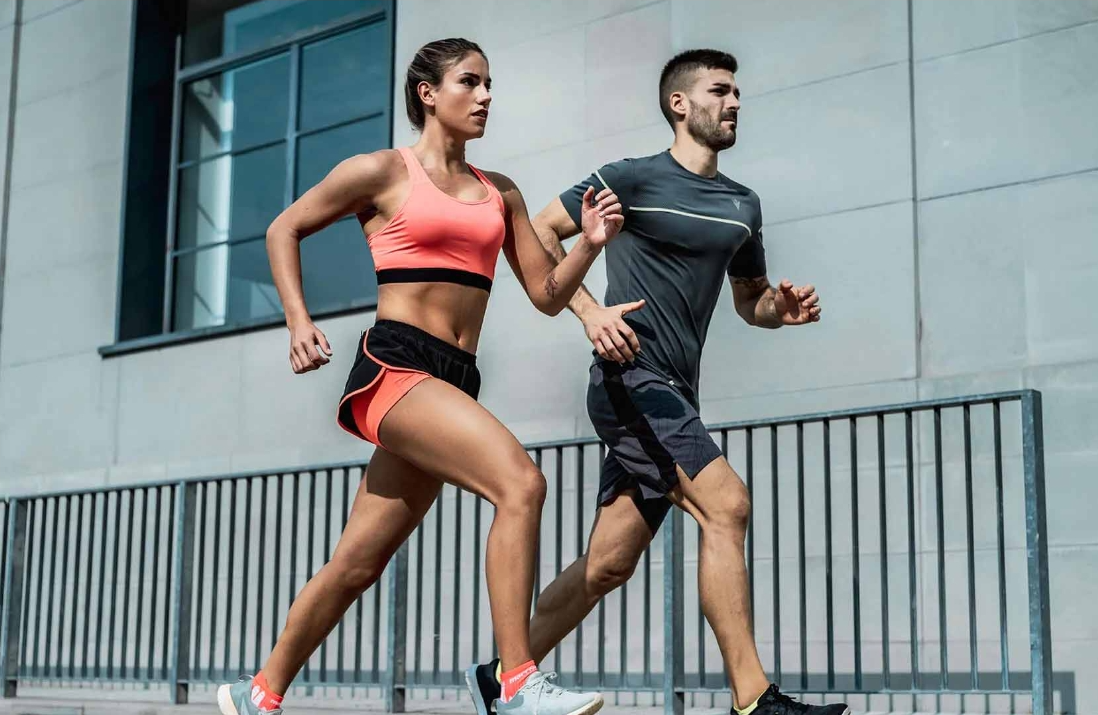
Sourcing workout leggings that sell is a different skill from sourcing leggings that just exist .
Any wholesale directory can point you to a activewear factory pumping out basic black tights by the container load. But your boutique customers, your fitness-obsessed Instagram audience, your Shopify store regulars? They want more than basics.
They're after:
- Scrunch-seam contour styles blowing up on TikTok right now
- Moisture-wicking leggings that smart wholesale buyers grab before they go mainstream
- Buttery seamless sets with waitlists before they even drop
This guide breaks down 2024's highest-potential wholesale leggings categories. You'll also get a straightforward activewear manufacturer evaluation framework and the margin math you need before placing a single bulk order. Use it as your edge in a crowded market.
High-Waisted Pocket & Contour Seam Wholesale Range
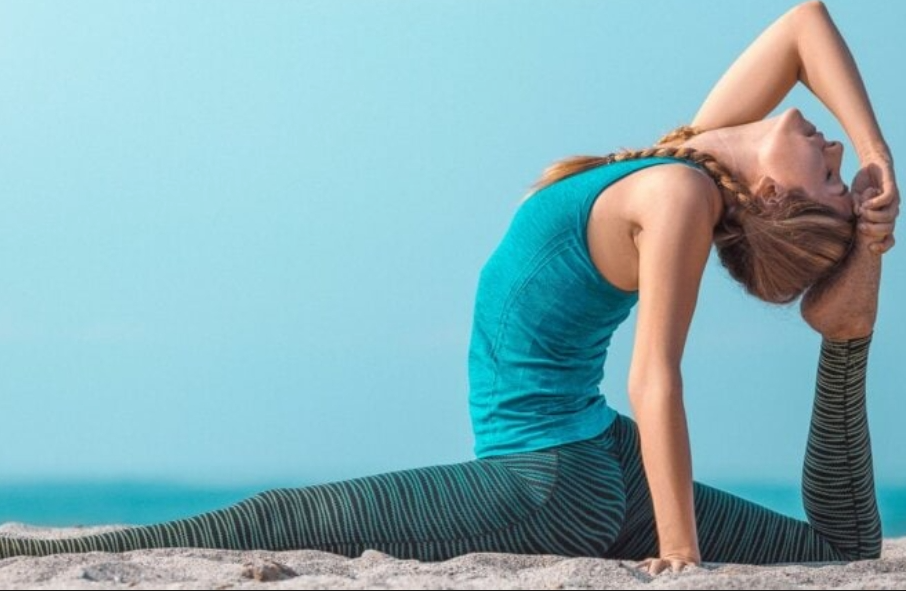
High-waisted pocket leggings aren't a trend anymore. They're the baseline expectation for any wholesale activewear range worth stocking in 2024.
Your Gen Z and Millennial customers aren't just buying leggings. They're buying a silhouette. Contour seam styles are dominating boutique bestseller lists right now — think labels like "UltraSculpt" and "SoCinched." These styles sell because today's athleisure shopper wants her workout gear to work at the gym and look sharp getting coffee afterward. That dual-purpose demand is your commercial opportunity as a wholesale buyer.
What the Core Style Looks Like
The go-to product in this category is a 7/8 or full-length high-waisted legging built on four functional pillars:
High-rise tummy-control waistband — wide, firm, no roll-down
Dual side pockets sized for a phone (zippered option available on custom orders)
Contour seam detailing along the glutes and outer leg for a sculpting, lifting effect
Scuba-style knit fabric — smooth, structured compression rather than the softer "buttery" feel
On the fabric spec side, the sweet spot for compression leggings wholesale is a 240 GSM polyester/spandex or nylon/spandex scuba knit with 18–25% spandex content . That's what delivers real 4-way stretch and shape retention after repeated washes.
Wholesale Pricing & MOQ Reality Check
Here are the real numbers from Dongguan/Guangzhou-based OEM manufacturers :
Order Volume | FOB Price Per Unit |
|---|---|
150–300 pcs per color/style | US$9.50–$13.00 |
500+ pcs per color/style | ~5–10% unit price reduction |
For custom printed leggings manufacturer orders — private-label branding, contour seam development, integrated pockets — 150–300 pieces per color is the standard MOQ. Solid-color basics can sometimes drop to ~100 pcs. Realistic custom work starts at 150.
Production turnaround runs 25–35 days after sample approval. Plan for 30 days as your working figure.
Quality Standards Worth Specifying
Don't leave fabric quality open to interpretation. Ask any squat proof leggings manufacturer to confirm these benchmarks in writing:
AATCC colorfastness (washing & perspiration): ≥ Grade 4.0 — anything lower means dye transfer complaints after the first wash
Martindale pilling resistance: ≥ Grade 3.5 — essential for scuba knits under regular gym friction
OEKO-TEX Standard 100 certification on dyes and fabric — non-negotiable for EU/US retail compliance. Plus, wellness-minded Gen Z consumers are starting to check for this label before they buy.
Most factories exporting to North America and Europe meet these standards without hesitation. A supplier who stalls on confirming them? That's your answer right there.
The Margin Picture
Take FOB $10.50 landed (mid-range spec, 200 pcs per style). Add $2–3 freight and duties per unit. Your landed cost lands around $13–14 . Boutique retail pricing for contour-seam high-waisted leggings runs $48–$72 . That gives you a 3.5x–5x markup — solid ground for positioning athletic leggings in bulk against premium DTC brands.
berunactivewear.com
Berun Activewear fills a useful middle ground. It's not a commodity factory pumping out container loads of identical black tights. It's also not a boutique sampling house with brutal MOQs. Small indie brands and Shopify sellers who need real private-label performance wear — without committing to 1,000-piece runs — will find this positioning worth paying attention to.
Their core wholesale leggings range covers the styles selling fastest right now: high-waist seamless, scrunch, crossover, and flared yoga cuts. All are built on nylon/spandex or polyester/spandex at 200–280 GSM . You get squat-proof opacity, moisture-wicking performance, and 4-way stretch recovery above 90% after repeated wear and wash cycles.
MOQ & Pricing at a Glance
This is where Berun gets interesting for newer brands:
Solid-color standard leggings : as low as 80–150 pcs per style
Custom sublimation / cut-and-sew : from 50–100 pcs per design
FOB pricing : $6.50–$9.50 (basic polyester/spandex) up to $11.50–$16.50 (premium full-print sublimation)
Mixed orders across leggings, bras, and tops get accepted at 300–500 pcs total . Per-color minimums run 50–100 pcs. For a boutique first order, those numbers are easy to work with.
Production & Customization Reality
Sampling takes 7–12 days after tech pack confirmation. Bulk production for modest orders (300–1,000 pcs) runs 15–25 days — noticeably faster than the 25–35 day range you'd see from larger OEMs.
Custom options include contour paneling, gusseted crotch construction, and waistband pocket integration. Full branding is covered too: woven labels, heat-transfer logos, custom hang tags, and FBA-ready packaging. Berun also supports DTC dropship fulfillment — bulk produced in China, then shipped piece-by-piece directly to your end customers. That's a solid option for Shopify sellers keeping inventory lean.
Payment runs on standard T/T 30/70 terms. Sample fees are $30–$80 per style , with part of that cost deductible from bulk orders.
Seamless Knit & Ombré Gradient Yoga Pants Bulk
Gradient colorways are doing something the activewear industry hasn't seen in years: they're making leggings collectible .
Studio regulars aren't just rebuying basics — they're hunting the next colorway drop. That shift is what makes seamless sports leggings wholesale in ombré and gradient prints a smarter activewear wholesale bet than another round of solid black SKUs.
Why Seamless Construction Changes the Buying Conversation
Construction matters as much as the color story. Seamless circular-knit and flatlock-seam builds remove the pressure points that cut-and-sew styles create. Zero chafing. No ridge lines under tight yoga poses. Studio-goers call it a "second-skin" feel — and it shows up again and again in five-star reviews.
For wholesale buyers, the payoff is clear: lower return rates, stronger repeat purchase cycles, and a product that spreads through fitness communities on its own.
What to Specify When Sourcing
The clearest benchmark from current bulk listings is 260 GSM fabric weight — confirmed on Alibaba seamless ombré listings with customization options. That weight sits right between structure and drape for yoga-to-lifestyle wear.
Your RFQ should lock down these specs:
Construction: seamless knit or flatlock-seam anti-chafe finish
Weight: 240–270 GSM breathable, quick-dry stretch fabric
Colorways: gradient, ombré, tie-dye, or rainbow program
Fit features: high-waist, tummy-control, scrunch butt-lifting
Stock availability: prioritize suppliers already holding 10+ gradient colors in stock — faster pickup, lower risk for first orders
Made-in-China bulk suppliers show 10 gradient colors ready to ship now , including scrunch butt-lift and high-waist tummy-control specs. That's your fastest path to a fresh, differentiated assortment — no waiting on custom development timelines.
Assortment Strategy
Start with 3–4 stock gradient colorways to test sell-through. Then add custom ombré options once you see which color families your customers actually buy. Look for suppliers that list seamless construction, gradient prints, and multiple in-stock colors together. Those are the ones best matched to studio boutique and yoga pants wholesale distributor buying patterns — shorter lead times, lower commitment, and faster reads on what's moving.
Compression & Squat-Proof Performance Manufacturer Lines
Squat-proof leggings are the hardest product to get right in the wholesale activewear market. There's no hiding a failure. One deep squat under a phone flashlight and your customer's trust is gone.
Sourcing this category demands a higher level of scrutiny than any other legging style.
The Fabric Spec That Makes or Breaks It
The number that separates real squat-proof performance from marketing copy is GSM . High-end compression lines land at 250–320 GSM . These use high-density nylon/spandex or polyester/spandex warp-knit constructions that hold opacity under deep stretching. Drop below 220 GSM and you risk show-through during squats. That's not a risk worth taking.
The winning fabric formulas break down like this:
Nylon 70–80% / Spandex 20–30% — softer hand feel, superior shape recovery
Polyester 70–85% / Spandex 15–25% — stronger moisture management, better colorfastness
Both work well. Your choice depends on whether your customer cares more about feel or moisture control.
Construction details matter just as much as fabric weight:
Wide waistbands, 8–12 cm with double-layer or power-mesh backing — no rolling, real core stability
High-compression power-mesh paneling at glutes and hamstrings — extra support without added bulk
Flatlock or cover-stitch seams — holds up through Olympic lifting and HIIT without blowout or chafing
The Squat Test Standard
Top squat proof leggings manufacturers run a 150% elongation opacity test as their internal pass/fail standard. They stretch the legging to 150% across front and back panels, hold it under bright directional lighting, and photograph it. Pass means zero visible skin outline. Fail means back to the fabric sourcing table.
Ask any prospective supplier to run this test on samples before you commit to bulk orders. Suppliers who push back aren't ready for serious performance buyers.
Manufacturer Profiles Worth Knowing
Seam Apparel (Los Angeles, CA) runs a US cut-and-sew model with overseas high-density fabric sourcing. This setup appeals to brands that want domestic manufacturing credentials without paying domestic fabric prices. They work from customer tech packs and handle pattern grading, compression paneling, and waistband customization. Custom branded lines start at around 100 pcs per style/color as a realistic MOQ floor.
Alanic/Oasis Group targets gym wear, CrossFit, and online athleisure brands head-on. They market "high-compression, squat-proof, non-see-through" as a clear product position. Their standard MOQ sits at 100–150 pcs per color/style for custom leggings. That's startup-accessible without cutting corners on performance specs.
For brands not working with named facilities, the dominant industry model is an LA or Dallas cut-and-sew shop pulling high-density fabric from specialized mills in Taiwan, South Korea, or China . These shops serve CrossFit boxes, performance gyms, and DTC labels. They treat compression leggings as a year-round, high-priority product , with peak reorders in January/March and late summer. No fashion seasonality risk. Stable demand.
Pricing & Margin Reality
FOB pricing from Asian OEMs for genuine high-density squat-proof compression leggings runs $16–$24 per unit at 100–300 piece runs. That's the real number for branded-level quality — not the $9 commodity spec.
US cut-and-sew adds a 25–35% labor uplift . A style at $16–$20 FOB Asia comes out to $20–$27 cut domestically with the same fabric. Retail pricing for this tier sits at $78–$110 . That gives you a solid 3.5x–4x margin on a product where customers are ready and willing to pay premium prices for proven performance.
For add-on colorways after your base pattern is approved, many shops accept 50–80 pcs per color . That's real flexibility for testing new colors without over-committing your inventory.
Plus-Size Inclusive & Eco-Recover Active Ranges
Extended-size activewear is one of the fastest-growing corners of the wholesale leggings market right now — and most suppliers are still underserving it.
The numbers are hard to ignore. The plus-size activewear subsegment is tracking a 13–18% CAGR through 2027 . That's well ahead of the broader apparel market. Most wholesale buyers are still stocking XS–XL and calling it inclusive. That's the gap. Brands that go to 3XL, 4XL, and beyond face far less competition. They also earn stronger customer loyalty on the other side.
Why Standard Grading Fails at Extended Sizes
Sourcing plus-size performance leggings isn't as simple as telling a factory to scale up your existing patterns. Linear scaling breaks waistband tension. It distorts inseam drop. A squat-proof style can turn into something that bags at the knees by the second wear.
The benchmark worth knowing is Dynamic Grading . This is the approach used by size-inclusive activewear label Vitality (XXS–4XL). It adjusts inseam, waist, and hip measurements at each size point separately — not by scaling the same proportions across the board. You get consistent compression and fit from size XS to 4XL, not just at the mid-range.
Ask any plus size workout leggings wholesale supplier directly how they grade across size clusters. Acceptable tolerance is ±0.5–0.7 cm at waist, hip, thigh, and inseam across the full curve. Request fit approval on at least XL and 2XL/3XL samples before releasing bulk. A size M sample with a grading chart attached is not enough.
The Eco-Performance Specs That Matter
The second force reshaping this category is sustainability. Plus-size consumers buying performance activewear in 2024 lean hard toward brands with real eco credentials — recycled materials, traceable supply chains, and certifications they can check and verify themselves.
The fabric brief that works for this segment:
78–80% GRS-certified rPET + 20–22% spandex at 240–260 GSM — opaque, squat-proof, recovers to 90–95% after repeated stretch cycles
UPF 40–50+ construction — achievable with tightly knit rPET blends, relevant for outdoor fitness and running categories
Curved ergonomic seams at inner thigh and seat — cuts chafing and removes the "dig-in" effect at larger hip and waist measurements
Gusseted crotch panel — standard in any serious performance plus-size build
For certifications, the minimum credible stack is GRS (Global Recycled Standard) for yarn and fabric, OEKO-TEX Standard 100 for chemical safety, and a factory social audit — BSCI, WRAP, or SA8000.
The eco premium is real but contained. Full GRS certification with documented chain-of-custody adds around US$1.00–$2.00 per unit on top of base FOB pricing.
Pricing & MOQ Benchmarks
Ethical factories producing rPET performance leggings across a full XS–3XL or XS–4XL size curve price as follows:
Spec Level | FOB Per Unit |
|---|---|
Standard rPET + spandex, 220–260 GSM | US$9.50–$13.50 |
Ethical/audited factory + traceability + eco hangtags | US$10.50–$14.00 |
Full GRS traceability pack add-on | +US$1.50–$2.00 |
MOQ sits at 150 pcs per color . The full size curve XS–3XL (or XS–4XL) is distributed within that total — not 150 pcs per size . That's workable for boutique buyers building an inclusive range for the first time.
Production runs 30–40 days after fabric approval. Budget an extra 2–4 weeks for proto and size-set development on your first order.
Size Curve Allocation for First Orders
Don't split your opening order evenly across sizes. Sales data from ethical plus-size active brands shows volume weighted toward L–2XL , with smaller allocations at the XS–S and 4XL ends. Start with M–2XL as your core. Go lighter at the extremes. Let your own sell-through data guide adjustments from there.
Wholesale Leggings Manufacturer Evaluation & QA Framework
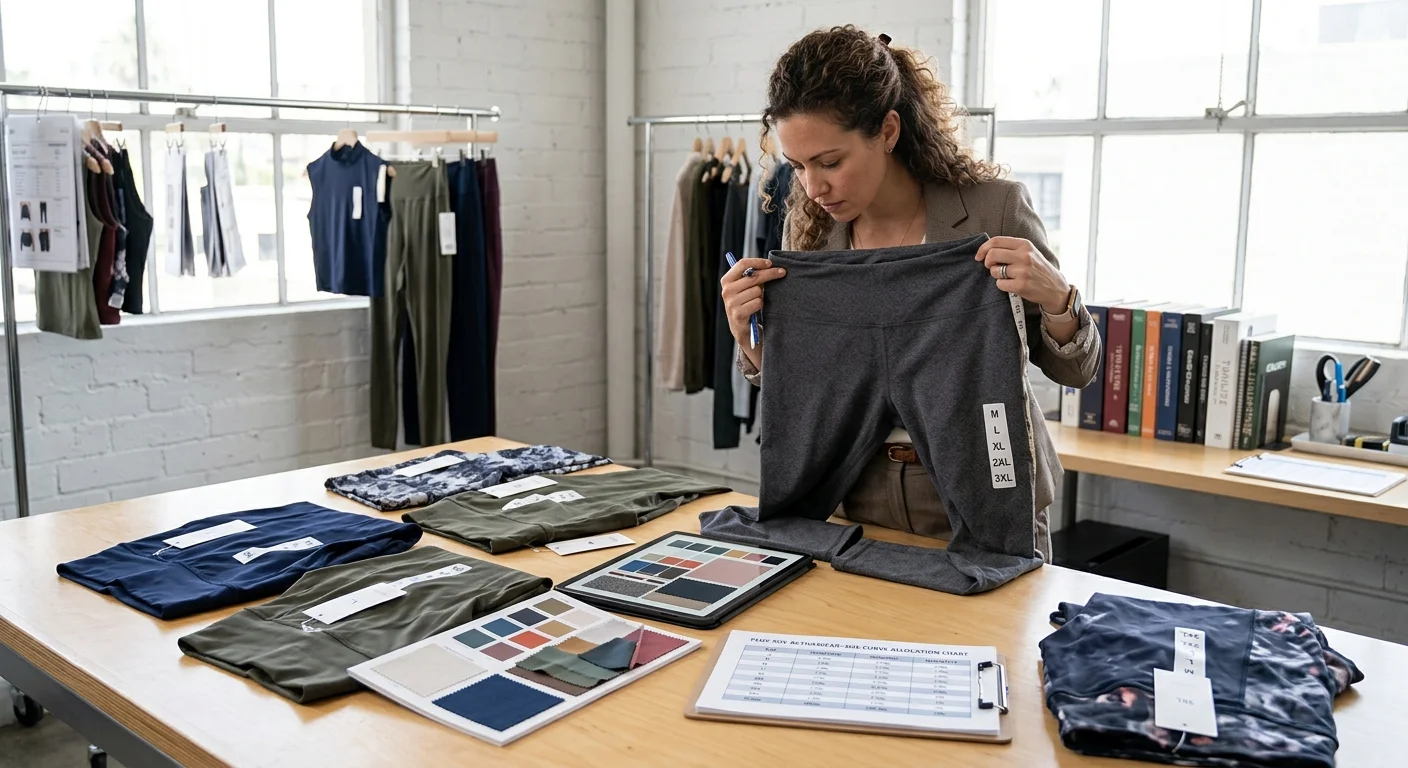
Bad factories are easy to find. They're everywhere — polished Alibaba storefronts, slick trade show booths, sample kits that look flawless on arrival. The hard part is sorting out which suppliers can perform at volume, hold quality under pressure, and still be worth working with six months into a real commercial relationship.
This framework gives you a scoring system and a set of hard benchmarks to cut through the noise.
Capacity & Compliance: The Floor, Not the Ceiling
First, confirm the manufacturer can handle your growth. For brands with serious scaling plans, the benchmark is monthly output ≥50,000 pieces across one to three facilities. Get the numbers straight from them — ask for cutting line output per day, number of active sewing lines, and average leggings production per month across the last 12 months by style category.
On compliance, require at least one active certification: ISO 9001 , BSCI , SEDEX , or WRAP. Then go further. Check that the certificate covers the right legal entity and factory address. Confirm it's still valid. Make sure any major non-conformities from the last audit have documented closure. A supplier who won't hand over a current audit report summary has something to hide.
Operational delivery benchmarks worth holding them to:
- On-time, in-full delivery rate: ≥95–98%
- Reorder fill rate without substitutions: ≥95%
- Lead times: 30–45 days bulk for in-stock greige fabric; 60–75 days for custom fabric and dyeing
The QA Numbers That Protect Your Brand
Defect rates in poorly run apparel supply chains hit 25–30% . That's not a typo. Your target zone should be nowhere near that.
Negotiate these thresholds in writing:
Production defect rate: ≤2% post-final inspection
Customer return rate for quality reasons: ≤2–3% on delivered units
Request AQL results from the last 10 bulk orders before you commit to anything. Set AQL 2.5 as the minimum inspection standard for major defects on leggings shipments. Shared reports should be standard practice, not a favor.
Target defect occurrence by category:
Defect Type | Target Rate |
|---|---|
Fabric defects (holes, laddering, pilling) | <1% |
Stitching & seam failures | <1% |
Measurement / fit out-of-tolerance | <1–1.5% |
Color issues (shade variation, migration) | <0.5–1% |
Technical Capability Scoring (1–5 Scale)
Score every shortlisted supplier across these five dimensions before making a final call:
Pattern & Design
Look for an in-house CAD team with grading capability from XS–3XL. They should have solid experience in compression mapping for contour-seam leggings. The benchmark: tech pack to first pattern in ≤3 days .
Sampling Performance
Strong vendors deliver first samples in 5–10 days after tech pack receipt. They hit your specs within ±1 cm on critical measurement points. A production-ready PP sample should take ≤2 correction rounds . Anything slower or sloppier adds weeks of delay and risk to your launch schedule.
Fabric & Construction
For high waisted workout leggings bulk and squat proof leggings manufacturer programs, these are non-negotiable:
- GSM: 200–280 (confirmed by fabric label or CoA)
- 4-way stretch recovery ≥90% after 5 cycles at 50% extension
- Flatlock seaming on high-stress points; seam burst strength ≥15–20 kgf on main inseams (ASTM D1683 or equivalent)
Bulk Production Control
Look for documented SOPs that cover fabric inspection on the 4-point system. There should be a minimum 24-hour relaxation time before cutting stretch fabrics. Inline QC checks at set intervals are a must. First-pass yield should hit ≥97–98% without rework.
Quality Testing
Ask for test reports from at least two recent shipments. Minimum thresholds:
- Colorfastness (washing and rubbing): ≥Grade 4 (AATCC/ISO)
- Pilling resistance: ≥Grade 4 after 5,000 Martindale rubs
- Dimensional stability / shrinkage: ≤3–5% post-wash
- For compression leggings wholesale programs: compression zone mapping in the 15–30 mmHg range, with consistency confirmed across all sizes
MOQ & Commercial Flexibility
MOQ ranges shift by product type and supplier tier:
Program Type | Typical MOQ |
|---|---|
Stock / ready-to-ship | 20–50 pcs per style/color |
Private label custom | 200–300 pcs per style/color |
Technical / advanced compression | 500 pcs per style/colorway |
For custom printed leggings manufacturer orders, FOB pricing by tier:
- Basic polyester/spandex: US$3–6/pc at 200–300 pcs
- Mid/high nylon/spandex, squat-proof, 220–260 GSM: US$6–12/pc at 300–500 pcs
- Seamless or advanced compression: US$10–18+/pc at 500+ pcs
Push for aggregated MOQ policies — one style across two or three colors, total pieces pooled, minimum 80–100 pcs per colorway. Sample fees run around US$50–150 per style . Strong vendors deduct 100% of sample costs from your bulk PO once your order hits a set threshold — 300–500 pcs is the usual cutoff.
Communication Standards & Liability Terms
The best factory relationship is one where you never have to chase information. Set these expectations from day one:
Response time ≤12 hours on workdays via email, WhatsApp, or order portal
Production update reports every week during active bulk orders
A dedicated account manager — not a shared inbox
A shared production Gantt or milestone tracker covering fabric booking, cutting start, inline inspection, final inspection, and ETD/ETA
Require photo and video evidence at three checkpoints: first bulk off the line, midline production, and packed goods before container loading.
On defect liability, negotiate clear clauses. Post-delivery quality defect rates above 2% make the manufacturer responsible for free replacement on the next order or a credit note for confirmed defective units. For latent defects — color bleeding, rapid pilling — set 90-day shared responsibility from the date of consumer sale. Also set a clear 30–60 day return/repair window from receipt for visible QC issues, backed by a documented evidence submission process.
Weighted Scorecard Summary
Use a 1–5 scale. Advance suppliers who score ≥4.0 overall and ≥4.0 on QA and technical capability . Those two areas are where leggings programs hold together or fall apart in public.
Evaluation Axis | Weight |
|---|---|
Capacity & compliance | 20% |
QA & defect performance | 20% |
Fabric & technical capability | 20% |
MOQ & commercial flexibility | 15% |
Sampling & development speed | 10% |
Communication & logistics | 10% |
Athleisure market experience | 5% |
Suppliers who clear this bar aren't just factories. They're the infrastructure your brand runs on. Vet them like it.
Private Label Profit Margin & Retail Pricing Strategy
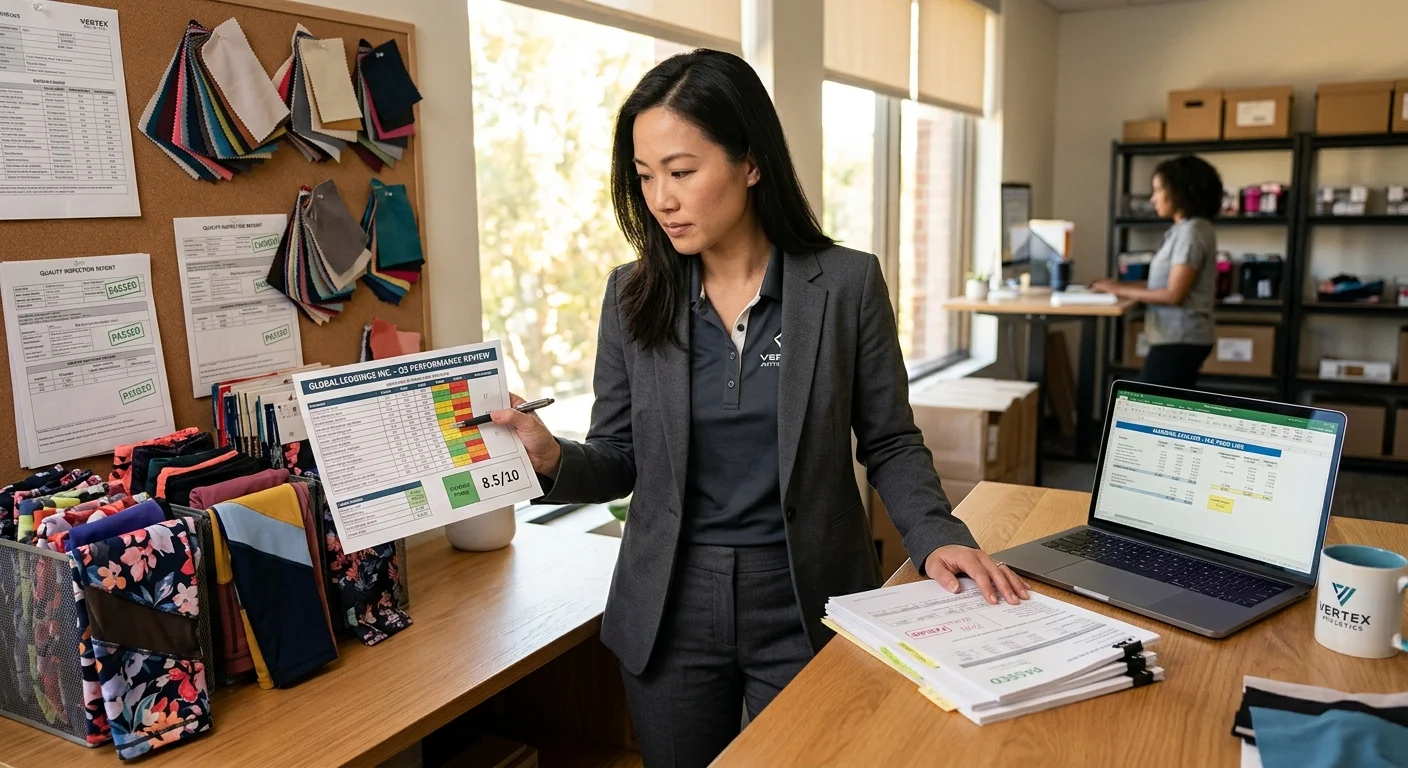
Private-label leggings are one of the best margin stories in wholesale apparel right now. Most boutique buyers still skip the math before placing an order. That's a missed opportunity.
Here's the key number: private-label activewear delivers 10–15 percentage points higher gross margin than comparable branded product at retail. A brand doing $500k in private-label leggings at 40% GM beats a $1M branded assortment at 30%. Volume looks good for branded. Margin wins for private label.
The Retail Pricing Tiers & What They Demand from Your COGS
Set 60–65% gross margin on net sales as your baseline target. That's the number that covers paid social, fulfillment, and overhead — without draining your cash. Here's how it plays out across three retail bands:
Retail Price Tier | Target COGS Range | Notes |
|---|---|---|
Budget $28–$39 | $7–$11/unit | Basic poly/spandex, minimal branding |
Mid-tier $45–$65 | $10–$18/unit | Nylon/spandex blends, compression, detail |
Premium $70–$95 | $15–$30/unit | Seamless tech, performance prints, GRS fabric |
Here's a real mid-tier example. A $49 retail legging with a $14.00 landed COGS on a 500-piece run hits 71% GM on net sales. That's strong enough to run a DTC ad-heavy model without stress.
That $14.00 COGS breaks down like this:
- Fabric + trims: $5.00
- Cut & sew labor: $2.20
- QC + reject allowance: $0.40
- Packaging + labeling: $0.45
- Inbound freight + duty: $2.20
- Factory overhead + margin: $3.75
Volume Discounts Worth Negotiating
Don't accept flat pricing. Tiered OEM pricing on high waisted workout leggings bulk orders is open for negotiation. Push for this structure:
300 pcs: base price (e.g., $14.00/unit)
500 pcs: 5–8% discount → ~$12.90–$13.30
1,000+ pcs: 10–12% discount → ~$12.30–$12.60
That $1.40–$1.70 per-unit difference across a 1,000-piece reorder is real money. Put together a 12-month volume forecast. Use it to push your custom printed leggings factory to lock in FOB pricing for six months. Fabric cost swings become their problem to absorb at that scale — not yours.
Positioning Against Branded Anchors
Comparable branded leggings retail at $80–$100. Your compression leggings wholesale private label fits into two solid positions:
Mid-tier: $55–$65 (65–75% of the brand anchor) — value-based, accessible, easier conversion
Premium PL: $70–$90 — works once you've built clear brand differentiation
Don't price at the anchor. Price where the margin lives.
Conclusion
The leggings market isn't waiting for anyone — and neither are your competitors.
Building a boutique fitness brand from scratch? Scaling an existing activewear line? The wholesale ranges covered here offer the strongest opportunities in 2024. High-waisted contour styles sell fast. Seamless knits bring serious retail premiums. Plus-size ranges tap into a large, underserved demographic that most brands still ignore.
A profitable first order or an expensive lesson — the difference comes down to one thing. Pick the right squat proof leggings manufacturer before you commit your budget. Not after.
Start with your niche. Run your margin math. Then shortlist two or three sportswear manufacturers from the athletic leggings in bulk suppliers featured above. berunactivewear.com is a strong first call. Request samples before you do anything else.
Your bestseller is already out there. It just needs the right buyer to bring it to market.