Most women don't need more motivation to work out — they need clarity.
So many options pull you in different directions. Lift heavy. Do cardio. Try HIIT. Just do yoga. It's easy to spend months going nowhere and never seeing the results your body is capable of.
Here's what most generic fitness advice misses. Different training types work with the female body in very different ways. Your hormones, bone density, joint structure, and where you store fat — all of these shape how you should train.
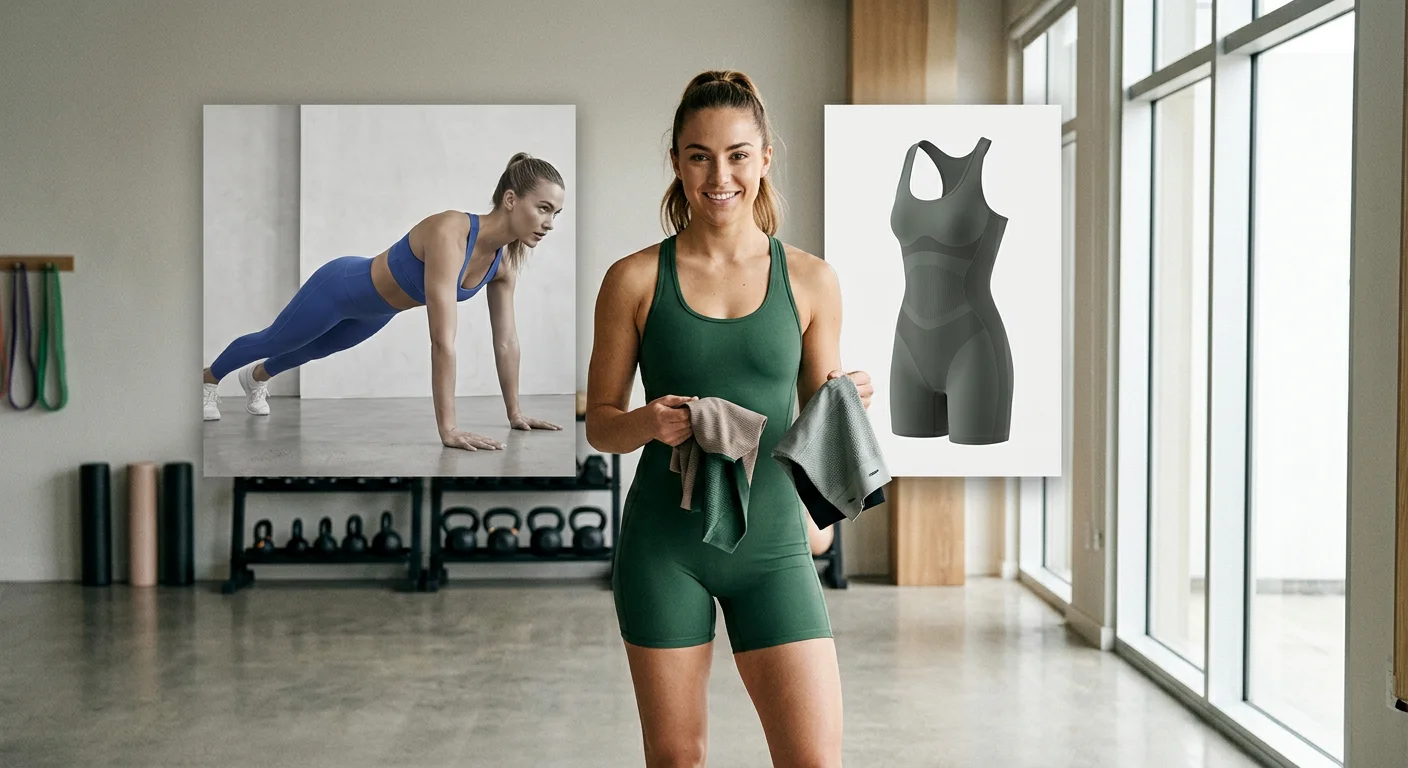
This guide breaks down five core training types with practical, science-backed detail. Each one is matched to real women's lives, goals, and bodies. So you can stop guessing and start training with your physiology, not against it.Whether you're choosing custom women's activewear for your own fitness brand or simply looking for gear that matches your training style, understanding how different workouts affect the female body helps you make better decisions.
Strength Training
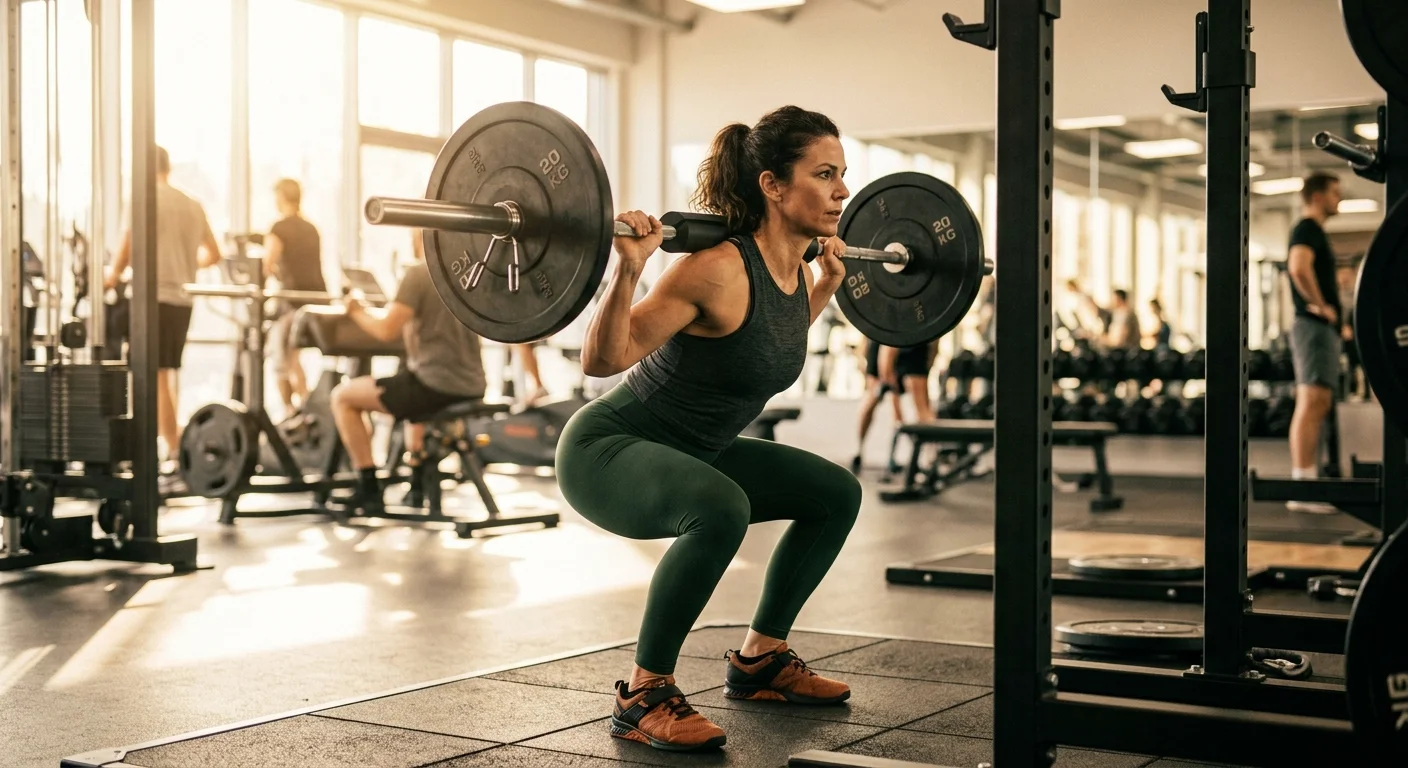
Bone loss starts earlier than most women expect. By the time perimenopause arrives, the spine and hip can shed 1–2% of bone mineral density every year — with no visible warning signs. Strength training is one of the few non-drug options that directly reverses this trend. Not slows it. Reverses it.
That alone should reshape the conversation around why women lift.This is also why many OEM activewear collections now emphasize compression fabrics and supportive construction specifically designed for resistance training.
What It Does to the Female Body
The research is specific and useful. Postmenopausal women who followed high-intensity resistance training improved lumbar spine bone density by 2.9% in just 8 months . Women aged 50–70 show strength gains on par with men at the same training intensity. The difference in muscle size is smaller — but that comes from lower baseline mass, not a weaker response from the female body.
Then there's the metabolism piece. Adding 1–3 kg of lean muscle shifts your body composition steadily — burning more calories at rest, improving insulin sensitivity, and cutting visceral fat. For women with insulin resistance or blood sugar concerns, 2–3 resistance sessions per week can lower HbA1c by 0.5–0.7 percentage points. Independent of weight loss.
The "Bulk" Question — Answered for Good
Women carry 10–15 times less testosterone than men (15–70 ng/dL versus 300–1,000 ng/dL). Without drug intervention, strength training in women first builds neural adaptations — better motor unit recruitment, improved coordination — then produces modest increases in muscle density. The result is muscle that looks firmer, more defined, and more compact . Not larger. The "bulk" fear is a myth rooted in a misunderstanding of female physiology.
Who Benefits Most
Women 40–65 (perimenopause and beyond): Protecting bone density and fighting age-related muscle loss (sarcopenia) should be the main goal. Compound lower-body lifts — squats, deadlifts, hip hinges — loaded at ≥70% of your one-rep max put direct mechanical stress on the bones that need it most.
Desk-bound workers: Sitting more than 8 hours a day slowly erodes postural control and metabolic efficiency. Two full-body strength sessions per week rebuild both. They also make daily movement feel easier — something cardio alone doesn't deliver.
Premenopausal women wanting body recomposition: 8–16 weeks of progressive resistance training produces 1–2 kg of lean mass gained and 1–3 kg of fat lost . Results are stronger when paired with ≥1.6g protein per kilogram of bodyweight per day.
Training by Your Cycle
For premenopausal women, the menstrual cycle is a built-in training schedule.
Follicular phase (days ~3–14): Estrogen rises, progesterone stays low. Recovery is faster, strength output is higher. Push harder here — heavier loads (65–75% 1RM), more sets, personal record attempts.
Luteal phase (days ~15–28): Progesterone raises core temperature and makes effort feel harder. Cut volume by about 20%, drop the load a bit, and focus on technique over intensity.
Perimenopausal cycles may be irregular. The principle still holds — train harder on your stronger weeks. Treat your tired weeks as planned deload periods, not setbacks.
The Prescription
2–3 sessions per week, 45–60 minutes each , built around compound movements:
Squat patterns: goblet squat, back squat, leg press
Hinge patterns: Romanian deadlift, hip thrust, conventional deadlift
Press patterns: push-up, dumbbell bench press, overhead press
Row patterns: single-arm dumbbell row, cable row, inverted row
Core stability: planks, dead bugs, Pallof press
Work main lifts at 60–70% of your one-rep max for 8–12 reps . Complete more than 12 reps with ease? The weight is too light. Target 8–15 hard sets per muscle group per week — split across sessions however your schedule allows.
Starter Move: The Goblet Squat
Hold a 10–20 lb dumbbell or kettlebell upright against your upper chest. Feet shoulder-width apart, toes turned out 5–15°. Brace your core hard — think "ribs locked down" — and sit between your hips, not onto your toes. Keep your knees tracking over your second toe as you lower to parallel. Drive back up through your mid-foot and heel.
Start with 2–3 sets of 8–10 reps . Hit 3 sets of 12 reps with clean form? Add 2–5 lbs and repeat the process. That progression, done with consistency, is the foundation of everything.
Cardio/Aerobic Training
Cardiovascular training has a reputation problem. For years, it's been sold to women as the answer to everything — the default prescription, the punishment for eating too much, the thing you do until you can do something "real." That framing has done a lot of damage.
Here's the honest picture: done right, cardio is one of the most powerful tools women have.A professional activewear supplier will usually recommend lightweight, moisture-wicking fabrics for steady aerobic sessions because long-duration comfort matters more than maximum compression. It helps manage stress, protect the heart, and build the kind of stamina that makes everyday life feel easier.
What It Does for the Female Body
The benefits that matter most for women aren't the ones printed on the treadmill display.
Cardiometabolic protection becomes critical after menopause. Estrogen loss speeds up cardiovascular disease risk at that stage. Regular moderate aerobic training lowers blood pressure, improves cholesterol profiles, and cuts visceral fat. That's the active fat stored around your organs — the kind that drives insulin resistance. For women with PCOS, that last point carries real weight. Steady-state cardio improves glucose control. It supports hormonal balance without pushing an already-stressed system further.
The nervous system benefits are underrated — and very relevant for high-stress women. Rhythmic, moderate-intensity movement pulls the body toward a calmer state. Less cortisol. Better sleep. A quieter mental baseline. It's not just mood. It's physiology.
The Zone 2 Principle — Why Intensity Isn't Everything
Most women doing cardio are working too hard to recover well, yet not hard enough to train with real effect. Zone 2 — 60–70% of your maximum heart rate — is the sweet spot.
A simple calculation: subtract your age from 220. A 40-year-old's Zone 2 target is 108–126 bpm .
No heart rate monitor? Use the talk test . You should be able to speak in full sentences, but not sing. The moment you're gasping, you've gone past it.
This intensity is where fat metabolism, cardiovascular adaptation, and nervous system recovery all happen at the same time. It isn't glamorous. It works.
Target: 150–300 minutes of moderate aerobic work per week, split across 3–5 sessions of 30–45 minutes each.
Who Benefits Most
Women with joint sensitivities — from previous injury, hypermobility, or the structural differences in female knee and hip alignment — do best with low-impact options: incline walking, cycling, swimming, or the elliptical. These protect the joints while still delivering full cardiovascular benefit. High-impact sessions (running, jump-based classes) should stay at 1–2 days per week maximum .
Women with PCOS or insulin resistance get the most from steady Zone 2 cardio paired with 2 resistance sessions per week. High-intensity intervals, done too often, can spike cortisol and worsen hormonal imbalance. Moderate and consistent beats intense and sporadic — every time.
Perimenopausal women dealing with temperature regulation shifts should adjust on harder days. Lower the intensity a notch, shorten the session, or move indoors. The goal is keeping your total weekly volume steady — not grinding through a workout in the middle of a hot flash.
High-stress professionals should treat cardio as active recovery, not another performance metric. Five 25–35 minute outdoor walks at a conversational pace will do more for cortisol, sleep, and sustained energy than three punishing HIIT sessions.
Starter Move: The Incline Treadmill Walk
Set the incline to 8–10% , speed between 2.8–3.3 mph . Start with a 5-minute warm-up at flat grade. Hold the main block for 20 minutes. Finish with a 5-minute cool-down.
Form cues that matter:
- Tall spine, relaxed shoulders, eyes forward — not down at your feet
- Soft mid-foot landing; push the belt back with your glutes rather than pulling yourself forward with your hip flexors
- Breathe in a 4-count inhale / 4-count exhale rhythm — the moment that falls apart, slow down
Start at 15–20 minutes . Add 1–2 minutes each session. That's the 10–20% progression rule in practice. Simple, sustainable, and kind to your body.
HIIT
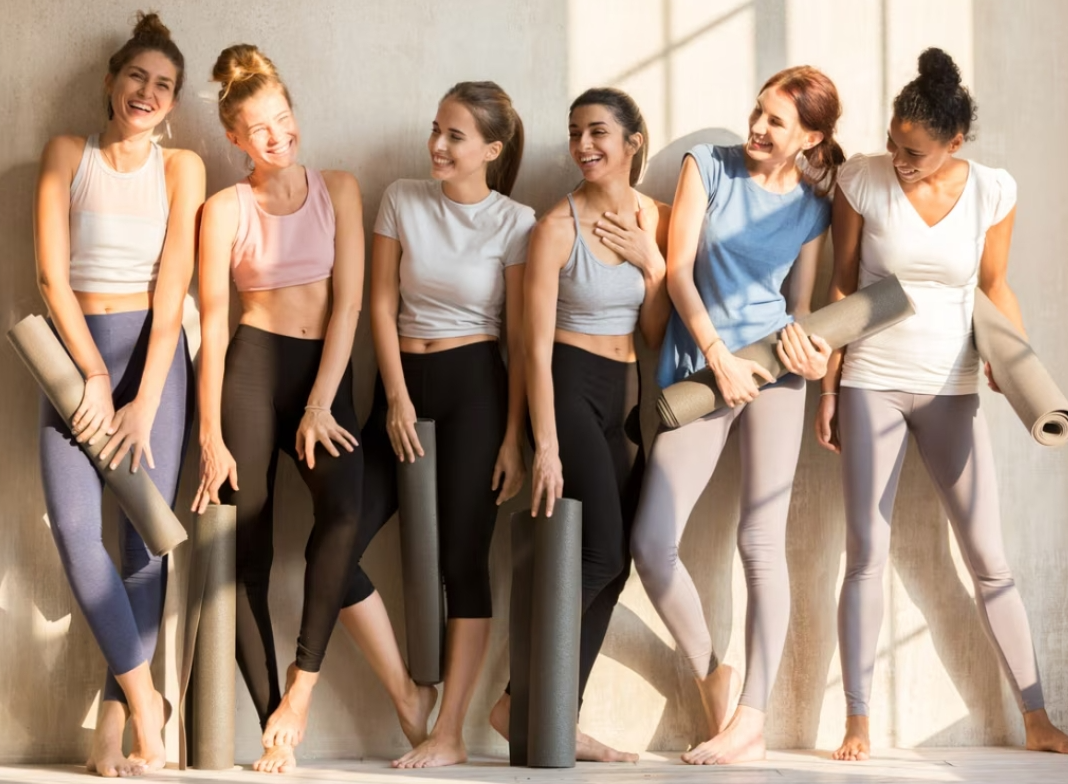
Twenty minutes. That's all it takes — as long as those twenty minutes are structured well.Many brands work with ODM fitness apparel partners to develop garments that combine stretch recovery, sweat management, and durability for repeated high-intensity workouts.
HIIT works on a simple principle: push hard, recover, repeat. But what makes it stand out for women isn't the effort itself. It's what happens after you stop.
What HIIT Does to the Female Body
The "afterburn" effect — known as EPOC (excess post-exercise oxygen consumption) — keeps your metabolism elevated for hours after a session ends. A 20-minute workout burning around 200 calories can trigger an extra 12–30 calories of post-exercise burn. Small on its own. Add it up across weeks, and it counts.
For women focused on body composition, HIIT targets visceral fat — the active fat stored around your organs. It reduces this fat faster than steady-state cardio for the same time spent. Studies show waist circumference reductions of 2–4 cm after 8–12 weeks, plus total fat loss of around 1.3–1.5 kg . Unlike long runs, HIIT also protects lean muscle mass — and can even build it slightly — as long as you eat enough protein (≥1.6 g/kg/day).
For women with insulin resistance, the blood sugar impact is real. One HIIT session boosts glucose disposal for 24–48 hours after. Three sessions per week over two to three months can raise insulin sensitivity by 20–35% — better results than moderate cardio for the same calories burned.
Cardio fitness improves fast too. Women doing a 4×4-minute interval protocol at 90–95% max heart rate, three days per week, tend to see VO₂max climb by 10–15% within ten weeks . That shows up as better energy, more stamina, and easier daily effort.
Who HIIT Is For
Time-crunched women are the clearest fit. Sessions run 15–25 minutes total — warm-up and cool-down included — with just 8–15 minutes of hard work . No other format burns 10–15 kcal per minute in that short a window.
Women stuck at a fat-loss plateau often see progress restart after swapping 40-minute steady jogs for two HIIT sessions per week. The reasons are solid: bigger VO₂max gains, stronger insulin sensitivity improvements, and a more varied metabolic demand on the body.
Women in their 20s and 30s with healthy joints and a solid fitness base can add sprinting, loaded jump squats, and cycling sprints to their routine. No history of knee or hip issues? This is the training window where your body handles high-impact work best.
Training Around Your Cycle
Around ovulation (mid-cycle), estrogen peaks. You get better neuromuscular efficiency, a small boost in power output, and a higher pain threshold. Push your hardest HIIT blocks here.
During heavy bleeding days, cut the impact and shorten your intervals. Fatigue and cramping pull down your output quality — pushing through won't help. Swap sprints for marching high-knees, shorten work periods, and treat the session as movement rather than performance.
Early postpartum women (under six months) — and anyone dealing with prolapse or incontinence — should skip high-impact HIIT until a pelvic health physiotherapist gives the green light. The pelvic floor must be ready before it can handle the pressure spikes that jumping and sprinting create.
The Programming Reality
1–2 HIIT sessions per week is the research-backed sweet spot for most women pairing this with 2–3 strength sessions. Do more than that — especially during high-stress or low-sleep stretches — and the balance tips from recovery into burnout.
Key numbers to track:
- Work intervals: 90–100% maximum heart rate, RPE 8–10/10
- Rest intervals: drop below 70% HRmax before going again
- Work:rest ratio: 1:2 or 1:3 for most women (e.g., 30 seconds hard, 60–90 seconds easy )
- Total "all-out" time per week: cap at 20 minutes for the general population
- Gap between sessions: minimum 48 hours
- Post-session protein: 20–25 g of high-quality protein within two hours
Starter Move: The Step-Back Burpee
This is HIIT's most beginner-friendly entry point — full-body, challenging, and safe for women who aren't ready to jump yet.
Stand with feet hip-width apart
Step one foot back into a shallow lunge, hinge forward a little
Place hands on a countertop, bench, or the floor (higher surface = lower pelvic floor load)
Step the second foot back into a high plank — body straight, shoulders over wrists
Brace: ribs over pelvis , glutes lightly engaged
Step one foot forward, then the other, back into a supported squat position
Exhale hard as you stand to full hip extension — this breath ties together pelvic floor and deep core activation, cutting pressure spikes with every rep
Progression path: hands from counter → bench → floor over several weeks. Then tighten the rest ratio: 20s work / 40s rest → 30s work / 30s rest.
Full beginner circuit (18 minutes, no equipment):
Warm-up (3 min): brisk march, hip circles, arm swings, shallow bodyweight squats
Main set (12 min): 30s work / 60s rest, 8 rounds — cycling through step-back burpees, fast bodyweight squats, marching high-knees, incline push-ups
Cool-down (3 min): walking, light hip and quad stretching
Start at RPE 6–7/10 for your first two weeks. That's not holding back — that's how you build the base that lets real intensity happen later.
Flexibility/Yoga/Pilates Training
There's a stubborn idea that no sweat means no workout. Yoga and Pilates have pushed back against that for years. Now the science backs them up.It's also one reason why private label activewear collections increasingly include Pilates- and yoga-specific designs that prioritize unrestricted movement over heavy compression.
What It Does to the Female Body
These training forms work on three levels most other methods don't reach.
Joint stability and hypermobility protection. Women deal with joint hypermobility far more than men do. It's that familiar feeling of being "too flexible" — joints moving further than they should. Pilates fights this by building active mobility : strength across a full range of motion, not passive hanging in ligaments. The slow, controlled movements train stabilizing muscles to carry the load your connective tissue shouldn't handle alone.
Nervous system regulation. Breath-synchronized movement isn't just wellness talk. The exhale-on-exertion pattern in Pilates and yoga — inhale to prepare, exhale to move — triggers the parasympathetic nervous system. Cortisol drops. Sleep quality improves. You'll notice a calmer mental baseline by week two, not week ten.
Core and pelvic floor restoration. The "Pilates powerhouse" is your deep core, diaphragm, and pelvic floor working together as one pressure system. Desk posture, pregnancy, and hormonal shifts disrupt that system. These practices rebuild it with a level of precision that standard core work rarely hits.
Who Benefits Most
Postpartum women (particularly those with diastasis recti) need movement that focuses on quality, not load. Heavy lifting too soon causes problems — targeted Pilates does not. Supine core drills, side-lying glute work, and modified roll-backs rebuild deep core function before you return to heavier training. Hold off on full curl-ups, deep backbends, and loaded rotation until the diastasis gap has closed significantly.
Desk-bound women with anterior pelvic tilt share a common dysfunction pattern: tight hip flexors, underactive glutes, and a lumbar spine that's lost natural mobility. Flows that combine warrior lunges, high-kneeling thigh stretches with active glute engagement, and spinal twists target that pattern head-on. A hip flexor stretch with a neutral spine and lightly contracted glutes does more for posture than years of passive sitting stretches.
Women in their luteal phase or high-stress periods get outsized benefit here. Fatigue, poor sleep, and mood shifts make hard training feel like a fight against your own body. A 10–20 minute mat session — slower pacing, longer exhalations, child's pose, supported forward folds — gives your body real recovery. It adds relief to a stressed system instead of more strain.
The Programming Framework
Frequency: 3–4 sessions per week
Session length: 45–60 minutes for a full practice; 20–30 minutes works well for self-guided routines
High-stress or high-fatigue days: A 10-minute sequence of breathing, spinal mobility, and low-load core work still delivers real stress relief. Short sessions done often beat occasional long ones every time.
Starter Move: Dead Bug with Breath Coordination
This move is the starting point for postpartum women, hypermobile women, and anyone rebuilding core-pelvic floor connection after a long stretch of inactivity.
Lie on your back. Bring your hips and knees to 90° in a tabletop position. Extend both arms toward the ceiling. Inhale — let your ribcage expand sideways, not upward.
On the exhale , draw your navel toward your spine and press your lower back into the mat. Lower the opposite arm and heel toward the floor in a slow, 3–4 second arc. Go only as far as you can while keeping your ribs heavy and your pelvis completely still.
On the inhale , return with control — no snapping back. Alternate sides for 6–10 reps per side .
The key cue: match your movement speed to your breath length . Your limb moves faster than your exhale? Slow the limb down. This isn't a flexibility drill. It's a coordination drill that rebuilds the deep pressure system your body relies on.
Start with 2 sets, 3–4 times per week , inside a 20–30 minute session. Stick with it, and this one pattern covers everything: diaphragmatic breathing, deep core activation, and controlled movement — without loading a single joint that isn't ready for it.
Functional Training
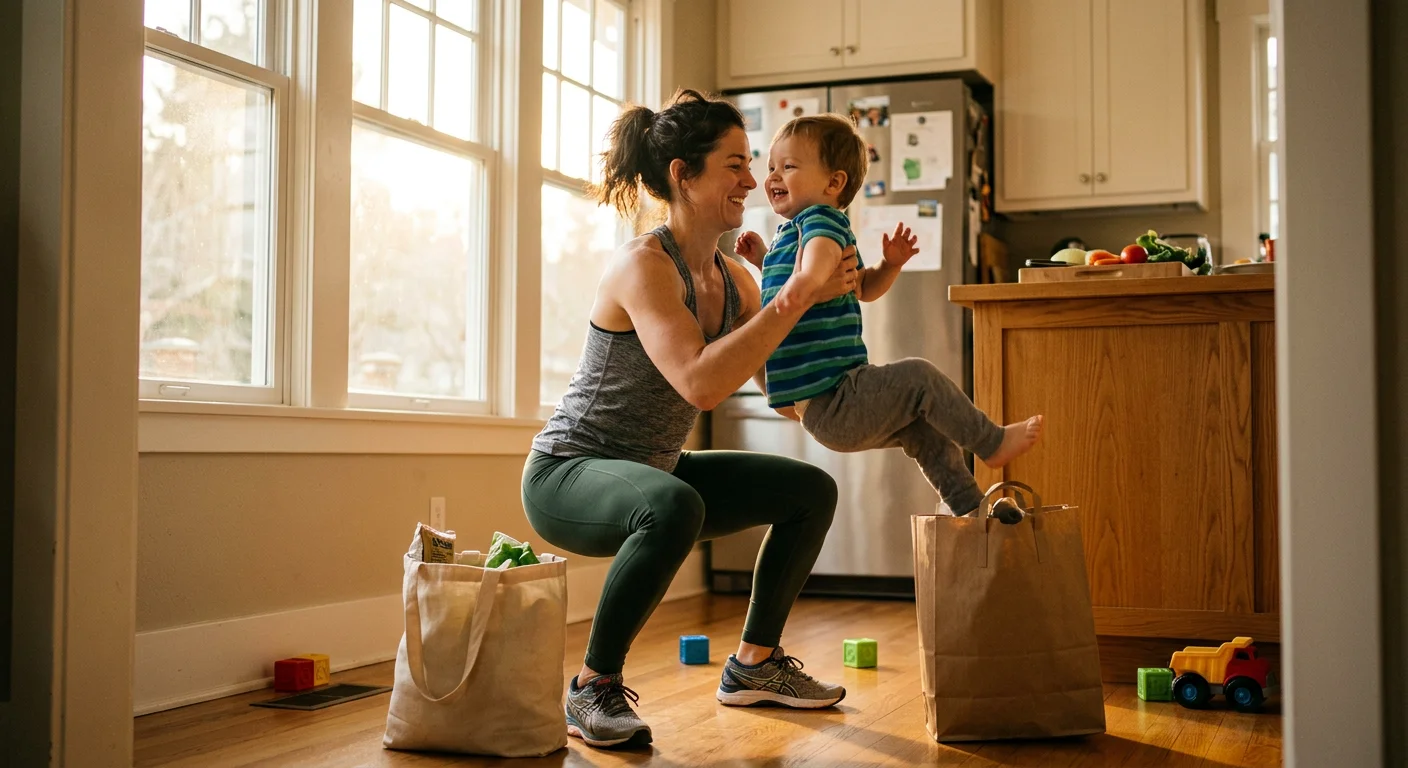
Think about what your body does in a day. You crouch down to pick up a toddler. You carry two heavy bags from the car in one trip. You reach overhead while balancing on one foot to grab something from a shelf. None of these movements happen in a straight line. None of them isolate a single muscle group.
That's the whole point of functional training — and why it deserves a permanent place in any woman's routine.Even brands sourcing at wholesale price activewear levels are adding functional-training pieces because consumers increasingly expect versatile apparel that performs across multiple workout styles.
What It Does to the Female Body
Functional training works across multiple planes of movement. No other training type delivers that. The research here is striking. Core-focused functional work produces a large effect on balance (SMD ≈ 1.17) across general populations. Add dynamic movement patterns, and that balance improvement jumps to an SMD of 2.72 . For women over 50 facing higher fall risk after estrogen decline, that gap is a big deal.
Beyond fall prevention, the deeper benefit is kinetic chain integration . Your muscles learn to fire in coordinated sequences, not in isolation. The result? Safer sit-to-stand movements. Easier stair climbing. The ability to shift direction fast without straining something.
The core stabilizers involved — transverse abdominis, multifidus, pelvic floor — are the same deep muscles that protect your spine lifting a child off the floor seventeen times a day. Standard gym machines skip them. Functional movement trains them.
Who Benefits Most
Active mothers and caregivers need squat and hinge patterns (goblet squats, hip hinges), unilateral farmer carries for uneven loads, and anti-rotation work like the Pallof press. That last one builds resistance to twisting when a child suddenly shifts their weight.
Women 50+ get the most from single-leg balance drills, lateral movement patterns like side squats to single-leg thruster, and bird dog progressions. All low-impact. All aimed at fall prevention.
Post-rehab women returning to independent fitness should start low-load and high-control: dead bugs, tall-kneeling Pallof press, wall-press heel drops. Build control first. Load second.
The Programming Framework
Frequency: 2–3 sessions per week
Length: 30–45 minutes
Format: Circuit of 5–7 exercises — push, pull, hinge, squat, carry, and anti-rotation patterns
Volume: 2–3 sets of 8–10 reps or 30–45 seconds per exercise — last rep challenging, not failure
Starter Move: The Farmer Carry with Overhead Reach
Hold a 5–10 kg dumbbell in each hand at your sides. Pack your shoulders down and back, ribs stacked over pelvis. Walk 20–30 slow, deliberate steps — as if on a narrow balance beam. After 10–15 steps, pause and raise one arm overhead without letting your torso side-bend. Lower with control. Alternate arms.
One coaching cue worth holding onto: "Zip up from pelvic floor through ribcage, and resist the weight pulling you sideways." That one internal instruction fires up everything this movement targets.
Start with 2 sets . Rest 45–60 seconds between. This single exercise pulls together carry, overhead reach, anti-lateral flexion, and balance under load. That's everything real life asks of your body — packed into two minutes of focused movement.
Conclusion
Your body is not a problem to be solved — it's a system to be understood.
After looking at all five training types, here's the truth: no single workout is the "best" for every woman. There's only the right combination for you — right now, at this stage of your life, with your specific goals and your unique body. Strength training won't bulk you up. It builds bone density and keeps your metabolism strong. Cardio, HIIT, yoga, and functional training each fill a gap the others can't.
The women who see lasting results don't just train harder. They train smarter . They match their workouts to how their body works — not how someone else's does.For fitness brands planning future collections, partnering with an experienced activewear wholesaler can also make it easier to offer apparel tailored to these different training needs and customer preferences.
So don't wait for the "perfect" routine to show up. Pick one training type from this guide that feels right. Try it for three weeks. See how your body responds.
That's where every strong woman's journey begins — with one honest first step.