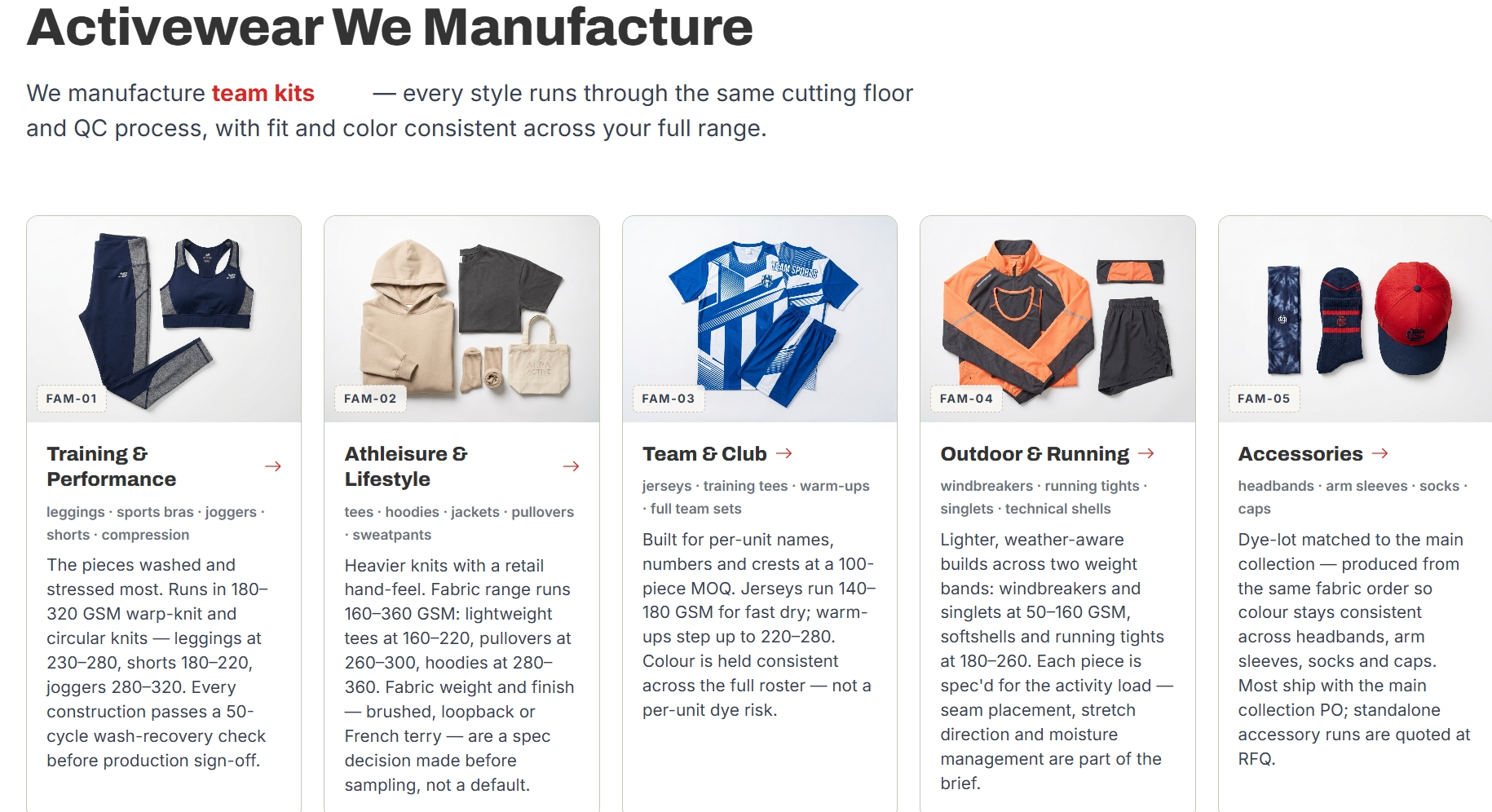
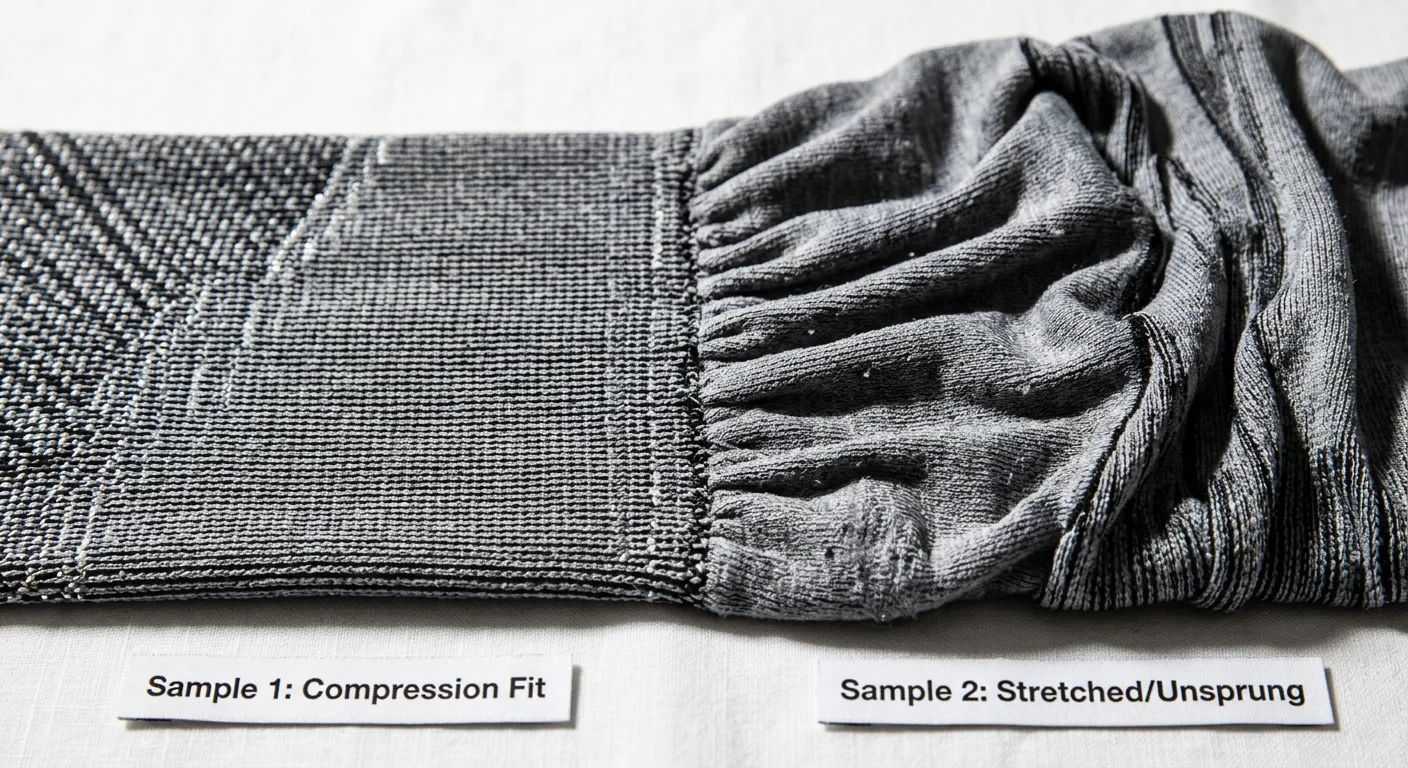
You've stood in a fitting room, zipped up something that looked perfect on the hanger, and immediately questioned every choice that led you to that moment. The lighting is not the problem. The pants are not "just weird with these shoes." Nobody ever taught you how to choose the right women's bottom wear for your actual body, in your actual life. The usual '10 flattering pants for every body' listicles recycle vague advice.Brands developing custom women's workout bottoms often start with these fit principles. This is a working system—body type meets occasion meets fabric logic.
Quick Self-Test: 3 Questions to Determine Your Body Type
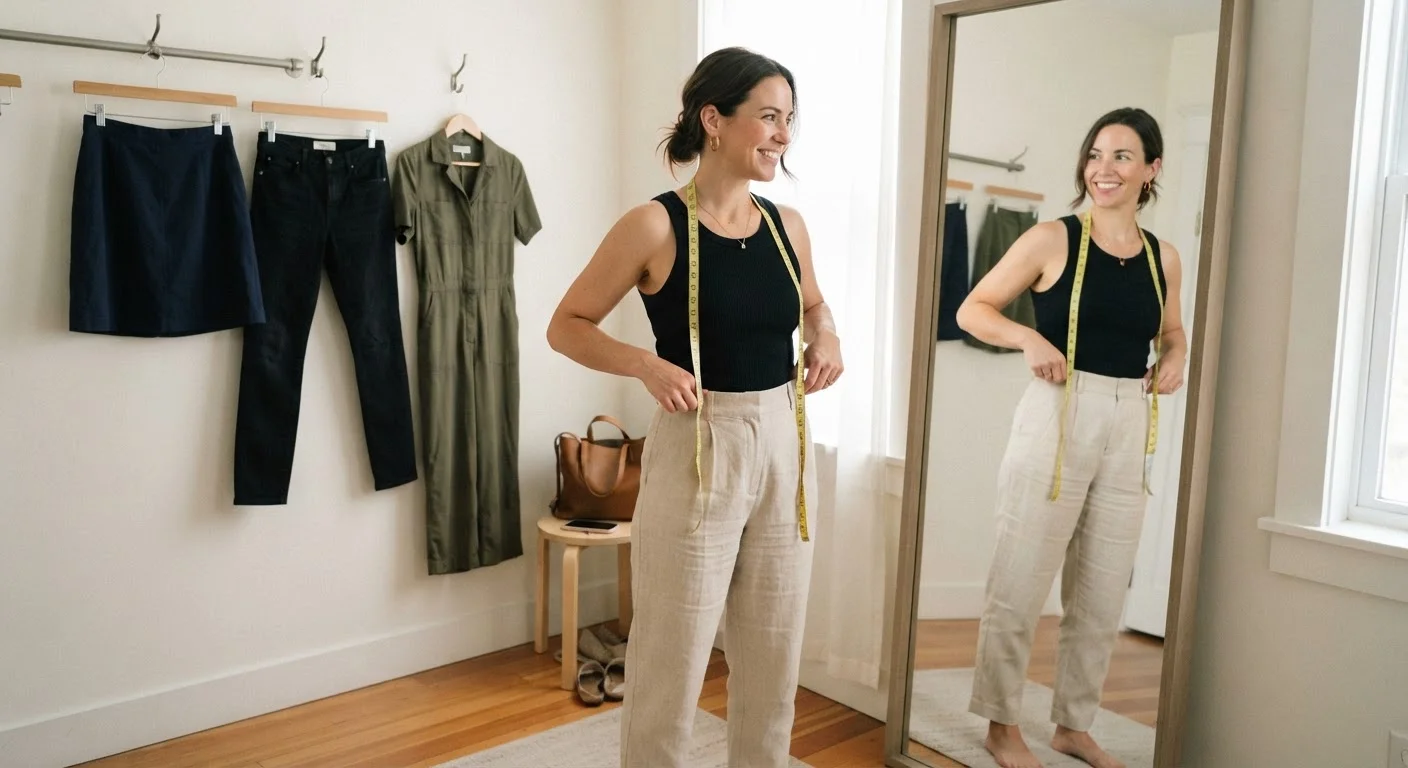
Forget the fitting room mirror for a second. Grab a tape measure, stand in front of any reflective surface—your phone screen counts—and answer these three questions honestly. This is the diagnostic step that everything else in this guide depends on, so don't skip it just because you think you already know.For brands, working with a reliable women's sports bottom wear supplier also requires accurate fit data and sizing insights before developing new collections.
Question 1: Compare your shoulder width to your hip width.
Shoulders roughly equal to hips → H-shape / rectangle
Shoulders narrower than hips → Pear shape (A-shape) — narrower upper body, more volume through the hips and thighs
Shoulders wider than hips → Apple shape (O-shape) — broader shoulders, more upper-body mass, fuller midsection
Question 2: Is your waistline clearly defined?
If yes—and a common benchmark is your waist measuring at least 20cm smaller than your hips—you're likely an hourglass shape (X-shape) . Hourglass proportions often fall around an 18–20cm difference between bust and waist, and a 23–25cm difference between hips and waist. If your waist-to-hip line stays flat with no dramatic dip, you're probably an apple or rectangle.
Question 3: Where does weight settle first on your body?
Hips and thighs → pear shape
Waist and midsection → apple shape
Evenly distributed → rectangle
Fullness at bust and hips with a defined waist → hourglass
The Cheat-Sheet Version
Shape | Key Markers |
|---|---|
Pear (A) | Narrow shoulders, wider hips, lower-body weight gain |
Apple (O) | Broader shoulders, fuller midsection, comparatively slimmer legs |
Hourglass (X) | Bust and hips similar, waist sharply defined |
Rectangle (H) | Shoulders, waist, and hips close in measurement, straighter lines overall |
Still unsure? Ask yourself these three questions out loud, like you're gossiping about yourself:
1. Are my shoulders or my hips wider?
2. Is my waist at least 20cm smaller than my hips?
3. Does weight go to my hips, my belly, or spread out evenly?
Whatever you land on—hold onto it. That answer is the whole premise for everything you buy next.
Figure Out Your Dressing Scenario: Work, Everyday, or Party?
At 11pm while online shopping, the body type quiz you just took means nothing without context. A pear shape in a boardroom needs entirely different bottom wear than a pear shape at brunch. Occasion is the second half of the equation.OEM women's activewear bottoms suppliers use this logic to build more wearable collections.
Office / Commute
Think structure, not suffering. High-waist straight-leg pants , tailored trousers , or a pencil skirt hitting somewhere near the knee are your baseline. Stick to dark or neutral tones —black, navy, grey, cream—with clean tailoring that isn't clingy. Does it dig into your stomach after sitting for two hours? Does it wrinkle the second you stand up? If you can walk to the printer without adjusting anything, you've found the one. Pair with a blazer, a button-down or a simple knit, and loafers or low heels.
Everyday Casual
This is where jeans , relaxed straight-leg pants , and wide-leg pants earn their keep—cotton or cotton-blend fabrics that move with you. The goal is fit that's comfortable but not shapeless, durable enough for repeat wear, and flexible enough to pair with a T-shirt, a knit, or a shirt without overthinking it.ODM women's fitness apparel programs usually refine fabric and fit around these daily needs. Dark denim and structured straight-leg styles are the most reliably versatile picks here.
Party / Fitted Layers
Under a bodycon dress or fitted pants, seamless bottom wear with laser-cut edges and a low-visibility design is non-negotiable. No visible panty line, no shifting when you sit down, no awkward outline through fabric. Look for smooth-edge, skin-tone or light-colored options that disappear under anything fitted.
Quick formula: Work → high-waist trousers or pencil skirt. Casual → jeans or wide-leg pants. Party → seamless, no-show styles.
Body Type × Occasion Cross-Reference: Best Bottom Wear for Pear, Apple, Rectangle, and Hourglass Shapes
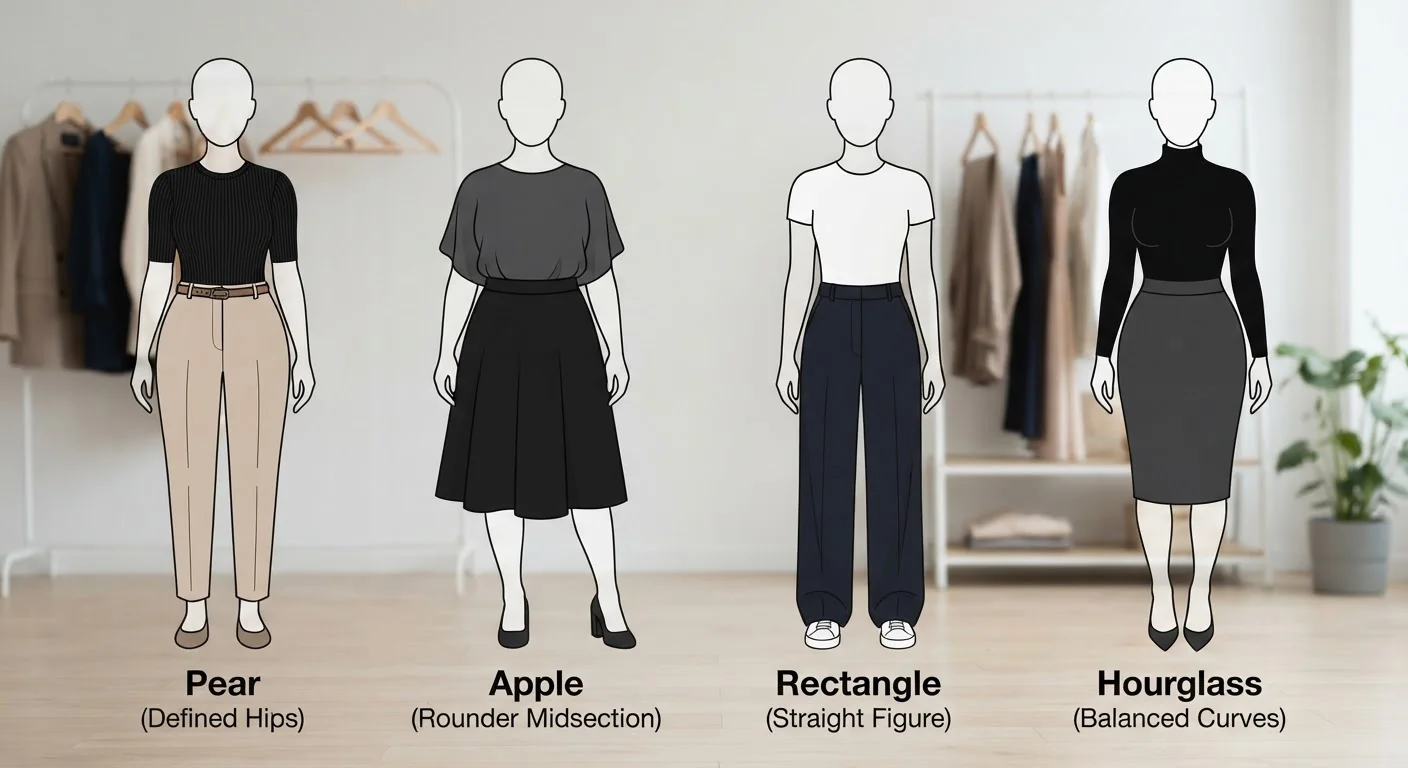
Know your body type—pear, apple, rectangle, or hourglass—and you stop wandering the racks like a lost tourist and start shopping like someone who's read the map. Below is what to grab for each shape, cross-referenced against the four occasions that matter. A pear shape at the office needs something different than a pear shape on a Tuesday coffee run.
Body Type | Office / Commute | Everyday Casual | Date / Going Out | Formal / Party |
|---|---|---|---|---|
Pear | Mid-to-high-waist straight-leg pants, tailored palazzo pants , A-line midi skirt; stiff fabric, dark tones, snug waistband | Flared jeans, A-line skirt, pleated skirt, straight-leg wide pants | High-waist A-line mini skirt, umbrella skirt, straight midi skirt (tuck a top to define the waist) | A-line gown, sleek straight maxi skirt, flowy palazzo pants set. Skip anything clingy at the hip or fishtail-shaped |
Apple | High-waist straight-leg pants, subtle flare pants, flowy wide-leg trousers | High-waist A-line skirt, umbrella skirt, straight skirt | Flowy midi skirt, side-slit straight skirt, high-waist wide-leg pants | High-waist maxi skirt, flowy wide-leg formal pants, A-line gown |
Rectangle | High-waist tailored straight-leg pants, subtle flare, pleated midi skirt | A-line skirt, paperbag-waist shorts, flared jeans | Fitted-not-tight high-waist midi skirt, side-slit straight skirt, flared pants | X-shaped gown (skip front fishtail), A-line gown with a defined waistline |
Hourglass | High-waist pencil skirt, fitted-not-tight straight skirt, tailored trousers | High-waist A-line skirt, pencil skirt, high-waist straight pants | Fitted midi skirt, high-waist slit skirt, flared pants | Fishtail skirt, fitted long gown, high-waist trouser set |
What Each Shape Should Chase
Pear shape : A-line, straight, flared, wide-leg, high waist, structured fabric. Skip skin-tight, fishtail-hemmed, low-rise, or anything that spotlights the hip and thigh. When picking bottom wear for a pear shape body, size up based on the hip, not the waist. A size that fits the waist often strangles the thigh, which is the single most common pear-shape fitting complaint. Let the top half do the talking and keep the bottom simple.
Apple shape : High waist over mid-rise. Drapey over tight. Straight-cut over anything that clings to the belly. Minimize the midsection, lengthen the leg line.
Rectangle shape : You need a waistline illusion. A-line, pleated, and slightly flared cuts manufacture that curve better than a strict straight-leg ever will.
Hourglass shape : Protect the waistline at all costs. Fitted-but-not-tight is the sweet spot. Anything too loose erases the exact proportion you're working with.
Fast-Pick Cheat List
Pear : A-line skirt / umbrella skirt / straight wide pants / flared pants / mid-high-waist palazzo pants
Apple : high-waist straight pants / flowy wide-leg pants / A-line skirt / umbrella skirt
Rectangle : A-line skirt / subtle flare pants / pleated skirt / paperbag-waist shorts
Hourglass : high-waist pencil skirt / fitted straight skirt / tailored trousers / fishtail skirt
For office, lean on palazzo pants, straight-leg trousers, and A-line midis. For casual, flared jeans, A-line and pleated skirts, wide-leg pants. For dates, high-waist A-line minis and slit skirts. For formal, A-line gowns, straight maxi skirts, and drapey wide-leg sets.
Wide-Leg Pants vs Straight-Leg Pants vs Leggings: Which Wins in Which Scenario
Three pant shapes walk into a closet, and only one of them gets invited to every event on your calendar.A women's activewear bottom wholesaler can use these categories to plan seasonal inventory. That's straight-leg pants. They're the most versatile of the three—comfortable enough for commuting, casual enough for weekends, structured enough to pass as business appropriate without trying too hard. Wide-leg pants are what you reach for when you want presence. Vacation, winter layering, anything that benefits from a little drama. Leggings are the specialist. Gym, base layer, or anywhere you actually want your leg shape on display.
The Occasion Breakdown
Occasion | Best Pick | Why |
|---|---|---|
Office / Commute | Straight-leg | Pairs with blazers, button-downs, knitwear. Slides between casual and formal without effort. |
Everyday / Errands | Straight-leg or wide-leg | Straight-leg means clean and comfortable. Wide-leg means relaxed, cover-everything ease. |
Formal / Semi-Formal | Straight-leg | Clean lines read as put together. Wide-leg works only if the cut isn't too billowy, or it tips into sloppy. |
Winter / Layering | Wide-leg | The generous leg opening swallows thick tights or thermal leggings underneath. Straight-leg can't compete here. Leggings are made for the underneath, not the outer layer. |
Notice leggings don't get a starring row for office or formal wear. That's on purpose. Public style data doesn't hand leggings a clear win in either category. They're built for comfort and mobility, not for reading as polished. Save them for workouts, or as the smart base layer under a skirt when it's freezing.
Matching Shape to Body Type
Straight-leg flatters pear, apple, and rectangle shapes almost universally. It hides without adding bulk, which is exactly why it shows up so often in conversations about bottom wear for pear shape or apple shape bodies.
Wide-leg pants do heavy lifting for pear shapes especially, disguising thigh and hip volume. But the wrong length turns a petite frame stumpy fast. High-waist, well-draped fabric is non-negotiable here.
Leggings put leg shape front and center. They suit anyone confident in that silhouette, or anyone using them purely as a layering move under a dress.
One-line verdict:
- Need one pant for almost everything → straight-leg.
- Need looseness, camouflage, or winter layering → wide-leg.
- Need leg definition, movement, or an under-layer → leggings.
Fitting Room Checkpoint System: Waist, Hip, Mobility, VPL, and Fabric
Forget "does it feel okay." Feelings lie. Numbers and movements don't. Here are five checks that separate a good fit from a fit that just looked convincing under fluorescent lighting.
1. Waist Check
Measure at your natural waistline—the narrowest point, roughly 3cm above your belly button. Keep the tape horizontal, not diagonal, not "close enough." A fitted waistband should sit snug without digging into flesh, and it should stay put when you sit: no flipping up, no sliding down, no rolling at the edge. For reference, Women's sports bras manufacturers measure waist as half the waist circumference laid flat, with a tolerance of about 0.5cm. That's how tight the margin for error is.
2. Hip Check
Wrap the tape around the fullest part of your hips, keeping it level all the way around. Standing up, there should be no horizontal pulling or puckering across the fabric. Sitting down, the back waistband shouldn't strain and the crotch shouldn't sag. Size to your hips, not your waist, especially in pants. Just like production tolerances, hip measurements are taken as half the hip circumference, with the same 0.5cm margin.
3. Mobility Test
Do three things before you buy anything: walk twenty normal steps, do a full squat, lift one leg to 90 degrees. Then ask yourself four questions: does it dig into the crotch, pinch at the hips, roll at the hem, or ride up? If the waistband and hemline stay roughly where they started, it passes.
4. VPL Test
Put on the fitted outer layer you plan to wear it under, then check yourself sideways, bent forward, and seated. Look at the back and hip area for a visible panty line. If it's there, don't fight it. Switch to seamless or laser-cut-edge underwear instead.
5. Fabric Test
Pinch a corner and let it fall. Good drape flatters the body better than fabric that stiffens or bunches. Stretch it, release it, and watch whether it snaps back fast or stays loose and warped. Stretch fabrics also fit differently, so don't assume your usual size. Finally, breathe onto the fabric. If the warmth disperses quickly instead of trapping, it'll hold up better over a long day, though the real answer always comes down to fiber content and weave.
Quick order to run through: waist fit, hip pull, walk/squat/lift, VPL, fabric feel. Five checks, two minutes, zero regret purchases.
Conclusion
Once you know your body type and bottom wear rules—pear, apple, hourglass, whatever shape you've decided to stop apologizing for—the guessing game is over. You don't need a stylist whispering sweet nothings about "flattering silhouettes." You need the waistband test, the squat test, the VPL check, and a tape measure you're not afraid to use.
Before your next shopping trip (online or off), run through the self-assessment, pick your scenario—desk job, brunch, whatever—and match it to the chart. Try the palazzo. Skip the skinny jean if it's lying to you. Trust the fabric drape test over the sales associate's enthusiasm.
Your closet doesn't need more pants. It needs the right ones. Brands comparing custom wholesale price women's sportswear bottoms can prioritize fit before volume.Now go find them confidently, and without a single regretful return label in sight.