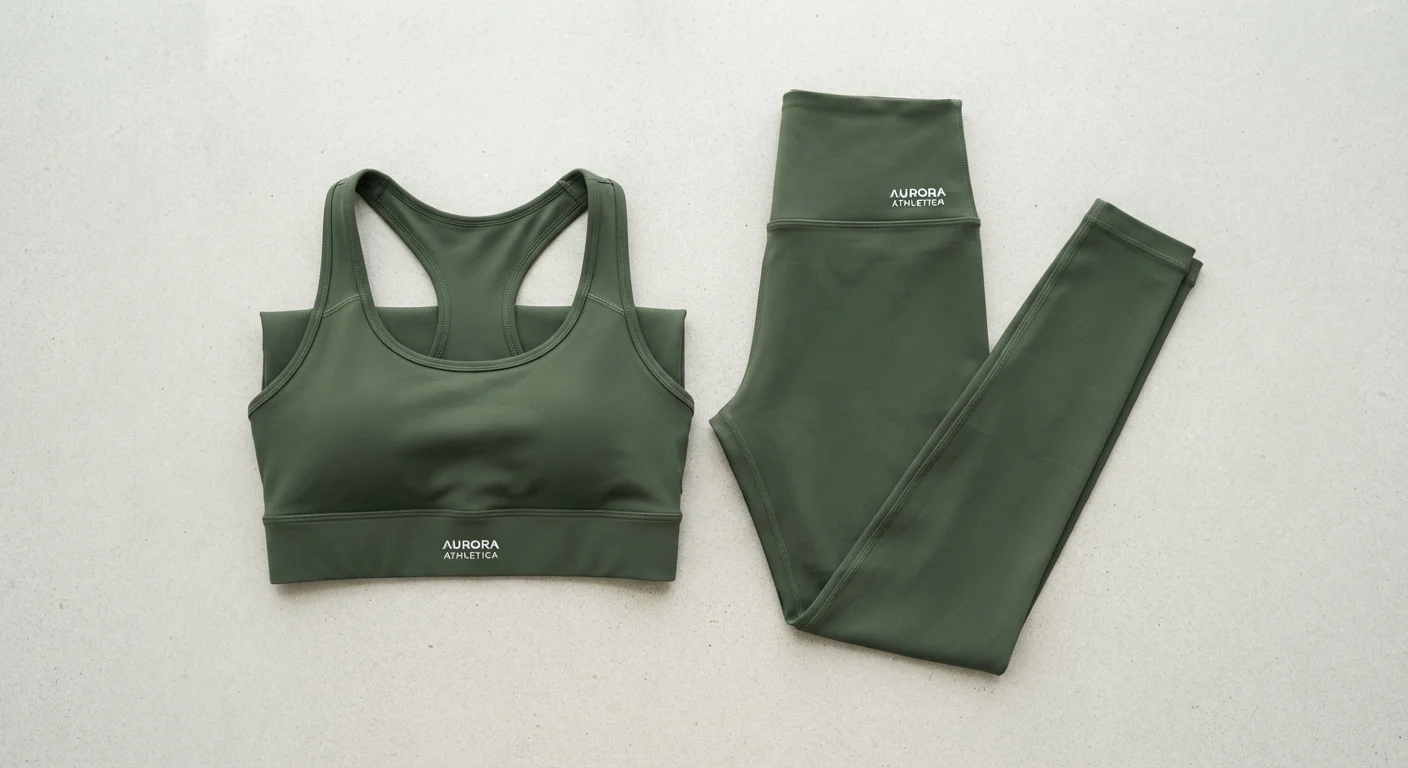
You know that moment when you’re mid-squat and your leggings start a slow-motion slide down, or the “breathable” tank is already a soggy second skin by rep three of HIIT? Yeah, I’ve been there too many times. It usually ends with me googling moisture-wicking leggings at 11pm instead of sleeping.
This isn’t another list of ten activewear brands you’ll forget tomorrow. It’s gear I’ve actually sweated through, squatted in, downward-dogged in, and run 10Ks in — broken down by training day, with the fabric fails and support wins most people don’t mention. By the end, you’ll have a three-step method to match your outfit to your workout. You’ll spend five minutes deciding, not forty.Fitness retailers and women's activewear wholesalers use similar performance checks when selecting reliable collections.
Strength Training Day: Stiff Fabrics That Won't Shift Under the Barbell
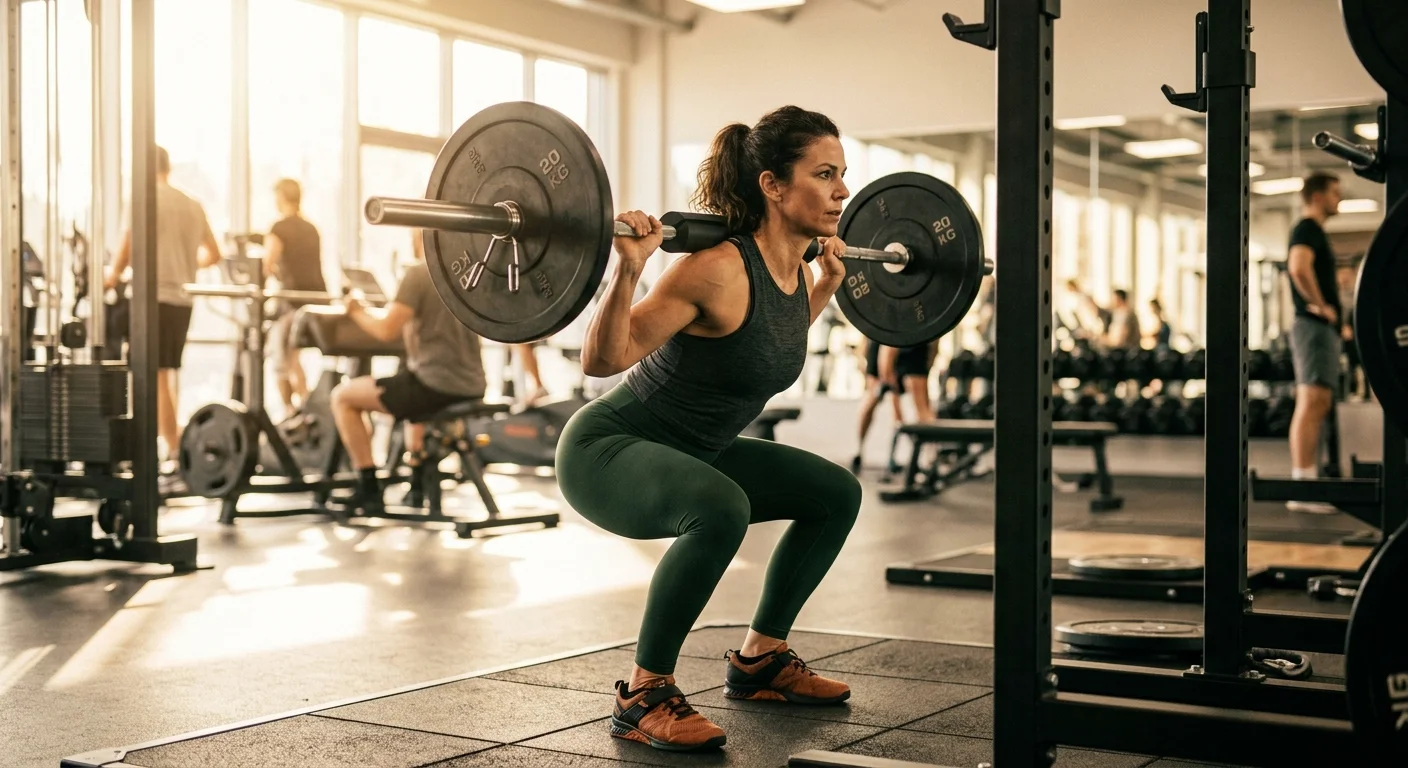
Your leggings betraying you mid-squat isn't bad luck. It's bad fabric math. Lifters want their gear to "disappear when you lift" — zero sliding, zero bunching, and no unexpected transparency when you hit depth on a heavy set.
What holds up under a barbell:
Structured woven nylon/poly blends hold their shape instead of drooping like your regular leggings do after wash three.
Compression-grade blends stay stable through hip hinges, deep squats, and overhead presses without twisting around your legs.Many brands develop women's fitness wear through OEM and ODM programs to achieve specific compression and fit requirements.
Dense merino or blended knits manage sweat well, but only if the knit is thick enough. Thin ones fail the test below.
The two-second test I wish someone taught me earlier:
Stretch the fabric under bright light before buying. If you can see your hand through it, it will go sheer in a deep squat. This is why I own three pairs of "squat proof leggings" that are anything but — cheap, stretchy synthetics marketed for cardio, not strength work. I learned that the embarrassing way, in a mirror-lined room, mid-set.
What to skip on heavy days:
Thin, sheer leggings sold on "moisture-wicking" claims — they lack the structure your body needs under load.
Loose, drapey tops. They snag on the bar, shift constantly, and distract you exactly when you need focus.
Anything chosen only because it's breathable. Breathable and barbell-safe aren't the same category.
Compression workout wear that earned its price tag:
Rehband's weightlifting line nails the durability-mobility-comfort balance that strength training demands. It's not cheap, but it survives knurling contact and repeated loading in ways budget synthetics can't.
Small accessories, big difference:
If you're going heavy, pair your apparel with an X-RX Lifting Belt ($49.99) and X-RX Lifting Straps ($19.99) . Neither is "activewear" in the usual sense, but both support the abrasion-resistant, form-holding setup your fabric is already working toward.
For gym wear across body types, the rule stays consistent: prioritize opacity and structure first, breathability second. Strength day isn't the place for delicate fabric — it's the place for gear that stays put no matter how deep you drop.
Training in Confidence with berunactivewear.com
Confidence in the gym isn't about owning the flashiest set. It's built the same way strength is — in small, repeatable reps.
Berunactivewear.com comes at this from the manufacturing side, not the motivational-poster side. They make custom training activewear—leggings, bras, and joggers—at scale, with a Repeat-SKU Program and Lot-to-Lot Records system. So the compression-grade blend in your favorite leggings this season should match the fabric feel next season too. No surprise thinning, no sudden shift in stretch recovery. That consistency matters more than people realize. Nothing kills confidence mid-set faster than gear that fits differently than it did last month.
Building confidence the way you build strength:
Sports psychology backs this up. Confidence is trainable, the same way your squat depth is trainable.
Preparation beats motivation. Set one proactive goal before each session—add 5lbs, hold plank 10 seconds longer. Trust builds from evidence, not hype.
Track small wins. A simple log, even three lines a day, shows progress your memory alone won't catch.
Mental imagery works. Visualize the lift or the run before you start it. Athletes use this because it genuinely reduces hesitation.
Borrow confidence when yours runs low. A coach, training partner, or even a supportive gym group can carry you through the days motivation doesn't show up.
None of this replaces good gear. But gear that performs consistently—the kind Women's fitness wear manufacturers like berunactivewear.com deliver at Women's fitness wear wholesale scale—removes one variable from the equation. You stop wondering if your leggings will hold up. You focus on whether you will.
Reliable fabric, a repeatable routine, and small wins logged often enough to notice the pattern. That stack builds confidence.
Cardio and HIIT Day: Moisture-Wicking Layers That Keep Up
Sweat doesn't wait for your fifth burpee. It shows up by the second round, and cheap fabric shows up right alongside it — clinging, sagging, turning your tank into a wet paper towel. Cardio and HIIT don't need heavy structure like strength day does. They need breathable gym clothes that move sweat off your skin before it pools.
The fabric math for high-output days:
Polyester-elastane blends are the default for good reason. Look for 3–15% spandex — enough stretch to recover shape between sets without going baggy by round three.
Lightweight knits, 120–180 gsm , work best for tops. Anything heavier traps heat during interval work.
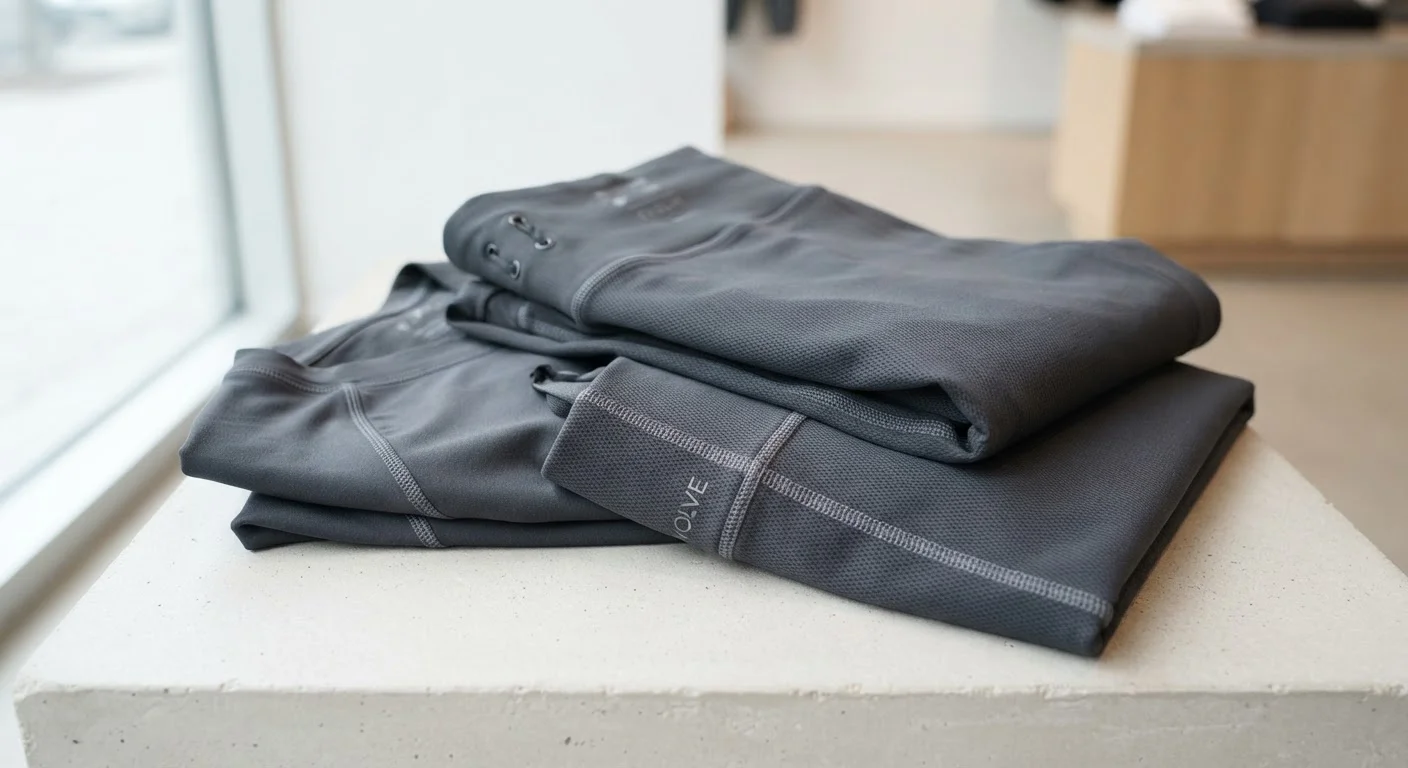
180–240 gsm is the sweet spot for compression leggings and shorts — thick enough for support, thin enough to breathe.
What keeps you dry, not just claims:
Ask for wicking finish , quick-dry treatment , and 4-way stretch before you buy. These aren't marketing fluff, they're testable specs. Flatlock seams matter too. I learned this after a "seamless leggings for women" pair rubbed my inner thigh raw by minute twenty of a HIIT circuit. Flat seams stop that friction fast.
Garment picks by sweat zone:
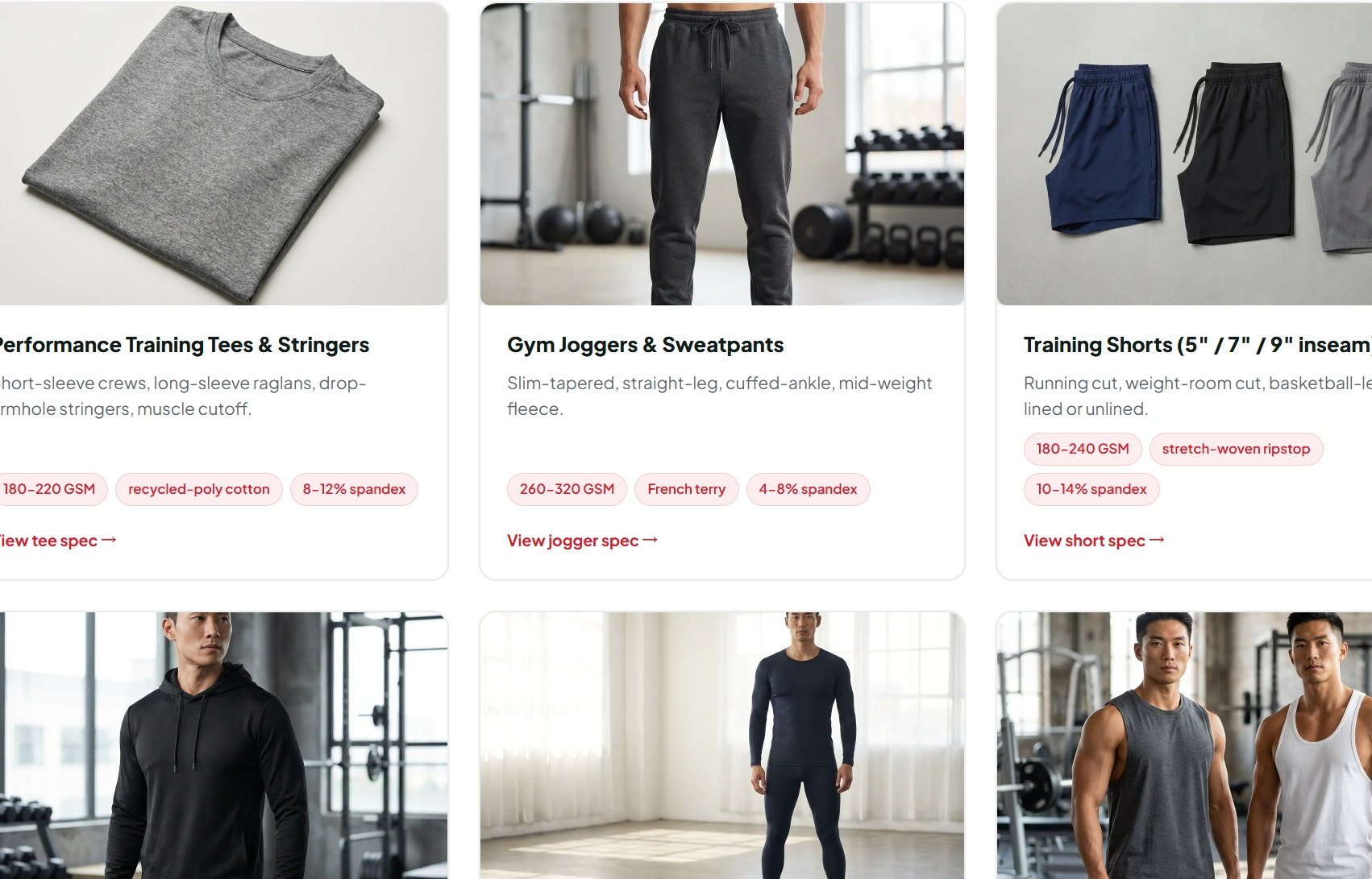
Short-sleeve training tee — lightweight polyester/elastane, breathes through box jumps and burpees.
Mesh-backed tank — open-knit panels across the back for max airflow when you're gasping between rounds.
Compression short — higher elastane percentage, stays put through mountain climbers without the crawl-up you get from cheaper blends.
The pilling problem nobody warns you about:
High-friction HIIT movements chew through weak knits fast. I've had leggings pill at the inner thigh after ten wears — not from washing, from the actual workout. If you're buying activewear meant to last, ask about pilling resistance and wash durability at 20–50 cycles before committing.
Construction details worth the extra few dollars:
Underarm gussets, laser-cut ventilation holes, bonded hems to cut chafing. Small features, but they're the difference between gear that survives interval training and gear that quits by week three.
Yoga and Pilates Day: Unrestricted Stretch Without the See-Through
Forward folds don't forgive. Neither does a reformer machine under studio lights. This is the day thin fabric gets exposed, and where the yoga pants vs leggings debate matters for your movement, not just your Instagram grid.
The opacity test that saved me from a very public moment:
Do a squat or forward-fold test before you buy, not after. Stretch the fabric under bright light. If you can see through it, skip it. I learned this mid-class, not mid-shopping, which is the wrong order.
What works on the mat or reformer:
High-waisted leggings, 4-inch+ non-roll waistband — stays put through core twists and leg lifts without digging in or rolling down.
Four-way stretch fabric , ideally an 80% polyester or nylon / 20% spandex blend. That ratio gives you stretch and snap-back recovery for deep mobility work.
7/8 length (around 25″) for reformer Pilates — no fabric catching on the carriage.
Full length (around 28″) for mat work, where you need coverage through inversions.
The CRZ YOGA Butterluxe 28″ at $35 is the closest I've found to the unrestricted-stretch uniform Pilates instructors keep recommending. Soft, opaque, thick enough to trust in a deep fold.
Top and bra: low-impact, not low-effort:
A fitted, narrow top matters more than people think. Loose fabric falls over your face during inversions. Pair it with a wire-free, low-impact sports bra or a light strappy style. Look for torso freedom over lockdown compression.
Small gear, real difference:
Grip socks aren't optional on reformer equipment. Regular socks slide on studio floors and mess with your footing.
What to skip:
Loose tops that bunch during forward bends.
Bulky seams, zippers, or buttons digging into you during mat work.
Heavy, heat-trapping fabric — your studio's already warm enough.
Low-rise bottoms that sag or thin out under stretch.
If your studio runs warm, biker shorts with a 3–4 inch inseam solve the ride-up problem better than full leggings. For cooldowns, a light fleece beats a bulky jacket every time. Prioritize opacity and stretch recovery first, warmth second.
Outdoor Running Day: Reflective, Lightweight, and Chafe-Free Picks
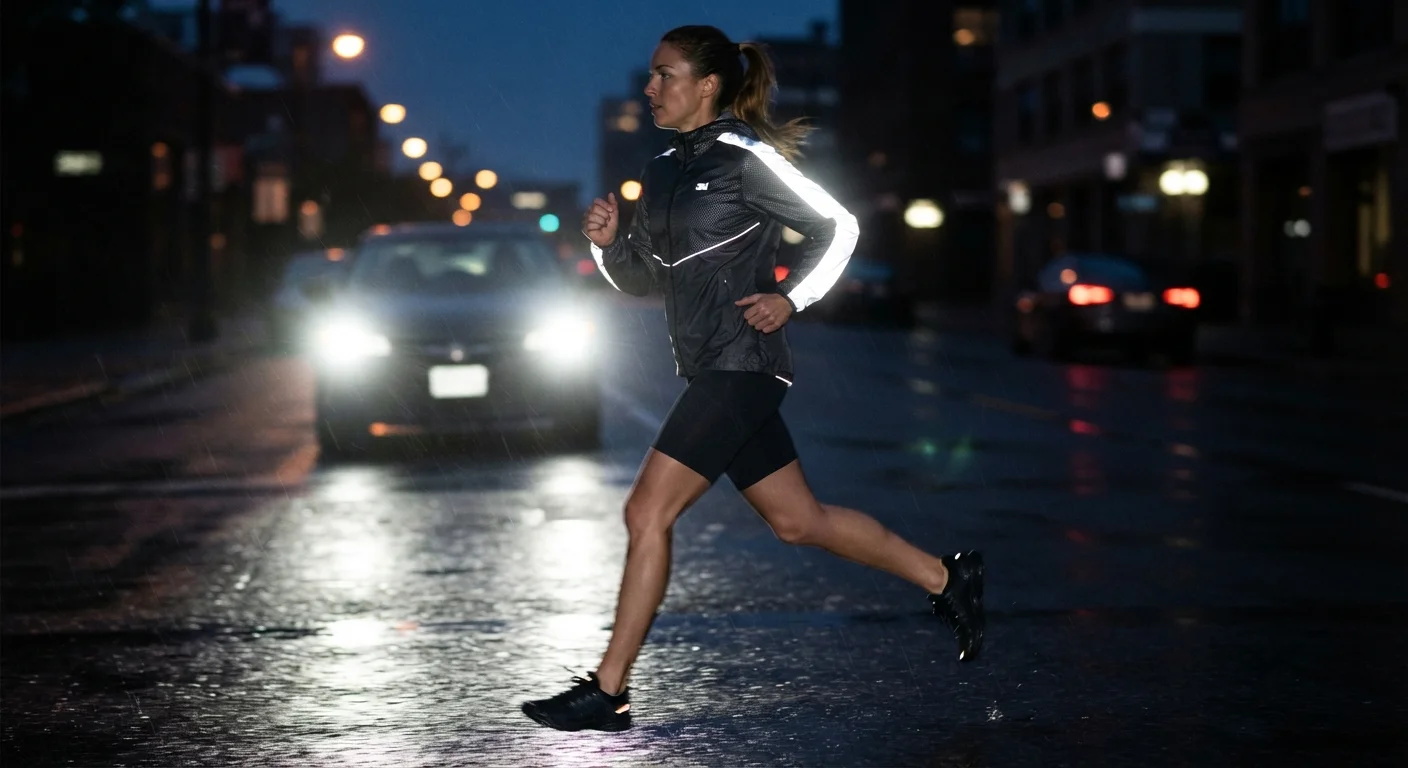
Six hundred feet. That's how far a driver can spot certain 3M Scotchlite Carbon Black Stretch reflective panels on running gear, according to the manufacturer's own testing. I didn't know that number existed until a 5:30am run where a car braked way earlier than I expected. Turns out my jacket was doing more work than I gave it credit for.
Visibility gear that earns its price:
Amphipod Xinglet Reflective Vest is the easiest layer to throw over anything, dark or light.
Proviz REFLECT360 Running Cap uses breathable mesh that is 100% reflective, grey by day and fully reflective by night.
Use the PETZL Tikka headlamp up front and the Nathan HyperBrite Mini Light on the rear, covering visibility without extra bulk.
Glimmer Gear LED slap band is visible up to 500 meters, and the Halo V Illuminator headband is both reflective and moisture-wicking.
Fabric that won't chafe by mile three:
Skip cotton entirely. It holds sweat instead of moving it, and wet cotton against skin is chafe waiting to happen. Quick-dry polyester or nylon with mesh panels breathes better and dries faster. Before buying tops, check for silky-soft feel, lightweight, breathable, sweat-wicking, fast-drying, and flat or seamless construction. For shorts, a longer inseam or split-leg cut cuts down skin-to-skin rubbing. It also helps to travel light — a bulky phone jammed in a pocket adds friction you don't need.
Backup tricks for hot spots:
Apply anti-chafe balm on underarms and inner thighs, and use 3M Nexcare tape for chest chafe if that's your problem area. Add a brimmed hat and sunglasses for sun days. Lighter shirts sit around UPF 15, darker ones closer to UPF 20, so sunscreen underneath isn't overkill.
Quick match: For a morning run, choose reflective vest, headlamp, and quick-dry shirt. For a hot afternoon run, go with mesh panels, balm, and a brimmed hat. For high-chafe risk, pick a seamless top, no cotton, and longer shorts.
Your 3-Step Decision Framework for a Five-Minute Outfit Choice
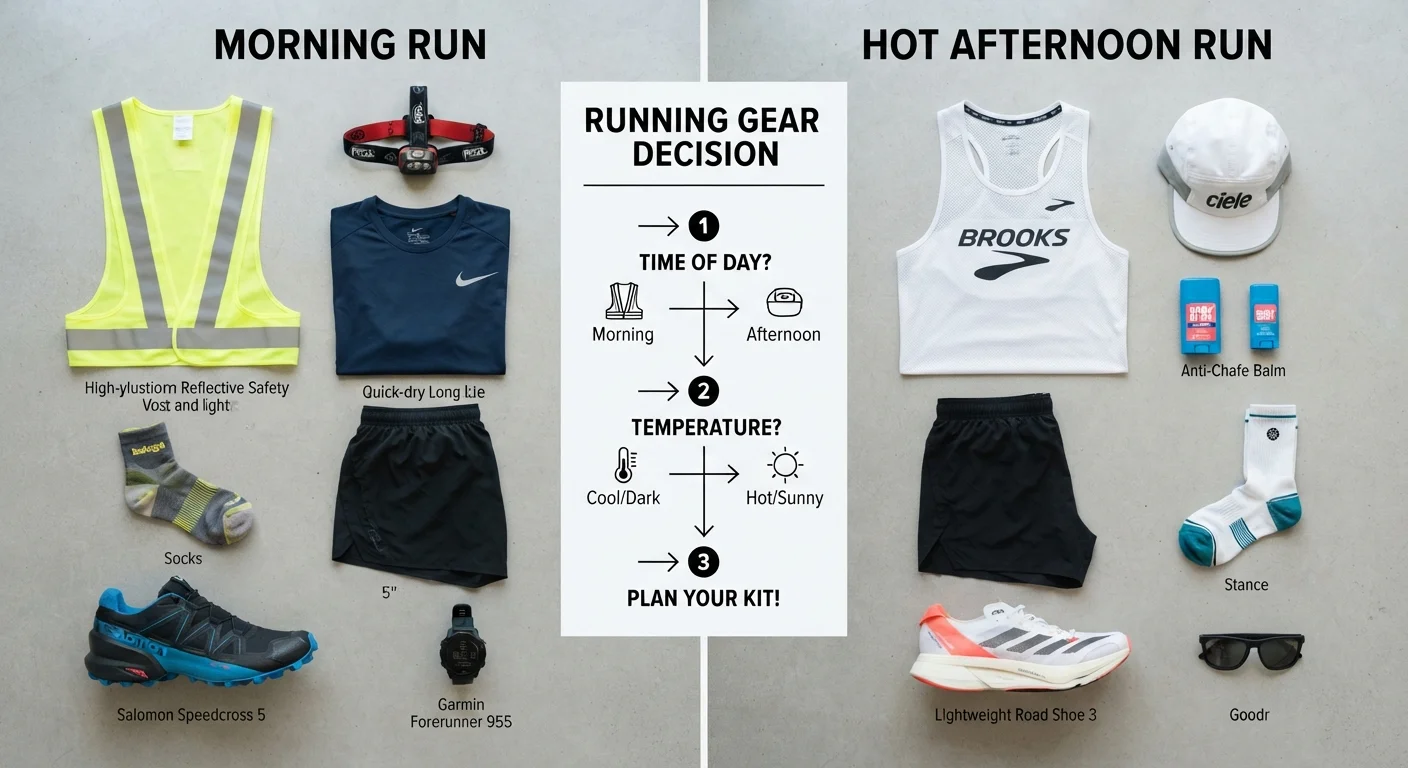
Forty minutes of tab-switching between five different activewear sites. That's the average, according to the shopping data nobody asked for but everyone recognizes. You don't need that. You need three questions, answered in order, and you're done.
Step 1: What's the training type?
Strength, cardio, yoga, or a run — pick one. This single answer eliminates 80% of your closet. A structured legging that's perfect for squats is dead weight on a hot yoga mat.
Step 2: What's the fabric support need?
Match the session intensity to the compression level. Heavy lifting wants opacity and structure. HIIT wants a wicking finish and 4-way stretch. Yoga wants stretch recovery over lockdown compression. This is where sports bra support levels matter most — high-impact for running, low-impact for reformer work.
Step 3: What fits your body type?
Sizing isn't universal across brands, and it shouldn't be treated that way. Check the waistband height, inseam length, and rise against your own proportions, not the model's.
Run through these three, in this order, and you'll land on a decision before your coffee cools.
Conclusion
Your workout wardrobe doesn't need to be bigger, it needs to be smarter. Match fabric to function — stiff compression for barbell days, moisture-wicking leggings for cardio, unrestricted stretch for yoga — and the guessing game disappears, along with that drawer of "almost right" pieces.Brands can compare custom wholesale price women's fitness wear when building training-focused collections with different fabric needs.
That's the point of the three-step framework: training type, fabric support, body-fit sizing. Run through it once, and you'll never spend forty minutes cross-tabbing product pages again.
Next time you're staring at your closet before a squat session or a sunrise run, check your schedule, match it to the scenarios above, and trust the fit. Your body will move better, your confidence will show it, and you'll wonder why you didn't build this system sooner.