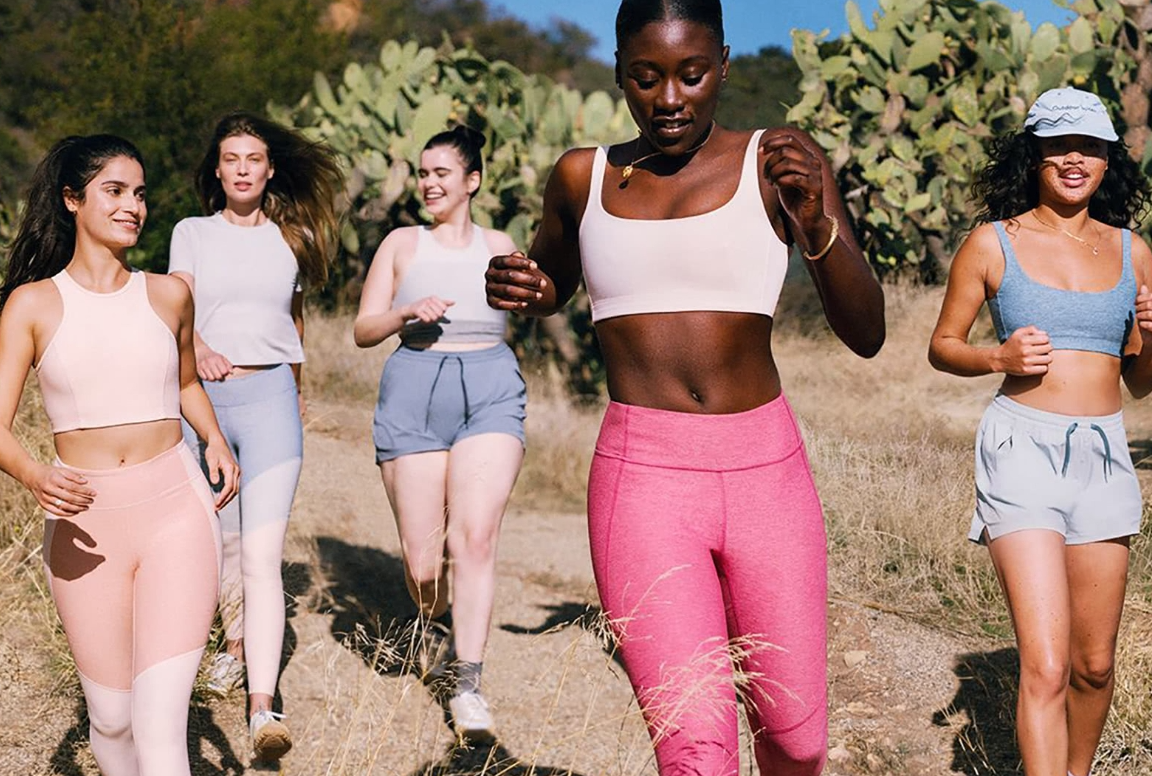
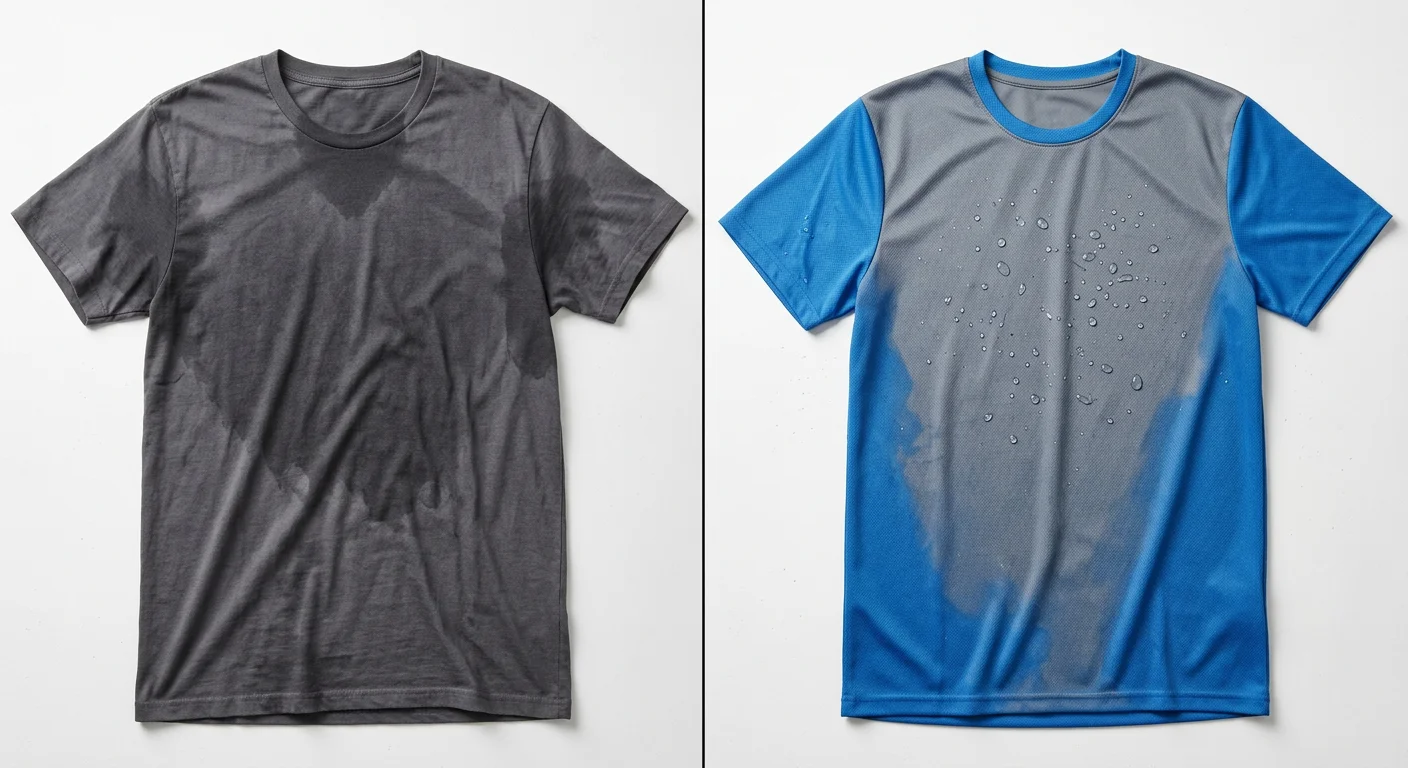
Not all activewear fabrics perform the same. Run in a soaked cotton tee or peel off leggings that lost their shape after three washes — you know the difference.
Fabric choice drives everything. It shapes how you move, how fast you cool down, and how long your gear holds up.
Looking for the best sweat-wicking material for gym wear ? Comparing a nylon-spandex blend for your next pair of leggings ? Or just trying to decode those fabric labels? This guide covers it all.If you're sourcing from an activewear manufacturer, understanding fabric differences helps you specify better-performing products.
Ten fabrics, compared straight — so you can stop guessing and pick with real confidence.
Quick Comparison: 10 Best Activewear Fabrics at a Glance
Here's the truth about fabric labels: the details matter. Each of these ten materials has its own strengths. Some will work for your workout. Others will work against it.
The table below rates each fabric across six key areas. Scores run from 1–5, based on breathability data, stretch percentages, abrasion testing, and sustainability indices.Many activewear wholesalers compare fabrics this way before deciding which products to stock.
Fabric | Breathability | Moisture‑Wicking | Stretch | Softness | Durability | Sustainability |
|---|---|---|---|---|---|---|
Polyester | 3/5 | ⭐ 5/5 | 3/5 | 3/5 | 5/5 | 2/5 |
Nylon | 3/5 | 4/5 | 4/5 | 4/5 | 5/5 | 2/5 |
Spandex | 2/5 | 2/5 | ⭐ 5/5 | 3/5 | 4/5 | 1/5 |
Polyester‑Spandex | 4/5 | ⭐ 5/5 | ⭐ 5/5 | 4/5 | 5/5 | 2/5 |
Nylon‑Spandex | 4/5 | 4/5 | ⭐ 5/5 | ⭐ 5/5 | 5/5 | 2/5 |
Cotton | ⭐ 5/5 | 2/5 | 2/5 | ⭐ 5/5 | 3/5 | 3/5 |
Merino Wool | 4/5 | ⭐ 5/5 | 3/5 | 4/5 | 4/5 | 3/5 |
Bamboo Viscose | 4/5 | ⭐ 5/5 | 3/5 | ⭐ 5/5 | 3/5 | 3/5 |
Linen | ⭐ 5/5 | 3/5 | 1/5 | 3/5 | 5/5 | ⭐ 4/5 |
Recycled Polyester | 3/5 | ⭐ 5/5 | 3/5 | 3/5 | 5/5 | ⭐ 4/5 |
Your At-a-Glance Picks
The pattern is clear:
HIIT & gym training → Polyester‑Spandex (190–220 GSM). It tops the scores for wicking, stretch, and durability — all three at once.
Yoga & Pilates → Nylon‑Spandex (200–230 GSM). That 5/5 softness rating isn't a small detail — it's the whole point.
Running outdoors → Lightweight polyester‑spandex (160–200 GSM) with mesh panels. You get strong airflow without extra weight.
Hot yoga or heated studios → Bamboo. It absorbs up to 3× its weight in moisture — about 40% more than organic cotton.
Eco-conscious shopping → Recycled polyester delivers the same performance as virgin polyester. The environmental footprint is much lower.
Multi-day outdoor adventures → Merino wool. It holds up to 30% of its weight in moisture before you feel any dampness.
The sections ahead break down why each fabric earns its score.
Polyester — The Everyday Workhorse of Activewear Fabrics
Performance tops, training tees, and team jerseys almost all start with polyester. The numbers tell you why.Polyester also offers one of the most competitive activewear wholesale price points for large-volume sportswear production.
Cotton takes 45+ minutes to dry. Basic polyester dries in 25 minutes. Advanced moisture-wicking polyester? As fast as 8–10 minutes. That's not a minor gap. Finish a run in cotton and you feel like you're carrying a wet towel. Finish it in polyester and you still feel fresh.
The reason comes down to molecular structure. Polyester has a moisture regain of 0.4% — so it absorbs almost no water. Sweat doesn't soak in. It moves outward to the fabric surface and evaporates fast. Cotton works the opposite way. It can hold up to 27× its own weight in water. That heavy, clingy feeling mid-workout? That's chemistry at work.
Where polyester performs best:
- Running shirts and performance tops ( 100–140 GSM for lightweight, breathable coverage)
- Training tees and team jerseys ( 140–180 GSM for structure and opacity)
Two things worth knowing before you buy:
Polyester traps odor over time. Skin oils and sweat stay on the fabric surface instead of absorbing in. That sounds fine at first. But repeated washes build up residue. Cold wash only, skip the fabric softener — it clogs the wicking channels. Also, keep tumble dry heat below 60°C. High heat breaks down elastane blends and can cut shape retention by about 15% over time.
It also doesn't feel as silky as nylon. Polyester is the cost-efficient performance base — reliable, durable, and easy to scale. But nylon edges it out on softness for all-day or extended wear.
For most gym sessions, runs, and training days, polyester does the job well. You get lightweight, quick-dry, sweat-wicking material that holds up wash after wash.
Nylon — The Premium-Feel Choice for High-Performance Activewear
Premium yoga brands charge $120 for a pair of leggings. That Premium yoga legging price almost always comes down to one thing: nylon.
That signature "buttery-soft" feel isn't marketing language. It's material science. Nylon beats polyester on handfeel, stretch recovery, and long-term durability. That's why it anchors high-end compression tights and yoga pants . Polyester handles the printed, mass-market side of the aisle.
What makes nylon worth the premium:
Stretch that bounces back — Nylon fibers stretch 25–50% before breaking. They recover over 90% of their original length. Deep squats, inversions, sprint intervals — the shape comes back every time.
Durability that outlasts the competition — Nylon wear resistance runs 10× higher than cotton. It holds up through 50,000+ Martindale abrasion cycles. You can expect 3–5 years of heavy use.
Lower odor retention — Nylon doesn't trap odor compounds the way polyester does. That's a real advantage for close-fitting gear you wear session after session.
The tradeoff? Nylon absorbs a bit more moisture (~3.5% of its weight) and dries a touch slower than polyester.
Best construction for performance: 70–80% nylon / 20–30% spandex, at 230–280 GSM. That's the sweet spot for opacity, recovery, and a true second-skin fit.
Nylon costs 15–30% more than equivalent polyester. For leggings that move with you rather than against you, that difference is easy to justify.
Spandex / Elastane / Lycra — The Stretch Backbone of Athletic Wear
Same fiber. Three names. Zero performance difference.
Spandex is the American term. Elastane is what Europe, Canada, and Asia call it. Lycra® is the registered brand name — developed by DuPont, now owned by The LYCRA Company. All three are the same material at the molecular level: segmented polyurethane, with at least 85% polyurethane content by weight. Think of it this way — all Lycra® is spandex, but not all spandex is Lycra®.
Here's what makes it stand out: a single spandex fiber stretches 500–700% of its original length, then snaps back with no lasting distortion. That's 1 cm pulling out to around 8 cm — and returning to its original shape, every time.
But no one wears pure spandex. On its own, it's dense, stiff, and clingy. It barely breathes. It works as a blended ingredient,not a standalone fabric.Many brands rely on OEM/ODM activewear services to develop proprietary fabric blends with different spandex ratios.
The blend percentage determines everything:
5–10% spandex → moderate stretch for training tees and basic yoga pants
10–20% spandex → high-recovery compression for leggings and running tights
20–30%+ → competition-level fit for swimwear and gymnastics
That 10–20% range is where 4-way stretch fabric happens. Pair it with nylon or polyester in a knit construction, and you get 30–60% stretch in both directions at once. Deep squats, inversions, lateral lunges — the fabric moves with every axis of your body. No pulling at the seams.
For real compression fabric for leggings , check these specs: nylon/polyester ≥80% + spandex 15–20% , knit structure, and a stretch recovery rate with ≤5% residual deformation.
Polyester-Spandex Blend — The Best All-Around Activewear Fabric
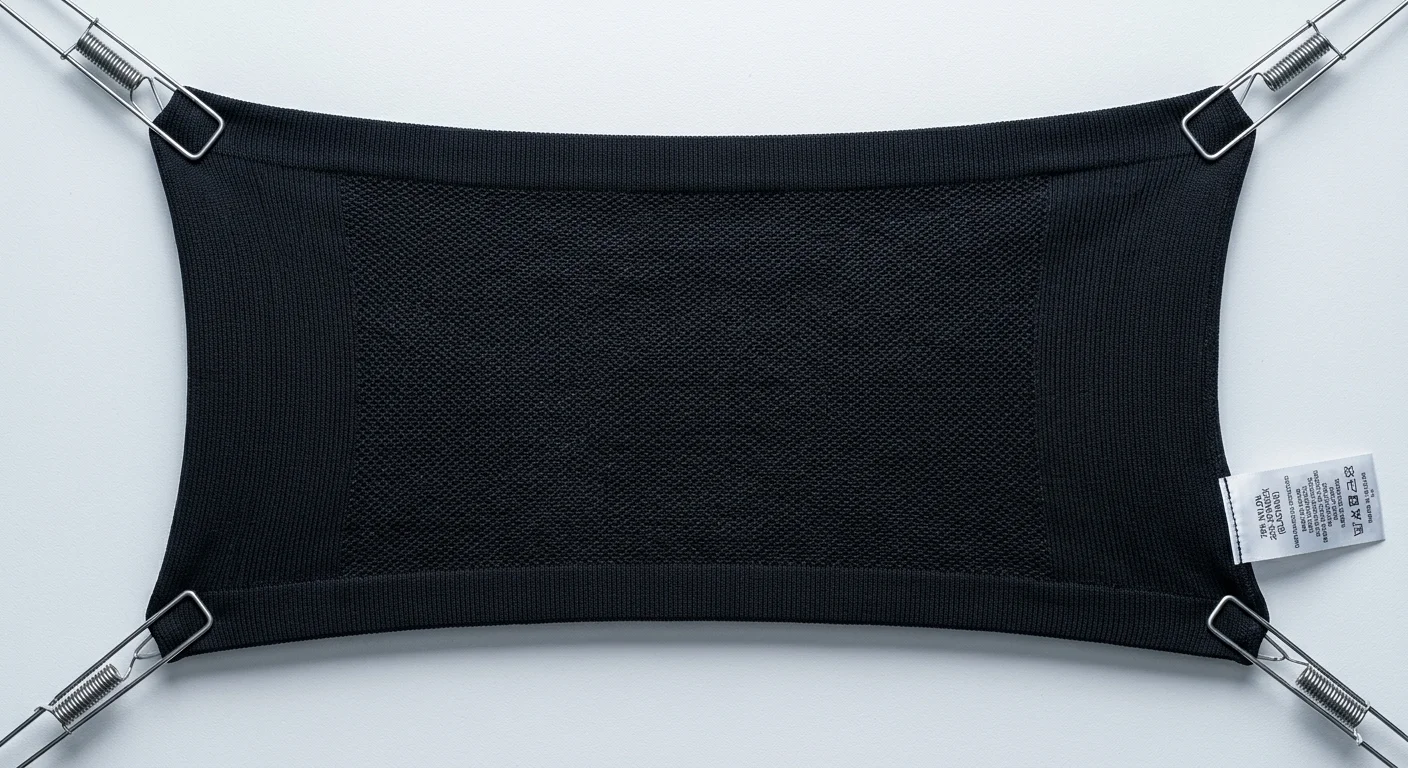
Polyester-spandex dominates the activewear market for one simple reason: it does everything well, all at once.
The core formula is straightforward — 80–90% polyester / 10–20% spandex . That range covers most leggings, training tops, and sports bras you'll find today. For custom activewear collections, adjusting this blend ratio is one of the easiest ways to target different performance levels.The ratio you pick within that range makes a real difference.
80/20 vs. 88/12 — Which Blend Is Right for You?
These two formulas feel different on the body. You'll notice it right away.
80/20 gives you higher compression and a tighter, sculpted fit. Stretch recovery exceeds 95% after movement. The fabric holds a breaking load of over 200N . Heavy lifting or HIIT training? That extra spandex delivers real muscle support.
88/12 is what the industry calls the "golden ratio." It holds its original shape and elasticity through 50 machine washes . Compression is moderate — enough to support without restricting. Long runs, all-day gym sessions, or anyone who finds 80/20 too tight — this blend is the sweet spot.
The performance scale runs like this: 80/20 → 85/15 → 88/12 → 90/10 . Compression and stretch intensity step down as spandex content drops.
A professional custom activewear factory can recommend the right blend based on your intended sport and target market.
Why It Wicks Better Than Almost Everything Else
Polyester earns the nickname "king of moisture-wicking" through one structural advantage: the fiber is hydrophobic. Sweat doesn't absorb into it. Instead, moisture moves straight to the fabric surface and evaporates.
The numbers back this up. In AATCC 195 standardized testing, a CoolDry™ polyester-spandex knit hit a surface drying time of under 6.5 seconds . Nylon-spandex clocked in at 18 seconds . The same polyester-spandex fabric also posted the lowest water vapor resistance (Ret) across all activewear fabrics tested. Lower Ret means heat and moisture escape faster — so you stay cooler, longer.
The Right Formula for Every Workout
Activity | Recommended Blend | Weight |
|---|---|---|
Running | 85–90% polyester / 10–15% spandex | 220–260 GSM |
HIIT / High-intensity | 80–85% polyester / 15–20% spandex | 200–260 GSM |
Gym training tops | 88/12 or 90/10 | 160–200 GSM |
Leggings (all-purpose) | 88/12 or 85/15 | 220–260 GSM |
High-support sports bras | 85–90% polyester / 10–15% spandex | 200–250 GSM |
For training tops, target a surface drying time under 7 seconds and the lowest Ret value you can verify. Those two numbers tell you more about real breathability than any marketing claim ever will.
A note from real-world feedback: people who find 80/20 leggings too tight for everyday wear tend to land on 88/12 or 85/15 as their go-to breathable workout fabric . You get enough stretch to move without restriction, plus enough recovery to keep everything in place.
Nylon-Spandex Blend — Smooth, Luxurious Stretch for Studio & Yoga Wear
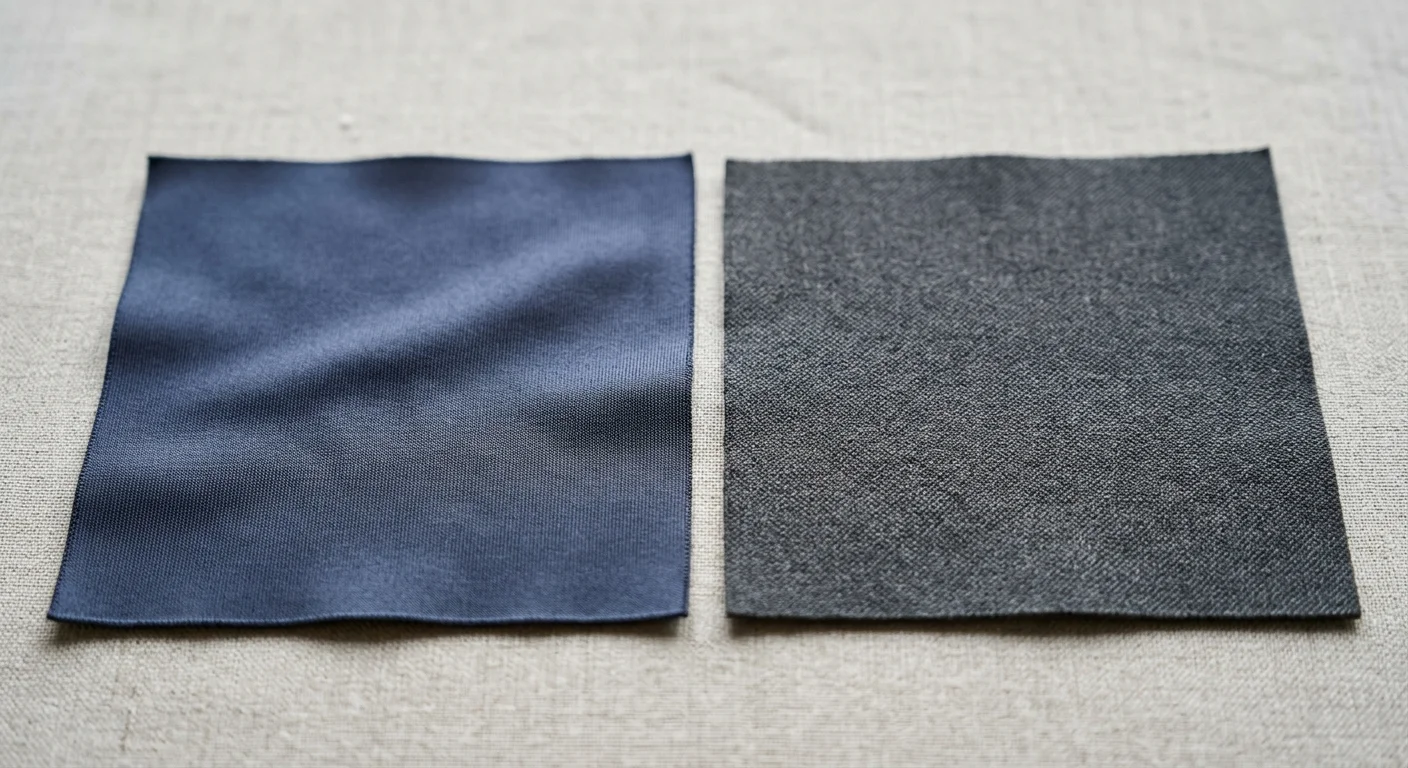
There's a reason your favorite yoga leggings feel different — that almost-too-good-to-be-true silkiness that makes you want to wear them everywhere. That's nylon-spandex at work.
The most-loved studio formula sits at 75–80% nylon / 20–25% spandex . That ratio does something polyester-spandex can't replicate. You get a buttery-soft, semi-lustrous finish that feels skin-like — not just functional. The slight sheen catches light in a way that looks intentional, not athletic.
What makes it the best fabric for yoga pants:
4-way stretch without restriction — spandex fibers extend up to 8× their original length. Deep warriors, inversions, and splits happen without a single pull at the seam.
Squat-proof structure — at ≥220 GSM with 20–25% spandex , the fabric holds its opacity and compression even when wet. No sagging at the knees or seat.
Second-skin compression — firm enough to contour and sculpt, soft enough to forget you're wearing anything at all.
For moisture, nylon-spandex handles standard studio sessions well. It's breathable, lightweight, and wicks sweat out. For hot yoga , though, polyester-spandex still dries faster under intense heat.
One honest caveat: nylon's fine, smooth filament snags more than matte polyester. Machine wash cold, skip the high-heat dryer, and it'll reward you with years of shape retention.
Your buying benchmark: Look for 75/25 nylon-spandex , at least 220 GSM , and fabric descriptions using words like silky , buttery , or second-skin . Those aren't just marketing — they're the right signals.
Merino Wool — The Natural Performance Fabric for Outdoor Training
Merino wool works differently from everything else on this list. That's the whole point.
Synthetic fabrics push sweat away from your skin. Merino pulls moisture into the fiber itself. The outer layer repels water. The inner core draws it in. The result: merino holds up to one-third of its weight in moisture before you feel damp. That's not a wicking system — it's a buffering one.
This difference matters most once you stop moving.
A four-year study from North Carolina State University tracked cyclists, climbers, hikers, and golfers through active and rest phases. The result was clear: 100% merino base layers kept skin temperature more stable during recovery than synthetics. The reason comes down to a process called hygroscopic heat release . As the fiber absorbs moisture vapor, it releases gentle warmth. This cuts the cold shock you feel after hard effort. Skiers waiting in the lift queue know that feeling well.
Where merino excels:
- Multi-day hiking and thru-hikes (3–7 days of wear, still odor-acceptable)
- Ski and snowboard base layers for stop-go training days
- Cold-weather trail running, especially dawn starts or winter races
Merino's natural keratin structure fights bacterial growth. Backpacking communities report wearing merino base layers 3–7 consecutive days with minimal odor. Synthetic base layers usually need washing after one or two days.
One honest limitation: merino dries slower than lightweight polyester mesh. For high-intensity HIIT or indoor cycling, synthetics win. Merino is the right pick for outdoor environments with shifting intensity and changing temperatures — not a sweat-soaked spin class.
It also costs more. Fine-gauge merino (17–21 microns) feels soft against bare skin. But it's a bit more prone to wear at friction points like pack straps after long use.
Best for: outdoor athletes who want microclimate stability, multi-day odor control, and all-day comfort that synthetic fabrics can't match.
Bamboo & Recycled Polyester — Sustainable Activewear Fabrics Worth Knowing
Sustainability and performance used to feel like a trade-off. These two fabrics are changing that.
Bamboo Viscose — Soft, Breathable, and Best for Low-Intensity Workouts
Bamboo viscose earns its place in activewear through sheer comfort. At 200–240 GSM , it drapes well, feels soft against bare skin, and absorbs moisture effectively. That makes it a natural fit for yoga, Pilates, and lounge training.
But there's a key detail most marketing skips. Bamboo absorbs sweat fast — it doesn't release it fast. In high-intensity sessions, the fabric holds moisture against your body instead of pushing it away. It gets heavy. It gets clammy. For HIIT or trail running, that's a real problem.
What about the "antibacterial" claims? Peer-reviewed research finds no proven advantage over cotton. Most bamboo activewear is bamboo viscose — a fiber made through heavy chemical processing. Check for OEKO-TEX or bluesign® certification before you trust the eco-story.
Best spec for bamboo activewear:
- GSM: 200–240 (tops); 220–260 (leggings)
- Elastane blend: 5–8% to minimize pilling
- Best for: yoga, Pilates, low-intensity studio sessions
Recycled Polyester (rPET) — Same Performance, Smaller Footprint
Patagonia, Adidas, Nike — the biggest names in performance gear have already made the shift. The reason is simple. rPET performs the same as virgin polyester. It also cuts fabric-level CO₂ emissions by 35–45% — around 3.0–3.5 kg CO₂e per kg, versus 5.5 kg for virgin polyester.
Same tensile strength. Same abrasion resistance. Same wicking speed. The difference is what it's made from — post-consumer plastic bottles pulled from landfill.
For eco-conscious activewear buyers, rPET is the clearest upgrade on the table. Zero performance compromise. Measurable environmental benefit. GRS certification backs it up with real data.
The smart blend: Bamboo viscose (50–70%) + rPET (25–45%) + elastane (5–8%) gives you bamboo's skin-softness and rPET's quick-dry recovery — the best of both worlds for sustainable studio wear.
Microfiber & Cotton Blends — Comfort Built for Real Life
Some fabrics are built for the podium. This one is built for real life.
Microfiber polyester has one defining threshold: under 1 denier — less than 1 gram per 9,000 meters of filament. Human hair runs around 20 denier. That puts microfiber filaments at 20× lighter per strand , with diameters under 10 µm. More filaments pack into each yarn. The result is a silky-yet-matte surface that feels nothing like standard polyester.
Blended with cotton, those finer fibers solve a real problem. Pure cotton absorbs over 20× its weight in water — that post-workout cling is physics, not imagination. A 60% cotton / 40% microfiber polyester blend dries 20–40% faster . It also gains just 30–40% weight after soaking , compared to 50–60% for 100% cotton alone.
The sweet spot for everyday wear:
Light yoga leggings: 50–60% cotton / 30–40% microfiber polyester (≤1D) / 5–10% elastane, at 200–230 GSM
Athleisure tees: 60/40 cotton-microfiber at 140–180 GSM — airy, soft, and dries faster after a workout
Travel or walking leggings: 40–50% cotton / 40–50% microfiber / 5–10% elastane — cuts down on that heavy, wet feeling after you move
This blend won't replace your HIIT leggings. But for the walk to the café, a slow-flow Sunday, or a day that asks you to move and look put-together — it hits the mark.
Best Activewear Fabric by Workout Type — Match Your Fabric to Your Training
The right fabric doesn't just support your workout — it disappears into it.
Here's how to match what you wear to how you move.
Running & Hot Weather
Reach for lightweight polyester or nylon mesh at 90–140 g/m² . Many top-tier running tees come in under 120 g/m². With just 8–20% spandex and a moisture regain of 0.4–0.8%, the fabric sheds sweat instead of holding it. Look for these construction details:
- Warp-knit or piqué mesh build
- Flatlock seams to stop chafing
- UPF 30–50+ finish for outdoor miles
Spec target: 85–90% polyester / 10–15% spandex, 100–130 g/m², mesh knit.
Yoga & Studio
Opacity matters here. Go for dense 4-way stretch knits at 200–280 g/m² . That weight holds full coverage through deep lunges and forward folds. A 70–80% nylon or polyester base with 20–30% spandex gives you strong stretch-and-return. Things stay smooth, not bunchy. For heated studios, look for blends that wick moisture and feel soft against skin. Nylon-spandex and polyester-lyocell-spandex are the two go-to builds.
HIIT & Strength Training
This is where fabric takes real punishment. Go with compression tights made from 65–75% nylon / 25–35% spandex at 220–300 g/m² . That blend gives you solid abrasion resistance and the muscle support high-intensity sessions demand. Antimicrobial treatment matters too. Training hard five days a week means odor control isn't optional — it's a must.
Outdoor & Cold-Weather Training
Think in layers. Start with a 100% merino base at 150–200 g/m² . It handles moisture and keeps your temperature steady as effort levels shift. Add a polyester fleece mid-layer at 250–300 g/m² for insulation. Finish with a DWR-finished woven shell at 120–180 g/m² to block wind without trapping heat.
Everyday Athleisure
Cotton-bamboo-polyester blends with 5–10% spandex hit the sweet spot. At 200–260 g/m² , they're soft enough for the commute and structured enough for a surprise yoga class. Easy care, matte finish, no compromises.
How to Choose Activewear Fabric: 6 Key Buying Factors
Six questions. Answer them in order, and the right fabric becomes clear.
1. What's Your Activity?
Start here. Everything else follows from this.
High-impact training — HIIT, running, cycling — needs nylon/spandex or polyester/spandex blends. You want abrasion resistance, compression recovery, and a fabric that holds its shape under hard use. Yoga and Pilates are different. Opacity and softness matter more than wicking speed. Nylon/spandex or bamboo/spandex gives you both.
2. What's Your Climate?
Fabric weight is a climate choice as much as a style one.
Hot and humid: 150–175 GSM polyester or nylon blends — light, fast-drying, minimal drag
Temperate gym: 200–225 GSM for standard leggings with good opacity and a solid feel
Cold-weather outdoor: 225–250+ GSM compression tights, or merino/nylon blends that layer well under shells
3. What GSM Do You Need?
GSM is the number most buyers skip. Don't.
≥260 GSM is the go-to benchmark for squat-proof leggings. Below 250 GSM, many fabrics fail the stretch-opacity test in motion. Match your number to your use: 150–175 for tops and shorts, 200–225 for everyday leggings, 225–260+ for compression or winter wear.
4. How Much Stretch?
Spandex percentage drives this. 8–30% elastane covers the full range — from gentle recovery to firm compression. Yoga and Pilates need the higher end. Go 15%+ for full range of motion. Running and gym training work well in the middle range.
5. How Much Do You Sweat?
Heavy sweaters need inherent moisture-wicking fibers . Skip finish-based treatments — they wash out over time. Polyester pulls moisture away a bit faster than nylon. Cotton holds water, so it's the wrong call for cardio. For odor control across multiple wears, merino wool beats every synthetic on this list.
6. How Sensitive Is Your Skin?
Rough synthetics trap heat and cause irritation. Sensitive skin does better with bamboo, merino, TENCEL™ Lyocell, or organic cotton . Look for a small elastane percentage too — it adds stretch without sacrificing softness. Check for OEKO-TEX Standard 100 certification before you trust any fabric's "skin-safe" label.
Conclusion
The right fabric doesn't just dress your workout — it defines it.
Chasing PRs in lightweight polyester? Flowing through vinyasa in a silky nylon-spandex blend? Layering up for a trail run in Merino wool? Every discipline is different, but one thing stays true: fabric performance shapes how you feel when you move.
The best activewear fabric for you isn't the most technical one. It's the one that matches your training intensity, your body's needs, and how you want to feel the moment you put it on.
You know what to look for now. Trust that.
Check out Berun Activewear's fabric-first collection. Every piece is built around the same performance standards you've just learned to spot. Good fabric makes you perform better.
Shop the Collection → [ berunactivewear.com ]